
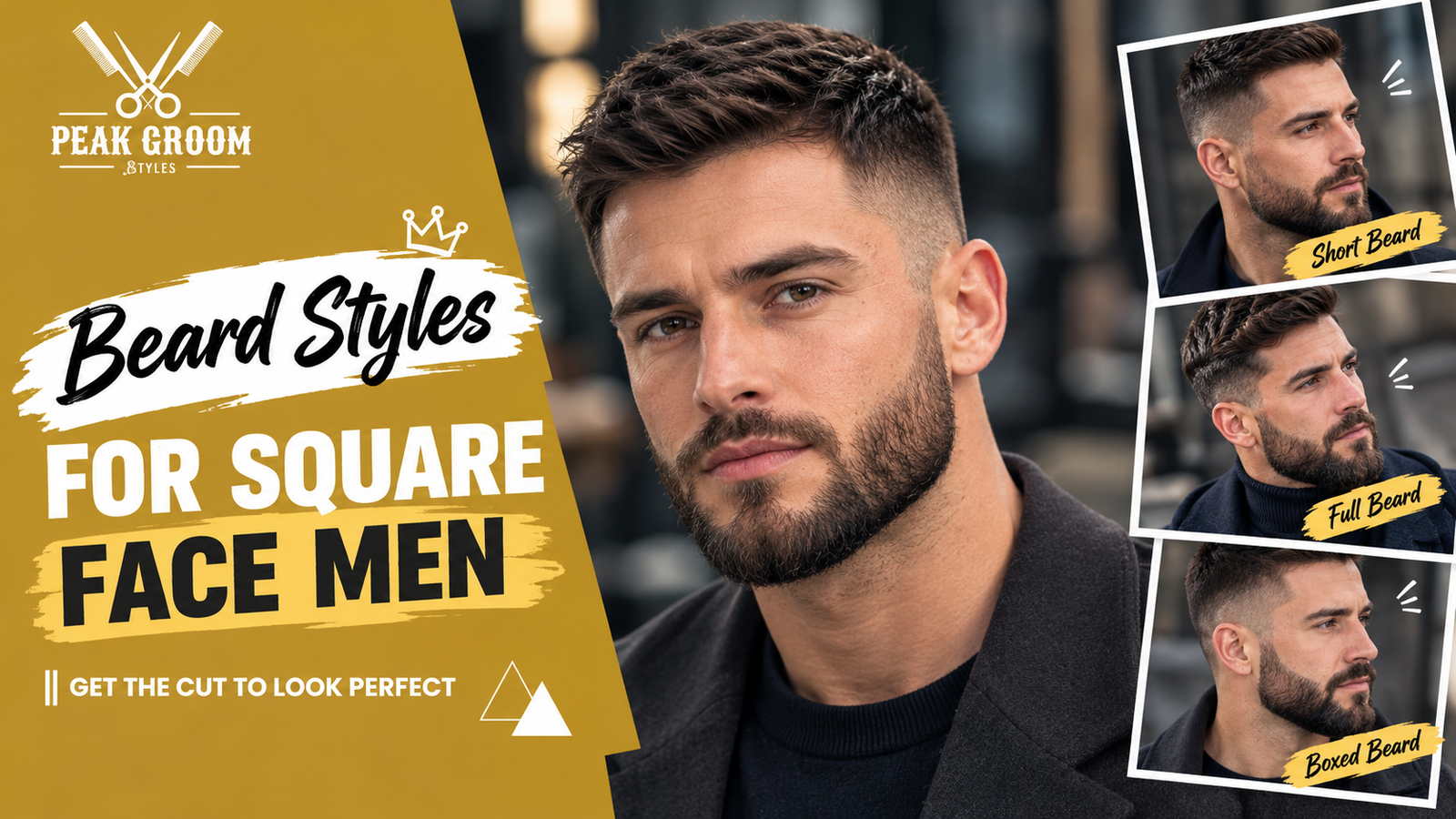
A square face already has strong angles, so the wrong beard can make the jaw look boxy or heavy. Too much length on the sides adds width where you do not need it.
A heavy, blunt cut can also hide a strong jawline, and growing it out takes weeks. By then you are trimming blindly and hoping for the best.
These beard styles for square face shapes show how length, fade, and neckline placement change the look. You will also get simple grooming tips to keep each one sharp.
How to Choose a Beard Length for a Square Face
- Chin length: A little extra length at the chin adds vertical shape, which can balance the width of a square jaw. Keep the sides shorter so the face does not look wider.
- Cheek line: Let it follow the natural growth instead of cutting it high and straight. A hard, high line repeats the boxy shape of the jaw.
- Neckline: Curve it gently from ear to ear, just above the Adam’s apple. A square, flat neckline adds another sharp edge.
- Sideburn blend: A soft fade from the sideburns into the beard keeps the sides slim and the outline clean. It also stops the beard from looking pasted on.
Classic Goatee
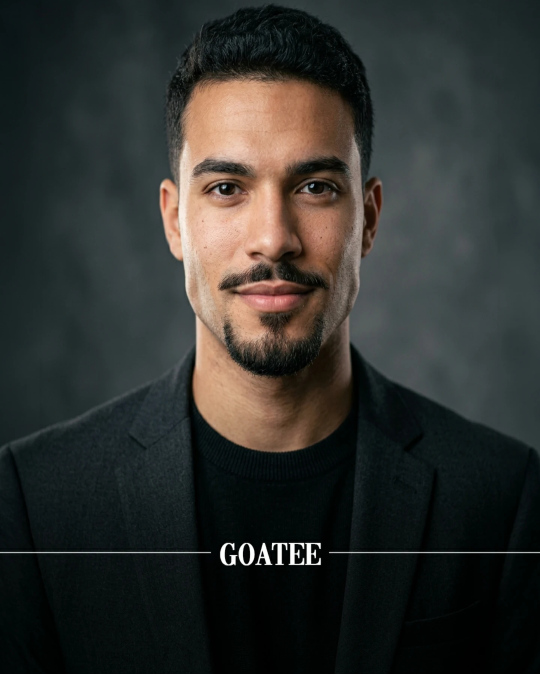
Beard formula: trimmed goatee + defined mustache + clean-shaven cheeks
The goatee sits on the chin and chin point, and the mustache above it is thin and neatly shaped. The cheeks and jaw are clean, so the beard stays in the center of the face. Short dark hair with tapered sides keeps the whole look tidy.
For a square face, this style works because it adds length at the chin instead of width at the sides. That draws the eye down the middle of the face and softens a boxy jaw. Keeping the cheeks bare also stops the jawline from looking heavy.
Ask your barber: Keep the goatee short and the edges crisp, with a clear gap around the mouth. If your jaw is very wide, a slightly longer chin section adds more balance.
Maintenance tip: A goatee needs more frequent edging than a full beard because there is no extra hair to hide stray growth. A quick trim every few days keeps the lines sharp.
Thick Full Beard
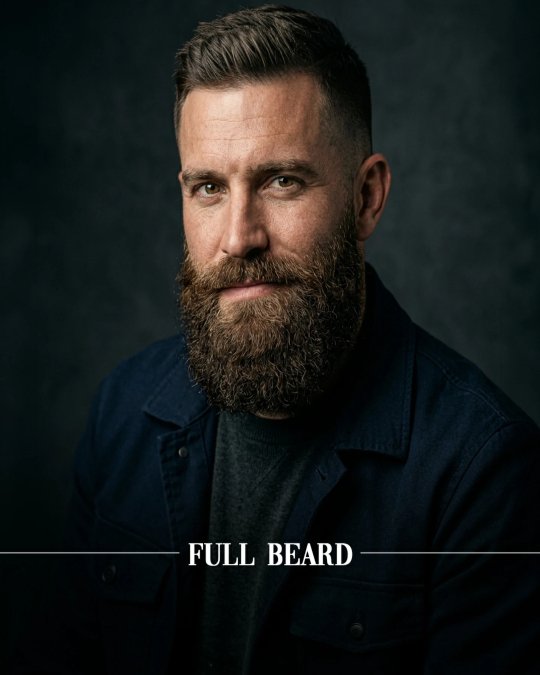
Best for: Men with a square face who want a fuller, more rugged look and can grow even, dense facial hair.
This full beard covers the cheeks, chin, and jaw, with a thick mustache that blends into the sides. It is longest at the chin and rounds off at the bottom, which softens the corners of a square jaw. The brown beard has lighter, sandy tones near the chin, and the hair on top is short, combed to the side, with tapered sides.
For a square face, the key is shape. A rounded, slightly longer chin adds length, so the face looks less boxy. If the beard grows wide on the sides, it can make the jaw look even broader.
Ask your barber: Keep the sides trimmed a little shorter than the chin and ask for a natural curve at the bottom. Avoid a flat, square-cut bottom, which repeats the shape of the jaw.
Maintenance tip: A beard this full needs regular trims and a comb or brush. Beard oil or balm helps keep the hair soft and the skin underneath from getting dry.
A Tidy Short Boxed Beard
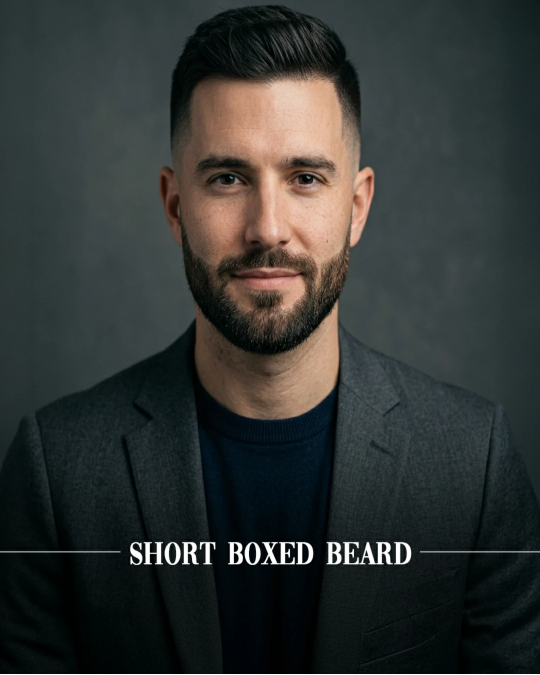
The beard is short and even from the sideburns to the chin, with a trimmed mustache and clean edges. His hair is short and dark, combed up and to the side, with tapered sides that match the beard’s neat finish. The beard is the main feature, but the haircut gives it a clean frame.
For a square face, a short boxed beard works because it follows the jaw without adding bulk. The close length keeps the sides slim and still adds some definition at the chin.
Ask your barber:
- Cheeks: Keep the cheek line natural and not too high, so the beard blends into the sideburns.
- Sides: Ask for the beard to stay short and even along the jaw so the face does not look wider.
- Chin: Leave a touch more length here for balance, with a soft curve at the bottom instead of a flat edge.
- Neckline: Set it above the Adam’s apple and keep the line clean, since it shows the most when the beard is this short.
A boxed beard has squared-off edges by design, which can repeat the shape of a square jaw. A slightly rounded bottom edge keeps the look sharp without making the face look boxy.
Chin Strap Beard
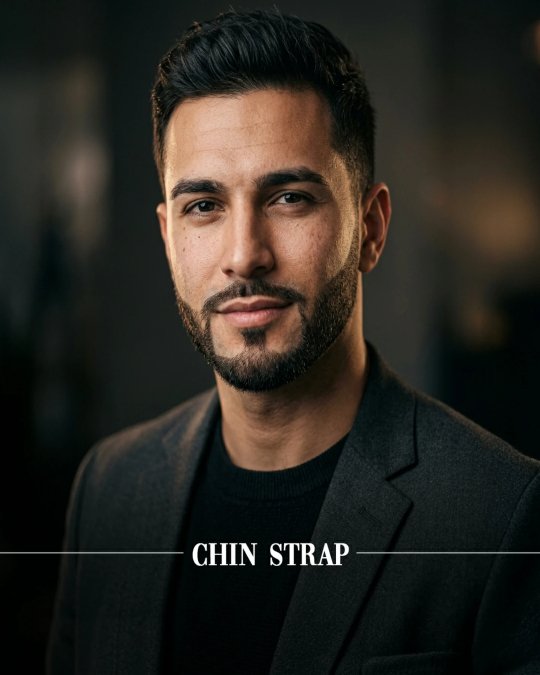
The beard follows the jawline from the sideburns to the chin as a defined band, with a trimmed mustache above it. A small patch of hair sits under the lower lip. The cheeks are mostly clear, with only a light shadow, and the dark hair is short and combed up and to the side with tapered sides.
Why this style works:
- Jaw definition: The strap traces the edge of the jaw, so it shows off a strong square jawline instead of hiding it.
- Slim sides: Because the cheeks stay clear, the face does not look wider.
- Chin length: The beard is slightly fuller at the chin, which adds a little vertical shape.
- Clean frame: The tapered haircut keeps the look tidy and puts the focus on the jaw.
What to avoid: A very thin strap can make a square jaw look severe. Ask for a slightly thicker band, and keep the line along the jaw smooth instead of perfectly straight.
This style takes steady upkeep. The edges and the cheek line show every stray hair, so plan on a quick tidy every few days.
French Beard for Square Jaws
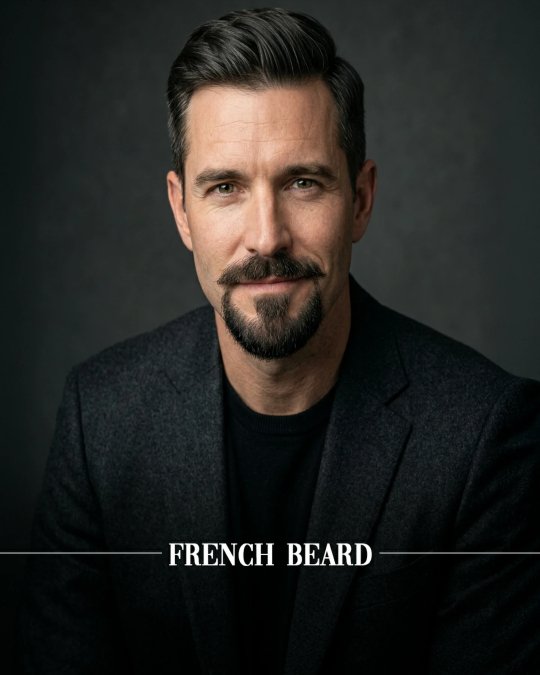
A full, wide mustache sits above a separate chin beard that is fullest just below the lip and rounded at the bottom. The cheeks and jawline are clean, so the whole beard stays in the center of the face. His dark hair has some grey through it and is combed back and to the side, with short sides and a smooth finish.
Face shape note: Clean cheeks keep the sides of a square face from looking wider, and the chin beard adds length down the middle. That softens the jaw without covering it, so you still see the strong angles.
- Styling: Brush the mustache outward, away from the lip, and keep the chin beard fairly narrow. A chin section about as wide as the mouth keeps the shape tidy.
- Maintenance: The shaved cheeks and the gap around the mouth show stubble within days. Plan on regular shaving and a quick trim of the mustache so it stays off the lip.
Van Dyke With Curled Mustache
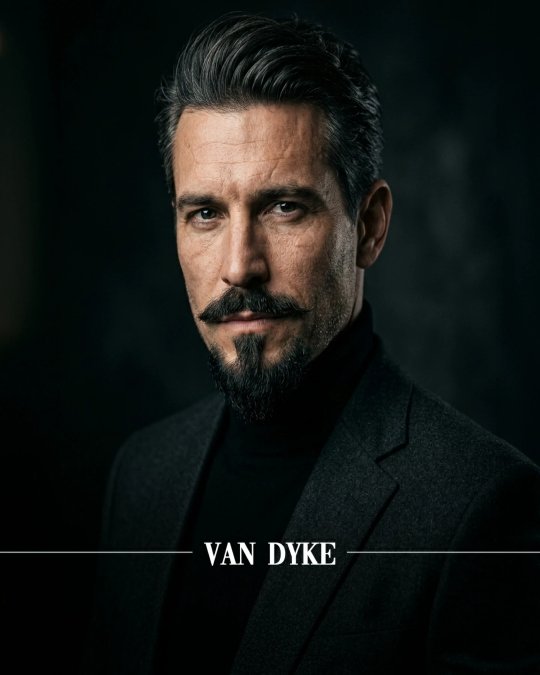
Beard formula: curved mustache + pointed chin beard + light cheek stubble
The mustache is thick and dark, with the ends curving slightly upward. It is separate from the chin beard, which narrows to a soft point below the chin. The cheeks carry only light grey stubble. His dark hair, with grey streaks, is slicked back and to the side.
For a square face, the pointed chin beard adds length down the middle, so the jaw looks less boxy. The mustache gives the face a strong focal point without adding width at the sides.
Ask your barber: Keep the chin section narrow and slightly longer than the cheeks. The cheek stubble should stay short and even, or be shaved clean, so the beard does not widen the jaw.
Maintenance tip: A curved mustache needs the most care here. A small amount of mustache wax or balm helps hold the curl, and regular trims keep it off the lip.
Sharp Short Beard
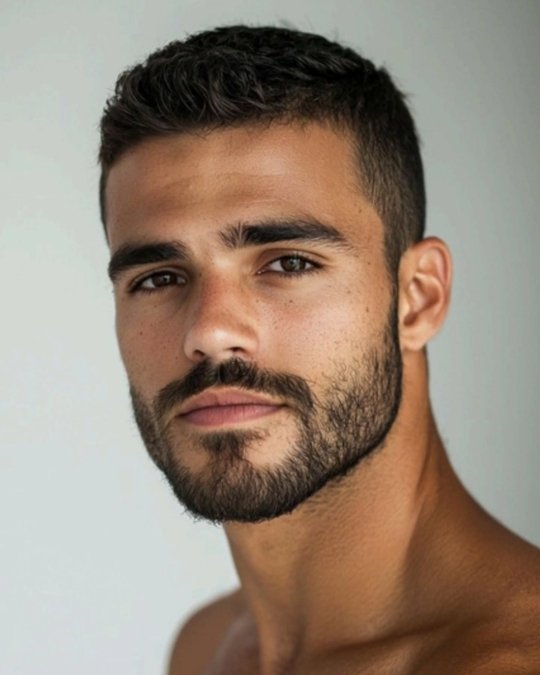
The beard is short, dense, and even across the cheeks, with a mustache that blends into the sides. It is a little longer at the chin and cut with a clean line under the jaw. The dark hair on top is short and textured, with tapered sides that keep the outline tight.
The strong jaw is part of the look. The even length follows the jaw’s angles without adding width, and the slightly longer chin gives some vertical balance. That helps a square face look balanced instead of boxy.
The cheek line stays fairly natural, and the neckline is sharp enough to define the jaw without cutting it too high. A short, textured top also keeps the head from looking top-heavy next to a fuller beard.
Easy upgrade: If your cheeks grow in patchy, keep the beard shorter on the sides and leave the chin a touch longer. Even length matters more than a sharp edge.
Maintenance tip: At this length, uneven spots show quickly. A trim about once a week and a tidy neckline keep it looking planned.
Italian Verdi Beard
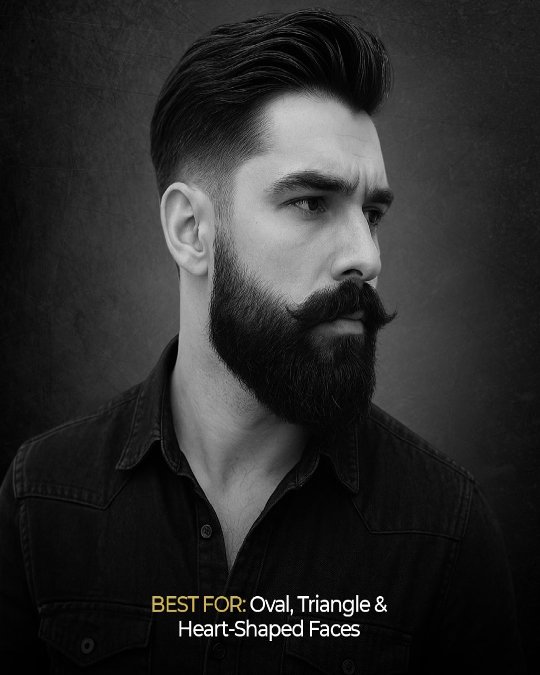
A full, dense beard covers the cheeks and chin and rounds off at the bottom. The mustache is wide, with the ends curling slightly upward. On top, the dark hair is swept up and back with plenty of volume, and the sides are tapered close above the ear.
On a square face, a beard this full needs a few changes. The sides can add width to the jaw, so the cheeks should stay shorter than the chin.
Ask your barber:
- Cheeks: Keep them trimmed close and blended into the sideburns, so the beard does not widen the jaw.
- Chin: Leave the most length here, with a soft curve at the bottom instead of a flat edge.
- Mustache: Trim it so it stays off the lip, then use a little wax to hold the curled ends.
- Top: Keep the volume on top. It adds height and balances a fuller beard.
What to avoid: Letting the beard grow wide and square at the bottom. That repeats the shape of a square jaw and makes the face look heavier
Italian Garibaldi Beard
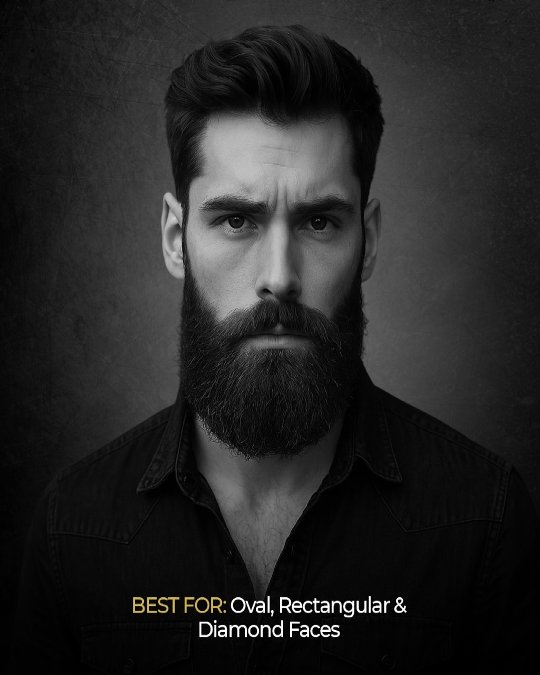
The beard is full and wide, covering the cheeks and jaw with a rounded bottom that reaches below the chin. The mustache blends into the beard instead of standing apart from it. On top, the dark hair is thick and brushed up and back, with short sides.
On a square face, a wide Garibaldi can make the jaw look broader, since the rounded bottom adds fullness at the sides. It can still work if the width is kept under control.
Face shape note: The rounded bottom softens the corners of a square jaw, which helps. The sides are the risk, because extra width there adds to the boxy shape.
Ask your barber:
- Sides: Keep them trimmed noticeably shorter than the chin.
- Bottom: Ask for a gentle curve, not a wide, flat edge.
- Length: Leave the most length at the chin so the beard adds height instead of width.
Maintenance tip: A beard this full needs regular trims and a brush or comb. Beard oil or balm keeps it soft and the skin underneath from drying out.
Long Viking Beard
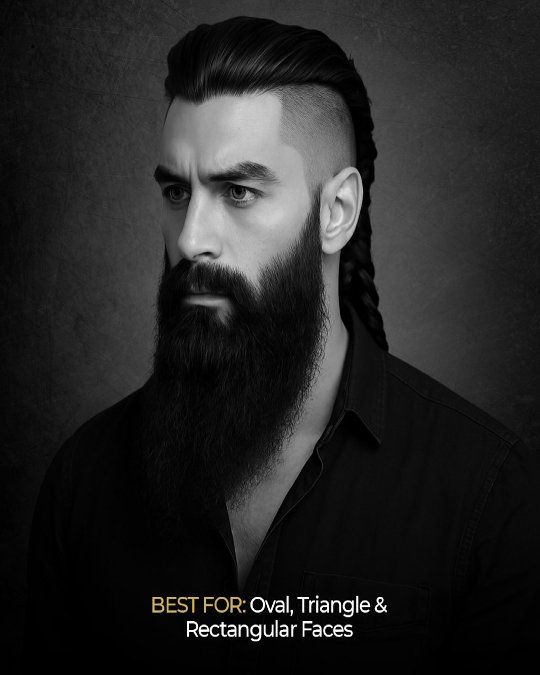
The beard is long, thick, and fairly straight, falling well below the chin and tapering slightly toward the bottom. The mustache blends into the beard without a sharp separation. The hair has a shaved side, slicked-back top, and a braid running down the back, which fits the Viking look.
For a square face, the length matters most. A long beard adds a lot of vertical shape, so it stretches the face and softens the boxy jaw. The shaved sides keep the top from adding width.
Face shape note: The length helps, but width can undo it. If the beard flares out at the sides, the face looks broader. Keep the cheeks neat and let the length hang straight down.
Ask your barber:
- Sides: Keep them tapered close and blended into the sideburns.
- Bottom: Shape it to a soft point or gentle curve, not a wide, square cut.
- Length: Trim only the stray hairs. The weight of the length is what creates the shape.
Maintenance tip: A beard this long needs washing, conditioning, and daily brushing. Beard oil helps with dryness, and a trim every month or two keeps the ends from splitting.
Goatee With Curled Mustache
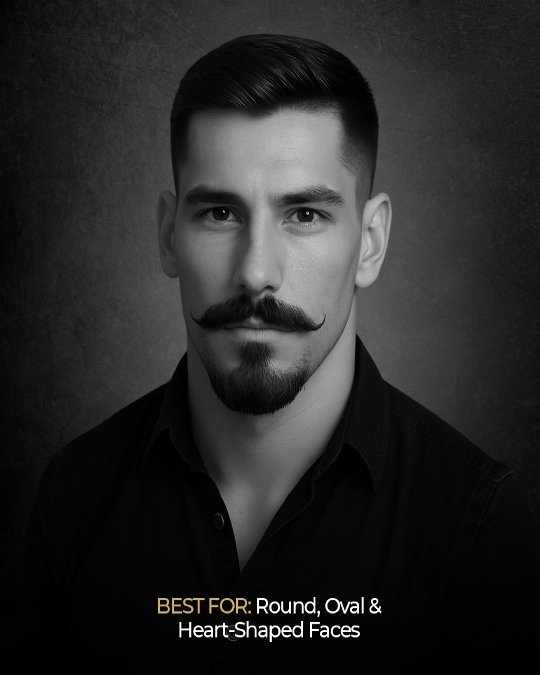
The goatee is short and neat, with a clean chin and a curled mustache above it. The ends of the mustache curve up slightly. The cheeks and jaw are shaved, so the beard stays in the center of the face. His dark hair is short and combed to the side, with a tight fade at the sides.
On a square face, this style adds length at the chin without adding width at the jaw. Bare cheeks keep the sides slim, and the mustache gives the face a clear focal point.
Ask your barber: Keep the goatee short and fairly narrow, about as wide as the mouth. Leave a bit more length at the chin, and keep the edges around it crisp.
What to avoid: A very wide goatee that spreads toward the cheeks. It adds width to the jaw and makes the face look boxier.
Maintenance tip: Shaved cheeks show stubble within a day or two, so plan on regular shaving. A little mustache wax helps hold the curl.
Balbo Beard
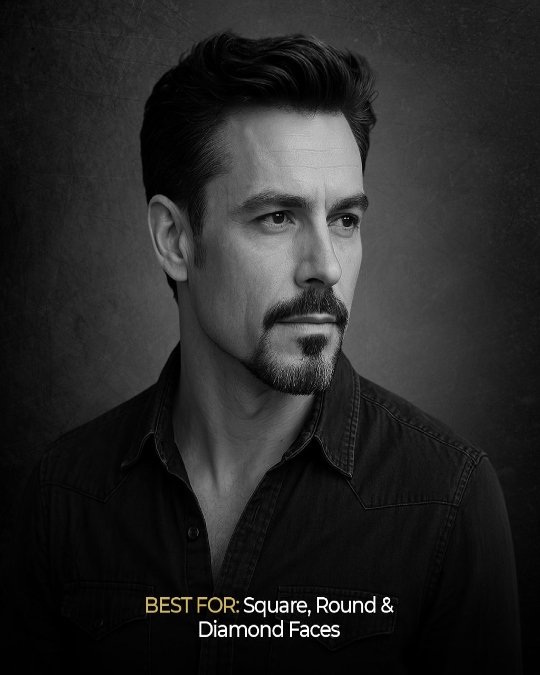
Beard formula: trimmed mustache + chin beard + clean cheeks
The mustache is neat and thick, and the chin beard sits below it as a separate, short patch of hair. The cheeks and jaw are clean, so the beard stays in the center of the face. His dark hair is short on the sides and swept up and back on top, with natural volume at the front.
This image is labeled for square faces, and the reasoning holds. The beard adds length at the chin, and the bare cheeks keep the jaw from looking wider. That softens a boxy shape without hiding the jawline.
Ask your barber: Keep the chin section about as wide as the mouth, and make sure the mustache and chin beard are clearly separated from each other. A soft edge on the chin looks more natural than a hard, squared-off one.
Maintenance tip: Clean cheeks need regular shaving, and the lines around the chin beard show stray hairs fast. A quick tidy every few days keeps the shape sharp.
Medium Full Beard
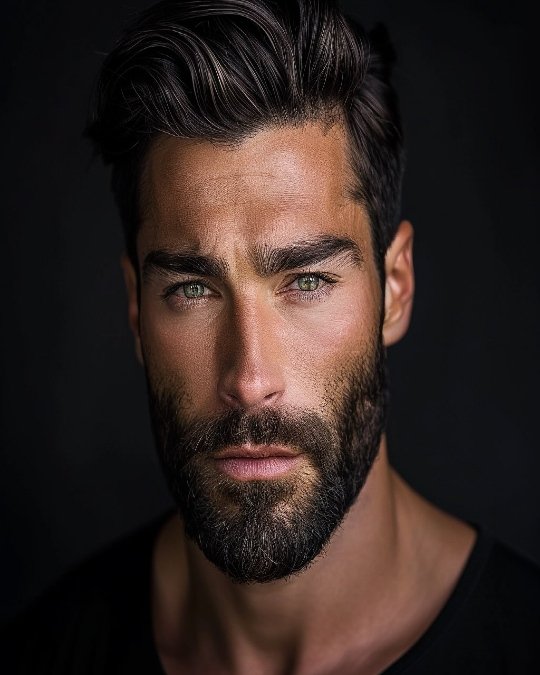
Best for: Men with square faces who can grow dense, even facial hair and want a fuller beard that stays tidy.
The beard is medium length and thick, covering the cheeks, jaw, and chin, with the mustache blending into the sides. It looks a little longer and more rounded at the chin. The dark hair on top is swept up and back with natural volume, and the sides are shorter.
This works on a square face because the length gathers at the chin and the sides stay closer to the face. That adds some vertical shape and stops the jaw from looking wider. The height in the hair also helps balance the fullness of the beard.
Ask your barber: Keep the cheeks shorter than the chin and ask for a gentle curve at the bottom. A flat, squared-off bottom would repeat the shape of the jaw.
Maintenance tip: At this length, a beard can look untidy quickly. Brush it daily, trim every two to three weeks, and use a little beard oil to keep the hair and skin underneath soft.
Fade Beard
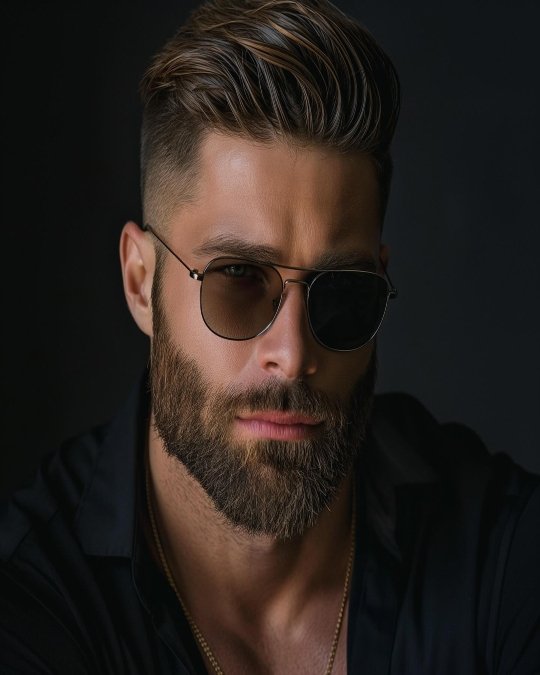
Haircut formula: swept-back top + high fade + faded full beard
The beard is medium length and dense across the cheeks and chin. It is shorter near the sideburns and neck and grows fuller toward the chin, so it blends from skin to full length. The hair on top is swept back with some length and shine, and the sides are faded close with a tight line above the ear.
A faded beard suits a square face because the shorter sides slim the jaw, while the length at the chin adds shape. The close fade on the head and the beard fade match, so the whole outline looks cut as one piece.
Ask your barber: Ask for the beard to fade into the sideburns and the neckline, with the most length kept on the chin. Request a soft blend instead of a hard line, so the fade does not look pasted on.
Maintenance tip: Fades grow out quickly. Plan on a barber visit every two to three weeks, and brush the beard daily to keep the length even.
Short Beard + High Fade
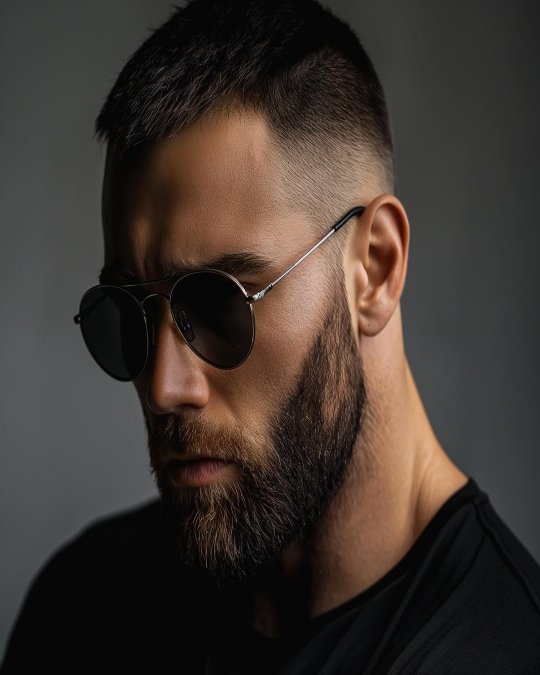
The beard is short and dense, running along the jaw with a sharp edge under the chin and a clean neck below it. It looks lighter around the mouth and chin and darker along the jaw. The hair on top is cropped short and textured, and the sides are faded very close, with a high, tight line above the ear.
His strong jaw shows clearly in profile. The short beard follows the angle of the jaw without adding width, and the close fade keeps the sides slim. For a square face, that creates a sharp, balanced outline instead of a boxy one.
Barber note: Ask for the beard to blend into the fade at the sideburns, with no gap or hard line between them. A smooth transition makes the haircut and beard look planned together.
- Styling: The short top needs very little. A small amount of matte clay or cream is enough to keep the texture visible.
- Maintenance: A high fade grows out fast, so plan on a barber visit every two to three weeks. Trim the beard weekly to keep the cheek line and neckline sharp.