
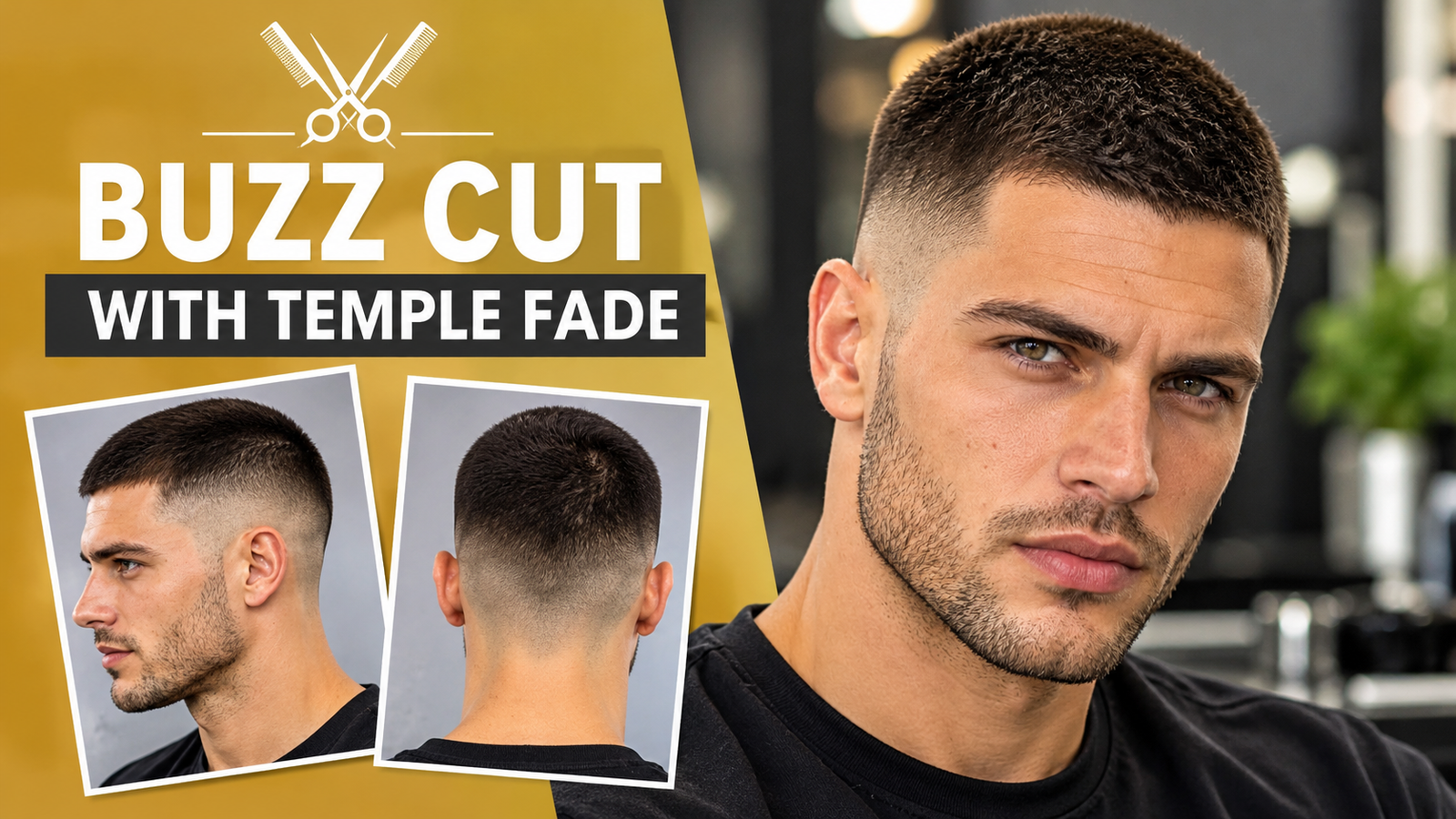
Drafting the barber questions and the meta description
Buzz cut with temple fade looks sharp until the fade lands in the wrong spot. Too high and it looks harsh. Too low and nobody notices it.
A bad blend also leaves a visible line around the ears, which makes a short cut look unfinished. Hairline shape and head shape change how much contrast works.
Here you will find practical advice on fade height, face shape, and barber requests, plus photo ideas you can save and show at your next appointment.
What to Ask Your Barber Before Getting This Cut
- Top length: Ask for an even buzz on top and say if you want it closer or slightly longer. A little extra length softens a narrow head, while a closer cut sharpens a strong jaw.
- Fade placement: Ask for the fade to stay around the temples and sideburn area, blending into the sides instead of climbing high. This keeps the cut clean without looking severe.
- Hairline: Choose between a natural edge and a crisp line-up. A natural edge looks softer on a receding hairline, while a sharp line-up adds contrast on a strong hairline.
- Reference photo: Bring a picture that shows the front and the side. Temple fades can look very different from each angle, so this helps you and your barber agree on the contrast.
1. Clean Temple Fade Buzz Cut
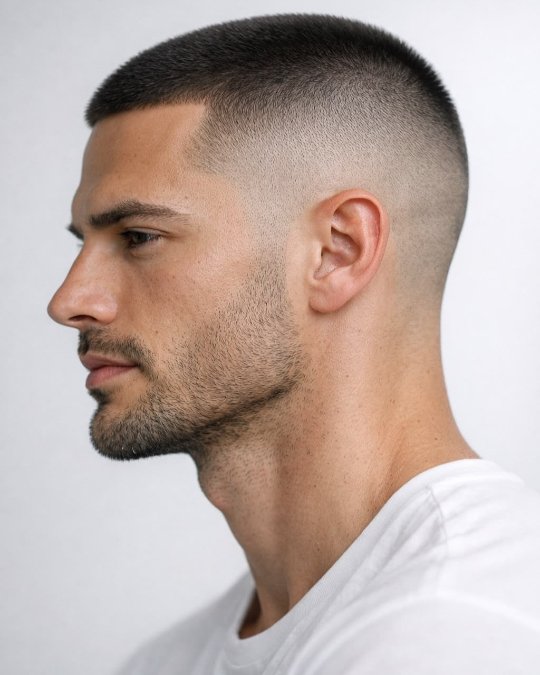
The top is cut short and even, sitting close to the scalp with a dense, dark finish. On the sides, the hair fades down quickly from the temple to bare skin around the ear and toward the nape. That gives strong contrast against the darker top.
The hairline is straight across the forehead, with a defined corner at the temple. This crisp edge is what makes a buzz cut with temple fade look sharp instead of plain.
A short stubble beard follows the jaw, and the neckline under the chin blends softly into the skin. Because everything stays close to the head, the cut works well on men with a strong jaw or defined profile.
It needs regular barber visits, since the fade and hairline lose their shape fast as the hair grows.
2. A Soft Temple Fade
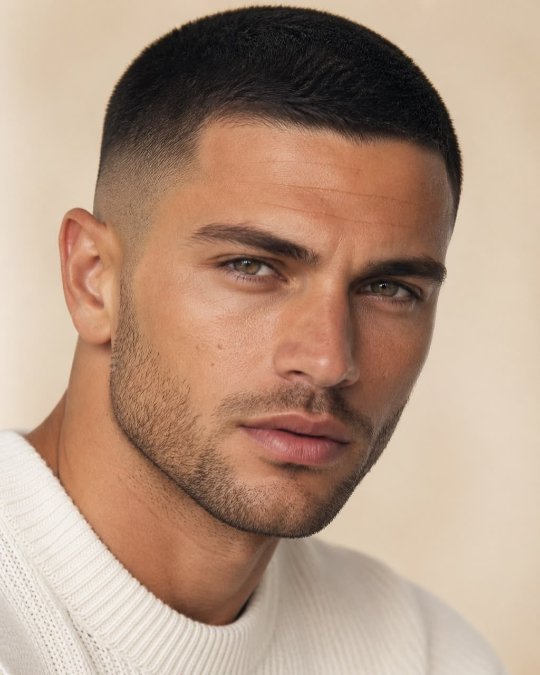
Best for: Men with a strong jaw and dark, dense hair who want a short style with almost no daily effort.
The hair on top is cut short and even, following the round shape of the head. It looks slightly fuller than the sides, which gives the buzz cut with temple fade some structure. The sides drop to skin around the temple and ear, with a gradual blend instead of a hard line.
The hairline runs straight across the forehead with squared corners. That clean edge makes the face look more defined, especially with the short, even stubble along the cheeks and jaw. The beard and haircut share the same close length, so the whole look feels balanced.
This cut suits square and oval faces best. On a narrower face, ask your barber to leave a little more length on top so the head doesn’t look too small.
There is no styling to do, but the hairline and fade grow out fast. Plan on a visit roughly every two to three weeks to keep the edges crisp.
3. Short Textured Crop Fade
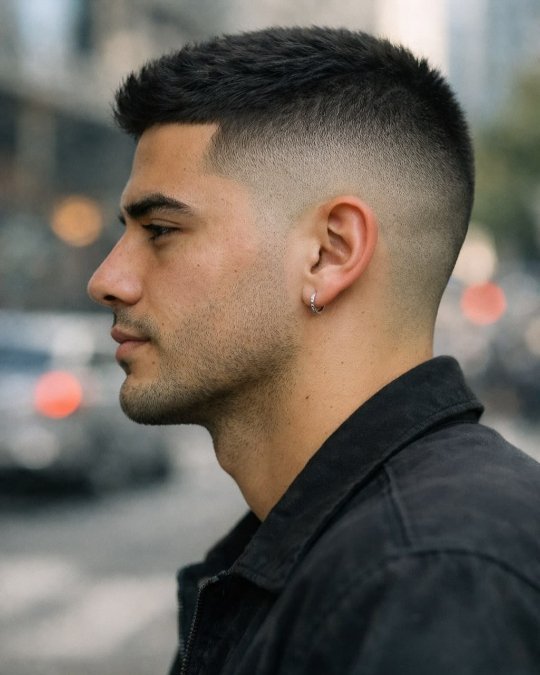
This style sits between a buzz cut and a full crop. The top keeps enough length to show texture, while the sides fade down to skin around the ear and nape. It suits men who like the temple fade look but want something to style.
- Top: Short with a rough, slightly pushed-forward texture. Ask your barber to point-cut the top so the ends look broken up instead of flat.
- Sides: The fade starts at the temple and drops to skin behind the ear. The blend is smooth, with no harsh line between the dark top and the lighter sides.
- Fringe: Short and cut straight across the forehead. This blunt edge keeps the face open and makes the hairline look sharp.
- Finish: Matte and natural. A small amount of clay worked through dry hair holds the texture without making it look stiff.
The contrast between the full, dark top and the faded sides adds height to the head. That works well on oval and square faces, and the short stubble along the jaw keeps the profile clean.
Maintenance tip: The top grows out more slowly than the fade does. Book a touch-up every three weeks or so to keep the temple and neckline sharp, and ask for a full trim every other visit.
4. Short Quiff + Skin Fade
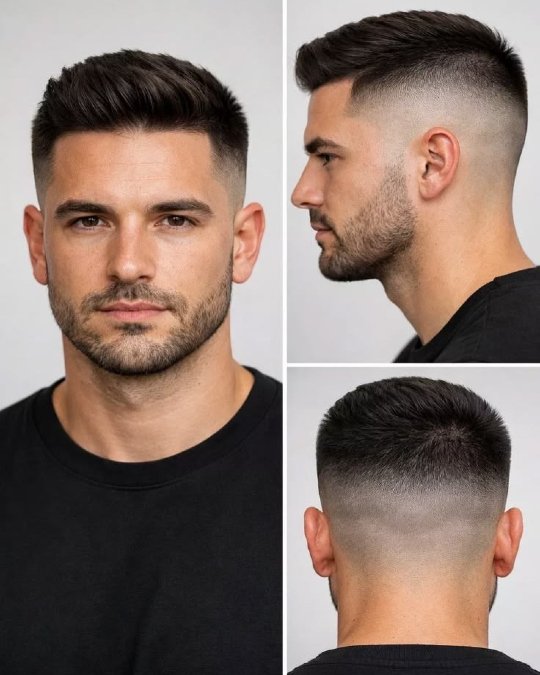
The three views show a short top that is lifted at the front and brushed slightly back, with a rough, broken-up texture. It looks like a textured quiff cut close, so the shape reads as a crop with a bit of height.
The sides are faded down to skin around the temples and ears. From behind, the fade moves smoothly from dark hair into bare skin at the nape, with no hard line.
Ask your barber: Request a short textured top with enough length at the front to push up, and a temple fade that keeps a straight hairline. Point out the neckline in the back photo so the taper ends where you want it.
The short, dense beard follows a clean cheek line and stays close to the jaw, which matches the sharp hairline. Together they give an oval or square face a strong, balanced outline.
A little matte clay or paste worked through dry hair lifts the front without a shiny finish.
5. Crisp Line-Up Buzz Cut
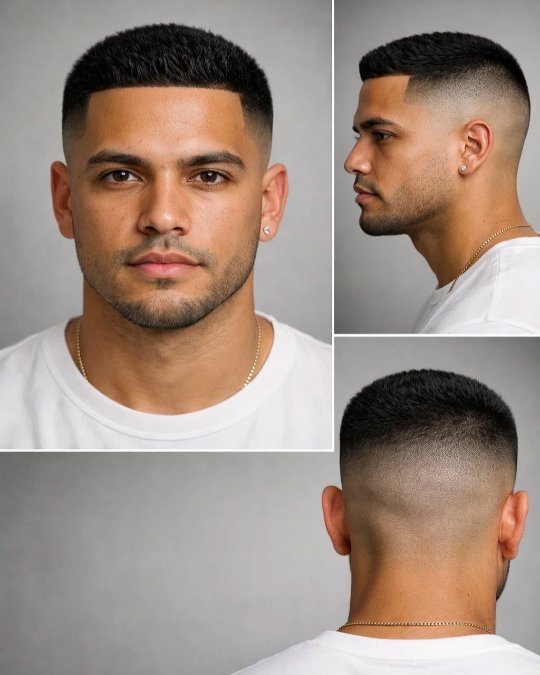
Haircut formula: short dense top + temple fade + sharp line-up
The top is cut short and even, with a slightly fuzzy, soft-edged texture rather than a flat clipper finish. It follows the round shape of the head from the front, side, and back views. The sides blend down to skin around the temples and ears, and the back fades smoothly toward the nape.
The hairline is the main feature here. It runs straight across the forehead with squared corners, which frames the face and makes this buzz cut with temple fade look deliberate.
Face shape note: A broad, strong jaw like this one handles the high contrast well. The short stubble beard with a clean cheek line and trimmed mustache keeps the lower face in proportion with the sharp top.
Ask your barber: Request a crisp line-up and show the back photo so the fade curves evenly behind the ears. A hard line-up needs a touch-up every two to three weeks, or the edge starts to blur.
6. Spiky Textured Crop
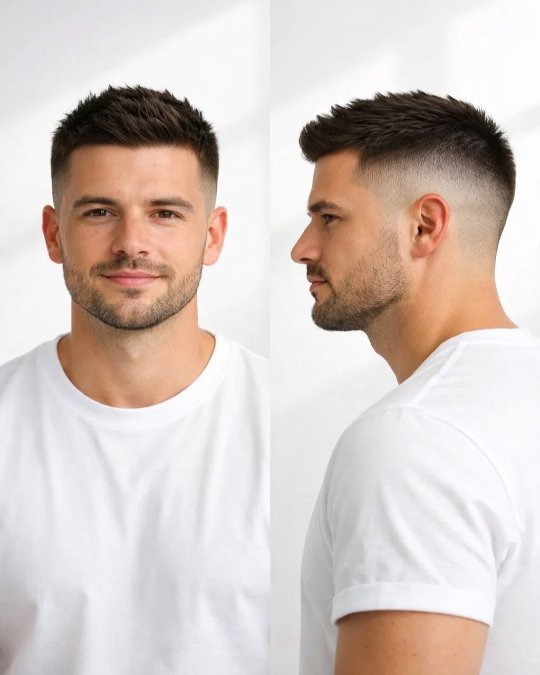
The top has enough length to stand up in short, choppy tips, with the front pushed slightly forward over the forehead. It sits one step above a buzz cut with temple fade, giving you a little hair to style while keeping the same clean sides. The sides fade down to skin around the temples and ears.
Why this style works:
- Texture on top: The broken-up ends add movement, so the cut looks styled instead of flat. This suits straight to slightly wavy hair with some natural density.
- Fade contrast: The dark top against the faded sides gives the head more shape from both the front and side views.
- Face balance: The short, spiky height lengthens an oval or rounder face a little, and the stubble beard keeps the jawline in proportion.
Styling tip: Work a small amount of matte paste or clay through dry hair, then push the front up and forward with your fingers. Too much product makes the tips clump, so start with less.
This cut needs more upkeep than a plain buzz. Plan a visit every three weeks to keep the fade from growing into the top.
7. Crop With Blunt Fringe
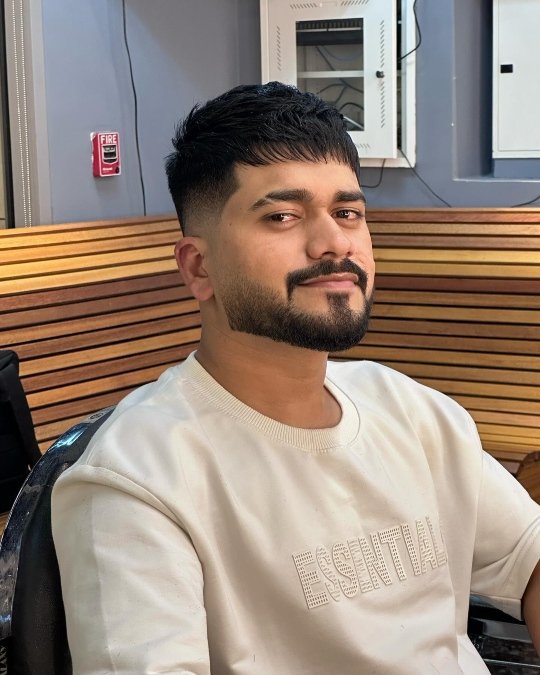
The top is longer than a buzz cut, with a textured, slightly messy finish that is pushed forward. The front is cut straight across the forehead, forming a blunt fringe. It is a good option if you like the clean sides of a buzz cut with temple fade but want hair on top.
The sides fade down from the temple to skin around the ear, so the dark top stands out against the lighter sides. The fade also blends into the sideburn, which connects to the beard.
Beard pairing: The full, dense beard has a defined cheek line and a rounded shape under the chin. It adds weight to the lower face, and the full top keeps it from looking too heavy.
- Styling: Rough-dry the hair, then push the fringe forward with a little matte clay. The ends should look broken up, not combed flat.
- Maintenance: The fringe and cheek line lose their shape first. Plan on a trim every three weeks, and keep the beard line tidy between visits.
This shape suits broader or rounder faces. The straight fringe adds structure, and the height on top keeps the face from looking too wide.
8. Textured Fringe Fade
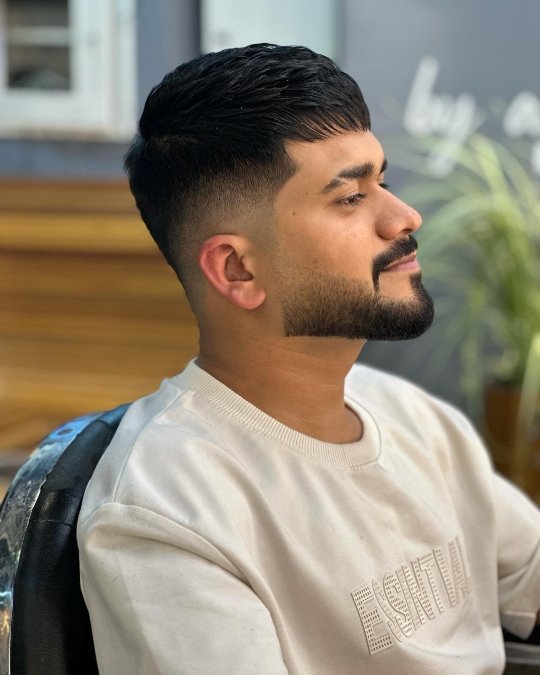
The side view shows how this cut is built. The top is longer than a buzz cut and combed forward into a straight fringe, with the ends slightly broken up. The back of the top sits shorter and follows the curve of the head.
Ask your barber:
- Top: Short to medium length, with more length at the front than at the crown. Ask for texture through the ends so the top doesn’t look like a flat helmet.
- Sides: A fade that starts at the temple and drops to skin around the ear. The blend is smooth, so the dark top meets the lighter sides without a hard line.
- Fringe: Cut straight across, just above the brow. A blunt edge looks deliberate, while a ragged one looks grown out.
- Beard: Keep the cheek line sharp and angled, with the sideburn flowing into the beard. A squared edge at the cheek matches the straight fringe.
This is a good option if a plain buzz cut with temple fade feels too bare, but you still want the clean sides. The fade keeps the cut tidy, and the fringe gives you something to style.
Daily styling: Use a small amount of clay or paste on towel-dried hair. Push the fringe forward and let the top dry with some natural movement.
Expect to see your barber every three weeks, since the fringe and the fade both lose their edge as they grow.
9. Buzz Cut for Square Faces
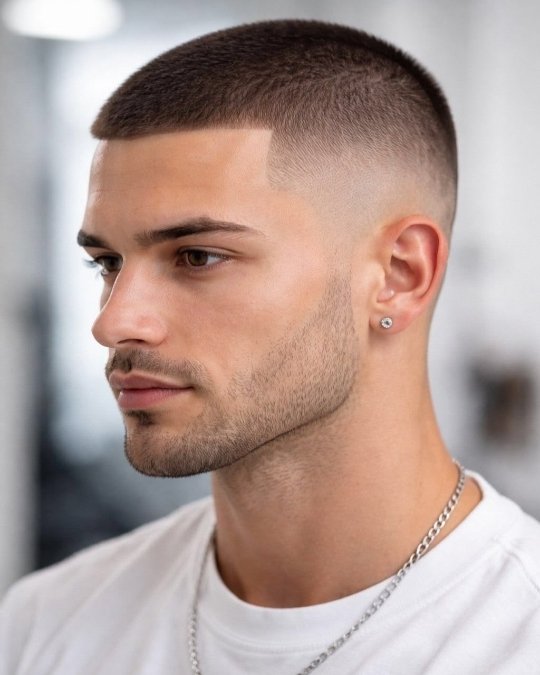
Haircut formula: short even top + temple fade + clean hairline
The top is cut very short and stays even from the front to the crown, with the dark brown hair sitting close to the scalp. The sides fade down to skin around the temple and above the ear, so the cut reads as a buzz cut with temple fade. The hairline is straight across the forehead, with a squared corner at the temple.
Face shape note: The angular jaw and strong cheekbones suit this close cut, since there is no hair to soften or hide them. The short stubble follows the jaw and blends into a light neckline, which keeps the profile tidy.
Easy upgrade: If the cut feels too bare, ask your barber to leave a little more length on top and keep the same fade. The extra length adds shape without changing the clean sides.
10. Ultra Short Buzz Cut
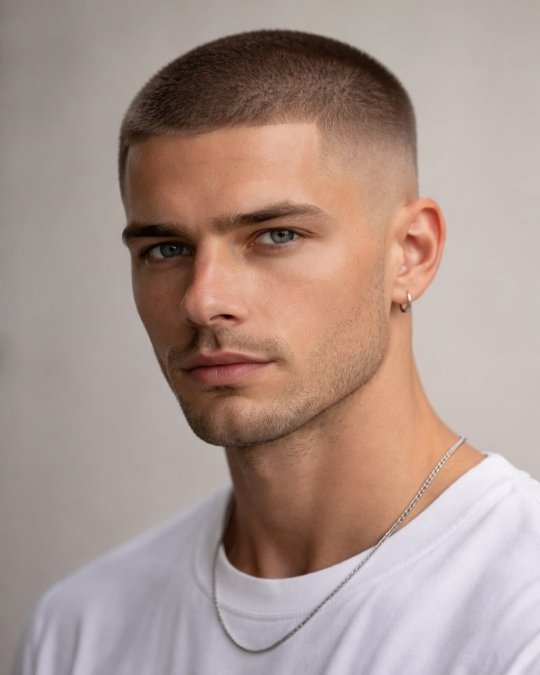
The light brown hair is cut very short and stays even across the top, so the scalp shows through a little at the front. The sides drop to skin quickly above the ear. That gives the buzz cut with temple fade a soft, low-contrast look, because the top color is already close to the skin tone.
The hairline sits straight across the forehead with squared corners, which keeps the cut from looking rounded or unfinished. The stubble along the jaw is trimmed to a similar length, and the cheek line is kept clean.
This works best on lean or oval faces with a defined jaw. If the hair on top is thin, keep the length even instead of going closer, since a very close cut can make thin areas more obvious.
11. The Classic Buzz Fade
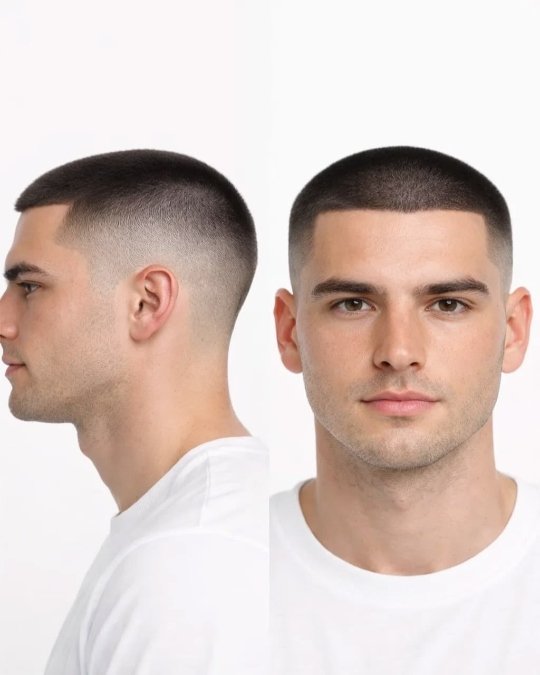
The top is cut short and even, following the rounded shape of the head in both views. From the side, the fade starts at the temple and drops to skin above and behind the ear. This is a standard buzz cut with temple fade, with no extra length or texture on top.
Hair length note: The top looks slightly fuller at the crown than at the front, which keeps the shape round instead of flat. Ask your barber to hold that length so the head doesn’t look boxy.
From the front, the hairline is straight with squared corners, and the temples are cut back cleanly. The jaw has only a light layer of stubble, so the look stays minimal and tidy.
Close sides make ears more noticeable, as they are here. If that bothers you, ask for the fade to start a little higher so the blend is softer around the ear.
12. Smooth Blended Buzz Cut
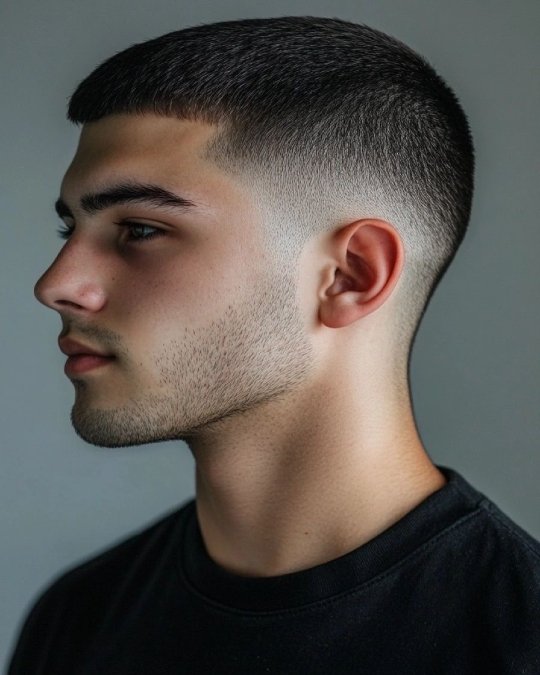
The hair on top is short and dark, with the length held fairly even from the front to the crown. At the temple, the fade begins as a soft gradient and lightens slowly toward the ear. Behind the ear it reaches bare skin and curves into the nape without a visible line.
That gradual blend is what makes this buzz cut with temple fade look polished. A rough transition would show up right away at this length.
The hairline is straight across the forehead with a sharp corner at the temple. Light stubble along the jaw keeps the lower face clean and matches the short top.
This works well on slim or oval faces with a defined jaw. Ask your barber to take extra time on the blend above the ear, since the cut depends on it.
13. Buzz Fade + Full Beard
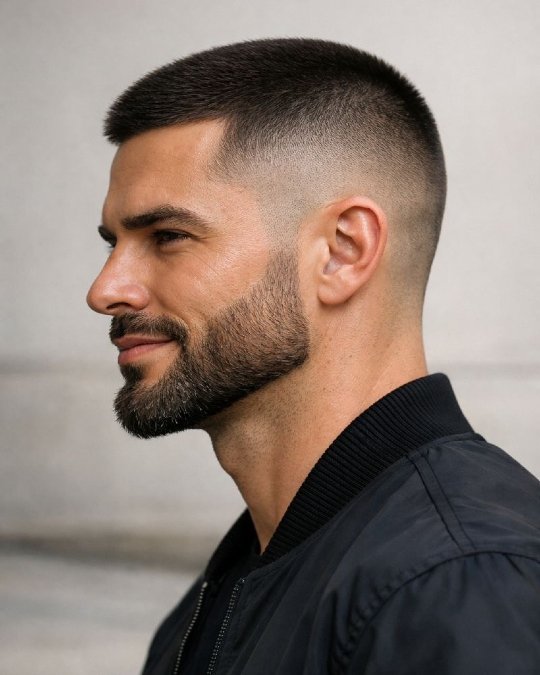
The hair on top is cut short and even, with the dark color sitting close to the scalp. The fade begins at the temple and lightens quickly toward the ear. Behind the ear it drops to skin, so this buzz cut with temple fade has strong contrast between the top and the sides.
The beard is the main difference here. It is full and dense, with gray flecks near the chin, and it follows a clean cheek line down to the neck. The mustache joins the beard without a gap.
Beard pairing: A close haircut with a fuller beard keeps the face balanced. The short top shows off the jaw, and the beard adds weight to the lower face. It suits oval and slightly longer faces especially well.
Keep the neckline just above the Adam’s apple, and trim the cheek line every week or two. The fade also needs a touch-up every three weeks or so.
14. Natural Edge Buzz Cut
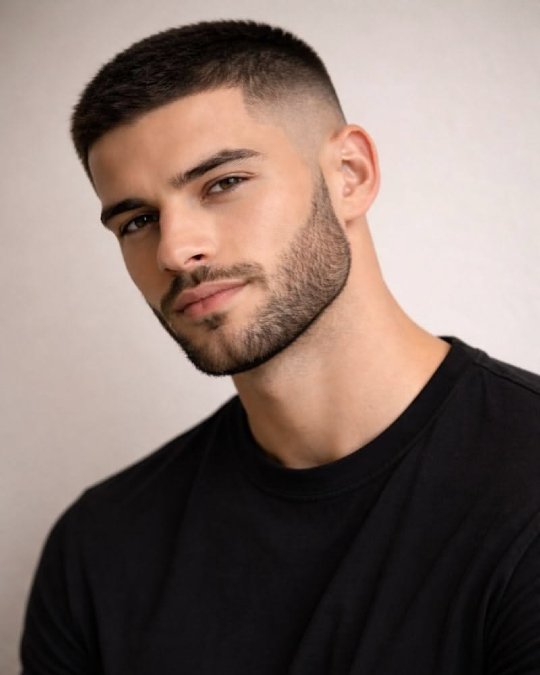
The dark brown hair on top is short and slightly fuller at the front, with the ends brushed forward. The sides fade quickly from the temple to skin above the ear. This is a softer take on a buzz cut with temple fade, since the hairline follows the forehead’s natural shape instead of a hard line-up.
A natural edge grows out more gently than a sharp one. That makes this version easier to live with between barber visits.
The beard is short and neat, with a defined cheek line and a rounded shape under the chin. The mustache is trimmed close, and the neckline sits just below the jaw.
Make it work: This suits angular, oval, and square faces. If your hairline is receding, a natural edge hides it better than a crisp line-up.
15. Sharp Skin Fade Crop
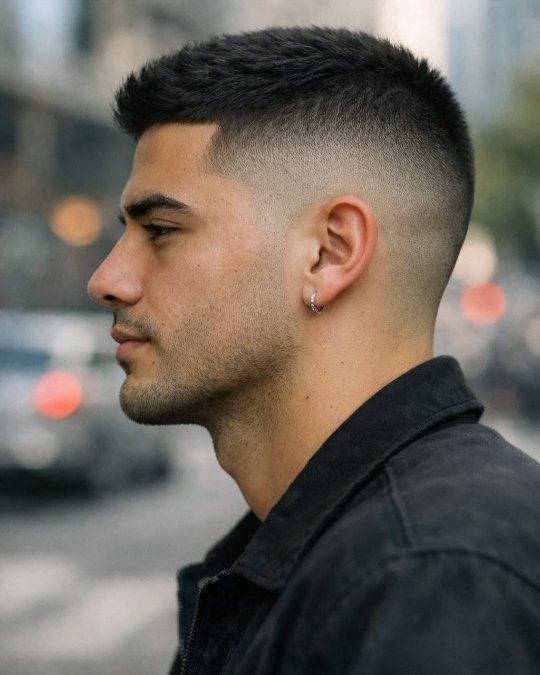
Haircut formula: short textured top + skin fade + crisp hairline + trimmed beard
The top is short and slightly fuller than the sides, with the front brushed forward over a straight hairline. The fade climbs higher here than on most of the earlier cuts, taking the sides to skin well above the ear. That gives this buzz cut with temple fade more height and contrast.
A fade this high can feel severe if the top is cut too close. The slightly longer top keeps the shape balanced, and a little matte paste adds texture without shine.
The beard is full but short, with a clear cheek line and a rounded shape under the chin. Because the fade and the beard are both neat, the sharp edges look consistent from top to bottom.
Ask your barber: Request the fade to blend smoothly into the sideburn, so the beard connects to the sides without a gap. Plan on a touch-up every two to three weeks, since a high skin fade shows regrowth quickly.
16. Light Brown Crop Fade
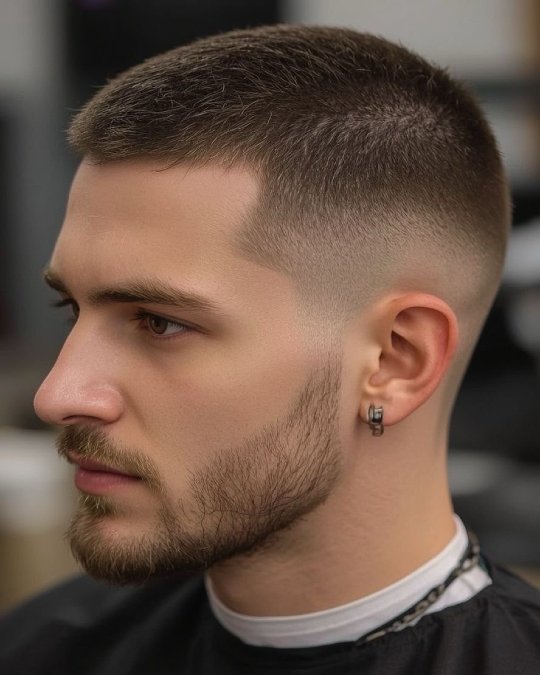
The top is short but a little longer than a true buzz, with soft, slightly uneven tips. It is brushed forward with a natural, lived-in finish. At the temple, the fade starts as a gentle taper and lightens toward the ear, then drops to skin behind it.
The hairline sits slightly back at the temple, and the blend softens that area instead of cutting a hard corner. This makes the cut a good match for men who like a buzz cut with temple fade but want more forgiveness around the hairline.
What to avoid: Skip a very sharp line-up if your temples are receding. A hard edge draws attention to the gap, while a soft taper keeps the front looking even.
The stubble beard is short and fairly light, with a mustache and chin that blend into the cheeks. Because the beard is not heavy, the head and face stay in balance. This works best on oval and slightly longer faces, since the extra length on top adds a little shape.
Light brown hair shows the fade gradient clearly, so the blend needs to be smooth. Ask your barber to take their time above the ear, and plan a visit every three weeks.
17. Choppy Textured Quiff
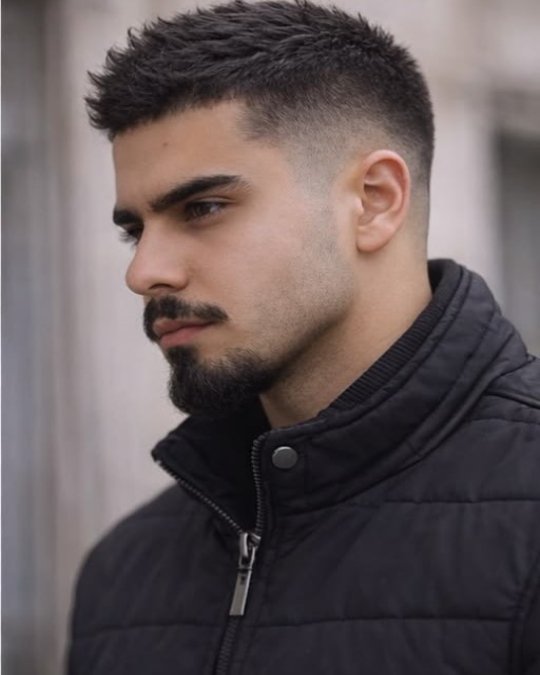
The top is much longer than a buzz cut, with brown strands lifted and pushed forward into a rough, choppy shape. The ends look separated and slightly uneven, which gives the front height and movement. The sides fade from the temple down to skin above the ear.
This is the step up for men who like the clean sides of a buzz cut with temple fade but want something to style on top.
- Why it works: The contrast between the full top and the faded sides adds height and frames the face. The sharp hairline keeps the front tidy even with the messy texture.
- Ask your barber: Request a longer top with texture cut into the ends, and a fade that starts at the temple and blends into the sideburn. Ask them to keep the front length so it can be pushed up and forward.
- Best for: Men with straight to slightly wavy hair and enough density to hold lift. It suits oval and square faces, and the extra height can balance a rounder face.
The short beard has a defined cheek line and a trimmed mustache, so the lower face stays neat next to the textured top.
Styling tip: Use a small amount of matte clay or paste on dry hair, then push the front up with your fingers. Add a little at a time, since too much will weigh the strands down.
18. Blonde Spiky Crop
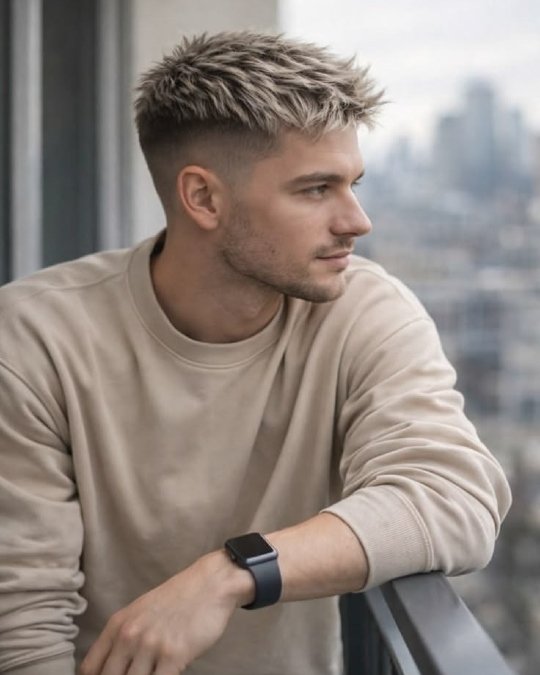
Haircut formula: choppy blonde top + temple taper fade + light stubble
The top is cut short enough to stand up in sharp, separated tips, with the front pushed forward over the forehead. The blonde color looks lighter at the ends and darker near the roots, which makes every spike easier to see. The sides taper down short around the ear and nape.
Pair this with the clean sides of a buzz cut with temple fade and you get a cut that looks styled without needing much length. The contrast between the full top and the tight sides adds height and keeps the shape from looking flat.
Ask your barber: Request a short, choppy top with texture cut into the ends, and keep the front slightly longer so it can be pushed up. Ask for the taper to start at the temple and blend into the sideburn.
Light stubble along the jaw and a trimmed mustache keep the lower face neat. This style suits oval and slightly longer faces, and it works best on straight, medium-thick hair that holds lift.
Styling tip: Rub a pea-sized amount of matte clay between your palms, then work it through dry hair and flick the tips up. Lighter hair shows product quickly, so use less than you think you need.
19. Sharp Hairline Buzz Cut
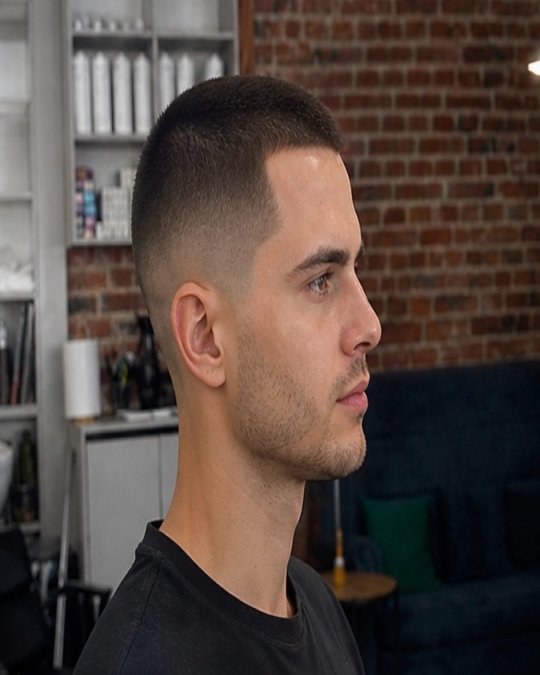
The dark brown hair on top is cut short and stays even from the front to the crown, with a slightly fuzzy finish. At the temple, the fade starts almost right away and lightens toward the ear. Behind the ear it reaches bare skin and curves into the nape. This is a clean buzz cut with temple fade, and the sides stay tight.
Fade detail: The fade begins low and moves fast, so the sides look closer than the top. That contrast is what keeps a short cut from looking flat. Ask your barber to blend slowly around the ear, where the gradient shows most.
The hairline runs straight across the forehead and turns into a crisp corner at the temple. Light stubble covers the jaw and chin, and a short mustache keeps the lower face tidy. The neck looks lean, which suits a close cut like this.
This works well on oval and longer faces with a defined jaw. Because there is no length to style, the only upkeep is the fade and hairline, so book a visit every two to three weeks.