

Korean comma hair looks easy in photos and falls apart in the mirror. The fringe is meant to curl inward and sweep across the forehead like a comma, but most guys end up with a flat flop or a stiff, sprayed-in curl. The problem is rarely your hair. It is the cut, the blow dry direction, and how much product goes on.
This guide helps you pick the right comma for your hair type, set the fringe in about ten minutes, and explain it clearly to your barber. You also get 15 styles to choose from, from short and clean to long and wavy.
A Comma Is a Curl With a Direction, Not Just a Long Fringe
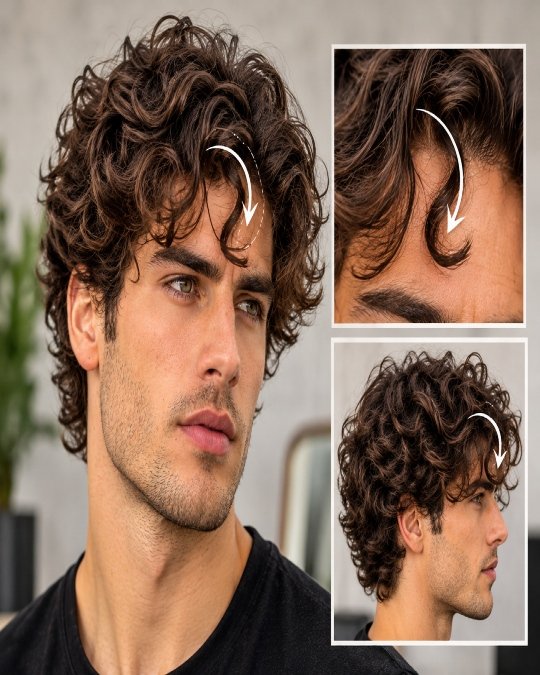
A regular fringe hangs straight down. A comma fringe bends. It starts with lift at the root, travels across the forehead, and ends in a small inward curl at the tip.
That shape needs three things to work:
- Length. The front needs to reach at least your eyebrows when pulled straight down. Most guys do best with 3 to 4 inches (7 to 10 cm) at the front, because shorter hair does not have the weight to bend.
- Lighter tips. A barber thins the ends with point cutting, so the tip curls instead of sitting in a heavy block.
- Short sides. A taper or fade around the ears keeps the top from looking bulky and makes the curl the main feature.
The curl also needs a direction. Most commas sweep slightly to one side from a soft, off-center part, with the tip pointing toward the temple. Your natural growth pattern at the front hairline decides which side is easiest, so ask your barber to read it before cutting.
This is why copying a photo with a flat iron and a lot of wax rarely works. The cut does half the job. Styling does the rest.
Fine, Thick, Wavy or Coily: Your Hair Type Sets the Starting Point
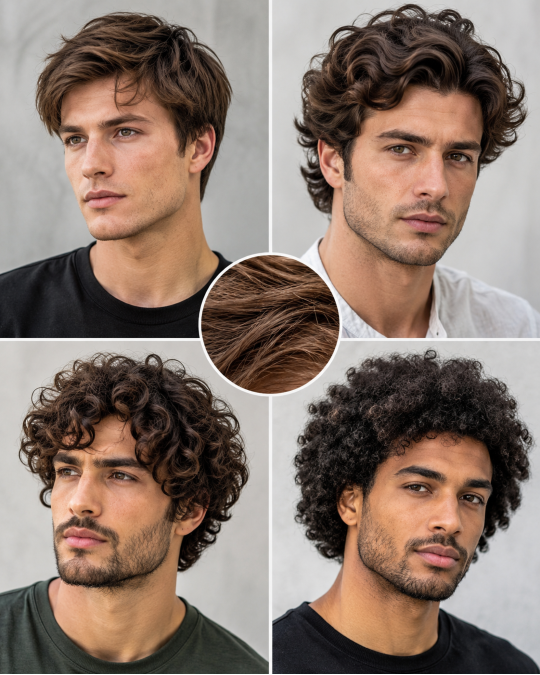
Comma hair grew up around straight to slightly wavy hair, which bends easily with a blow dry. Other textures can wear it too. They just need a different route to the same shape.
| Hair type | What the fringe does on its own | What to adjust |
|---|---|---|
| Straight, fine | Falls flat and loses the curl fast | Ask for light layers, use a light mousse or sea salt spray, and finish with a cool shot of air |
| Straight, thick or coarse | Holds shape well but can stand stiff | Ask for the fringe to be thinned at the tips, and use a smaller amount of paste |
| Wavy | Curves naturally but can split or flip out | Blow dry the fringe forward first, then shape it to curve in |
| Curly | Forms springy curls instead of one curve | Keep the fringe at 3 to 4 inches, use a curl cream, and shape the front into one loose C |
| Coily or tight curls | Shrinks when dry, so length looks shorter | Cut the fringe longer than you want it to look, and define it with finger coils or twists |
| Lower density | Can look see-through at the root | Go for a shorter, lighter fringe, and use a texture powder at the roots for lift |
Barber note: Some Korean salons use a soft perm (often called a C-curl or down perm) to hold the curve in straight hair. It is a chemical service, so tell the stylist about any bleach, color or dryness before you book.
If you do not want a perm, a good cut plus a five minute blow dry gets you most of the way there.
Set the Comma in Five Steps: Damp, Dry, Curl, Cool, Lock
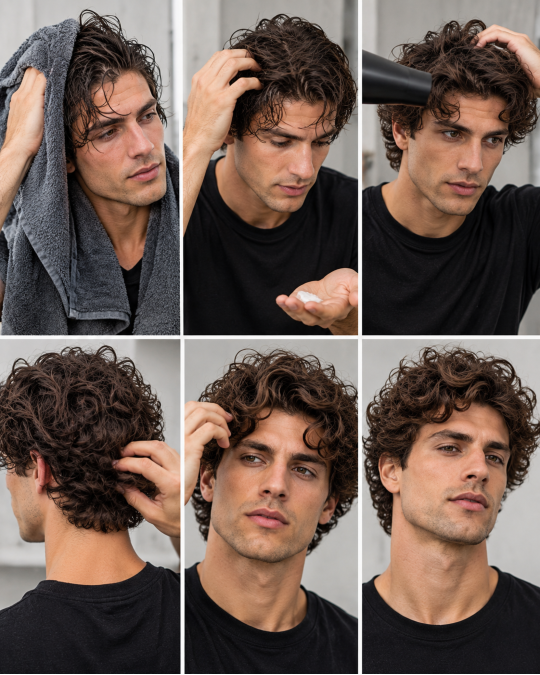
Formula: tapered sides + 3 to 4 inches on the fringe + light mousse or sea salt spray + blow dry forward and down + round brush curl + cool shot + a pea-sized amount of matte clay or paste on the tips
The order matters because hair holds the shape it is in when it cools. Here is how to use that.
- Start damp, not dripping. Towel dry until water stops dropping off your hair. Work in a light mousse or sea salt spray if your hair is fine or straight. Use a curl cream instead if your hair is curly or coily.
- Dry the roots first. Brush the fringe forward and down over your forehead while drying on medium heat. This sets the direction and calms a cowlick. If the front splits in the same spot every day, dry against that split first, then switch to the direction you want.
- Curl the ends inward. Slide a small to medium round brush under the fringe and roll it back toward your scalp so the tip turns in. Hold hot air on it for about 5 to 10 seconds. A vent brush or your fingers work if you do not own a round brush.
- Cool it to set it. Hit the curl with the cold button, or let it sit for a few seconds without touching it. This step is what stops the fringe from dropping an hour later.
- Lock with a light touch. Rub a pea-sized amount of matte clay or paste between your palms until it warms up. Touch only the tips and underside of the fringe, then break it into two or three loose pieces. A light mist of hairspray from about 8 to 10 inches away finishes it.
Technique note: If your hair is straight and stubborn, a flat iron can help on the last inch only. Use a heat protectant, clamp the tips, and rotate the iron a half turn inward. Heat on the full fringe tends to look flat and stiff, not soft.
The whole routine should take 5 to 10 minutes once you learn it. The first week usually feels slow.
Korean comma hair routine
Set the Comma in 5 Steps
The formulaTapered sides + 3 to 4 inches on the fringe + light mousse or sea salt spray + blow dry forward and down + round brush curl + cool shot + pea-sized matte clay or paste on the tips
-
1Damp
Towel dry until water stops dripping.
Fine or straight: light mousse or sea salt spray. Curly or coily: curl cream.
-
2Dry
Dry the roots first. Brush the fringe forward and down on medium heat.
Cowlick? Dry against the split first, then switch direction.
-
3Curl
Slide a small or medium round brush under the fringe and roll toward your scalp so the tip turns in.
Hold hot air for 5 to 10 seconds.
-
4Cool
Hit the curl with the cold button, or let it sit a few seconds untouched.
Hair holds the shape it is in when it cools.
-
5Lock
Warm a pea-sized amount of matte clay or paste in your palms. Touch only the tips and underside.
Finish with light hairspray from 8 to 10 inches away.
Time: about 5 to 10 minutes once you know the routine. Week one is usually the slowest.
Stubborn straight hair? Use a flat iron on the last inch only, with heat protectant. Heat on the full fringe looks flat and stiff.
Peak Groom
15 Comma Styles Grouped by Fringe Length and Hair Texture
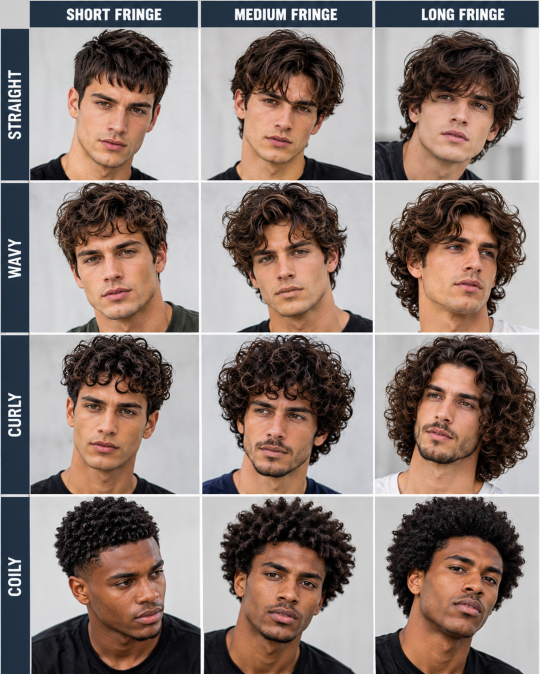
Pick the group that matches the length you can grow and the time you have each morning. Then choose the style inside it.
Short and clean (fringe about 2 to 3 inches
- Classic short comma with a low taper. The safest first version. Sides stay neat and the fringe curls just above the brows. Works with most office dress codes.
- Comma with a mid skin fade. A sharper contrast between sides and top. Good if you get trims every 2 to 3 weeks.
- Textured crop comma. Shorter, choppier top with a small curl at the front. Suits thick hair that stands up on its own.
- Comma with a hard part. A thin shaved line marks the part, which gives the fringe a clear direction. Needs frequent touch-ups to stay crisp.
Medium and classic Korean (fringe about 3 to 4 inches)
- Two-block comma. Sides and back are cut short while the top stays longer, with a clear break between them. It is the most recognised version and works for straight to wavy hair.
- See-through comma. A thin, airy fringe that shows some forehead. It looks lighter and is easier to keep from looking heavy in heat.
- Full comma. A thicker fringe that covers more of the forehead. A good match for hair with plenty of density and a taller forehead.
- Side-parted comma. The curve starts at a visible part and sweeps across. It looks tidy and polished with a button-down shirt.
- Soft perm comma. A light C-curl perm holds the shape with less daily effort. A good option for straight, fine hair that will not hold a curve.
Longer and softer (fringe about 4 to 6 inches)
- Layered medium comma. Ear-length sides with layers through the top. The weight moves around more, so it looks soft in motion.
- Wavy comma. Uses your natural wave, with the curl only controlled at the fringe. Fast to style, and looks best air-dried then blown into shape at the front.
- Curtain-comma hybrid. A soft center-ish part with two curved pieces framing the face. Needs a lighter hand with product so it stays loose.
Built for curls, coils and lower density
- Curly comma. Tapered sides with a curly top shaped into one loose C at the front. Use curl cream and diffuse, so the curls stay grouped.
- Coily comma. Finger coils or twists on the front section sweep across the forehead. Cut it longer than the look you want, since coils shrink.
- Lower-density comma. A shorter, lighter fringe with a little texture powder at the root. It adds shape without needing much length or weight.
Try this: Start in the short group even if you want a longer look later. It is easier to grow a short comma out into a medium one than to fix a cut that started too long.
Face Shape Decides How Long and How Wide the Fringe Should Sit
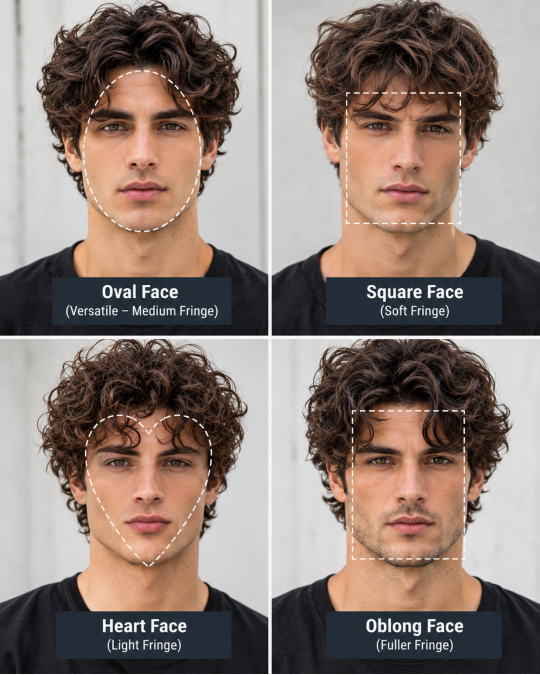
The comma changes how balanced your face and head look. Use face shape to choose between options, not to fix anything.
| Face shape | Comma options to try | Why it works |
|---|---|---|
| Oval | Almost any version, including the full comma | The proportions are even, so length and fringe thickness are mostly a style choice |
| Round | Side-parted or see-through comma with height at the roots | Lift and a diagonal sweep add vertical lines, and tight sides keep width in check |
| Square | Layered medium comma or wavy comma | Soft curves on the fringe balance a strong jaw |
| Long or oblong | Full comma with a lower fringe and less height on top | A fringe across the forehead shortens the look of the face, and extra height would add length |
| Heart | Curtain-comma hybrid with some fullness near the ears | Width at the sides balances a wider forehead and narrower chin |
Head shape matters too. If the back of your head is flat, ask for a little extra length at the crown. If it is rounded, a clean taper at the back usually looks sharp without extra work.
Bring a photo of someone with a similar face shape and hair type, not only a similar hairstyle. It gives your barber a more realistic target.
Four Things to Tell Your Barber Besides Bringing a Photo

A photo shows the finished look. It does not show the cut that built it. Tell your barber these four things.
1. The fringe length you want to keep. Say “leave the front at 3 to 4 inches, long enough to reach past my eyebrows.” Hair measured by your own hand is clearer than “a bit long.”
2. The side length. For a clean look, ask for a taper or fade with a number 2 to 3 guard at the top of the sides. For a softer look, ask for scissor-cut sides that stay over the ears.
3. Thinned tips, not a thinned top. Ask for point cutting or light texturizing on the ends of the fringe. This lets the tip curl without removing the weight that holds the shape.
4. Your habits. Say how long you will spend styling it, whether you own a blow dryer, and where your cowlick sits. A comma that needs 15 minutes a day will not survive a 3 minute routine.
Here is a script you can use:
“I want a comma cut. Keep the fringe about 3 inches, thin the tips so it curls in, and taper the sides short. I have a cowlick on the right, and I can spend about 5 minutes styling it.”
Barber note: Ask the barber to show you how they would blow dry the fringe once. Watching the direction and brush angle for a minute teaches you more than reading a guide.
Matte Clay Holds the Curl; Mousse and Sea Salt Spray Help Fine Hair

A comma should look soft and slightly airy. Shiny, heavy products clump the fringe into stripes and make it look wet, so most routines work best with a matte finish and light to medium hold.
| Product type | Finish and hold | Best for | Watch out for |
|---|---|---|---|
| Light mousse | Natural finish, light hold | Fine, straight hair that goes flat | Too much leaves the fringe crunchy |
| Sea salt spray | Matte, textured, light hold | Fine to medium hair that needs grip | Can feel dry if used every day |
| Matte clay or paste | Matte, medium hold | Thick or coarse hair, final shaping | A big scoop weighs the curl down |
| Texture powder | Matte, lifts roots | Lower-density hair | Brush out any white residue at night |
| Curl cream | Soft, defined, light to medium hold | Wavy, curly and coily hair | Layer it before heat, not after |
Look at the label for words like “matte,” “natural finish,” or “flexible hold.” Skip anything that says “high shine” or “wet look” for this style.
Budget swap: No sea salt spray? Stir about half a teaspoon of fine sea salt into a small spray bottle of warm water. Shake it, spritz it on damp hair, and use it sparingly. Your blow dryer’s cold button also replaces a strong-hold product for many hair types.
Product note: Wash product out every night. If your scalp itches, flakes, or stays irritated after you change products, a dermatologist can help you work out the cause.
Why the Comma Flops by Noon, and How to Keep It for Weeks

Most comma problems come from one of five causes. Match yours below.
- It goes flat by lunch. The curl was not cooled, or too much product weighed it down. Use the cold button for 10 seconds and cut the product amount in half.
- The tip flips outward. The brush angle was wrong. Roll the brush toward your scalp, and finish with the tip pointing in.
- A cowlick splits the fringe. Dry that section in the opposite direction first, then reshape it forward. Ask your barber to leave a little extra length there.
- Frizz on humid days. Use a lighter hold and skip rubbing product into the full fringe. Hairspray from a distance does more than extra clay.
- It looks greasy by afternoon. Too much product, or a heavy cream on fine hair. Switch to a mousse or powder.
What the cut looks like over a month
Week one is the sharpest. The sides are clean and the fringe sits where you asked for it. By week three the sides fill in and the fringe is about half an inch longer. By week four to five the curl starts to hang lower and the shape softens.
Book the sides every 3 to 4 weeks if you wear a fade, or every 5 to 6 weeks for a softer taper. The fringe often needs a trim every 4 to 6 weeks, but tell the barber to take off only the ends so you keep the length.
Seasonal swaps
- Winter: Hats flatten the root lift. Take it off loosely, then use 30 seconds of dryer heat on the front to bring the curve back.
- Summer: Humidity and sweat loosen the hold. Use sea salt spray, skip heavy paste, and carry a small comb.
- After the gym: Mist the fringe with water, blow dry it forward, and add a rice-grain amount of paste.
The real secret is the trim schedule. A comma that is two weeks overdue is the one that flops.
Frequently Asked Questions
How long does my hair need to be for a comma? The front needs to reach at least your eyebrows when you pull it straight down. For most people that means 3 to 4 inches at the fringe. Shorter hair can still curl a little, but it will look more like a small flick.
Do I need a perm to get comma hair? No. A perm helps straight, fine hair hold the curve, but a good cut, a blow dry, and a cool shot get many people there. Wavy and curly hair often does not need one.
Can I wear a comma with a receding hairline or thinner temples? Yes. A shorter, see-through comma with a little texture powder at the front works for many hairlines. Ask your barber to keep the length at the front slightly longer and avoid heavy products that clump the hair.
How long does it take to grow out hair for a comma? Hair grows roughly half an inch a month for many people. From a short crop to a 3 inch fringe, plan for around three to five months, with a trim to shape the sides along the way.
How long should styling take each morning? About 5 to 10 minutes once you have the routine down. Dry the roots first, curl the tips, and cool the shape. The first week is usually the slowest.
Start With the Blow Dry, Not the Product
The best comma comes from a cut that leaves enough length at the front, tips that are thinned, and a blow dry that sets the curve before any product touches it. Products only hold what the dryer already shaped.
Try this tomorrow: dry the fringe forward, roll the tips in with a brush, hit it with cold air for 10 seconds, then add a pea-sized amount of matte paste. If it holds until lunch, you have the routine. If not, adjust one thing at a time.