
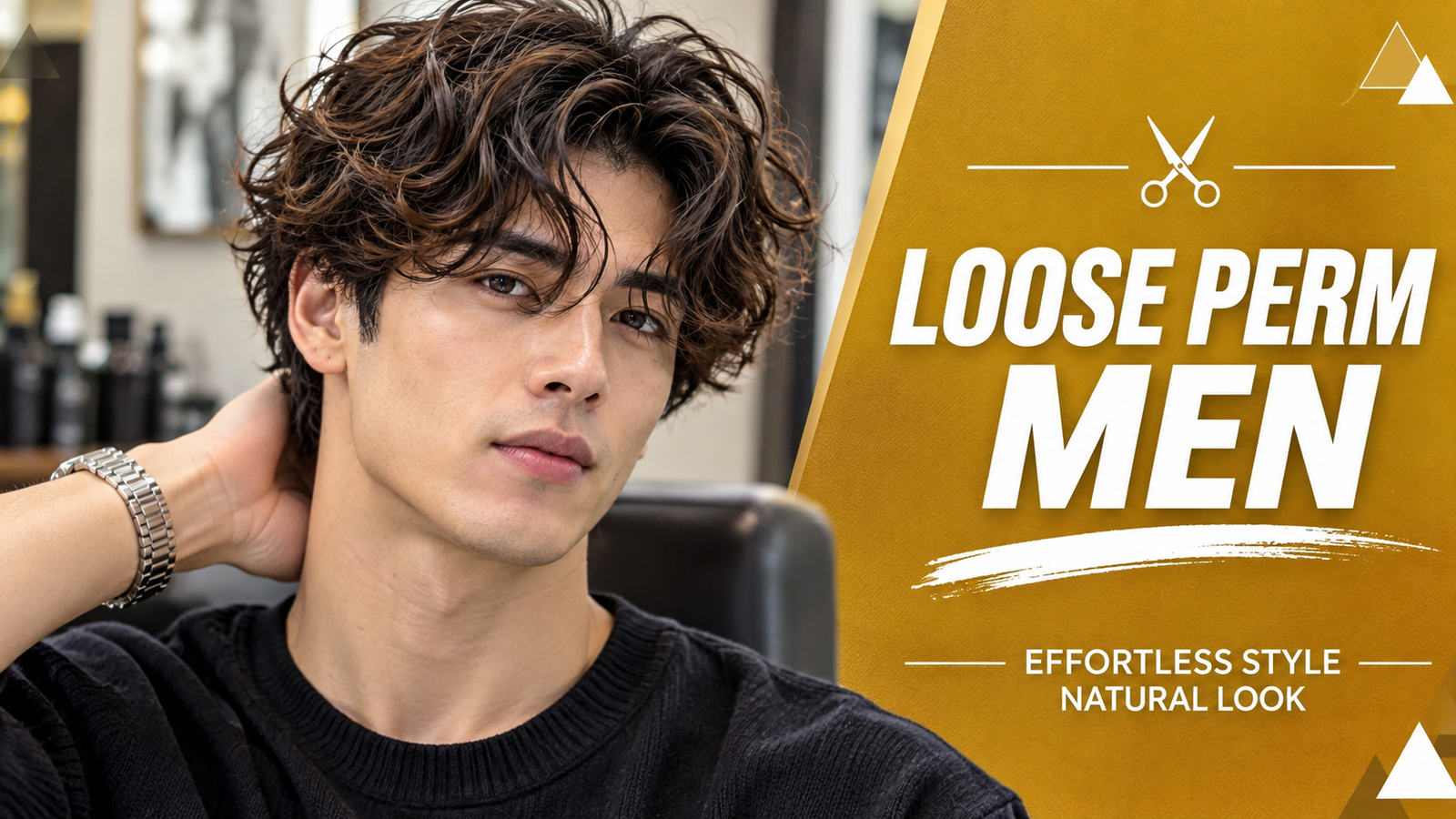
Straight, heavy hair often refuses to hold any shape, no matter how much product goes in. You blow-dry, add clay, and by lunch the top has fallen flat again.
A tight, springy perm can swing too far the other way. Overdone curl looks dated, and a bad result takes months to grow out.
A loose perm gives men soft, natural-looking waves with real volume and less daily effort. These 17 men’s hairstyles show how length, fades, and fringes change the finish, so you can bring a clear reference to your barber.
What to Ask Your Barber Before Getting a Loose Perm
- Top length: A perm needs enough hair to form a wave. Ask whether your top is long enough, since very short hair may gain texture but not visible curl.
- Wave size: Ask for loose, soft waves instead of tight curls, and bring a photo. Larger rods generally create a looser pattern, so ask which size suits your length.
- Sides: Ask whether the sides should stay tapered or faded. Keeping the waves on top stops the cut from looking bulky and keeps the shape clean.
- Hair condition: Mention any bleach, color, or heat damage before you book. A good stylist will check hair health first and may suggest waiting.
1. Loose Perm Mullet
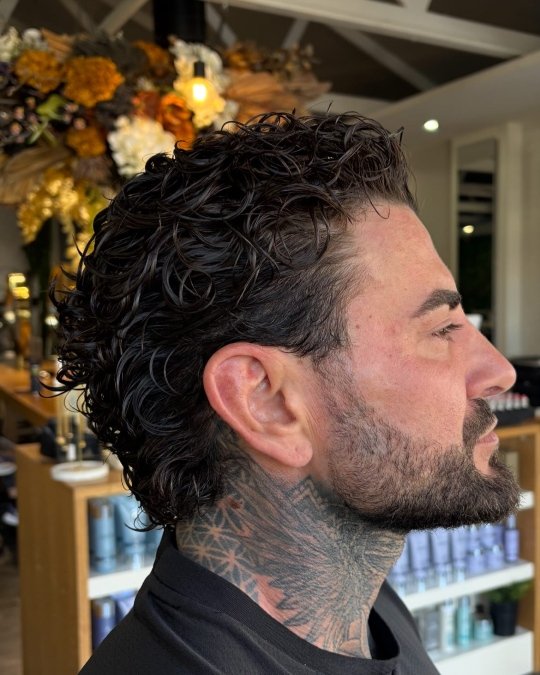
Dark, loosely curled hair sits high on top and sweeps back from the forehead. The curls vary in size, which keeps the shape from looking too tight or uniform.
The length builds toward the nape, so the back falls softly over the neck. That extra length balances the volume on top and gives the profile a mullet-style flow.
A short, dense beard with a clean cheek line keeps the look sharp instead of shaggy. It also suits the strong jaw and the loose texture above.
This style works best for men with enough length to hold a wave. Plan on regular trims at the nape, since the back can get heavy as it grows.
2. A Rounded Curly Mullet
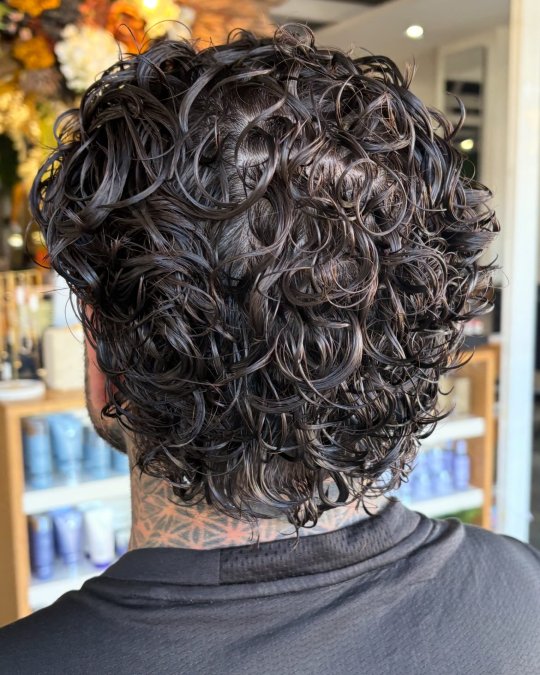
Haircut formula: loose curls + rounded shape + nape-length back
From behind, the curls stack into a full, rounded shape that ends just above the collar. The ringlets are glossy and well separated, so the hair reads as defined waves and curls instead of frizz.
The longer ends flick out at the nape, which gives the back a soft mullet outline. Because the length sits right at the neck, the shape stays neat but needs regular trims to avoid extra bulk.
3. Choppy Blonde Shag
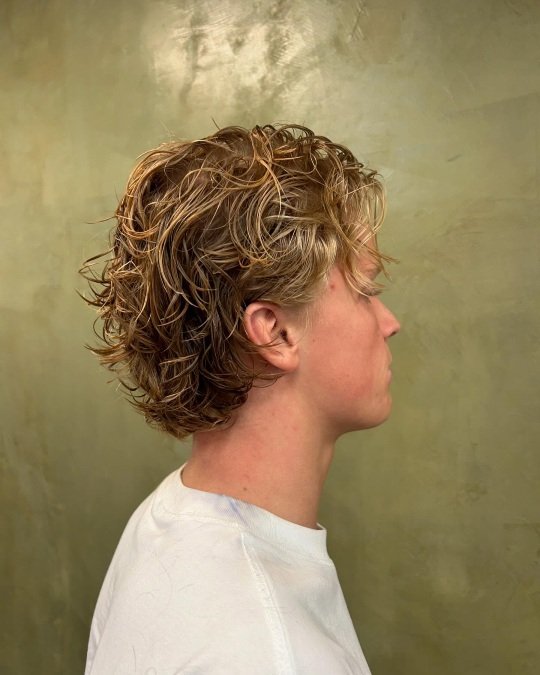
Loose, tousled waves in honey blond with lighter pieces fall forward into a wispy fringe. The back grows longer past the ear, and the damp finish shows how the curl clumps into soft, uneven sections.
Why this style works:
- Layered texture: Choppy layers let the waves sit in separate pieces, so the top has volume without looking round or heavy.
- Soft fringe: Short strands over the forehead break up the hairline and keep the look relaxed instead of styled.
- Balanced length: The ear stays mostly clear while the back lengthens, which gives the profile a light shag-mullet shape.
- Color contrast: Lighter blond pieces catch the light and make each wave look more defined.
4. Wavy Shag Back View
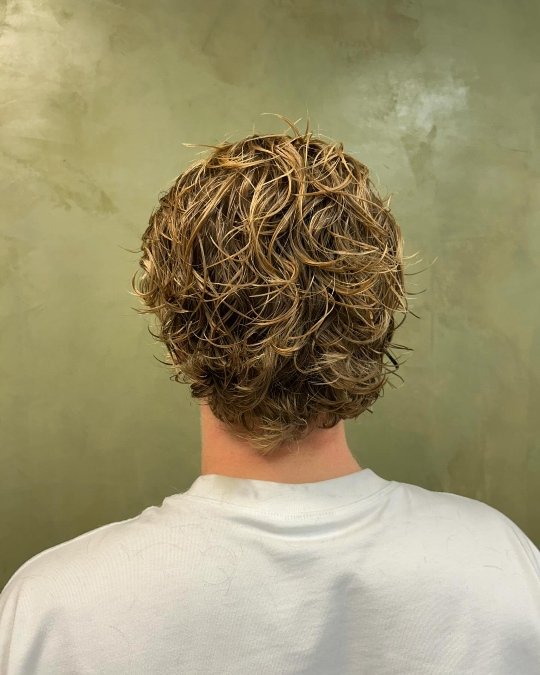
Haircut formula: choppy layers + loose waves + soft neckline
From behind, the cut forms a full, rounded shape that narrows gently toward the nape. Darker tones sit underneath while lighter blond catches the outer layers, so each wave is easy to see.
The ends flick outward instead of hanging flat, and the hair stops just above the collar. Ask your barber to blend the layers and keep the neckline soft, since a hard, straight edge would fight the loose texture.
A light curl cream worked through damp hair can help keep the waves separate as they dry.
5. Curly Top Low Taper
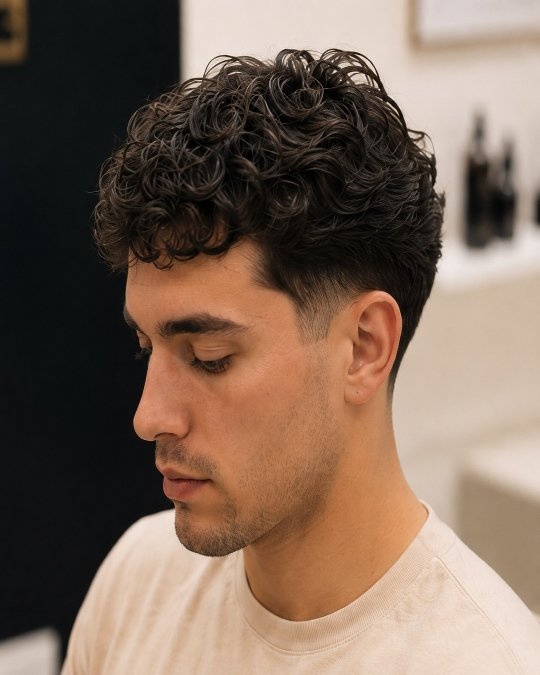
Tight-to-loose curls stack on top, while the sides tighten into a low taper around the ear and down the neck. The clean sides keep the curls from looking bulky.
- Top: Medium-short curls with plenty of volume. Ask your barber to leave enough length for the waves to form, since cutting too short flattens the curl.
- Sides: The taper starts short above the ear and stays close at the nape, which gives the cut a neat outline.
- Fringe: Curls fall forward and break across the forehead in a soft, textured fringe.
- Finish: Natural and slightly glossy, with each curl left separate instead of brushed out.
6. Medium Wavy Flow
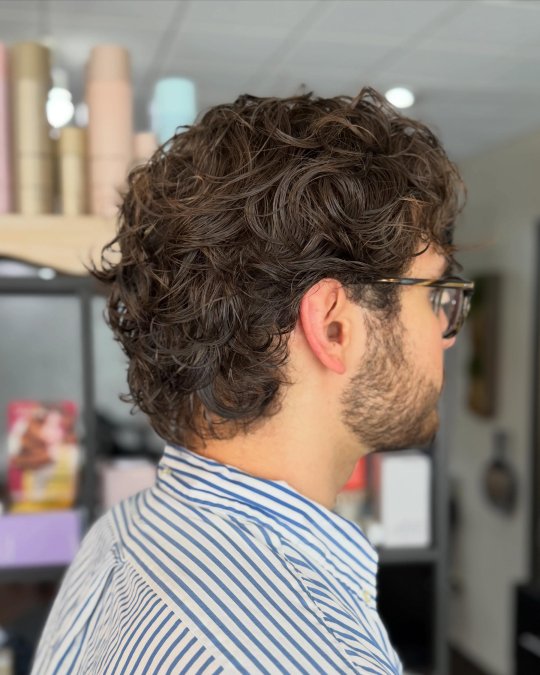
Dark brown waves build volume on top and through the back, then curl under softly at the nape. The hair sits closer around the ear, and a short stubble beard adds a rougher edge to the look.
- Why it works: Layers let the waves overlap and stack, so the back keeps shape instead of hanging flat. The shorter ear area keeps the outline neat.
- Ask your barber: Request tidy, shorter hair around the ears and a longer back with layers. Ask for the nape to be softly blended, so the curls tuck in rather than end in a hard line.
- Best for: Men with natural bend who want medium length hair that can air-dry. The clear ear area also gives glasses frames room to sit comfortably.
7. Wavy Mullet With Stubble
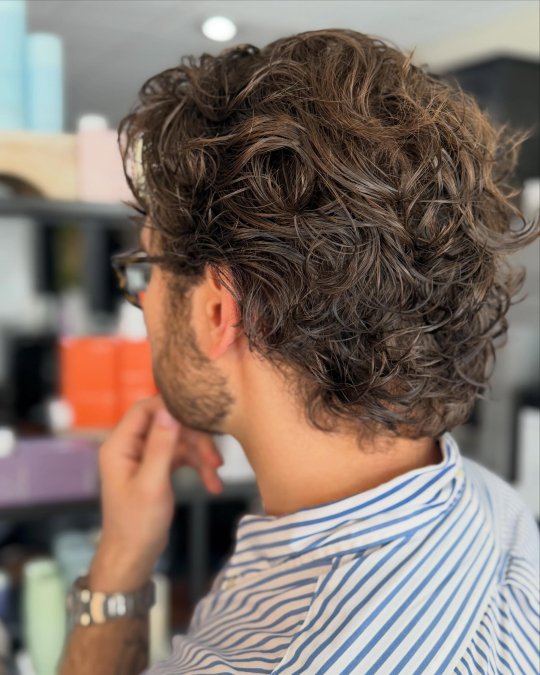
Waves sweep up and back from the front, which builds height on top. The hair then lengthens past the ear into a layered back that flicks out at the ends. Lighter brown tones show where the curls lift.
Beard pairing: A short stubble beard with a clear neckline balances the extra length at the back and keeps the look tidy.
- Styling: Work a light curl cream or sea salt spray through damp hair, then let it dry naturally for a loose finish.
- Maintenance: The back needs reshaping every six to eight weeks, or the layers lose their flow and the nape gets heavy.
8. Soft Tapered Curly Back
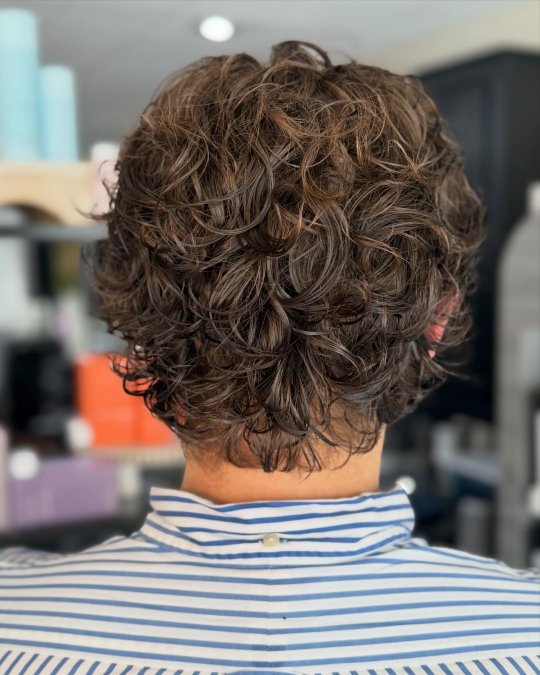
Best for: Men who want a full, rounded curl shape from behind and a neat finish at the neck.
Dark brown curls stack in loose spirals from the crown down to the nape, with lighter brown tones showing through. The shape is fullest through the crown, then narrows toward the neck where the hair follows the curve of the head.
The curls stay separate instead of clumping, so the volume looks soft rather than heavy. When the nape starts to grow out, the neckline loses its shape first, so ask your barber for a quick neckline clean-up between full cuts.
9. Perm Rod Wrap for Loose Waves
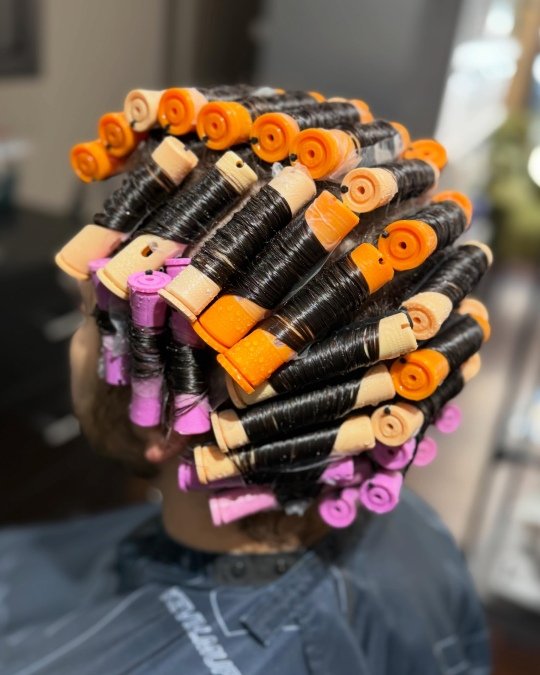
Dark hair is wound around orange and peach perm rods across the top, with smaller pink rods lower down near the nape and sides. The rows run at an angle, so the waves will fall in one direction instead of standing straight up.
Ask your barber: Rod size controls wave size. Larger rods give looser waves and smaller rods give tighter curls, so ask which sizes will go on top and which at the back.
Mixing sizes lets the top stay soft and full while the lower sections stay neater around the neck. Wetter, well-sectioned hair also wraps more evenly, which helps the finished waves look consistent.
10. Middle Part Curtain Fringe
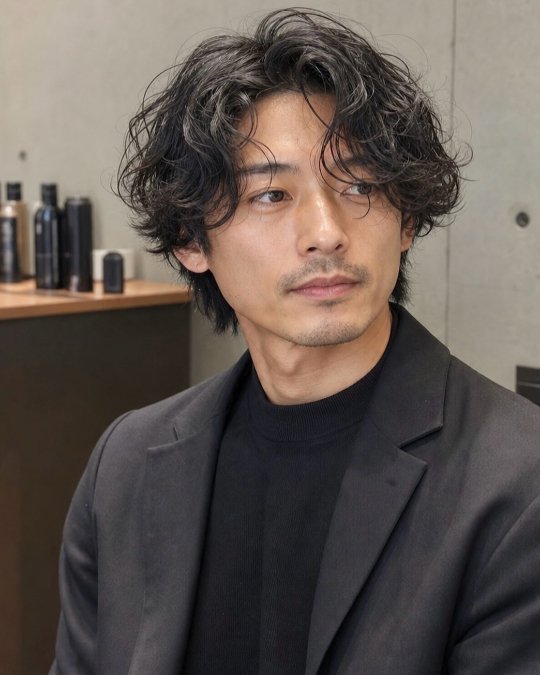
Black hair splits down the center and falls in loose waves that frame the forehead and cheekbones. The fringe is long and airy, with wispy curls that bend inward near the eyes instead of lying flat.
The length reaches around the jaw and partly covers the ears, which adds width at the sides. That extra width may suit men with longer or narrower faces. Strands vary in length, so the texture looks lived-in rather than set in one shape.
A trimmed mustache and light chin stubble keep the look grounded against the soft waves.
The part and fringe do most of the work here, so the front needs enough length to curl. Ask your barber for a few longer face-framing pieces, and use a light product on damp hair to keep the ends defined.
11. Fluffy Messy Fringe

Haircut formula: wispy fringe + loose waves + ear-length sides
Hair falls forward in a light, uneven fringe that skims the eyebrows. The top keeps airy volume, with a few flyaway strands adding to the relaxed shape.
The sides cover part of the ears and lengthen near the jaw, so the cut feels soft and rounded instead of tight. Keep product light, since heavy styling weighs the waves down and flattens the fluffy finish.
12. A Curly Fringe Fade
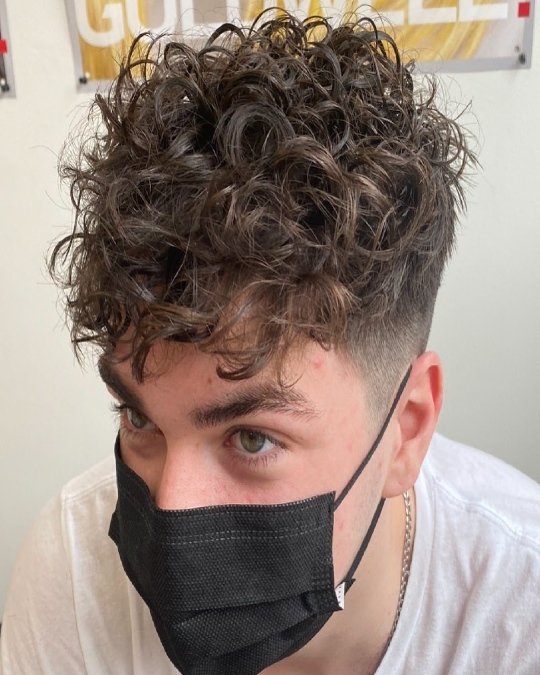
Haircut formula: voluminous curls + faded sides + forward fringe
Dark brown curls with lighter brown tones sit high on top and fall forward into a curly fringe over the forehead. Underneath, the sides fade tight around the temple and ear, so all the volume stays on top.
That contrast makes the curls look fuller. Ask your barber to keep the top long enough to curl freely and to blend the fade smoothly into the curls, since a harsh line can make the top look like it sits on the head.
The fade needs the most upkeep and looks best fresh, so expect to refresh it every few weeks while the curls can wait longer.
13. Wavy Top Clean Taper
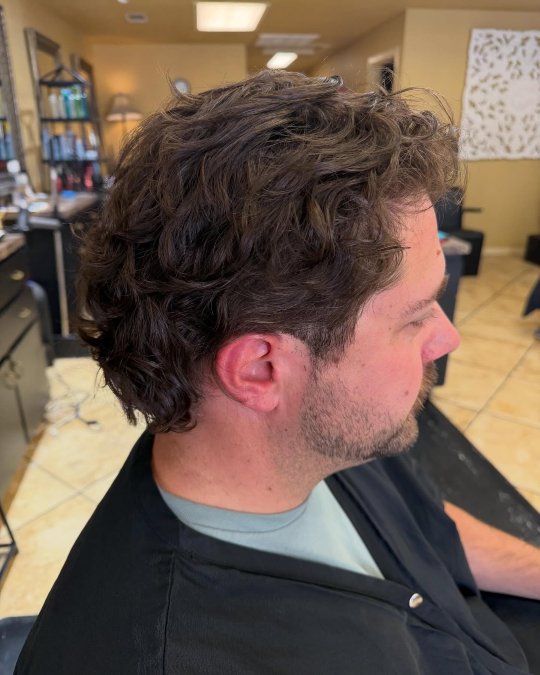
Soft brown waves sit full on top and sweep back off the forehead. The sides stay short and neat around the ear, while the back keeps enough length to flow.
- Top: Medium length with loose waves and natural volume, brushed back and up from the front.
- Sides: Short and tidy around the ear, with a clean taper at the sideburn.
- Back: Longer waves fall to the neck and curl slightly at the ends.
- Finish: Natural and soft, with a light shine instead of a stiff hold.
Shorter sides keep width under control, which helps if the waves tend to puff out. A short stubble beard follows the jawline and adds definition without making the look heavier.
14. Rounded Wavy Neckline Cut
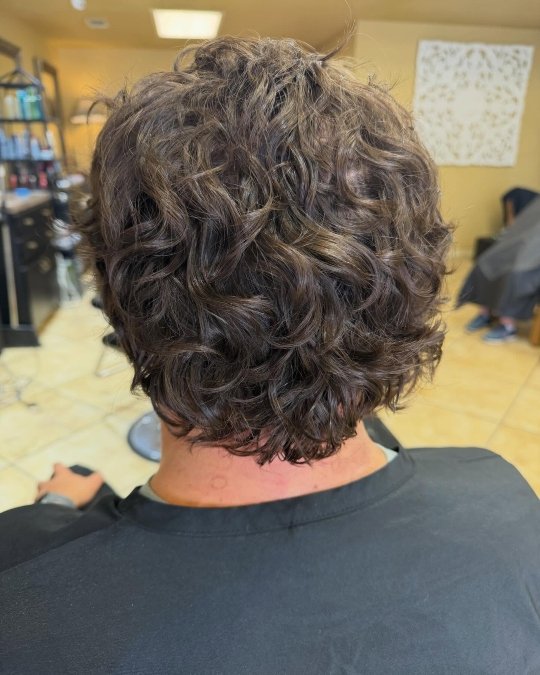
Haircut formula: glossy waves + rounded shape + short nape
From behind, large, soft waves build a full, rounded shape that stays wide through the middle of the head. The ends curl outward at the bottom instead of dropping straight down.
The hair stops just above the neck with a short, soft edge, which keeps the back neat. It suits men who want volume without extra length, but the neckline needs a trim every few weeks to hold its outline.
15. Side View Perm Rod Layout
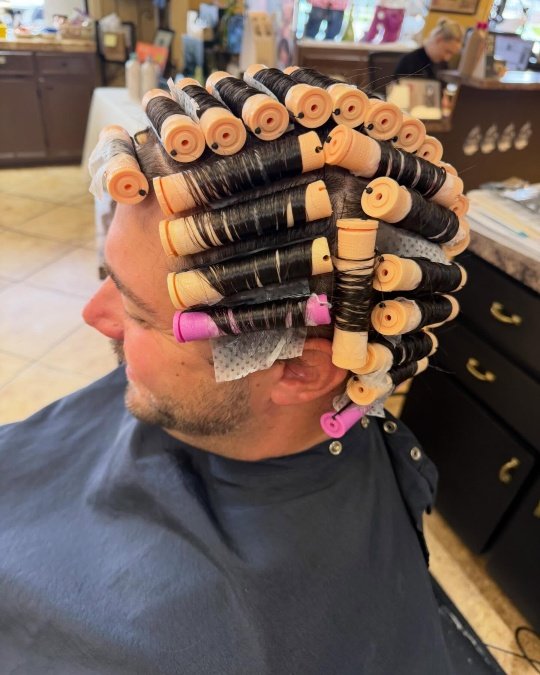
Rows of peach rods run back from the front hairline, with dark hair wound neatly around each one. A pink rod sits near the temple and another near the nape for the smaller sections.
Most rods look similar in size, so the finished waves should come out fairly even and loose. Paper strips sit along the temple and ear, which is a normal part of a salon perm setup.
Make it work: Ask whether the sides will be wrapped or kept short, since a perm on very short sides can look puffy.
- Styling: Once the rods are out, scrunch a light cream into damp hair and skip the brush, which pulls waves into frizz.
- Maintenance: Follow your stylist’s aftercare advice and use a gentle shampoo to keep the waves from drying out.
16. Layered Surf Perm
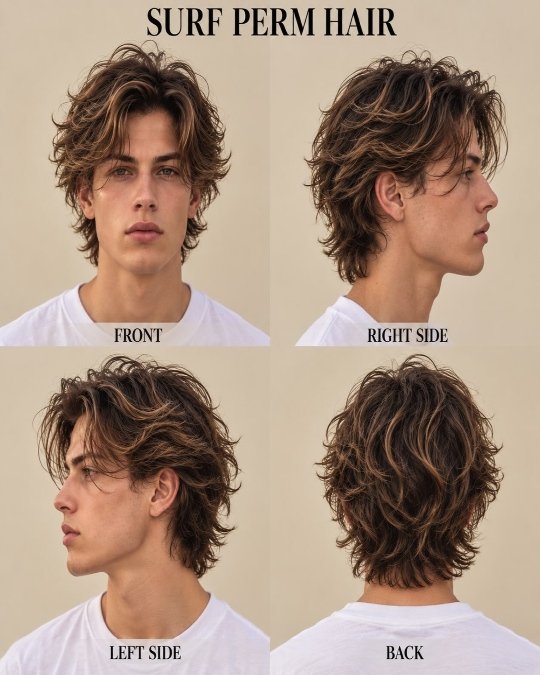
The four views show a surf perm on medium-length hair, built from choppy layers and loose, uneven waves. In front, a soft, center-leaning fringe breaks over the forehead and frames the cheeks.
From the side, the hair sweeps back over the ears and lengthens behind them, ending in pointed, layered tips at the nape. The back view shows the waves stacking in separate pieces, with caramel tones running through a darker brown base.
The layers keep the shape light, so the hair moves instead of sitting heavy. Show your barber all four angles, since where the layers fall at the back matters as much as the fringe.
17. Soft, Curly Two Block
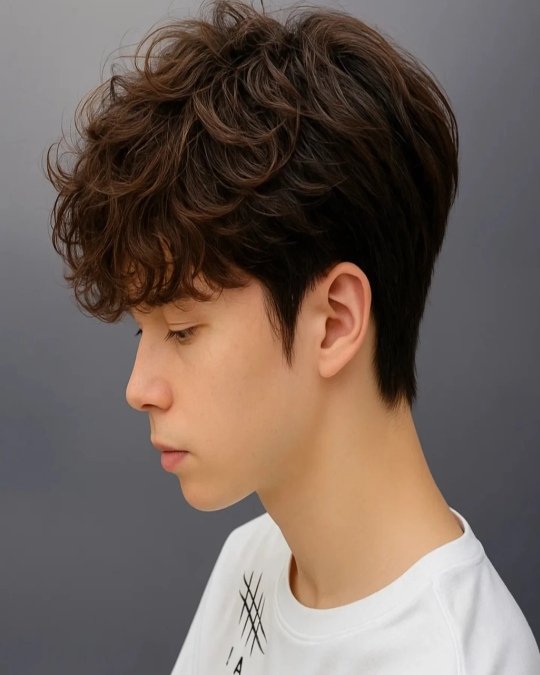
Haircut formula: wavy top + short tapered sides + curly fringe
The top keeps its length and falls forward in loose waves, ending in a curly fringe above the eyebrows. Below it, the sides and back are cut short and close to the head, so the top reads as its own layer.
That split is what defines a two block cut. Ask your barber to soften the line where the two lengths meet, since a hard edge can make the top look like it sits on the head. A light cream on damp hair keeps the waves defined without weighing them down.