
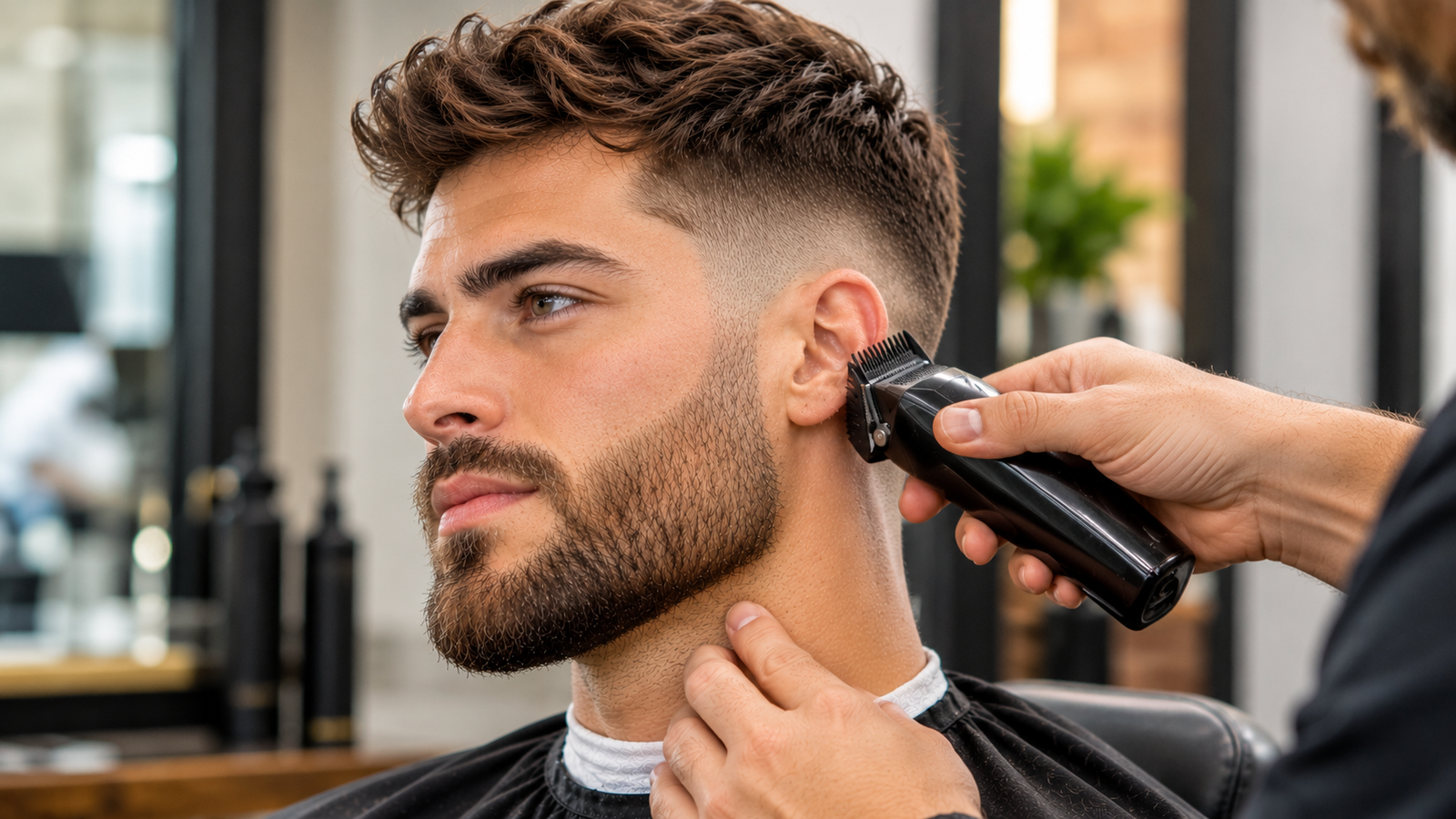
A fresh haircut and a trimmed beard can look like two separate cuts that never met. The cause is usually a hard line near the sideburn, where short fade hair stops and full-length beard starts. “Just ask for a fade” doesn’t help much if your hair is thick, your beard is patchy, or your barber is in a hurry. This guide shows you how to blend a beard into a haircut so the sides flow into the jaw. It gives you guard numbers, clipper moves, and the exact words to use in the chair.
Why the Line Shows Up Right at the Sideburn
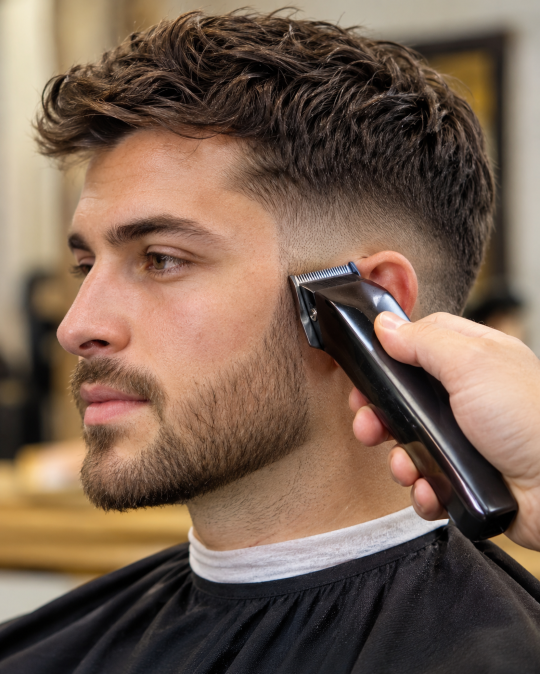
The eye notices sudden changes. When hair goes from skin-short to inch-long in one step, you see a edge, even if both areas are neatly cut.
Three things usually create that edge:
- A big jump in length. A bald fade on the sides next to a full beard has nowhere to transition.
- A razor-cut border. A sharp line shaved at the sideburn or high on the cheek stands out against soft fade hair.
- A difference in hair itself. Beard hair is often coarser and can be a different shade than scalp hair, so it reads darker and thicker beside a short fade.
The fix is not one magic guard. It is a gradual change in length across the whole area, from the temple to the chin.
Pick One Connection Point Before You Touch a Clipper
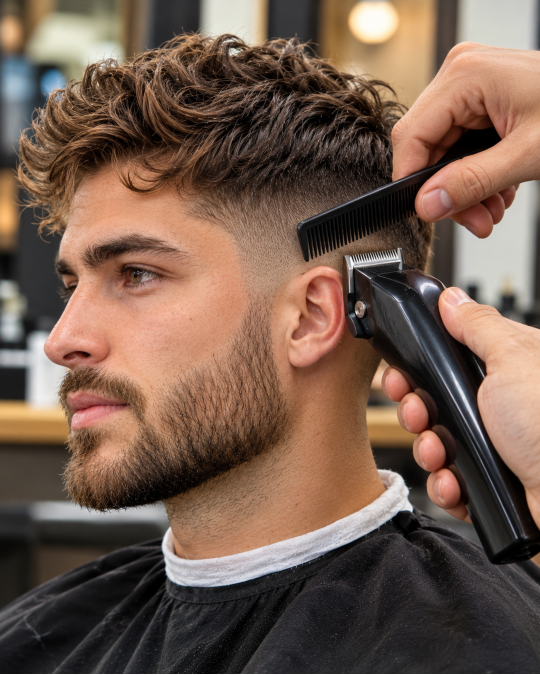
The connection point is the spot where your sideburn turns into your beard, usually around the middle of the ear. Choose one length there, and build everything else around it.
Here is the idea in a single formula:
Formula: low taper fade (#1 at the ear, stepping up to #3 above) + sideburn left connected at #3 + beard growing longer toward the chin + soft cheek line + clean neckline
Why it works: the sideburn becomes a bridge. Hair gets shorter as it goes up the head and longer as it goes down the jaw, so no single spot shows a sudden drop.
Technique Note: On most clipper sets, #1 is about 1/8 inch (3 mm), #2 is 1/4 inch (6 mm), #3 is 3/8 inch (10 mm), and #4 is 1/2 inch (13 mm). Check the numbers on your own set, since brands vary.
Beard + Haircut Blend Guide
The Length Ladder: No Hard Line
Hair gets shorter going up and longer going down, so no single spot shows a sudden drop.
Shorter at the top, longer at the chin
Pick your connection length by beard type
Full, dense
#3 to #4
Long taper from jaw to sideburn.
Medium density
#2 to #3
Sides to #1 or a light skin taper.
Patchy or slow near sideburn
#1 to #2
Or stubble. Keep sides at #1, not skin.
Curly or coily
#3 or longer
Trim dry and stretched. Curl shrinks.
Guard key
#11/8 in · 3 mm#21/4 in · 6 mm#33/8 in · 10 mm#41/2 in · 13 mmOn most clipper sets. Check your own, since brands vary.
Flick out at the end of each stroke to avoid a stop mark.
Soft cheek line. Remove only stray hairs on the cheekbones.
Crisp neckline one to two finger widths above the Adam’s apple.
Peak Groom
Match the Connection Length to Your Beard Density
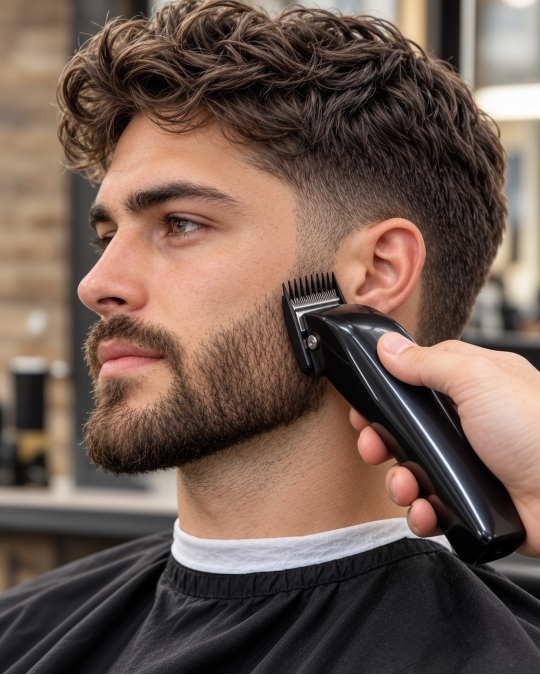
A thick beard and a thin one need different blends. Dense growth can handle a longer taper. Lighter growth looks smoother with a shorter, softer transition.
| Beard type | Connection length | What to do on the sides |
|---|---|---|
| Full, dense | #3 to #4 | Long taper from jaw to sideburn. Fade sides down to #1 |
| Medium density | #2 to #3 | Fade sides to #1 or a very light skin taper |
| Patchy or slow near the sideburn | #1 to #2, or stubble | Keep sides at #1 instead of skin. Less contrast hides gaps |
| Curly or coily | #3 or longer | Trim dry and stretched. Curl shrinks, so go longer than you think |
If your beard grows in thin around the cheeks, you have options. A short stubble beard, a cropped beard, or a clean shave can all look sharp. A taper that stays close in length makes growth look even, so you are not trying to cover anything.
Face shape option: On a rounder face, keep a little more length at the chin and a closer cheek. On a narrower face, leave a touch more length on the cheeks so the jaw doesn’t look pulled in. Treat these as starting points, not rules.
Which Haircut Blends With a Beard Most Easily
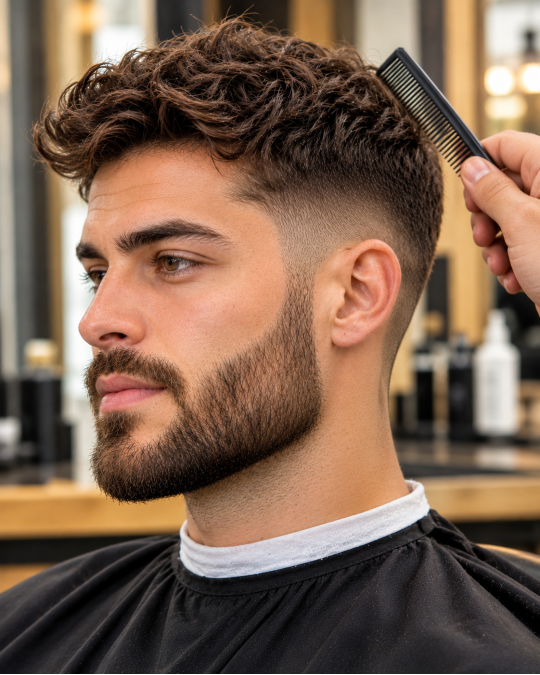
Some cuts connect to a beard more easily than others. The shorter your sides, the longer your blend zone needs to be.
| Haircut | How it meets the beard | Difficulty at home |
|---|---|---|
| Skin or bald fade | Highest contrast, needs the longest beard taper | Hardest |
| Low taper | Short only at ears and neckline, sideburn flows naturally | Easiest |
| Mid fade (#1 to #3) | Works with most beards, needs a clear connection point | Medium |
| Scissor-cut or longer sides | Beard length matches sideburn length | Easy |
| One-guard buzz cut | Beard one or two guards longer, tapered up | Easy |
A low taper is the safest pick if you are blending for the first time. It keeps the sideburn area soft and leaves less to go wrong.
Budget Swap: If you want a skin fade but don’t want to book frequent visits, a #1 fade blends nearly as cleanly with a beard and grows out more gracefully.
Blend It at Home in Six Steps
Start with a longer guard than you think you need. You can always cut more, but you can’t add hair back.
- Start dry and combed. Wet hair stretches and then shrinks, which throws off your lengths. For curly or coily hair, comb it out first so it sits at its true length.
- Cut the haircut first. Get the sides and taper done so you can see exactly where the sideburn will land.
- Set the sideburn at your connection length. Run the guard from the temple down to the ear, using the same guard you chose in the table above.
- Taper the beard in layers. Set your guard to the length of your chin. Run it across the whole jawline. Drop one guard, then work upward from the sideburn along the cheek, stopping a little farther back with each pass. The shortest length ends up at the sideburn and the longest at the chin.
- Flick out at the end of each stroke. Move the clipper up and away from the skin as you finish. This prevents a stop mark that becomes a line.
- Check from the side in daylight. Use a hand mirror to look at the profile. If you spot a step, go back with the guard one number up and lightly pass over just that area.
Try This: No half-step guard? Use the clipper lever. Moving it halfway between two settings gives you a length between guards for the final softening pass.
Keep the neckline crisp and the cheek line soft
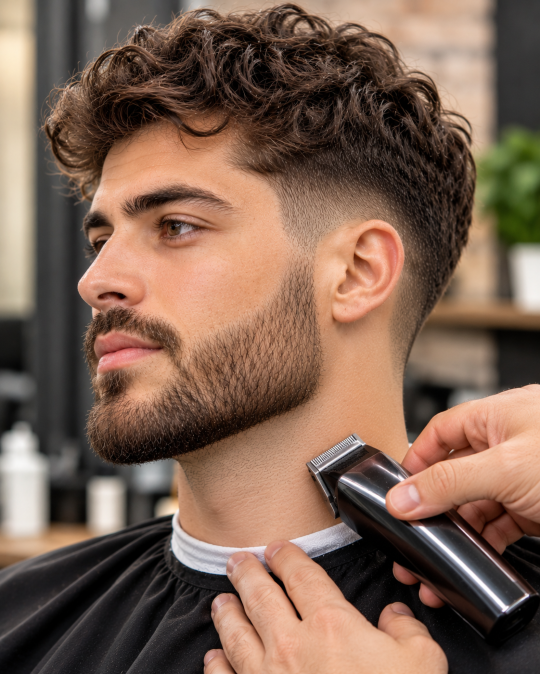
The neckline is the one spot where a defined edge looks clean. Aim for a gentle curve about one to two finger widths above your Adam’s apple, adjusting for your neck length. Everything below can be shaved or trimmed close.
Leave the upper cheek line natural. Only remove stray hairs on the cheekbones. A razor-sharp line here is the fastest way to bring the hard line back.
Skin Note: Sideburns and necks get irritated easily. Use a clean, sharp trimmer, short strokes, and a trimmer instead of a razor if your skin is sensitive. For irritation that keeps coming back, check in with a dermatologist.
If the line still shows
- Visible step between two guards: add a half-step, or use scissors over a comb to soften it.
- Gaps showing after the fade: raise the guard on the sides by one number. Less contrast hides thin areas.
- Beard still looks darker than the sides: leave the sides one guard longer around the ear.
- Sideburn shorter than the beard: grow it back out to the connection length, then retrace the taper.
Say It This Way in the Barber Chair
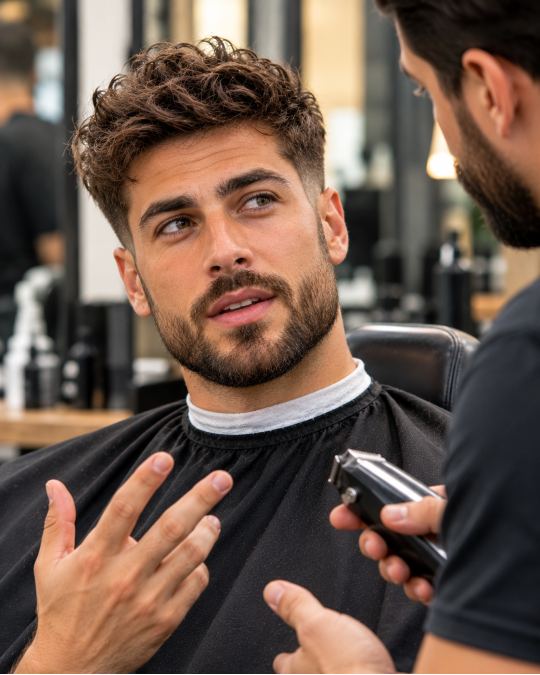
Barbers read your words and photos together. The clearer you are about the connection, the better the blend.
Barber Note: Try saying: “Fade my sides into my beard with no line between them. Keep my sideburns connected. Start the beard at a #3 at the ear and taper it longer toward the chin. Keep the cheek line natural and clean up the neckline.”
Bring a photo that shows a side view and, if possible, the back. Point to the exact spot where the hair and beard meet in the picture. Ask them to leave the cheek line soft instead of shaving it in.
If you want to try a new look, ask for a slightly longer first cut so you can see the shape before going shorter.
What Week One and Week Four Look Like
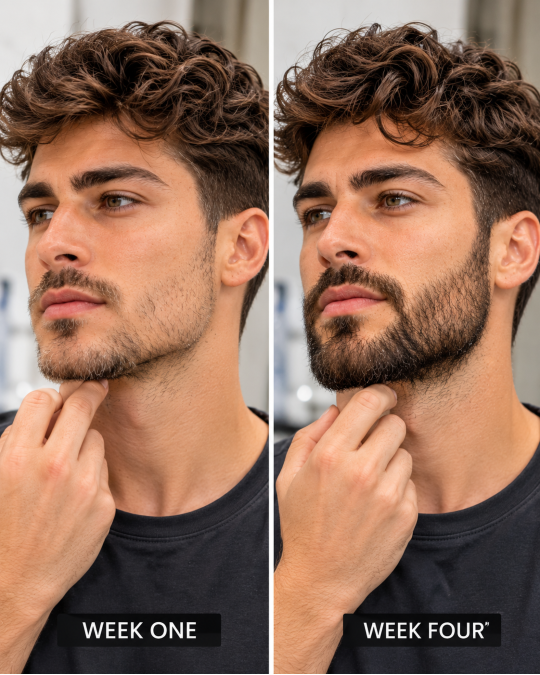
A blend changes as hair grows. Knowing what to expect helps you decide when to touch up.
- Week one: The taper is at its smoothest. Everything flows from temple to jaw.
- Week two: Short hair starts to fill in, and the fade looks softer. The blend usually still looks intentional.
- Week three: The sideburn area may look fuller than the sides. A quick pass with the connection-point guard keeps it even.
- Week four: The transition zone has widened, and the neckline needs attention. Many men book a barber visit somewhere between two and four weeks.
Between visits, tidy the neckline weekly and run the sideburn guard once to restore the bridge.
Frequently Asked Questions
Should my sideburns connect to my beard?
Usually yes. Connected sideburns act like a bridge and are the easiest way to avoid a hard line. If you prefer a clean sideburn, keep the beard short so the contrast stays soft.
Can I blend a patchy beard into a fade?
Yes. Keep the beard short and the taper gentle, and choose a #1 on the sides instead of skin. A clean shave is also a good option if you like the look of it.
What guard should I start with if I’m new to this?
Start longer than you think, such as a #4 on the beard, and go down one number at a time. Mistakes are easy to fix when you cut gradually.
Do I need to shave the cheek line?
No. A natural cheek line blends better with a fade. Remove only stray hairs high on the cheekbones.
The Takeaway
A smooth blend comes from one decision made early: pick the length where your sideburn meets your beard, then let everything above get shorter and everything below get longer. Use guards one number apart, flick out at the end of each stroke, and keep the cheek line soft. Try this on your next trim, and check it from the side in daylight before you put the clippers down.