
At 60, most people believe they still have plenty of time. There are trips to take, friendships to maintain, family problems to resolve, and retirement plans to finish.
But what happens when the years pass faster than expected, and opportunities that once seemed ordinary suddenly disappear?
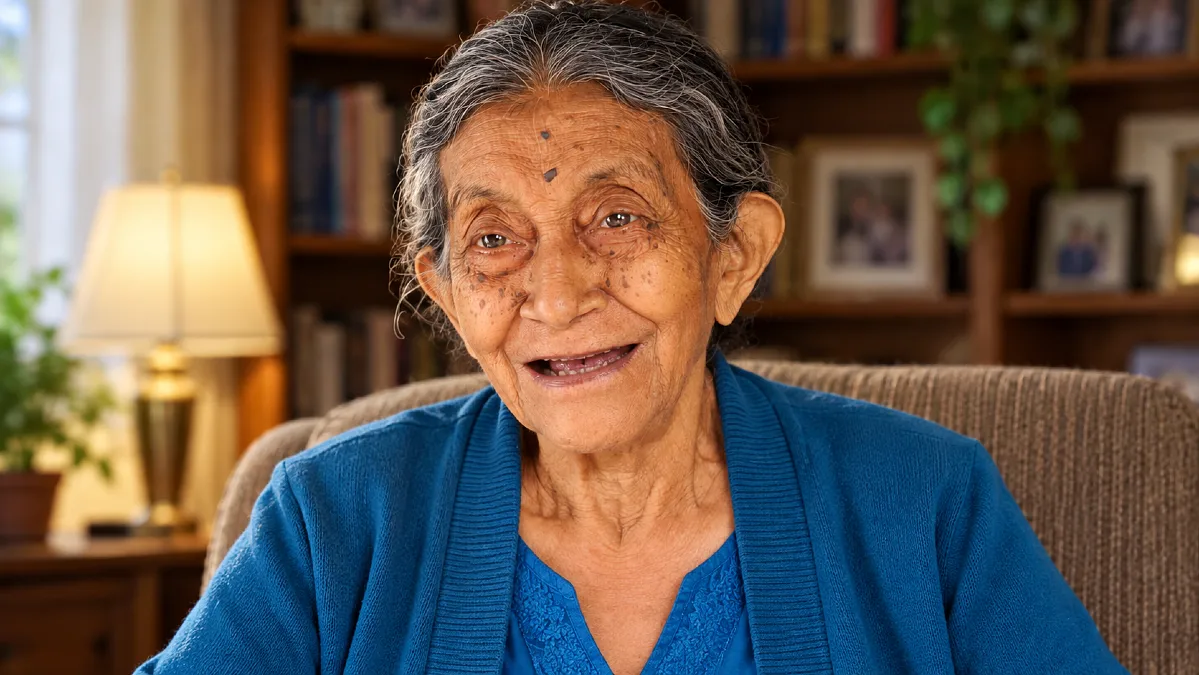
At 92, Lorraine Castello understands that feeling better than most. Her life has included love, loss, retirement, illness, and difficult family decisions.
1. Build Your Physical Strength Before You Desperately Need It

At 62, Lorraine could walk three miles without much effort. She carried groceries upstairs, worked around her home, and played on the floor with her grandchildren without worrying about getting back up.
Those simple movements seemed so ordinary that she never considered losing them. By her mid-70s, longer walks had become challenging, and climbing stairs required more effort.
At 84, a stroke changed her independence dramatically. The woman who once managed everything herself suddenly needed help with daily activities she had performed for decades.
Looking back, Lorraine regrets not spending more time maintaining her physical strength. She had focused on staying busy without realizing that remaining active and building muscle were not necessarily the same thing.
Muscle strength matters because it supports everyday independence. Stronger legs make standing from a chair easier, while better balance can reduce the risk of falls.
The CDC recommends that adults 65 and older combine aerobic activity with muscle-strengthening and balance exercises. Strength and physical function can improve even at advanced ages, although results depend on individual health and abilities.
| Physical Ability | Why It Matters Later | What to Practice Now |
|---|---|---|
| Leg strength | Standing and climbing stairs | Chair rises and suitable resistance exercises |
| Balance | Reducing fall risk | Supervised balance exercises |
| Walking endurance | Maintaining mobility | Regular comfortable walks |
| Upper-body strength | Carrying everyday objects | Light resistance training |
| Flexibility and mobility | Making movement easier | Gentle stretching and mobility work |
The lesson is not that everyone must remain physically fit at 90. It is that the strength developed at 50 or 60 may help preserve more options later.
Lorraine would encourage someone who can comfortably walk, lift, and move today to protect those abilities. Appropriate exercise, guided by a healthcare professional when needed, can be a valuable investment in future independence.
2. Make More Friends Because Your Old Circle Will Not Always Be There

For nearly 40 years, Lorraine belonged to a small friendship group she called the Tuesday girls. Barbara, Eileen, and Margaret had shared family celebrations, difficult marriages, children growing up, and countless ordinary lunches.
Their friendship felt permanent because it had lasted through so many changes. Lorraine assumed those women would remain part of her life for as long as she lived.
Then the group began disappearing.
Barbara died in 2008, Eileen in 2014, and Margaret in 2020. By 92, Lorraine was the only surviving member of the group that once filled her Tuesdays with laughter.
The greatest regret was not simply losing her friends. It was realizing she had stopped making new ones during her 60s because she believed her existing friendships were enough.
Her daughter and grandchildren still offered love and companionship. But family relationships could not entirely replace the connection she had shared with women who remembered her younger years.
Friendships need to be renewed throughout life, not just preserved from the past.
Someone turning 60 today may benefit from joining a walking group, volunteering, attending community classes, or regularly meeting people who share similar interests. Friendships with younger adults can also create connections across generations.
The CDC identifies social isolation and loneliness as important health concerns. Having meaningful social connections is about more than keeping a calendar full of activities.
Lorraine’s experience illustrates why building new friendships after 60 is worth the effort. People cannot control how long their friends live, but they can continue creating opportunities for companionship.
3. Talk About Death and Money Before a Family Emergency Forces You To

Lorraine’s mother suffered a serious stroke at 89 that left her unable to speak. For the following three years, her family struggled to understand what medical care she would have wanted.
They also faced questions about finances, important documents, and who should make difficult decisions. Without clear instructions, even family members who loved one another found reasons to disagree.
Lorraine promised herself that her own children would never experience that uncertainty. Yet she postponed many of the same conversations because discussing death felt uncomfortable.
She eventually spoke with Lisa and Michael about her wishes when she was 74. Looking back, she believes those conversations should have happened at least a decade earlier.
Planning for incapacity is different from planning only for death. A will generally directs what happens to property after death, while other legal documents can authorize decisions during a person’s lifetime.
The following documents serve different purposes, and their legal requirements vary by state.
| Document or Record | Purpose | Why It Matters |
|---|---|---|
| Will | Directs estate distribution | Reduces uncertainty about property |
| Durable financial power of attorney | Authorizes financial decisions | Helps if someone cannot manage finances |
| Healthcare proxy | Names a medical decision-maker | Provides a trusted person to speak for someone |
| Advance directive | Records healthcare preferences | Guides treatment decisions |
| Account inventory | Identifies assets, debts, and contacts | Helps family members locate information |
A complete plan should also identify insurance policies, beneficiary designations, trusted contacts, and instructions for accessing essential records securely. Passwords should be managed through a secure arrangement rather than distributed casually.
The most important part of Lorraine’s lesson is the conversation itself. Documents become much more useful when the people expected to carry out those wishes understand what matters to the person making them.
For adults in their 50s and 60s, this is one responsibility that becomes easier when handled before a crisis. Waiting until someone is seriously ill can leave families with fewer options and far more uncertainty.
4. Retirement Will Not Automatically Give Your Life Meaning

Lorraine worked as a high school guidance counselor in Pittsburgh for 38 years. Her career provided a routine, a sense of responsibility, and a familiar place in her community.
For years, she imagined retirement as freedom from early mornings, demanding schedules, and endless paperwork. She expected to spend her days gardening, traveling, reading, and enjoying her family.
When she finally retired at 70, something unexpected happened. Instead of feeling completely free, she felt as though a significant part of her identity had disappeared.
For nearly four decades, people had known her as Mrs. Castello, the guidance counselor. Suddenly, nobody was waiting for her advice at school, and her daily schedule no longer had the structure she understood.
It took three difficult years before she began building a satisfying life outside work. Watercolor painting, volunteering at the library, and spending more time with her daughter gradually gave her days new meaning.
Lorraine eventually discovered something that many prospective retirees overlook. Retirement removes workplace obligations, but it does not automatically replace the purpose those obligations provided.
A person whose entire identity depends on a career may struggle when that career ends. Developing interests and relationships before retirement can make the adjustment less abrupt.
| Life Beyond Work | What to Try Before Retiring | Possible Benefit |
|---|---|---|
| Creative interests | Painting, writing, or photography | Personal satisfaction |
| Social connections | Weekly community activities | Regular companionship |
| Volunteering | Helping at a library or nonprofit | Meaningful contribution |
| Learning | Taking a course or studying a skill | Continued curiosity |
| Family time | Establishing regular visits | Stronger relationships |
These activities do not need to be expensive or impressive. What matters is having reasons to get out of bed that do not depend entirely on a paycheck.
Lorraine’s experience suggests that retirement preparation should include more than savings calculations. People also need to consider how they will spend their time and what will make their days worthwhile.
5. Spend More of Your Healthy Years With the Person You Love

Lorraine and her husband, Anthony, were married for 63 years. To anyone hearing that number, their marriage might sound like a lifetime of shared happiness.
But Lorraine remembers how those decades were actually spent. Their early years were consumed by raising children, building careers, paying bills, and keeping their household running.
Later came a difficult period when their marriage nearly ended. They eventually rebuilt the relationship, and Lorraine felt their happiest years together began when they were in their 50s.
For a while, they finally had the time and energy to enjoy one another. They traveled, visited family, and experienced the freedom that comes when children become independent.
Then their health began changing. Medical appointments, medications, and physical limitations gradually replaced some of the activities they once enjoyed.
Anthony eventually died after a sudden medical emergency at a hardware store. Lorraine was at home preparing a grocery list, unaware that an ordinary Tuesday would become one of the most painful days of her life.
Her regret is not that they failed to have a long marriage. It is that they sometimes postponed experiences during the years when they were both healthy enough to enjoy them.
For couples in their 50s and 60s, the lesson is to stop treating shared experiences as something that must always happen later. A weekend away, a dinner together, or a visit to an old friend may be more meaningful than another year of waiting.
Enjoying those experiences does not mean ignoring financial responsibilities. It means making room for worthwhile activities within a realistic household budget while the opportunity exists.
6. Stop Holding On to Grudges That Could Last Longer Than the Relationship
When Lorraine was 67, she and her brother Frank became involved in a bitter disagreement about their mother’s care. Money, responsibilities, and old family tensions made the situation even more difficult.
Both believed they were right, and neither wanted to be the first to apologize. What began as a family argument eventually turned into years of silence.
Lorraine spent eight years without speaking to her brother. During that time, birthdays passed, holidays came and went, and opportunities for reconciliation disappeared.
Frank later died of a heart attack at 79. Lorraine never had the conversation that might have helped repair their relationship.
The pain of his death was made worse by the realization that their disagreement could no longer be resolved. She had spent years defending a position that eventually mattered far less than having her brother in her life.
Being right does not always bring the satisfaction people expect. Sometimes winning an argument can mean losing something much more valuable.
That does not mean everyone should reconcile with relatives who are abusive, threatening, or repeatedly harmful. Healthy boundaries remain important, and forgiveness does not require restoring unsafe relationships.
But ordinary disagreements often become larger because nobody wants to surrender their pride. A simple phone call or sincere apology can sometimes reopen a relationship that has been unnecessarily closed.
At 92, Lorraine understands that time does not guarantee another chance. For someone still carrying a manageable family dispute at 60, making peace may be more valuable than continuing to prove a point.
7. Your Adult Children Need Your Presence More Than Your Constant Advice

After spending decades as a guidance counselor, Lorraine had become comfortable helping people solve their problems. She knew how to ask questions, identify mistakes, and offer practical suggestions.
Unfortunately, she sometimes brought that professional habit into her relationships with her adult children. She commented on their careers, marriages, parenting choices, and household decisions because she believed she was helping.
Her intentions were loving, but the results were not always positive. Her children sometimes felt that every conversation became an evaluation of their decisions.
The tension eventually damaged her relationship with Michael, and they went through a long period without speaking. Lorraine later recognized how her constant advice could make him feel that she did not trust his judgment.
Her understanding changed as she grew older. She learned that adult children often want a parent who listens carefully rather than someone who immediately offers solutions.
A mother can support her grown children without controlling how they live. Listening to a difficult work story, helping with grandchildren when invited, or enjoying dinner together can strengthen a relationship without turning it into a counseling session.
Advice is often more useful when someone actually asks for it. Respecting an adult child’s independence can make family conversations warmer and less defensive.
Lorraine’s lesson applies to grandparents as well. Children and grandchildren are more likely to value time together when every visit does not become a discussion about what they should be doing differently.
8. Write Down Your Family Memories Before Important Details Fade

Lorraine has 11 grandchildren and six great-grandchildren. Their birthdays, family milestones, and personal stories fill a lifetime of memories.
Yet at 92, she sometimes struggles to recall details that once came easily. She keeps written reminders because remembering every date and conversation has become more difficult.
What troubles her most is not forgetting a recent appointment. It is realizing that some stories about her childhood, parents, and early married life have become harder to reconstruct.
She began keeping a journal at 78, but she wishes she had started much earlier. There were family recipes, conversations, and small details she could have recorded when her memories were clearer.
Family history often disappears through ordinary forgetfulness rather than one dramatic event. A parent’s favorite expression or the story behind an old photograph may never be recorded unless someone takes the time to preserve it.
The National Institute on Aging explains that mild forgetfulness can accompany aging, but serious memory problems are not an unavoidable part of getting older. New or worsening difficulties that interfere with daily life deserve medical attention.
For people in their 50s and 60s, preserving memories can begin with something simple. Recording a family story every week, organizing photographs, or describing important childhood experiences can create a meaningful collection over time.
Audio recordings are another option for people who dislike writing. Hearing a grandparent tell a story in her own voice may become a treasured family record.
Lorraine’s lesson is about protecting memories while they are still accessible. A handwritten notebook or a few recordings can preserve details that future generations might otherwise never know.
9. Courage Means Preparing for the Things That Frighten You

During her 60s, Lorraine worried about becoming older and losing her independence. She feared illness, loneliness, the death of her husband, and the possibility of needing help with daily activities.
Her preferred response was to avoid thinking about those possibilities. As long as life remained relatively comfortable, it was easier to focus on the present than confront frightening questions about the future.
Then several of those fears became real. Anthony died, Lorraine experienced a stroke, and she eventually moved in with her daughter because living alone was no longer practical.
Those experiences changed her life, but they did not erase everything she enjoyed. She continued looking forward to family visits, appreciating conversations, and finding satisfaction in ordinary routines.
Looking back, she sees a difference between worrying about aging and preparing for it. Worry rarely helped her make decisions, while practical planning might have reduced uncertainty.
Someone afraid of becoming dependent can begin by reviewing household safety, discussing possible care arrangements, and identifying trusted people. Someone worried about loneliness can strengthen friendships before an emergency makes socializing more difficult.
Courage does not require pretending that illness, grief, or disability will be easy. It means accepting that circumstances may change while recognizing that worthwhile experiences can continue afterward.
Lorraine’s later years included painful losses, but they also included meaningful moments. That balance is an important part of her perspective on aging.
10. The Years After 60 Can Feel Much Shorter Than You Expect

At 60, Lorraine believed there was still a great deal of time ahead. She had children, grandchildren, retirement plans, and a husband she expected to grow old with.
Then the years began passing in a way she had never experienced before. She reached 70, retired from her career, and slowly adjusted to a different daily routine.
Before long, she was 80 and dealing with greater physical limitations. The next decade brought a serious stroke, the loss of her husband, and changes she could not have imagined when she was younger.
By 92, she found herself looking back at events that seemed recent but had actually happened many years earlier. The decades felt compressed because so much of life had passed.
There is no universal rule that time literally moves faster with age. However, many older adults describe the subjective feeling that later years pass quickly, especially when routines become familiar.
Lorraine wishes she had paid more attention to those ordinary years instead of constantly anticipating what would happen next. So much time had been spent waiting for retirement, waiting for problems to improve, or waiting for the right opportunity.
The present becomes difficult to appreciate when life is always organized around a future milestone.
A person at 60 may still have many healthy and active years ahead, but nobody can know exactly how many. This uncertainty makes deliberate choices more useful than assuming there will always be another opportunity.
Lorraine’s advice is to recognize the value of a normal Tuesday, not just major celebrations. Sometimes the days that appear least important become the ones a person misses most.
11. Prepare for a Time When Living Alone May No Longer Be Practical
Lorraine had always valued her independence. She managed her household, made her own decisions, and expected to remain in control of her daily life for as long as possible.
Her stroke at 84 forced her to reconsider that expectation. Suddenly, tasks that previously required little thought became difficult without assistance.
She eventually moved in with her daughter, a change that affected both women. Lorraine had to adjust to receiving help, while her daughter had to make room for additional responsibilities.
This experience raises an important question for adults approaching retirement. What would happen if a health problem made it impossible to continue living exactly as they do today?
Many people prepare financially for retirement without considering how housing, transportation, or personal care needs might change. Even those with substantial savings can face difficult decisions when unexpected assistance becomes necessary.
In the United States, Medicare generally does not pay for ongoing nonmedical long-term care, such as regular help with bathing and dressing. It may cover eligible short-term skilled care, but that is different from permanent personal assistance.
Planning ahead means understanding available choices without assuming everyone will eventually need the same arrangement.
| Possible Living Arrangement | Main Advantage | Important Consideration |
|---|---|---|
| Current home with modifications | Familiar surroundings | Accessibility and ongoing maintenance |
| Home with family support | Familiar relationships | Caregiver time and household needs |
| Home with paid caregivers | More support in a familiar setting | Cost and availability of help |
| Assisted living | Assistance with daily activities | Ongoing fees and service levels |
| Nursing facility | More extensive care when needed | Eligibility, care requirements, and cost |
No single arrangement is best for every household. Health needs, preferences, finances, family circumstances, and local services all affect the decision.
Lorraine’s experience suggests that these discussions should happen while a person can still participate fully. Preparing for possible assistance is one way to protect personal choice rather than surrender it.
12. Stop Saving Every Meaningful Experience for Someday

Throughout her working years, Lorraine was careful about responsibilities. She focused on her career, supported her family, and tried to make sensible decisions about money.
Like many people, she associated retirement with finally having time to enjoy the activities she had postponed. Travel, hobbies, and personal interests seemed easier to pursue once work was finished.
But her later years taught her that free time and physical ability do not always arrive together. When retirement finally came, she discovered that some experiences were harder than they had been a decade earlier.
Her regrets were not about failing to buy expensive possessions. They centered on opportunities to spend time with Anthony, visit places together, and enjoy experiences while both were healthy.
This reveals a common retirement planning tradeoff. Saving more money can improve future financial security, but postponing every enjoyable activity may mean missing experiences that become less accessible with age.
The answer is not reckless spending. It is finding a reasonable balance between future needs and present enjoyment.
Consider a hypothetical couple who sets aside $100 each month for affordable outings and shared activities. That creates a $1,200 annual experience budget without requiring lavish vacations.
For some households, that amount would be too much, while others could comfortably spend more. The important point is to make the decision deliberately rather than leave all meaningful experiences waiting indefinitely.
Lorraine learned that a modest weekend trip or dinner with loved ones can become part of a person’s most valuable memories. Such experiences may deserve a place in the household budget alongside other priorities.
13. The Ordinary Moments You Ignore Today May Become Your Most Precious Memories

At 92, Lorraine’s life is quieter than it once was. Many of the friends who shared her younger years are gone, and the husband who stood beside her for more than six decades is no longer there.
She still has a photograph of Anthony near her and remembers the ordinary routines they once shared. His absence is most noticeable during moments that would have seemed unremarkable when he was alive.
An ordinary conversation at the end of the day now represents something she can no longer experience in the same way. Even a routine trip to the store or a familiar family dinner has acquired a different meaning in hindsight.
Lorraine sometimes speaks to Anthony before falling asleep, telling him about family news and the events of the day. It is one way she maintains a personal connection to the life they built together.
The experiences she misses most are not necessarily elaborate vacations or milestone celebrations. They are the everyday moments that once formed the background of her marriage.
That realization has changed how she understands happiness. She no longer measures a good day by how much gets accomplished or how impressive the activities might appear to others.
A visit from her great-grandchildren can make an ordinary afternoon meaningful. A conversation with her daughter or a good cup of coffee can still provide genuine satisfaction.
Ordinary moments gain their value from the people and experiences they contain.
For adults in their 50s and 60s, this lesson is an invitation to become more attentive to daily life. Listening during a family conversation, enjoying time with a spouse, or calling an old friend may matter more than expected.
Lorraine’s perspective is not that every day must be extraordinary. It is that people sometimes recognize the value of ordinary days only after those days are no longer possible.