
An Italian beard fade looks sharp in photos, but asking for it at the barber is harder than it sounds. Words like fade, taper, and blend mean different things to different barbers.
Say it wrong and you can leave with sides cut too short, a cheek line set too high, or a fade that looks pasted on. Beards grow slowly, so mistakes last.
These 17 variations show how fade height, cheek line, and chin length change the look. You also get clear wording to use in the chair, so you know what to ask for.
What to Ask Your Barber for an Italian Beard Fade
- Fade height: Say where the beard should start to fade: low near the ear and jaw, mid on the cheek, or high. A low fade keeps more beard, while a high fade looks cleaner but needs more upkeep.
- Blend into the sideburns: Ask for the beard to flow into the haircut’s sideburns with no gap or hard line. This is what stops the fade from looking pasted on.
- Length at the chin: Keep the most length on the chin and jaw, and shorter toward the cheeks and neck. The gradual change in length is what makes it look like a fade.
- Neckline and cheek line: Set the neckline above the Adam’s apple and keep the cheek line natural. Bring a photo, since “fade” means different things to different barbers.
Low Fade Beard
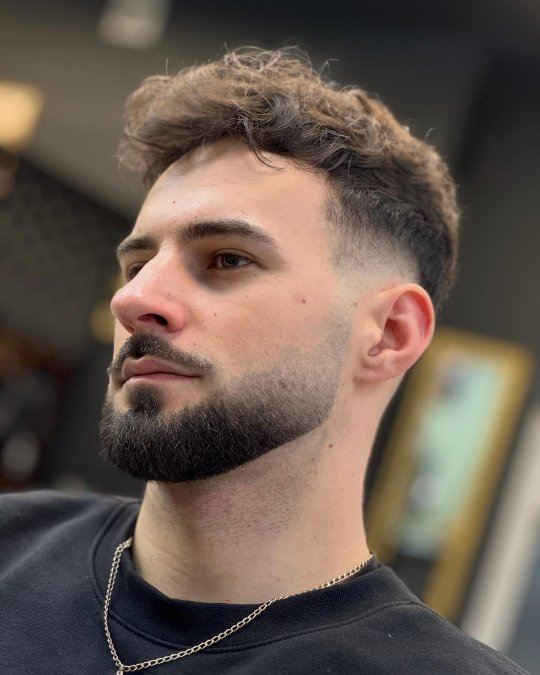
Haircut formula: wavy textured top + low fade + faded beard
The beard is medium-short and dense along the chin and jaw. It fades down toward bare skin in front of the ear and at the neck, and the cheek line is soft and natural. A trimmed mustache sits above it, with a small patch under the lip. The hair on top is wavy and tousled, and the sides fade low around the ear.
This is a good example of a beard fade because the beard and haircut fade together. The shorter sides slim the face, and the length stays at the chin, so the blend looks planned instead of pasted on.
Ask your barber: Ask for the beard to fade into the sideburns, with the most length kept on the chin and jaw. Say you want a soft blend, not a hard line, and point to the skin-to-beard transition near the ear in a photo.
Maintenance tip: A low fade stays neat longer than a high one, but the skin area at the neck still needs regular tidying. Plan on a visit every three weeks or so.
Sharp Skin Fade Beard
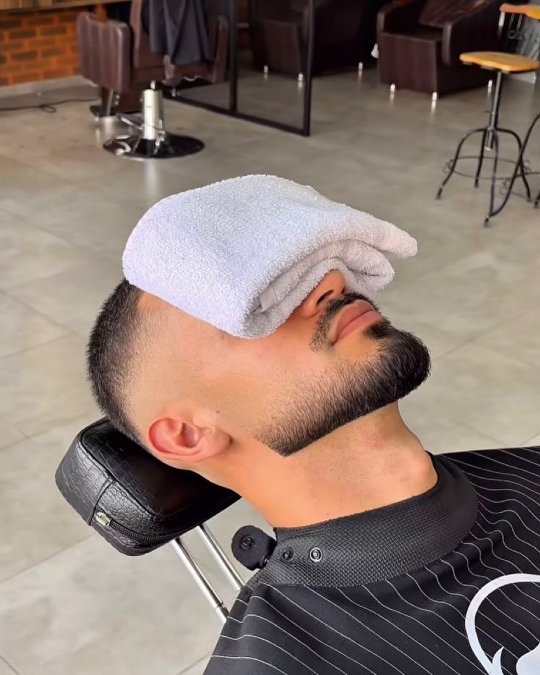
The man is reclined in a barber chair with a folded towel over his eyes, so this one is about the cut, not the face. The beard is short and dense, and it fades toward bare skin near the ear, with a crisp, angled line under the jaw. The sides of his head are faded close to the skin, with a very short top.
Seen from the side, the beard fade and the haircut fade follow the same curve. The beard is thickest along the chin and jaw and thins out toward the sideburn, which gives a clean, sharp outline.
Fade detail: This is a skin fade beard. The beard thins down to bare skin at the cheek and neck, so it needs a very precise blend. A hard line between beard and skin is the most common mistake to avoid.
Ask your barber: Ask for the beard to fade to skin at the sideburn, with a clean line under the jaw and a defined neckline. A side-profile photo helps them see exactly where you want the fade to end.
Maintenance tip: A skin fade shows regrowth quickly. Plan on a barber visit every two to three weeks, and tidy the neckline between visits.
Buzz Cut With Skin Fade
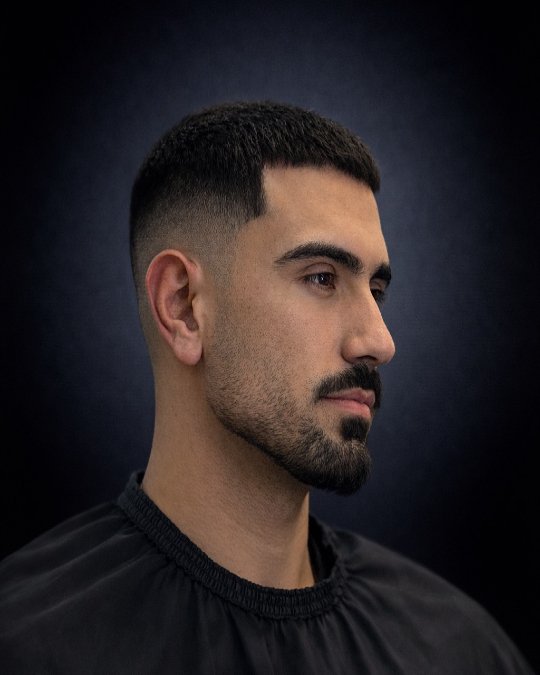
Haircut formula: short crop + skin fade + faded beard
In profile, the beard is short and dense, running from the sideburn along the jaw to the chin. It thins toward the ear and cheek, and a trimmed mustache sits above a small patch under the lip. The hair on top is cropped very short with a straight, blunt front line, and the sides fade down to bare skin around the ear.
The beard fade and the haircut fade work together here. Both go from short to skin on the same curve, so the head and face look like one clean shape. The strong jaw and ear line show clearly because nothing is left long.
Ask your barber: Ask for the beard to fade into the sideburn and the skin fade on the sides, so there is no gap or hard line where they meet. Mention the straight hairline at the front if you want the same crisp edge.
Maintenance tip: A short crop with a skin fade grows out visibly within two weeks, so plan on frequent visits. A quick neckline tidy in between keeps it looking fresh.
Drop Fade With Short Beard
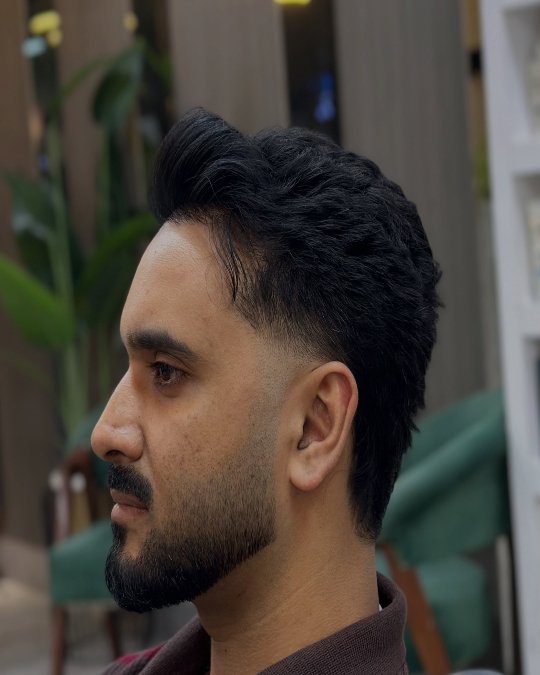
The drop fade curves down behind the ear and sweeps toward the back of the head. The top is thick, black, and swept up and back, with natural texture and some length at the nape. The beard is short and neat, fullest at the chin and lighter along the cheek and jaw, with a clean line under the jaw and a trimmed mustache.
The fade and the beard follow the same direction. The shorter sides near the ear slim the face, and the length at the chin gives the outline some weight. The volume on top balances the beard, so the whole shape looks deliberate.
Fade detail: A drop fade dips lower behind the ear instead of running straight around the head. This makes the back of the haircut look curved, so it is worth asking for by name and showing a side-profile photo.
- Ask your barber: Ask for the beard to blend into the sideburn and the fade near the ear, with the most length at the chin. A soft blend works better than a hard line.
- Styling: The top has natural texture and some length. A little matte clay or cream, worked in with the fingers and swept back, keeps it full without looking stiff.
Curly Top + Neckline Fade
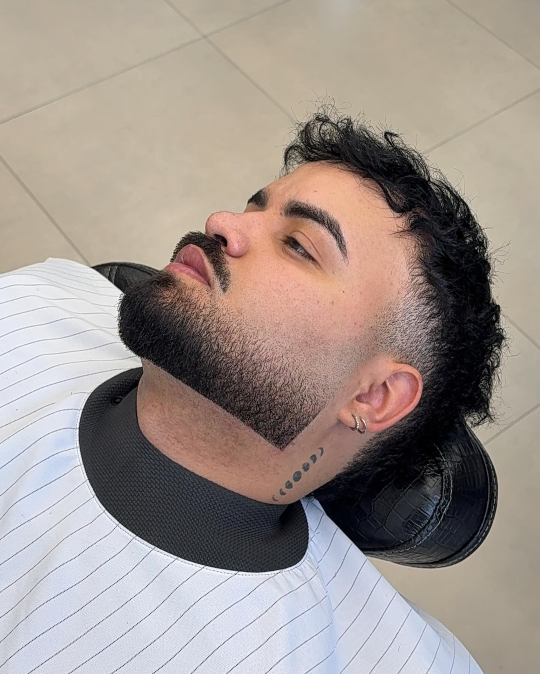
The beard is dense and close-cut, with a sharp, angled neckline under the jaw that stops cleanly above the neck. It fades to bare skin near the sideburn and ear, and a trimmed mustache sits above it. On top, dark curls sit loose and textured, with the sides faded down to skin around the ear.
The beard and the haircut fade follow one clean curve. The sharp neckline is the key detail here, since it defines the jaw and makes the beard look planned. Because the curls keep their volume on top, the faded sides stay in contrast.
Barber note: Ask for the neckline to be set in a clear angle under the jaw, with the beard fading toward the ear. Show a photo from this angle, since it shows exactly where the line should land.
- Styling: Curly hair holds shape better with a light cream or curl product and a little air-drying, which keeps the curls loose instead of frizzy.
- Maintenance: A sharp neckline shows regrowth fast. Plan on a barber visit every two to three weeks to keep it crisp.
Low Taper Fade Beard
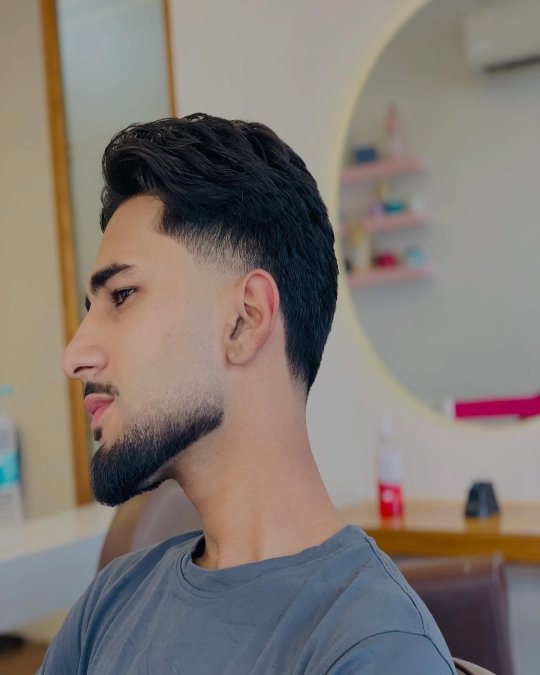
The beard is short and neat, with a trimmed mustache and a small chin patch. It is darkest and fullest at the chin, then thins toward the cheek and sideburn. A clean line runs under the jaw. The dark hair on top is swept back with soft waves, and the low taper wraps around the ear and curves down the back of the neck.
The beard fade and the taper meet at the ear in one smooth transition. Because both start short and get shorter toward the skin, the head and face look cut as one piece. The tapered neckline at the back also keeps the haircut tidy as it grows.
Ask your barber: Ask for the beard to fade into the sideburn with the taper, so the two blend at the ear. Mention that you want the most length at the chin and a clean line under the jaw.
Maintenance tip: A low taper holds its shape for about three weeks. The neck and the cheek area grow out first, so plan to tidy those before the rest.
Italian Beard Fade for Wavy Hair
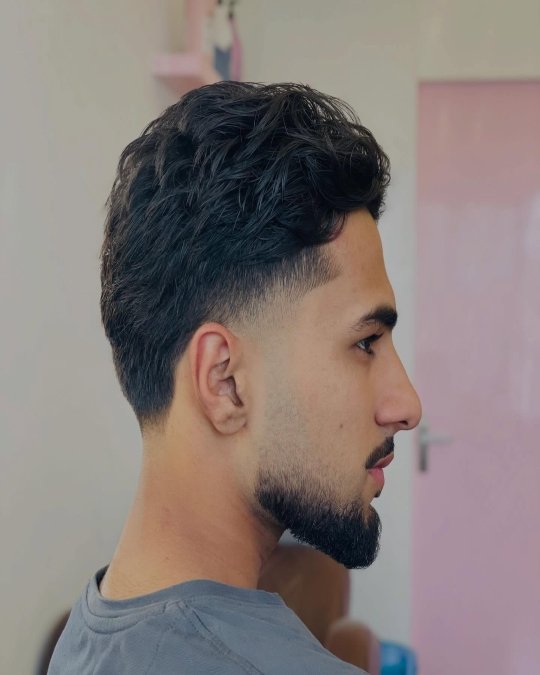
Haircut formula: wavy textured top + low taper + faded beard
This Italian beard fade has a short, dense beard with a trimmed mustache. It is fullest at the chin and jaw and thins toward the cheek and sideburn. A clean line runs under the jaw. The dark hair on top is wavy and tousled, and the taper curves around the ear and down the back of the neck.
The beard and the taper start short in the same place and get shorter toward the skin, so the head and face look cut as one piece. The wavy top adds movement, which keeps the sharp sides from looking too severe.
Ask your barber: Ask for the beard to fade into the sideburn with the taper, keeping the most length at the chin. Show a side-profile photo, since this angle makes the blend easy to see.
Styling tip: Wavy hair looks best with a light cream or sea salt spray, worked in with the fingers. That keeps the texture loose instead of stiff.
A Seamless Beard Fade
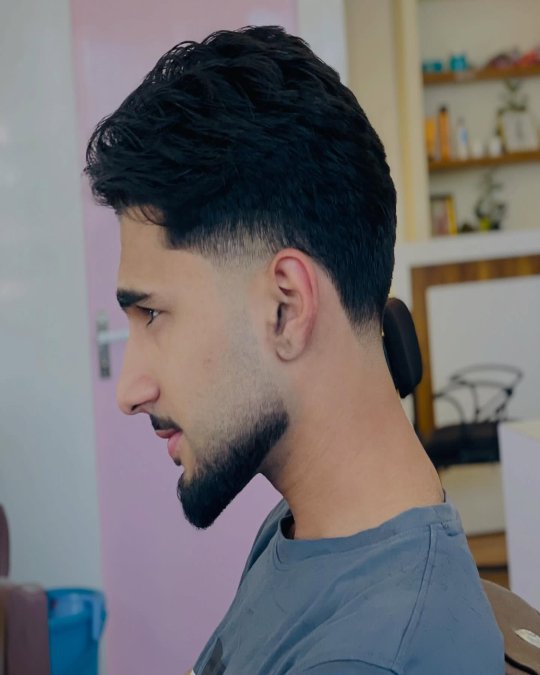
Why this style works:
- One continuous curve: The beard is short and dense, fullest at the chin and thinning toward the cheek. It meets the taper at the sideburn and ear, so the beard and haircut read as one shape.
- Clean outline: A sharp line runs under the jaw, and the taper carries down the back of the neck. That keeps the profile tidy and shows off the jaw.
- Volume on top: The thick, dark top is textured and swept back, with height at the front. It balances the close sides and keeps the cut from looking too severe.
- Soft contrast: The beard shades from dark at the chin to bare skin near the ear. The gradual change is what makes a beard fade look natural.
Ask your barber: Ask for the beard to fade into the sideburn with the taper, with the most length at the chin and a defined line under the jaw. A side-profile photo helps, because this angle shows exactly where the blend ends.
Close-Cut Beard Fade
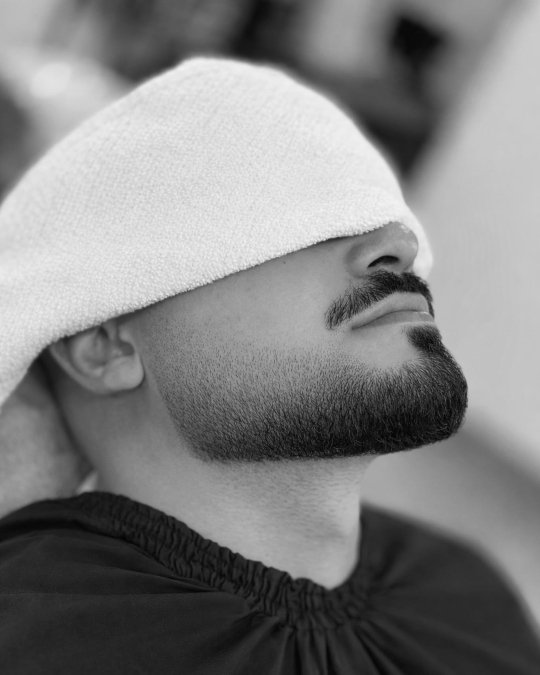
The beard is short and even, fullest at the chin and jaw. It gradually fades toward bare skin in front of the ear and down the neck. A trimmed mustache and a small patch under the lip sit above it. In this black and white close-up, the neckline is clean and the cheek line is soft.
The detail in this shot is the gradient. The hair gets lighter and shorter in small steps from the jaw to the skin, so there is no hard line anywhere. That smooth blend is what separates a good beard fade from a beard that has just been shaved at the edges.
Fade detail: The towel over the eyes means the face is not visible, so the focus stays on the beard. A fade like this usually starts with the longest hair at the chin and shortens toward the sideburn and neck.
Ask your barber: Ask for a soft blend into the skin with no visible line, plus a clean neckline above the Adam’s apple. Show a close-up photo, since the gradient is the main thing to explain.
Maintenance tip: The bare-skin area grows back fastest, so plan on a visit every two to three weeks.
Mid Fade Beard With Textured Quiff
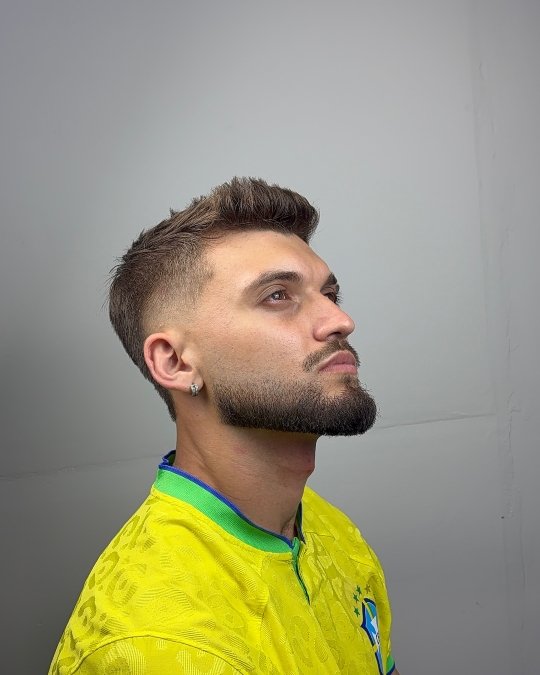
Haircut formula: textured quiff + mid fade + faded beard
The beard is medium-short and full, with a defined cheek line and a rounded line under the jaw. It fades toward bare skin in front of the ear. A trimmed mustache sits above it, and the chin carries a little extra length. The hair on top is brown, short, and pushed up and back into a textured quiff. The sides fade at mid height around the ear.
This is the first mid fade in the article, and it shows the difference clearly. The fade starts higher than on the low fade looks, so more skin shows on the sides. That makes the quiff on top stand out and gives the head a sharper outline.
Ask your barber: Say “mid fade” for the head and ask for the beard to blend into the sideburn at the same height. A matching fade height keeps the head and beard looking like one cut.
Styling tip: A matte paste or clay, pushed up at the front with the fingers, holds the quiff without shine. Blow-drying it upward first helps it keep height.
Light Stubble Fade
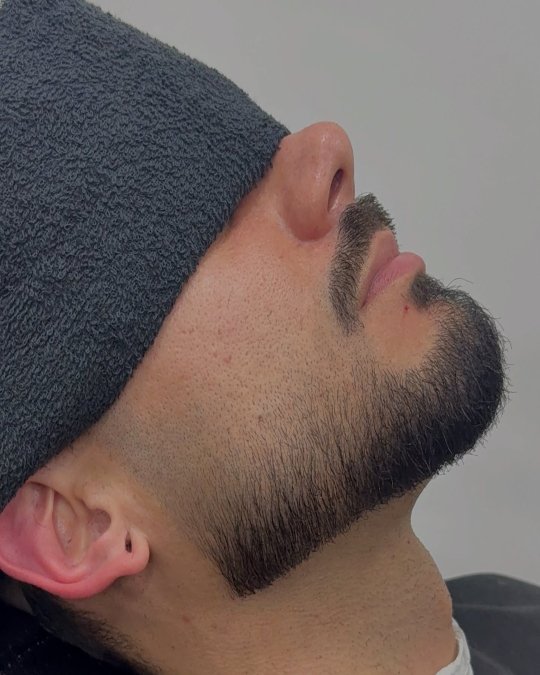
The beard is short and sparse, and it fades into the cheek and jaw in a soft, patchy gradient. It is slightly denser along the jaw and chin, with a trimmed mustache and a small patch under the lip. The line under the jaw is crisp, and the skin below it is clean. A dark towel covers the eyes, so the focus stays on the beard.
This look works for men whose beard grows in lighter or less evenly. A short length hides gaps, and the fade shapes the edges so the beard looks planned. It also gives the jaw a defined outline without needing thick growth.
Easy upgrade: If the cheeks grow in patchy, keep the beard at this short length and let the line under the jaw do the work. A sharp edge makes light growth look intentional.
Ask your barber: Ask for a short beard faded into the cheek, with a clean line under the jaw and a tidy neckline. Say you want a soft blend, since a hard cheek line shows every gap.
Maintenance tip: Short stubble loses its shape fast. Trim every few days and plan on a barber visit every two to three weeks.
Wavy Mullet Fade
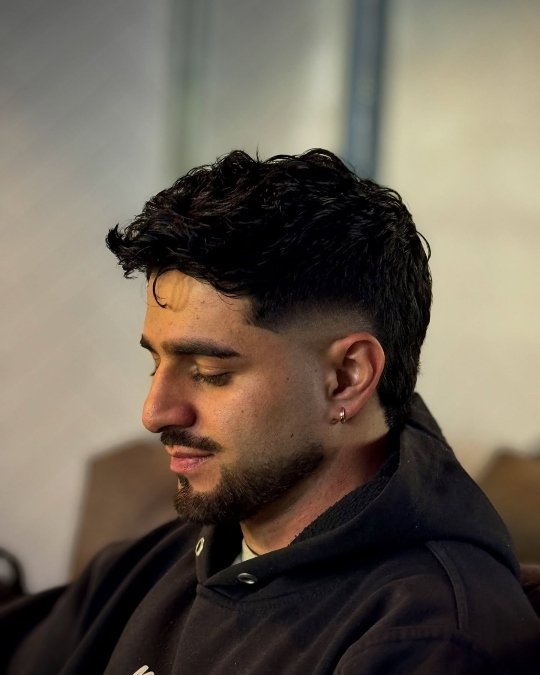
Haircut formula: wavy top + fade + longer back + short beard
The beard is short and neat, with a trimmed mustache and a small chin patch. It is fullest at the chin and jaw, and lightens toward the cheek and sideburn. The hair on top is dark and wavy, falling forward with natural movement. The sides are faded close around the ear, while the hair at the back stays longer and drops past the neckline.
The contrast is what makes this look work. Close faded sides slim the face and show off the beard, while the wavy top and longer back add volume and shape. The beard keeps the whole look grounded instead of letting the mullet take over.
Ask your barber: Ask for the beard to fade into the sideburn at the same height as the fade on the head. Keep the back longer, with a clean line at the neck so the length looks intentional.
Styling tip: Wavy hair holds its shape with a light cream or sea salt spray, scrunched in and air-dried. Skip heavy gel, which flattens the waves and makes the top look stiff.
Curly Crop Taper Beard
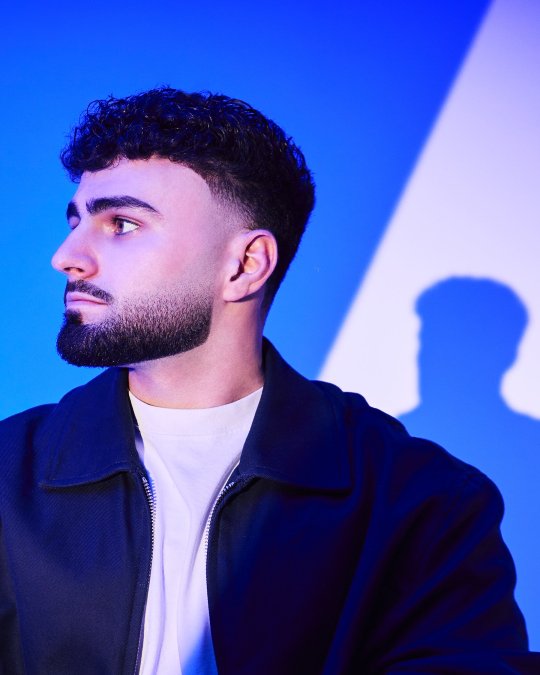
Beard formula: full short beard + tapered cheeks + clean neckline
The beard is full and dense, with a well-defined cheek line and a rounded edge under the jaw. It is fullest at the chin and jaw, and it tapers toward the sideburn and ear. A trimmed mustache sits above it. The hair on top is short, dark, and curly, cut into a rounded crop with a soft fringe. The sides taper close around the ear.
Short curls on top and a full beard below make a balanced outline. The taper on the sides keeps the curls from looking bulky, and the beard’s defined edges add structure. The tight curl pattern holds its shape well, so the crop needs very little styling.
Ask your barber: Ask for the curls to be kept at a short, even length on top, with a taper on the sides. Say you want the beard to blend into the sideburn, with the cheek line kept natural and a clean line under the jaw.
Styling tip: Curly hair holds shape best with a light curl cream or leave-in product, worked in while damp. Skip heavy wax, which weighs the curls down and makes them look dull.
Textured Pompadour High Fade
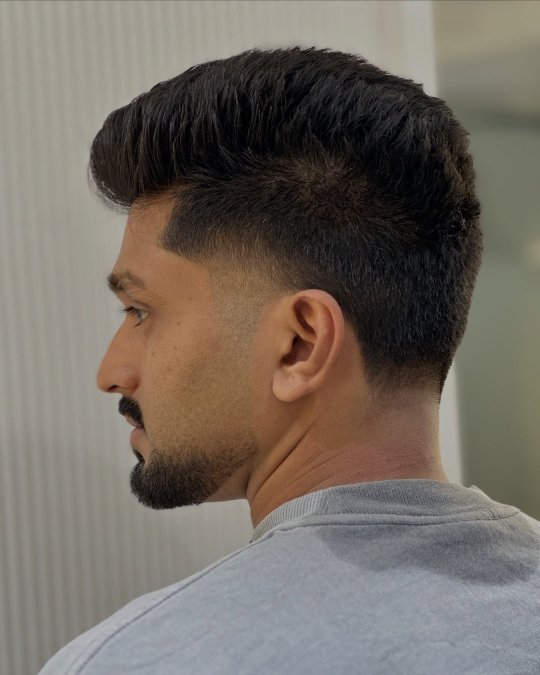
Haircut formula: voluminous quiff + high drop fade + short stubble beard
The sides and back are faded very close, with the fade starting high on the temple and dropping behind the ear. The top is thick, dark, and swept up and back into a tall, textured quiff that holds its height at the front. The beard is short and neat, a light stubble on the cheek that gets denser and slightly longer at the chin. It has a trimmed mustache and a clean line under the jaw.
The contrast is the main feature. A high fade leaves a lot of skin on the sides, so the volume on top stands out. The short stubble beard stays tidy and keeps the focus on the haircut. Because the neck is also faded, the whole profile looks sharp from every side.
Fade detail: A high drop fade starts near the temple and curves down behind the ear. It shows more skin than a low fade and gives a bolder outline, so the beard fade needs to match its height.
Ask your barber: Ask for the beard to fade into the sideburn at the same height as the fade on your head, with the most length at the chin. Mention you want the quiff kept long enough on top to sweep back.
Styling tip: A matte clay or paste, worked through the hair and pushed up at the front, holds the height. Blow-drying the quiff upward first helps it keep its shape.
Maintenance tip: High fades grow out visibly within two weeks. Plan on a barber visit every two to three weeks to keep the contrast sharp.
Faded Goatee Front View

The front view shows how the beard fades across the face. The beard is short and neat, with a thick, trimmed mustache and a small patch under the lip. It is densest at the chin and jaw, and fades into light stubble on the cheeks, so the sides look shaded instead of solid. The hair on top is thick, dark, and pushed up into a textured quiff, with the sides faded close above the ear.
A front view is useful because it shows the cheek fade, which the profile shots hide. The beard thins gradually from the jaw up toward the ear, with no hard cheek line. That keeps the face looking even and makes the mustache and chin patch stand out.
Ask your barber: Ask for the cheeks to fade into light stubble instead of being shaved clean, with the most length at the chin and mustache. Show a front-facing photo, since this is the angle where an uneven fade shows up first.
What to avoid: A harsh line where the stubble stops and the skin starts. If the cheek line is cut too high or too sharp, the fade looks pasted on instead of blended.
Beard Fade From the Other Side
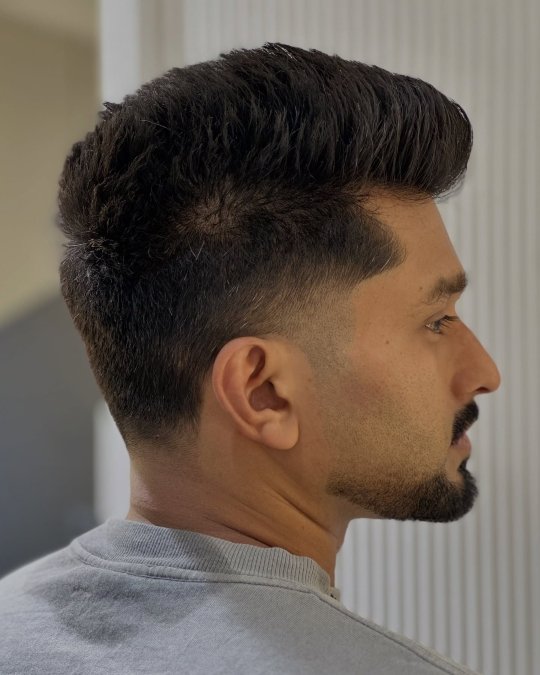
The beard is short and tidy, with a trimmed mustache and a small chin patch. From this side it thins out along the cheek and jaw, shaded dark at the chin and lighter toward the ear. The top is a tall, textured quiff swept forward and up, and the sides drop into a high fade with a curve behind the ear.
This is the opposite profile of image 15, so it shows the other side of the same cut. A beard fade should look balanced from both sides, and here the cheek fade and the line under the jaw match what you saw on the first side. Checking both sides in the mirror is the easiest way to catch an uneven blend.
Ask your barber: Ask them to check the fade on both sides before you leave, with the beard blending at the same height on each cheek. Asymmetry shows up fast on a short beard, so it is worth a quick look from both angles.
Maintenance tip: Because the sides are faded close, regrowth shows within two weeks. A trim every two to three weeks keeps the contrast sharp.
Tall Quiff Skin Fade
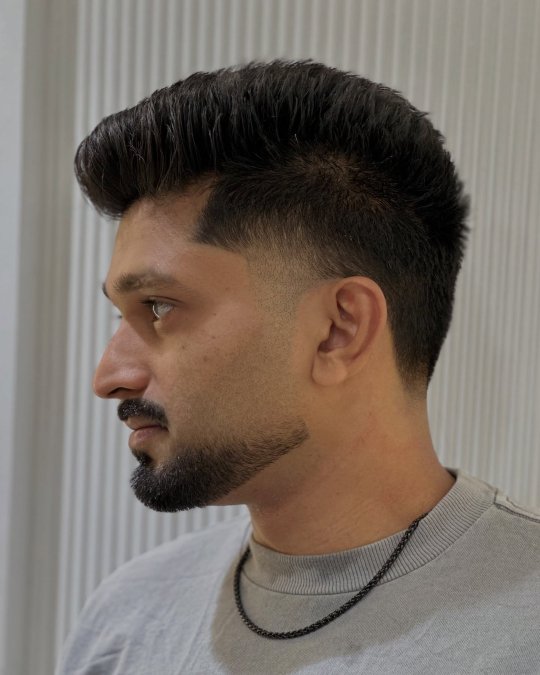
Best for: Men with thick, dark hair who want a bold top and a short, tidy beard that fades into the cheek.
The beard is short and dense at the chin, with a trimmed mustache. It thins as it travels along the jaw and cheek toward the ear, ending in light stubble, with a clean line under the jaw. The top is a tall, textured quiff swept up and back. The sides drop into a high fade that shows bare skin around the temple and ear.
This angle shows the cheek fade better than the earlier profile shots. The beard gets lighter in small steps instead of stopping at a hard line. Close sides also leave the volume on top as the main feature, so the beard stays neat and does not compete with it.
Ask your barber: Ask for the beard to fade into the sideburn at the same height as the fade on your head, with the most length kept at the chin. Mention that you want the quiff left long enough on top to sweep back.
Maintenance tip: A high fade shows regrowth within about two weeks. A tidy-up every two to three weeks keeps the contrast sharp.
| # | Beard Style | The Look | Upkeep | Beard Service | Cut + Beard |
|---|---|---|---|---|---|
| 1 | Low Fade Beard | Wavy top, low fade, beard thins toward ear and neck | Every 3 weeks | $20 – $30 | $45 – $60 |
| 2 | Sharp Skin Fade Beard | Beard fades to bare skin with a crisp line under the jaw | Every 2–3 weeks | $25 – $35 | $50 – $70 |
| 3 | Clean Taper Beard | Soft taper, beard stays visible along the whole jaw | Every 3–4 weeks | $15 – $25 | $40 – $55 |
| 4 | Buzz Cut With Skin Fade | Very short crop, skin fade, short faded beard | Every 2 weeks | $20 – $30 | $40 – $55 |
| 5 | Drop Fade With Short Beard | Fade curves down behind the ear, neat short beard | Every 3 weeks | $20 – $30 | $45 – $60 |
| 6 | Curly Top + Neckline Fade | Loose curls, angled neckline, beard fading to skin | Every 2–3 weeks | $25 – $35 | $50 – $70 |
| 7 | Low Taper Fade Beard | Swept-back waves, taper meets beard at the ear | Every 3 weeks | $15 – $25 | $40 – $55 |
| 8 | Italian Beard Fade for Wavy Hair | Tousled waves, low taper, dense short beard | Every 3 weeks | $20 – $30 | $45 – $60 |
| 9 | A Seamless Beard Fade | One continuous curve from beard to taper | Every 2–3 weeks | $25 – $35 | $50 – $65 |
| 10 | Close-Cut Beard Fade | Short even beard with a gradual blend into skin | Every 2–3 weeks | $25 – $35 | $50 – $65 |
| 11 | Mid Fade Beard With Textured Quiff | Textured quiff, mid fade, medium-short beard | Every 2–3 weeks | $20 – $30 | $45 – $60 |
| 12 | Light Stubble Fade | Short, light beard fading into the cheek | Every 2–3 weeks | $10 – $20 | $35 – $50 |
| 13 | Wavy Mullet Fade | Wavy top, faded sides, longer back, short beard | Every 3 weeks | $20 – $30 | $45 – $65 |
| 14 | Curly Crop Taper Beard | Short curls, tapered sides, full short beard | Every 3 weeks | $20 – $30 | $45 – $60 |
| 15 | Textured Pompadour High Fade | Tall quiff, high drop fade, short stubble beard | Every 2 weeks | $20 – $30 | $50 – $65 |
| 16 | Faded Goatee Front View | Thick mustache and chin patch, cheeks fade to stubble | Every 2–3 weeks | $15 – $25 | $40 – $55 |
| 17 | High Fade Beard | High fade with a short beard blending at the cheek | Every 2 weeks | $20 – $30 | $45 – $60 |
| 18 | Tall Quiff Skin Fade | Bold quiff, high skin fade, beard fading to light stubble | Every 2 weeks | $25 – $35 | $50 – $70 |
Note: Prices are rough US ranges in USD and change with city, shop, and barber. Skin fades and detailed shaping usually cost a little more. Tips are not included. Ask your barber for a quote before you sit down.
Frequently Asked Questions
What is an Italian beard fade?
“Italian beard fade” is a name people use in searches, not an official barbering term. It usually means a short to medium beard that blends from fuller length at the chin into bare skin or light stubble near the sideburns and neck. Showing your barber a photo is the safest way to get the same look.
How do I ask my barber for a beard fade?
Say where you want the fade to start (low, mid, or high) and ask for the beard to blend into your sideburns with no hard line. Ask for the most length at the chin and a clean neckline above the Adam’s apple. Bring a side-profile photo, since “fade” means different things to different barbers.
Which fade height is best for a beard fade?
A low fade keeps more beard and grows out more gently. A mid fade shows more skin and gives a sharper look. A high fade is the boldest and needs the most upkeep. Match the beard fade height to the fade on your haircut so both look like one cut.
How often should I get a beard fade touched up?
Most men go back every two to three weeks, because the bare-skin areas show regrowth first. A high or skin fade usually needs visits more often than a soft taper. Light trimming of the neckline at home can stretch the time between visits.
Can I get a beard fade with a patchy beard?
Yes. A short fade hides gaps better than a long beard because patchy areas are blended instead of left as a hard edge. Keep the length short and ask for a soft blend on the cheeks. A sharp line under the jaw also makes light growth look planned.
Does a beard fade work with curly or wavy hair?
Yes. Curls and waves on top add volume, and the faded sides keep the shape tidy. Use a light curl cream or sea salt spray on the top so the texture stays loose, and ask your barber to match the beard fade height to the sides of your haircut.
Can I do a beard fade at home?
A simple taper at the sideburns and neckline is possible at home with a trimmer and a mirror. A smooth fade to skin is harder, because small mistakes show right away. If you try it, start with a longer setting and go shorter slowly, since you cannot add length back.
How much does a beard fade cost?
Prices vary by city and barber. In many US shops, a beard trim or shape-up runs about $15 to $30, and a haircut with beard work runs about $40 to $70. Skin fades and detailed shaping usually cost a little more, and tips are extra.
How do I keep a beard fade looking sharp?
Brush the beard daily and trim stray hairs along the neckline every few days. Use a small amount of beard oil or balm to keep the hair and skin soft. Book your next visit before the blend starts to look uneven.