
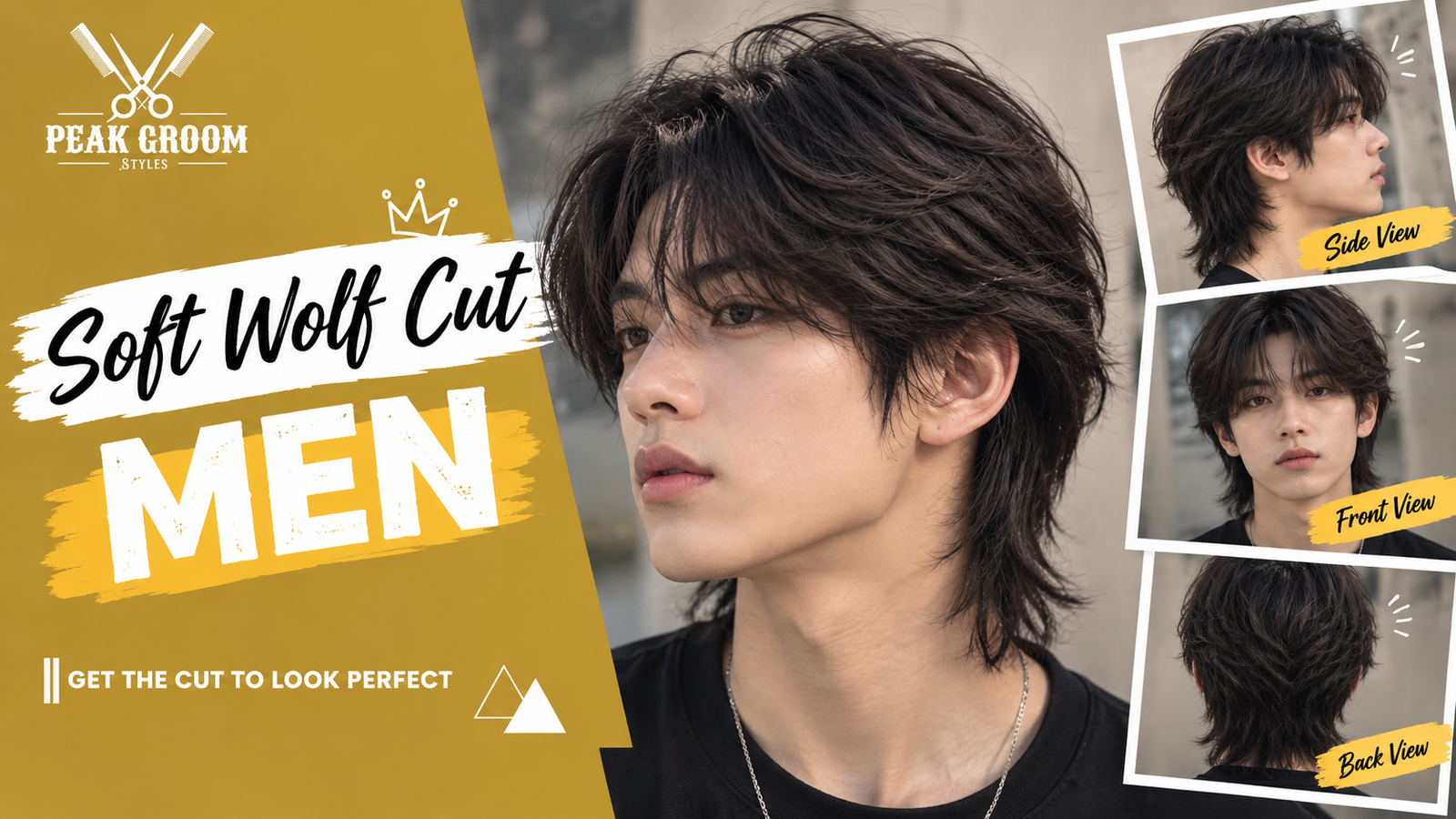
A wolf cut can look sharp on one guy and messy on the next. The difference usually comes down to how much layering the hair can handle.
Too much choppy texture on fine straight hair looks thin and stringy. Too little layering on thick curls leaves a heavy, boxy shape that’s hard to style.
This soft wolf cut guide for men covers 25 ideas across wavy, straight, and curly hair. Each one explains why the shape works and what to tell your barber.
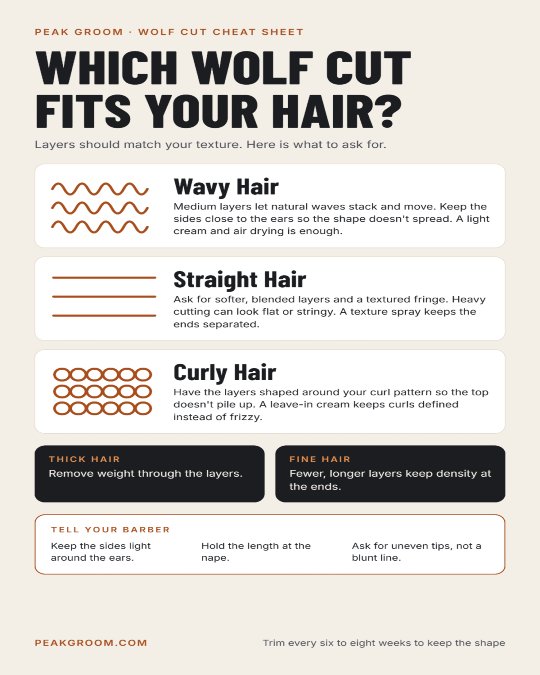
How to Match Wolf Cut Layers to Your Hair Texture
- Wavy hair: Medium layers let the natural bend stack and move without much product. Keep the sides close enough to the ears that the shape doesn’t spread sideways.
- Straight hair: Ask for softer, blended layers and a textured fringe. Straight hair shows every choppy line, so heavy cutting can look flat or stringy.
- Curly hair: Have the layers shaped around the curl pattern so the top doesn’t pile up. A leave-in cream helps keep curls defined instead of frizzy.
- Thick vs. fine hair: Thick hair needs weight removed through the layers. Fine hair does better with fewer, longer layers that keep density at the ends.
Wavy Curtain Wolf Cut
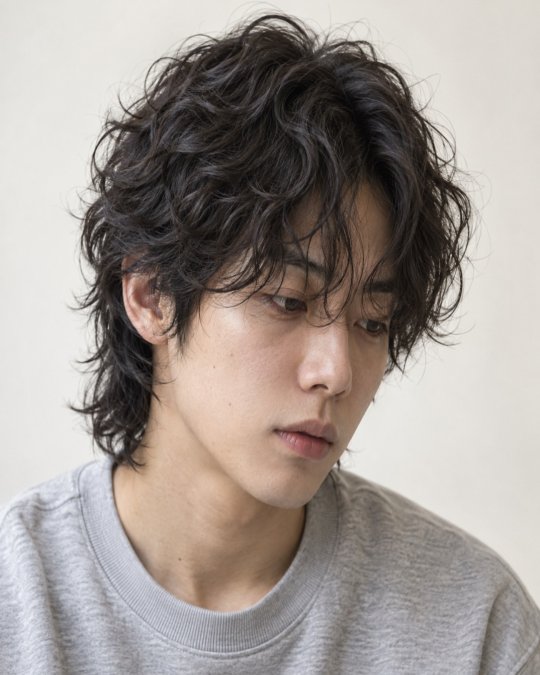
Dark wavy hair falls forward into a curtain-style fringe, then drops into longer layers around the ears and neck. The waves look loose and slightly undone, with wispy ends instead of heavy, blunt lines.
This soft wolf cut works because the volume sits on top while the sides stay light. That keeps the shape from spreading wide, and the fringe frames the eyes and cheekbones.
It suits men with natural waves or loose curls and enough length to layer. Straight hair may need a sea salt spray to hold this texture, and a trim every two months keeps the layers from bunching.
Medium Shaggy Wolf Cut
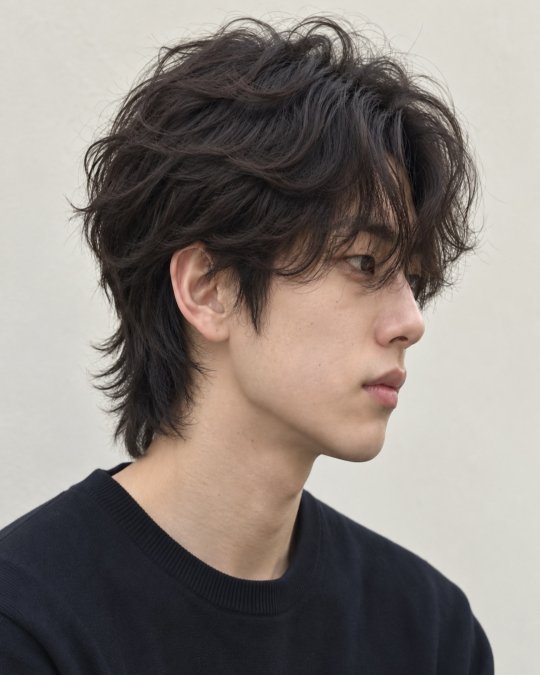
From the side, the layers build volume through the top and crown, then break into wispy, choppy ends behind the ear and along the nape. The fringe sweeps forward and slightly sideways, and the ear stays mostly uncovered.
- Why it works: The fuller top and lighter sides create a rounded outline that balances a slimmer face. The uneven ends at the back stop the shape from looking blunt or boxy.
- Ask your barber: Request longer layers on top, shorter and lighter layers around the ears, and a back that tapers into a soft, wispy point at the nape.
- Best for: Men with wavy hair and medium density. Fine or straight hair may need a light mousse or texture spray to hold the lift.
A Choppy Feathered Wolf Cut
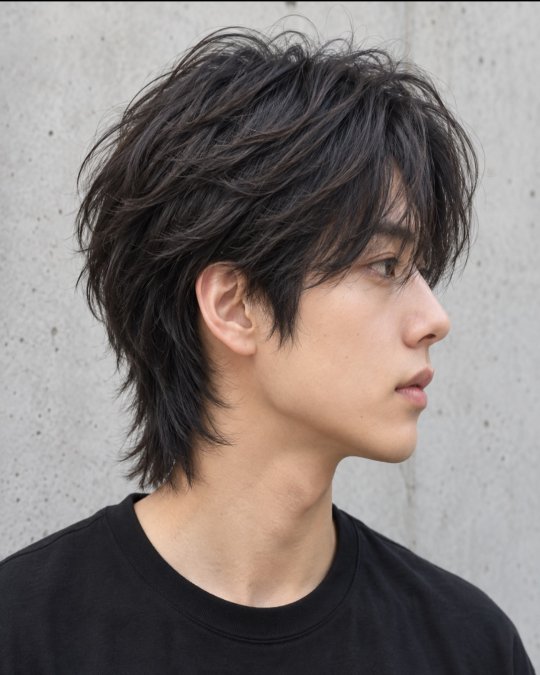
Haircut formula: choppy top layers + textured fringe + long, pointed nape layers
Straight dark hair is cut into uneven layers that lift away from the head, so the top gets movement without any curl. The sides sit slim around the ear, while the back stretches into pointed tips that reach the neck.
This wolf cut for straight hair works because the choppy ends create the texture waves would normally give. A small amount of matte clay or paste worked through dry hair keeps the layers separated instead of flat.
Long Wolf Cut With Side Fringe
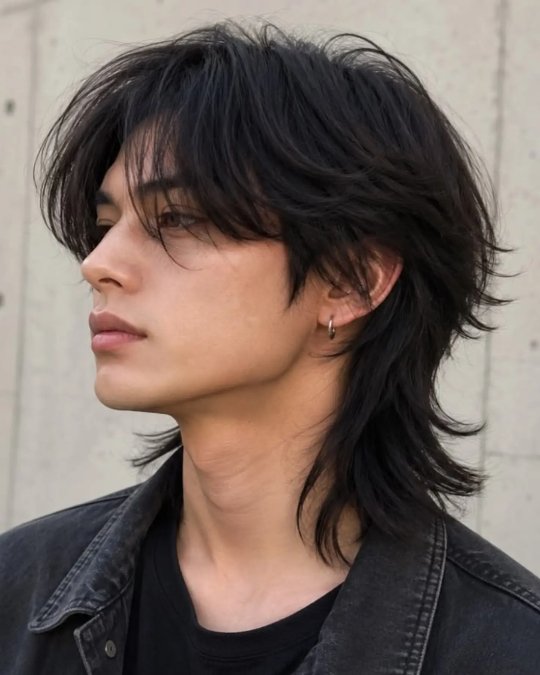
This version pushes the length further than the earlier cuts. Dark straight hair is layered through the top, then runs long and pointed down the back, with a fringe that sweeps across the face.
- Top: Voluminous layers lift off the crown, with wispy, uneven ends for a lived-in look.
- Fringe: Long and side-swept, falling past the brow line. It frames the eyes without sitting in a straight, blunt line.
- Sides: Shorter layers tuck around the ear, which leaves it uncovered.
- Back: Long, tapered layers fall past the neckline and end in sharp points.
The length at the back draws the eye downward and balances the volume on top. Straight black hair also shows every uneven end, so plan regular trims to keep those tips clean instead of frayed.
Soft Flowing Middle Part
Source : insta
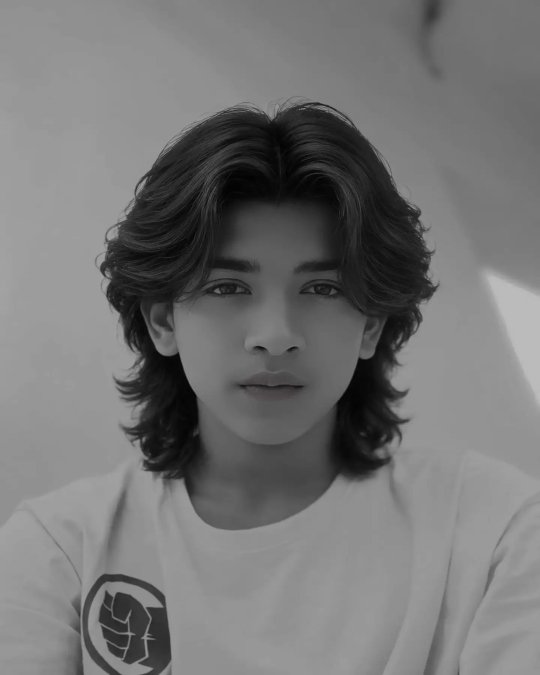
Best for: Men with naturally wavy, medium-to-thick hair who want a longer wolf cut that looks soft instead of choppy.
The hair splits at the center and sweeps outward in smooth waves that curtain the face. The layers end around the jaw and neck, where the tips flick out slightly.
This shape adds width at the sides, which can balance a longer face. Use a light cream on damp hair and let it dry naturally, since heavy products can pull these waves flat.
Tousled Fringe Wolf Cut
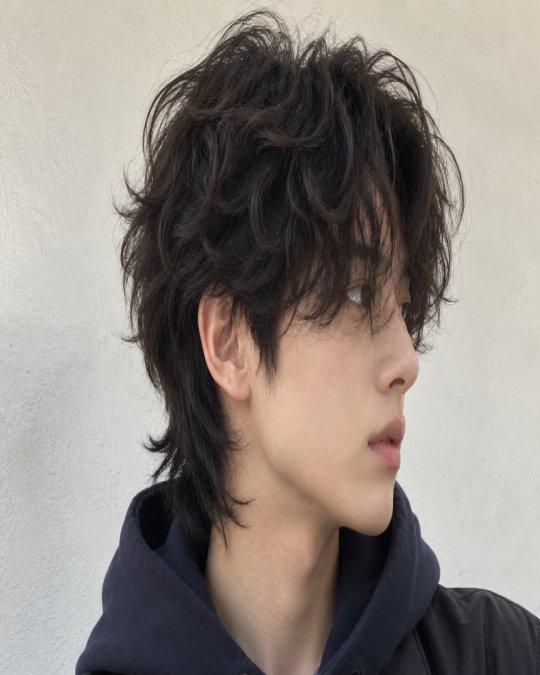
Dark wavy hair sits high and airy on top, with loose, uneven pieces that stand away from the scalp. The wispy fringe falls across the forehead and brow, and the shorter sides tuck behind the ear.
At the back, the hair stays longer and ends in a thin, uneven tail along the neck. That contrast between the rounded crown and the narrow nape gives the cut its wolf shape.
Sea salt spray scrunched into damp hair adds this kind of grit and movement. Because the fringe grows into the eyes first, plan on trimming it more often than the back.
Wolf Cut for Straight Hair
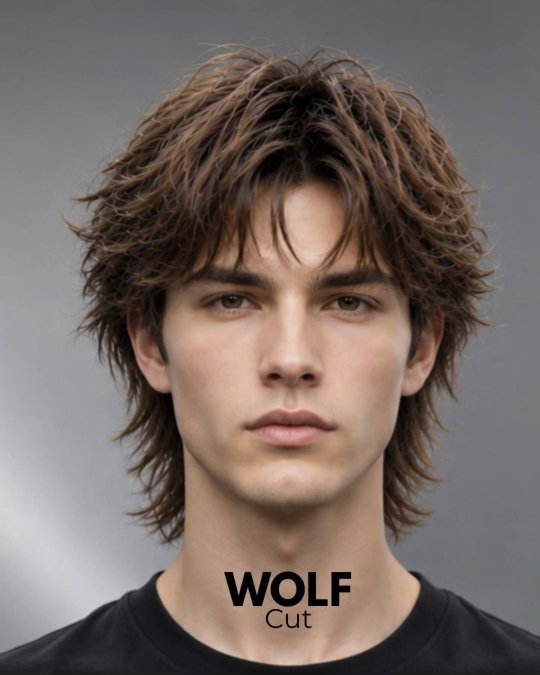
Why this style works:
- Layered shape: Shorter pieces on top and longer ones at the sides build a full, rounded outline without extra bulk.
- Fringe: It parts near the center and falls to the brow, which frames the eyes and softens the hairline.
- Face shape: The side layers reach past the cheeks and jaw, adding width around a slimmer or longer face.
- Styling: The brown hair has a dry, rough finish. A texture spray worked in with the fingers keeps the ends separated.
Warm Brown Wolf Cut
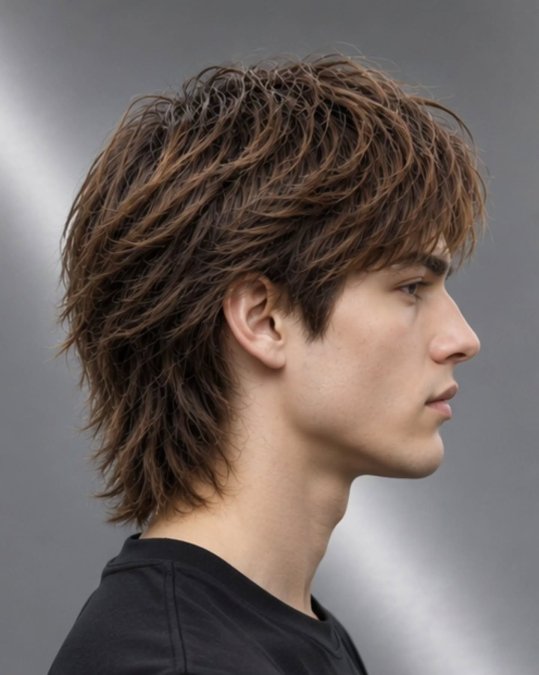
Haircut formula: feathered top layers + short side-swept fringe + pointed nape layers
Warm brown hair, with lighter tones through the ends, is cut into stacked layers that sweep back from the crown. The fringe stays short and falls to one side, and the ear is fully uncovered. At the back, the length drops into sharp, pointed tips along the neck.
When you ask your barber for this shape, tell them to keep the sides lighter around the ear and hold the length at the nape. That contrast is what turns a layered cut into a wolf cut, and a small amount of paste keeps the tips separated.
Short Fringe + Layered Nape
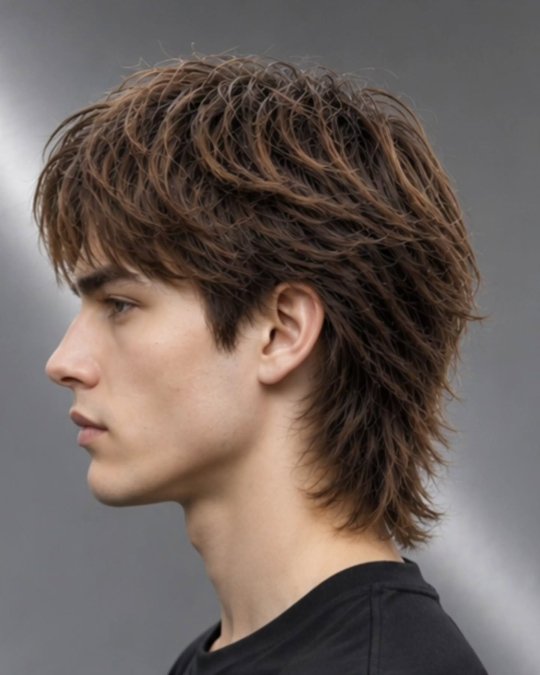
From this left-facing angle, the shape of the cut is easy to read. The top layers flow back in loose, wavy strands, the short fringe stops at the brow, and the hair around the ear is cut short and light.
Behind the ear, the layers lengthen and fan out before narrowing into a feathered tail at the neck.
Hair length note: For a shorter version, keep the layers on top and ask for the back to sit higher on the neck.
- Styling: Rough dry with your fingers, then add a little texture spray at the ends.
- Maintenance: Book a trim about every two months so the back tail stays clean instead of thin.
Wolf Cut Back View
Source : insta
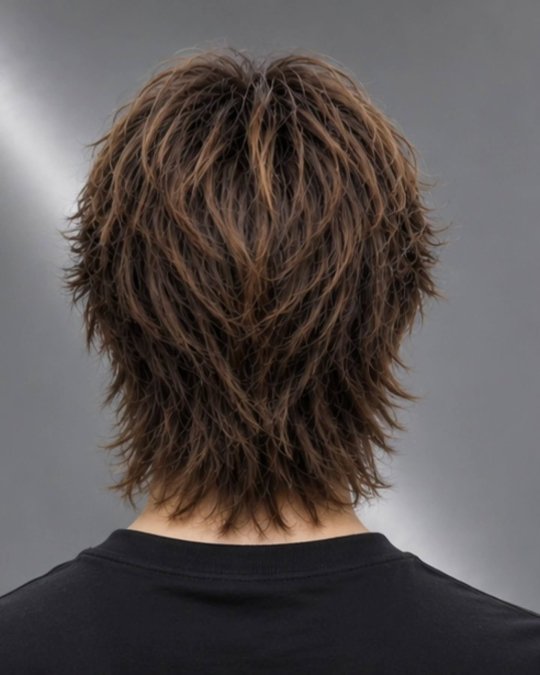
The back shows a rounded, full crown with warm brown strands that run down and inward, forming a V shape toward the center. Below that, the layers break into uneven, pointed ends that sit along the base of the neck.
What to avoid: Don’t ask for a straight, blunt line across the back. The uneven tips keep the cut light and stop it from looking like a bowl shape.
Layers like these take weight out of thick hair and add movement. On fine hair, ask for fewer, longer layers so the ends don’t look see-through. The neckline here is natural and feathered, so it will grow out softly between trims.
Sleek Modern Wolf Cut
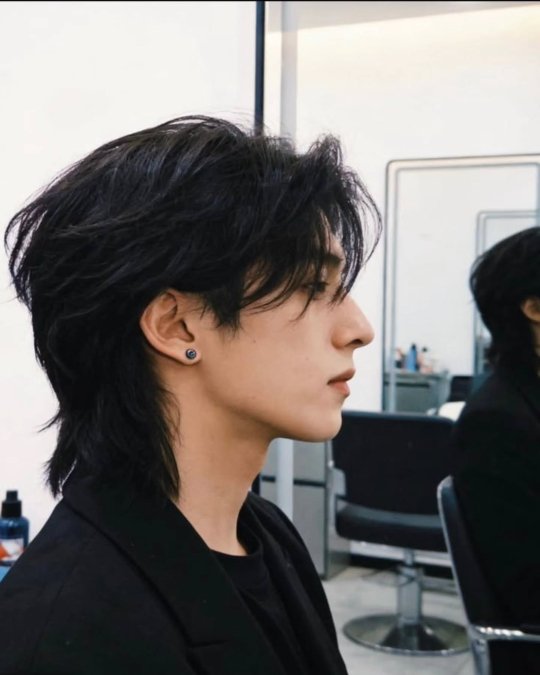
Straight black hair lifts off the crown, while a long, side-swept fringe drapes across the forehead and temple. The hair around the ear is short and tucked back, which keeps the face open.
Behind the ear, the length drops into a longer back section that follows the neck and ends in loose, pointed layers. That gap between the short sides and the long back is what gives this modern wolf its shape.
It suits men with straight, medium-to-thick hair and a slim or oval face. Straight black hair shows shine easily, so a light cream on the ends is enough, and regular trims keep the longer back section from thinning out.
Face Framing Wolf Cut
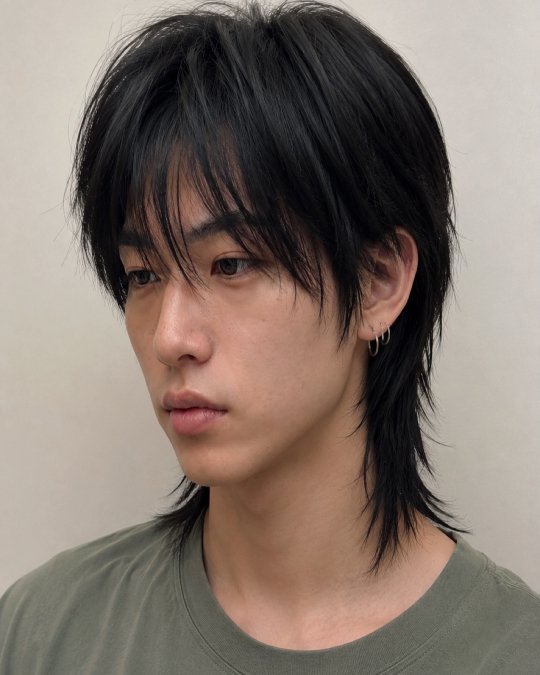
Haircut formula: heavy curtain fringe + airy crown + long, pointed back layers
Straight black hair is cut with a full fringe that sweeps across the forehead and down toward the cheekbones. Long layers frame both sides of the face and run into sharp tips at the neck. The ear stays uncovered, which keeps the sides light, while the length at the back balances the weight of the fringe.
Glossy Layered Wolf Cut
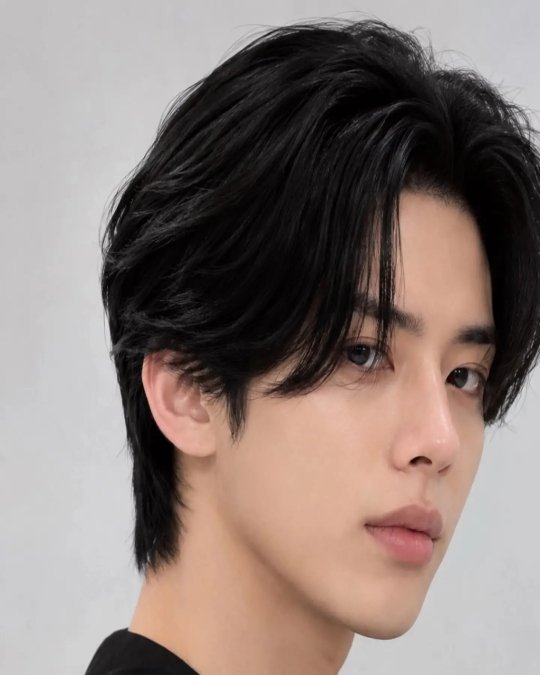
A smoother take on the wolf cut, with the shine of straight black hair and fewer choppy ends. If you want to bring this one to a barber, here is what to point out.
- Top: Longer layers with lift at the crown, brushed back and to the sides.
- Fringe: Parted near the center, with curtain pieces that fall to the brow and sweep outward.
- Sides: Short and tucked behind the ear, so the ear stays visible.
- Back: Layers narrow into a soft tail at the neck instead of a blunt edge.
The smooth finish keeps the cut looking neat, while the lift on top stops it from lying flat. A small amount of styling cream is enough, since heavy product would weigh down the shine and the movement.
A Short Tapered Wolf Cut
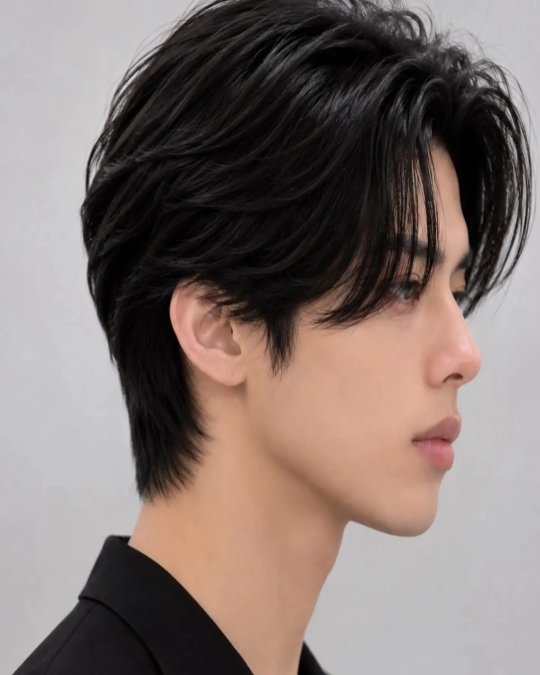
Haircut formula: lifted top layers + curtain fringe + short tapered back
This one is shorter at the back than most cuts on this list, with the length ending above the collar. The top keeps its height and the fringe falls to the brow, so the wolf shape is still there, just toned down.
If you want a first wolf cut, ask your barber to keep the layers long on top and the nape short and neat. Blow drying the top up and back with your fingers gives the same lift, and a short back is easier to keep tidy between trims.
Messy, Wispy Wolf Cut
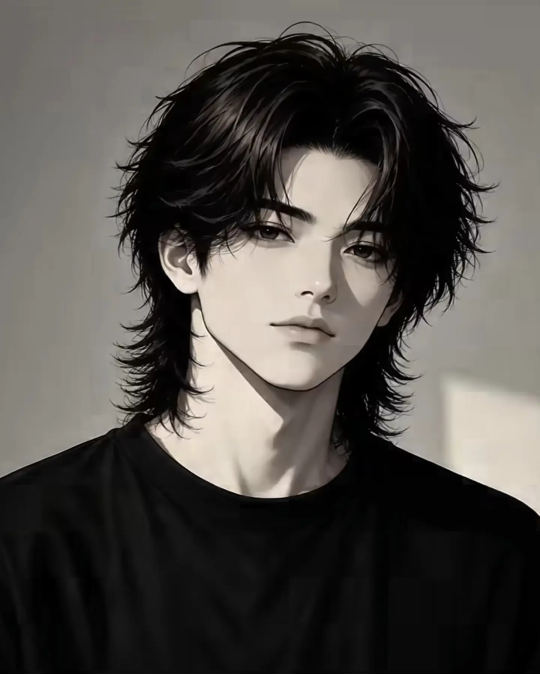
Black hair sits messy and airy on top, with a part just off center and a long fringe that curtains down past the brows. The sides end around the jaw and flick outward, and the back drops into thin, feathered tips near the collar.
Face shape note: The flicked ends at the jaw add softness to a slim face with a defined jaw. On a rounder face, keep the layers longer than the chin so the flip doesn’t add width at the cheeks.
Rough dry the hair with your fingers and use a little texture spray to keep the ends loose. The fringe will need a trim sooner than the back.
Wet Look Wolf Cut
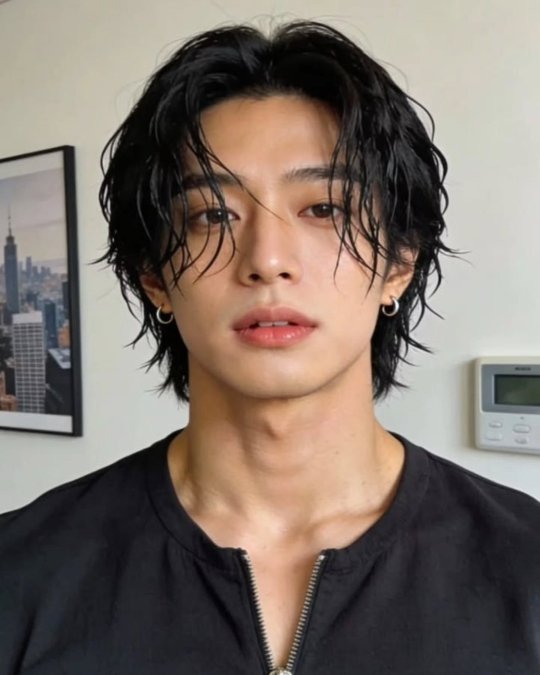
Black hair parts in the middle and falls into long, wavy strands around the face. The sides skim the jaw, and the ends flick out at the neck.
- Finish: The slick shine points to damp hair or a wet-look product. For a softer everyday version, use a light cream and let it dry naturally.
- Fringe: Long curtain strands fall past the eyes to the cheeks. Ask for them to be cut uneven, so they blend into the side layers instead of sitting as a blunt line.
- Best for: Men with dense, wavy hair. Straight hair will need a texture or wave product to copy the same movement.
Pointed Nape Wolf Cut
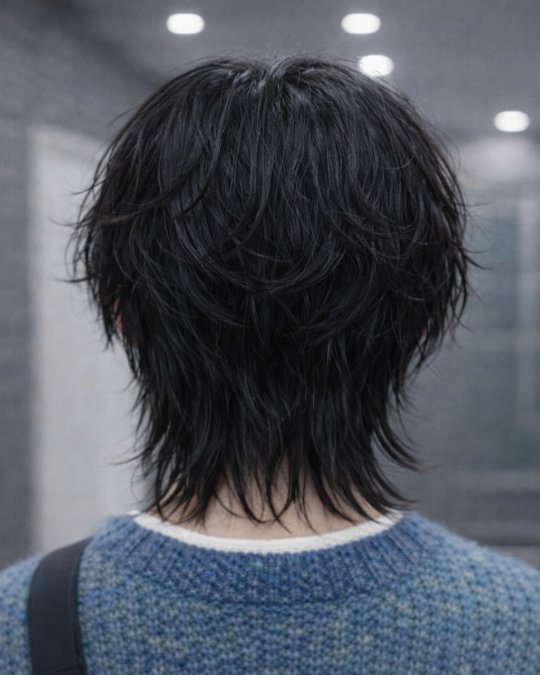
Why this style works:
- Stacked layers: The rounded crown steps down the back in tiers, so the volume sits high and the hair thins out toward the neck.
- Pointed nape: The ends fall in uneven points at the center of the neck instead of a straight line, which helps the cut grow out softly.
- Dark, straight texture: Choppy ends show up clearly on black hair, and a little texture spray keeps them from clumping.
- Upkeep: A trim every two months or so stops the nape from turning into a heavy block.
Eye Length Fringe Wolf Cut
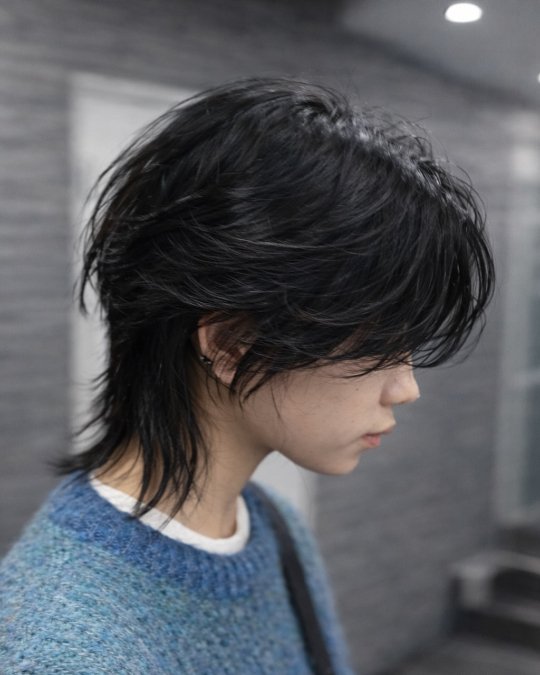
Haircut formula: eye-length fringe + stacked top layers + long, pointed back
Black straight hair is cut with a long fringe that falls over the eye and down toward the cheek. Stacked layers lift the crown, the sides tuck in around the ear, and the back runs down to the collar in loose points. A fringe this long can get in the way, so ask your barber to cut it slightly shorter if you need clear vision.
Middle Part Wolf Cut
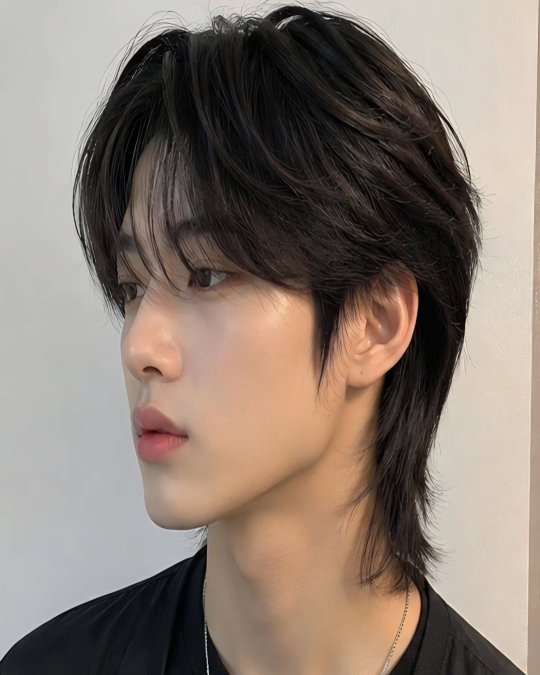
Best for: Men with straight to slightly wavy hair and a slim or oval face who want a wolf cut that looks tidy and still has shape.
The hair parts at the center and sweeps outward into curtain pieces that frame the eyes. The top layers sit in soft tiers, the ear stays uncovered, and the back narrows into a feathered point at the neck.
Blow dry the fringe outward with your fingers to set the curtain shape. A trim every six to eight weeks stops it from growing into the eyes.
Frequently Asked Questions
What is a wolf cut for men?
A wolf cut is a layered haircut with volume and texture on top, a fringe, and longer, choppy layers at the back. It blends a shag with a mullet, so the shape looks full on top and narrow at the neck.
Does a wolf cut work on straight hair?
Yes, but straight hair shows every choppy line. Ask for softer, blended layers and a textured fringe, and use a texture spray to keep the ends separated.
Can men with curly hair get a wolf cut?
Yes. The layers should follow your curl pattern so the top doesn’t pile up. A leave-in cream helps keep the curls defined instead of frizzy.
How long does my hair need to be?
You need enough length to layer, usually enough to cover the ears and reach the neckline. If your hair is shorter, ask for a shorter wolf cut and let it grow into the full shape.
How do you style a wolf cut?
Rough dry the hair with your fingers, then add a light product that fits your texture. Use cream for waves and curls, and texture spray or paste for straight hair.
How often should I trim it?
Plan on a trim every six to eight weeks. The fringe grows into the eyes first, and the back layers lose their pointed shape as they grow.
Is a wolf cut good for fine or thin hair?
It can be, with fewer and longer layers. Too many short layers make fine hair look see-through, while thick hair needs the extra layers to remove weight.
What face shapes suit a wolf cut?
Side layers that reach the cheeks and jaw add width, which can balance a slimmer or longer face. On a rounder face, keep the layers longer than the chin so the ends don’t add width at the cheeks.
What is the difference between a wolf cut and a mullet?
A wolf cut has layers through the whole head and blends from top to back. A mullet has a stronger contrast between shorter front and sides and a longer back, and the modern mullet keeps the sides closer.