
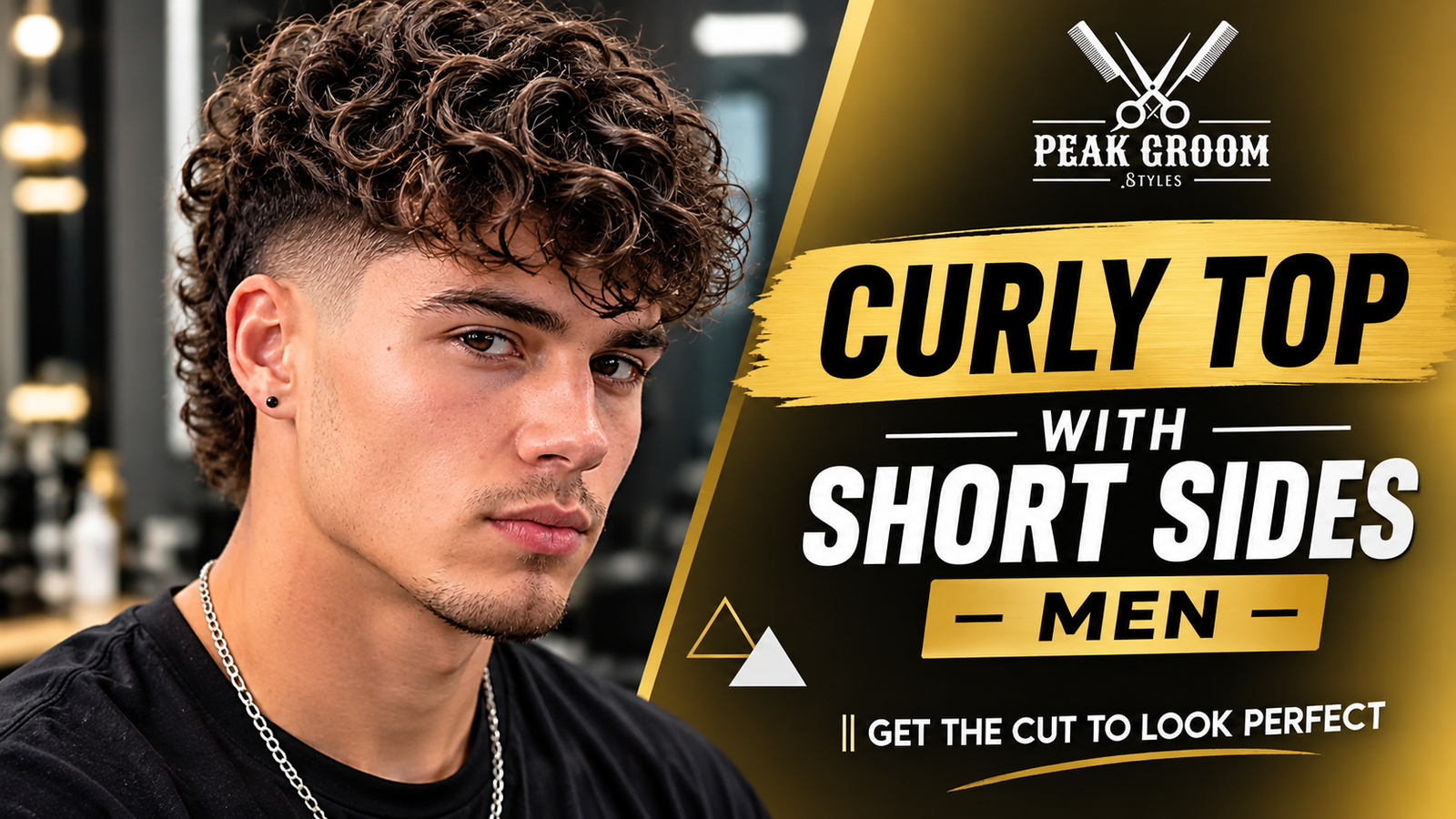
Find Your Curly Mullet in 10 Seconds
| Your hair or goal | Best styles from this list |
|---|---|
| Loose waves | 4, 10, 11, 12, 17, 19 |
| Medium curls | 2, 3, 15, 16 |
| Tight curls or spirals | 1, 5, 6, 9, 14, 18 |
| Low maintenance | 4, 12, 17, 19 |
| Bold skin fade look | 5, 7, 10, 16, 18 |
| Works with a beard | 1, 13, 14, 16, 19 |
What to Ask Your Barber Before Getting a Curly Mullet
- Sides: Ask for a taper or fade that keeps the sides short and blended. Tighter sides stop the curls from spreading outward and make the top and back stand out more.
- Top: Keep enough length for curls to form their natural spring. If the top is cut too short, the curl pattern can look flat instead of defined.
- Back: Ask for soft, tapered ends instead of a blunt line. This helps the back look intentional and keeps it from hanging in thin, stringy strands.
1.Faded Curly Mullet
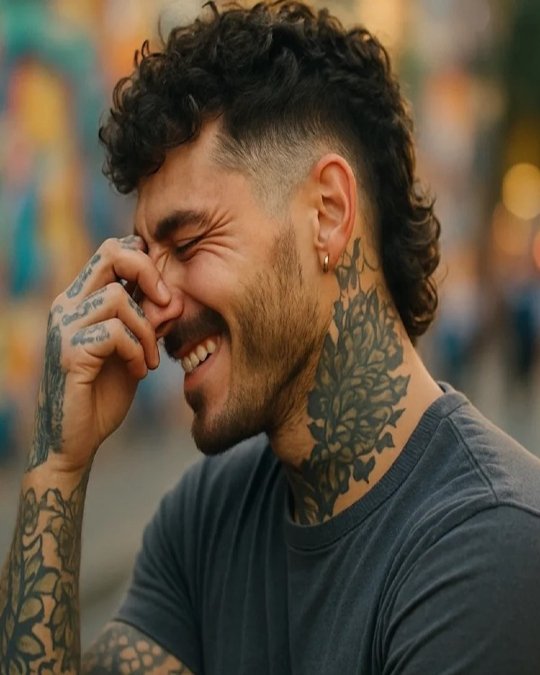
Dark, springy curls sit longer on top and fall forward in loose, natural clumps. The sides are cropped short and blended, with skin showing through near the temple and above the ear. The back keeps its length and curls over the neckline.
That contrast is what gives this curly mullet its shape. Tight sides keep the curls from spreading wide, so the volume stays on top and at the back.
The short beard suits the cut well. It stays close with a defined cheek line, adding weight along the jaw without competing with the hair.
Maintenance tip: The faded sides will soften within a few weeks, so plan regular touch-ups. A curl cream or light sea salt spray scrunched into damp hair helps the curls stay defined without turning stiff.
2. A Soft Taper Mullet
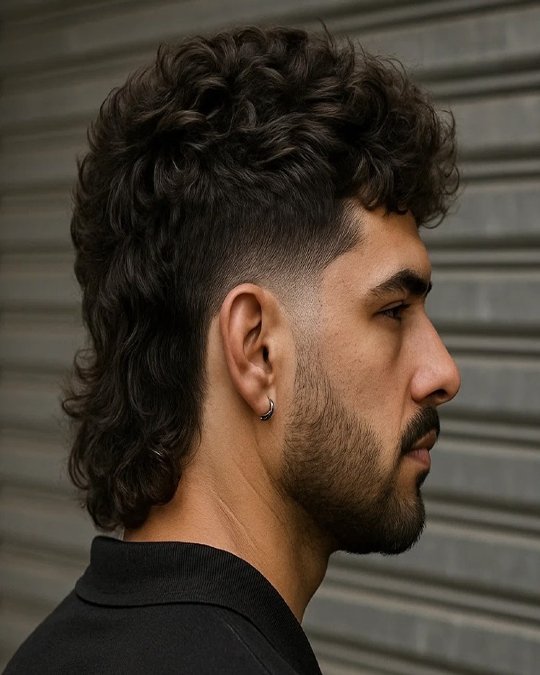
Haircut formula: voluminous curly top + short tapered sides + longer wavy back
The sides stay short and fade out around the temple and ear. The longer top and back look fuller by comparison, and the curls at the front fall forward into a loose, broken-up fringe.
The back is the main feature here. It hangs in loose waves past the neckline, so the cut reads as a mullet without looking harsh. Looser curls like these work well when they’re left a little free instead of being sculpted into place.
The short, full beard keeps the profile balanced. Because the hair has this much volume, a trimmed beard stops the head from looking top-heavy.
3. Curly Mullet With Short Fringe
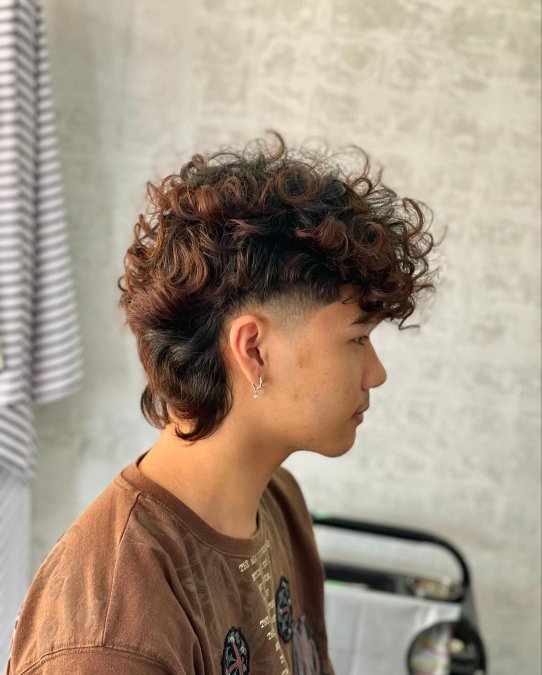
Tight ringlet curls sit high on the crown, with copper tones running through a darker brown base. The fringe is cut short and blunt above the brow, so the curls stay off the face.
The sides are cropped close and fade out around the ear, which leaves a clear break between the top and the sides. The back stays longer and falls in loose waves past the neckline.
- Why it works: The close sides make the curl volume on top look fuller, and the short fringe keeps the shape tidy.
- Ask your barber: Request a short, blunt fringe, a visible gap between the top and sides, and a longer back with softened ends.
- Best for: Men with naturally curly or tightly wavy hair who want a bold shape and don’t mind regular trims.
4. Medium Length Wavy Mullet
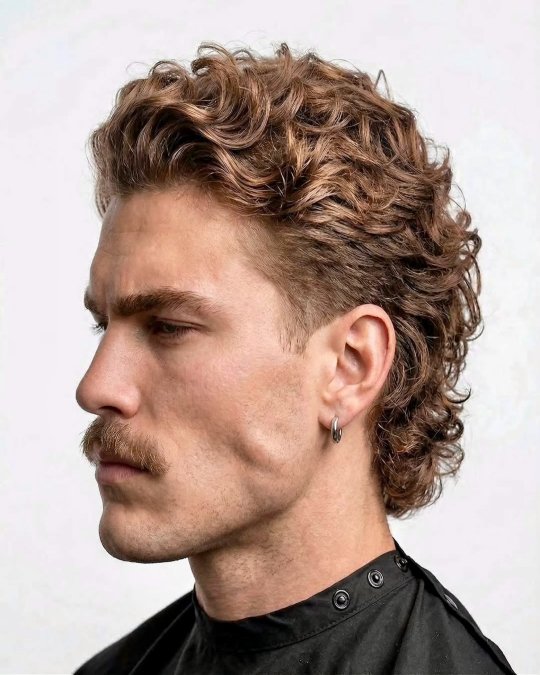
Best for: Men with naturally wavy to loose curly hair who want a relaxed, swept-back shape.
Honey-brown waves are pushed up and back from the forehead, which opens the face and adds height at the front. The sides are cut short and taper around the temple and ear, so the hair above looks fuller.
The back runs longer and curls out near the collar. Looser waves like these give the mullet a softer finish than tight curls, so the shape feels more wearable day to day.
The trimmed mustache and light stubble add some edge. Together with the strong jawline, they keep the longer hair from looking too soft.
Easy upgrade: Work a light curl cream into damp hair, then air dry or use a diffuser. Heavy gel will flatten these waves, and the back needs regular trims so the ends stay shaped.
Choosing black-hair mullet name formats for image five
5. Clean Skin Fade Mullet
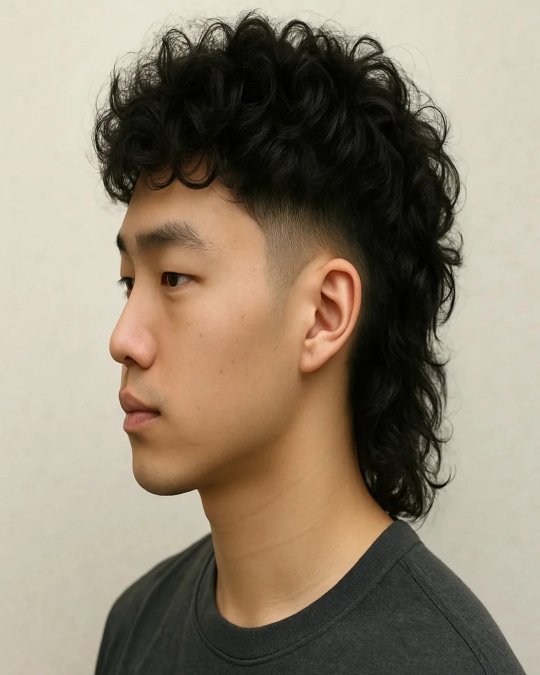
Jet-black curls stack high on top and fall into a rounded, textured fringe above the brow. The sides fade down to skin around the temple and ear, while the back stays long and wavy past the neckline.
- Top: Medium length with enough bulk for the curls to keep their spring. Ask for texture through the crown so the top doesn’t sit as one heavy block.
- Sides: A fade that starts near the temple and blends to skin around the ear, leaving a sharp edge against the longer hair.
- Fringe: Short and curled forward, ending above the eyebrows. This keeps the front tidy and the forehead visible.
- Back: Loose waves with softened ends that curl out at the nape instead of ending in a blunt line.
The sharp sides make the thick curls look fuller by comparison. Dense, dark hair like this also holds the shape well, which is why a skin fade suits it so cleanly.
Maintenance tip: Skin fades show regrowth quickly, so the sides will need regular barber visits to stay crisp. A light curl cream on damp hair is enough to define the texture, and the top can dry naturally.
6. Spiral Curly Taper Mullet
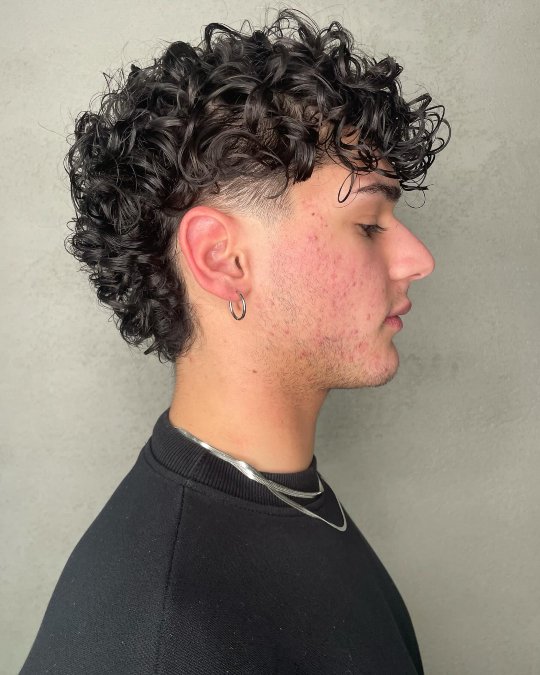
Glossy, dark spiral curls stack through the crown and fall forward into a loose, curly fringe that sits just above the brow. Each curl keeps its shape and separates from the next, so the top looks full without turning into one big mass.
The sides taper short around the ear and fade out near the temple. The back stays long, and the curls hang past the ear to the nape in a rounded shape.
Tight, well-defined curls like these show off the contrast between the short sides and the long back. The light stubble along the jaw adds a little structure to a very soft top.
Product tip: Spiral curls hold their shape best with a curl cream or light gel applied to damp hair. Scrunch it in, let it dry without brushing, and keep the fringe from getting too long so it stays off the eyes.
7. The Shaved Line Design Mullet
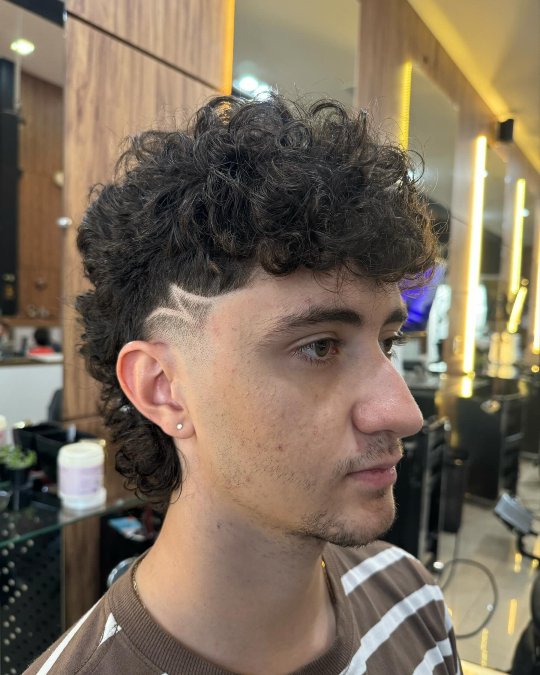
Haircut formula: voluminous curly top + blunt fringe + skin fade + shaved line design
Dark curls sit full on top and end in a short, rounded fringe above the brows. The sides fade down to skin, and a razor-cut line design near the temple adds a sharp, graphic detail against the soft curls.
The back stays longer and curls out past the ear toward the nape. That contrast between the clean, detailed sides and the loose back is what gives this curly mullet its edge.
What to avoid: Hair designs depend on a very short, clean fade, so they blur quickly as the hair grows back. Expect to return to your barber often if you want the lines to stay crisp. A simpler fade is easier to maintain if you’d rather go longer between visits.
8. Back View Curly Mullet
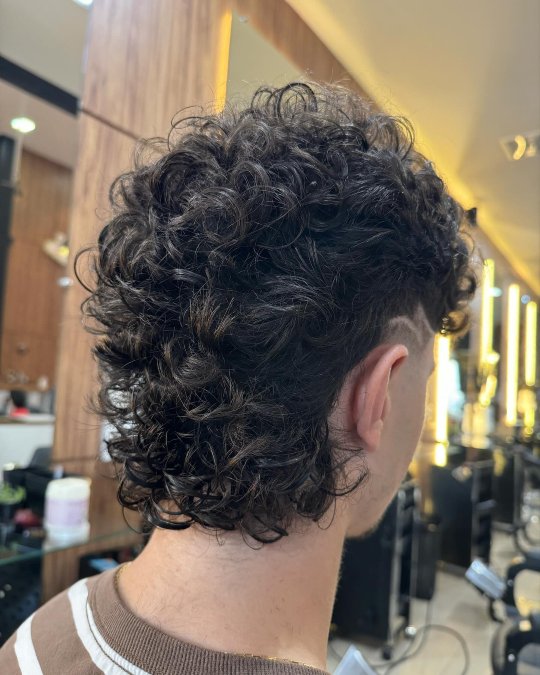
Seen from behind, the curls stack in loose spirals from the crown down to the nape. The hair builds into a full, rounded shape, with the longest curls resting just above the collar.
The sides cut in sharply above the ear, and the fade reaches skin near the temple. That tight edge gives the back a clear outline, so the volume looks planned and not overgrown.
Hair length note: The back needs to stay light enough for the curls to bounce. If it grows too long, the weight pulls the spirals down and the shape turns heavy. Ask your barber to keep the ends textured, not cut straight across.
This view also shows why curl pattern matters for a mullet. Tight, springy curls overlap each other, so the back looks dense without needing a hard line.
9. Mid Fade + Spiral Curls
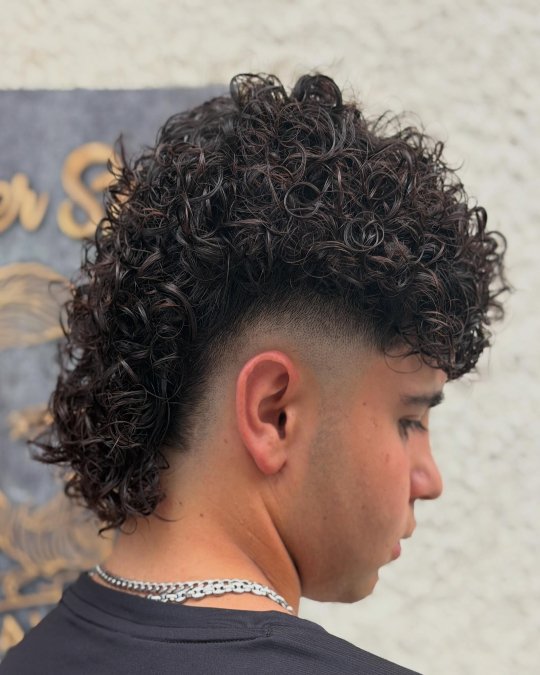
Dense dark spirals build high on top and push forward into a full, curly fringe. The sides fade down to skin around the ear and temple, with a smooth blend that climbs into the longer hair above.
The back stays long and loose, with curls hanging past the nape. That length against the close sides gives the curly mullet a strong shape, even from the side.
Ask your barber: Request a fade that blends up into the top instead of stopping at a hard line. Ask for a curly fringe that stays above the brows and a back that is thinned slightly so it doesn’t get bulky.
- Styling: Apply curl cream to damp hair and scrunch upward. Let it air dry so the spirals stay separate.
- Maintenance: The fade will grow out in a few weeks, so regular visits keep the sides clean. The top can wait longer between trims.
10. Sharp High Fade Mullet
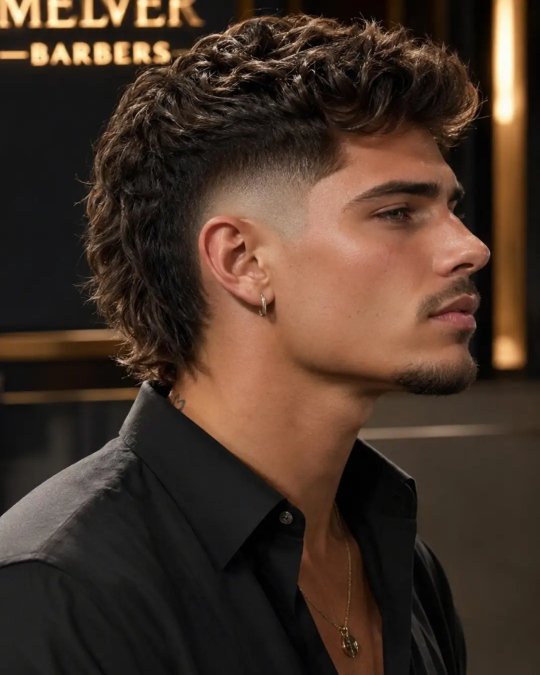
Warm brown waves with lighter tips are pushed up and forward into a full, textured front. The sides fade to skin high on the temple, then blend back into the longer hair above the ear.
The back keeps its length and falls in layered waves that end just above the collar. The result is a bold mullet that still feels controlled.
Why this style works:
- Fade height: The high fade exposes the temple and ear, which makes the top look taller and fuller.
- Wave texture: Looser waves give the volume a soft, movable finish, so the cut looks styled without looking stiff.
- Facial hair: A trimmed mustache and short chin beard with clean cheeks add definition along the jaw.
Hair texture tip: Waves like these respond well to a light styling cream or sea salt spray on damp hair. Push the front up and forward with your fingers, then let it dry naturally or with a diffuser.
High fades grow out faster than lower tapers, so the sides will need a refresh every few weeks.
11. Messy Fringe Mullet for Wavy Hair
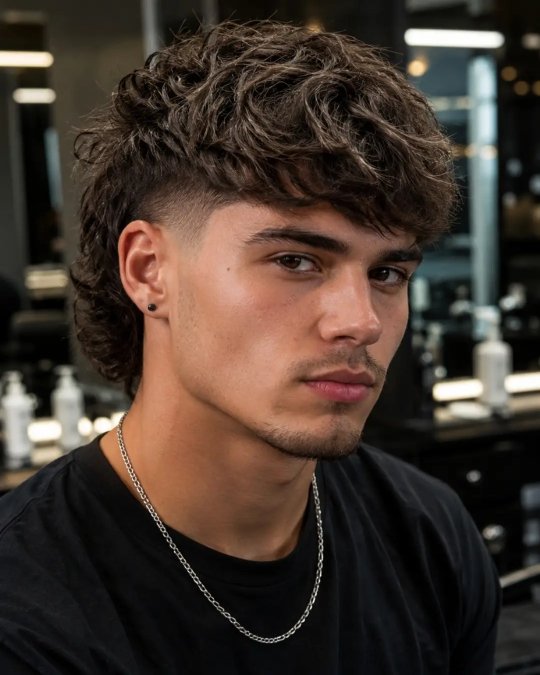
Haircut formula: messy wavy top + choppy fringe + low taper fade
Brown waves with lighter strands run through the top, which is cut with broken, uneven ends. The fringe sweeps across the forehead and stops near the brows. The sides are tapered close at the temple and ear, and the back stays longer and wavy behind the ear.
The choppy ends are what keep this mullet relaxed. Cutting the fringe in uneven layers lets the waves overlap, so the front looks tousled and natural instead of heavy.
A short, tapered side also gives the strong jawline room to show. The light stubble and trimmed chin beard add shape without competing with the hair.
Ask your barber for a textured, point-cut fringe and a back that is layered rather than blunt. Work a light styling cream or sea salt spray through damp hair, then finish with your fingers for a loose, matte look.
12. Rounded Wavy Mullet
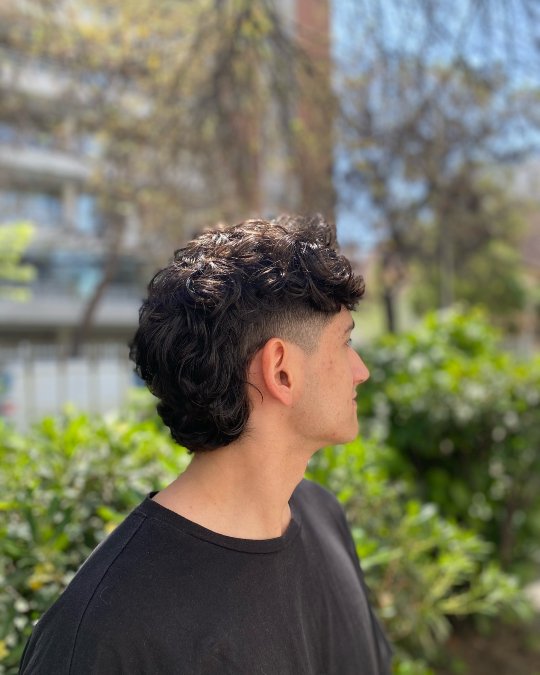
Dark, glossy waves sit full on top and curl forward into a short, uneven fringe above the brow. The sides fade down close to the skin around the temple and ear, then blend into the longer hair above.
Hair length note: The top and back are close in length, so the hair forms one rounded shape instead of a sharp step. That makes the cut look softer than a hard-lined mullet. It suits wavy hair with medium density, since the waves can stack without getting stiff.
The back falls loosely behind the ear and tucks in at the nape, with the ends kept soft. Clean-shaven cheeks leave the fade and jawline fully visible.
- Styling: Use a light cream or mousse on damp hair, scrunch gently, and let it dry naturally. The finish stays glossy and defined without feeling heavy.
- Maintenance: Keep the fade fresh every few weeks. Trim the back lightly so it holds its rounded shape instead of growing into a wide, bulky outline.
13. The Full Beard Curly Mullet
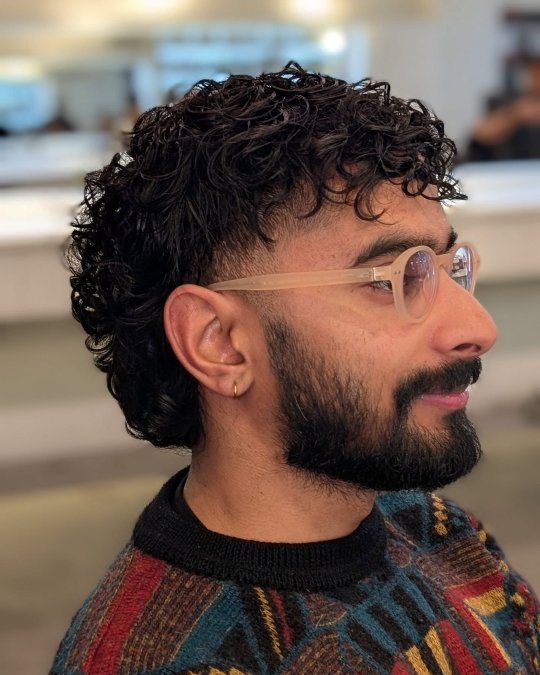
Tight black curls stack across the top and spill forward into a loose, curly fringe. The sides are cut close and faded around the temple and ear, and the fade runs down into the sideburn. The back stays longer, with curls that fall to the nape.
Beard pairing: The full beard is kept dense and even, with a clean cheek line and a rounded edge under the jaw. Because the sides of the haircut are so short, the beard picks up the weight and gives the lower face more structure.
The beard and fade blend together at the sideburn, so the head and face read as one shape. Without that connection, a full beard under a faded cut can look like two separate styles.
Round glasses sit comfortably with this look. A bold curly top can overpower a narrow frame, but a rounder one balances it.
Maintenance tip: Trim the cheek line and neckline every couple of weeks so the beard stays sharp. Keep the curls soft with a light curl cream, and let the back grow only until it starts to lose its shape.
14. Tall Curly Taper Mullet
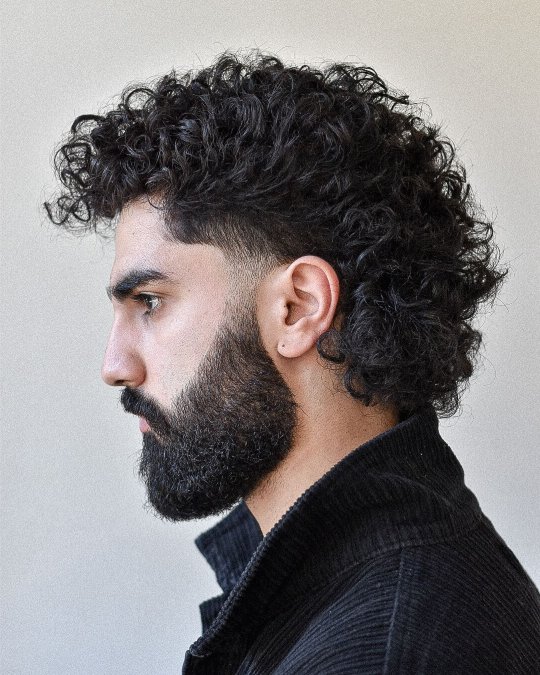
Tight, springy curls rise high off the crown and push forward over the forehead, adding real height to the profile. Each curl keeps its shape, so the top looks dense and full without turning frizzy.
The sides taper short around the temple and ear, and the skin shows through just above the sideburn. The back stays longer, with curls that tuck behind the ear and spill down to the nape in a rounded shape.
A full beard with a clean cheek line and a defined neckline anchors the cut. It adds weight to the lower face, which balances the height on top and stops the head from looking top-heavy.
Curls this tight shrink as they dry, so ask your barber to cut them a little longer than the finished length you want. Let the curls dry on their own after a curl cream, and keep the taper tidy every few weeks.
15. Highlighted Curly Mullet
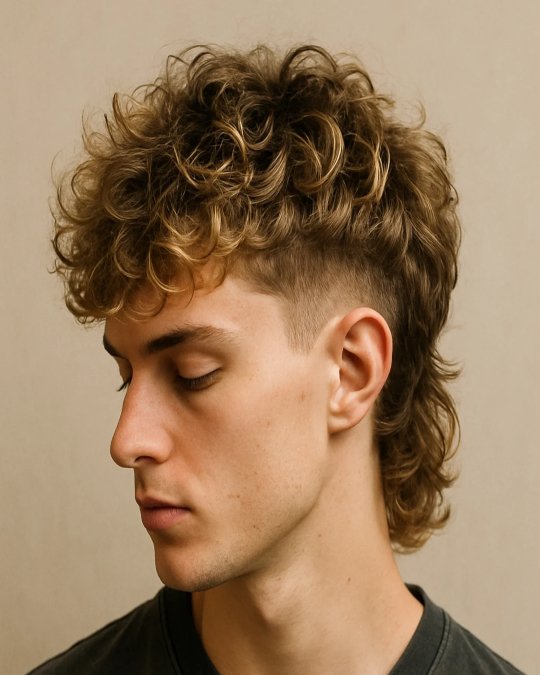
Haircut formula: loose curly top + short curly fringe + taper fade + longer wavy back
Golden-brown curls with lighter strands running through them sit full across the top and fall into a short, broken fringe above the brow. The sides taper close around the temple and ear, so the volume stays high and the face stays open.
The back is longer and wavier than the top. It curls out behind the ear and ends in soft, uneven tips at the nape instead of a hard line.
The lighter strands make each curl easier to see, which adds depth to the top. If the color is added, a leave-in conditioner helps keep the curls soft, since lightened hair tends to run drier. A light curl cream on damp hair is enough to keep the shape loose.
16. Dark Curly Mullet and Beard Fade
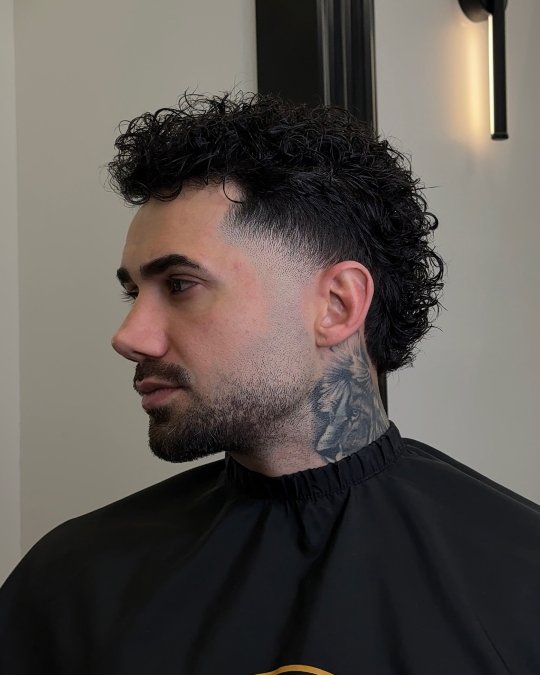
Tight black curls are lifted up and slightly forward on top, with a sharp edge where the fade meets the hairline at the temple. The sides fade down to skin around the ear and blend straight into the beard. The back is longer, with curls that fall behind the ear toward the nape.
Why this style works:
- Beard blend: The short beard fades into the sideburn, so the hair and facial hair read as one clean shape.
- Curl texture: Tight, springy curls hold the height on top without needing much product, which keeps the front looking neat.
- Contrast: The skin fade makes the curly top and back stand out, and it shows off the neckline.
Face shape note: The extra height on top and the fuller chin beard balance each other, which suits a longer or oval face. For a rounder face, keep the top slightly shorter so the shape doesn’t get too tall.
A fade this tight needs a touch-up every few weeks, and the beard edges need the same upkeep. Apply a light curl cream to damp hair and let it dry naturally.
17. Matte Wavy Mullet
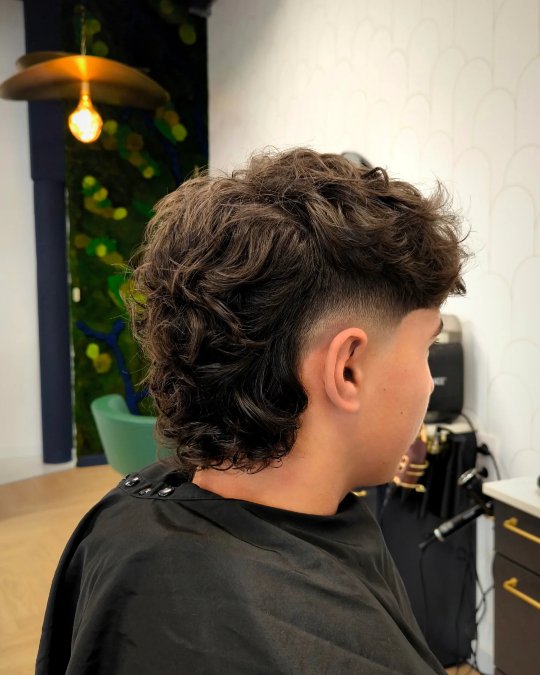
Soft brown waves sit full across the top, with loose, uneven ends that give the crown a tousled finish. The sides fade down to skin around the temple and ear, with a clear edge where the short hair meets the longer top.
Fade detail: The fade stops fairly high above the ear instead of running down the neckline. That leaves a bigger gap between the sides and the back, so the mullet shape looks deliberate.
The back falls in layered waves that reach the collar and curl slightly at the ends. Because the waves are loose, the length looks relaxed and doesn’t weigh the hair down. Hair with some natural bend suits this cut best, since straight hair may need more styling to hold the shape.
Work a light cream or sea salt spray into damp hair, then scrunch and let it dry for a matte finish.
18. A Skin Fade Curly Mullet
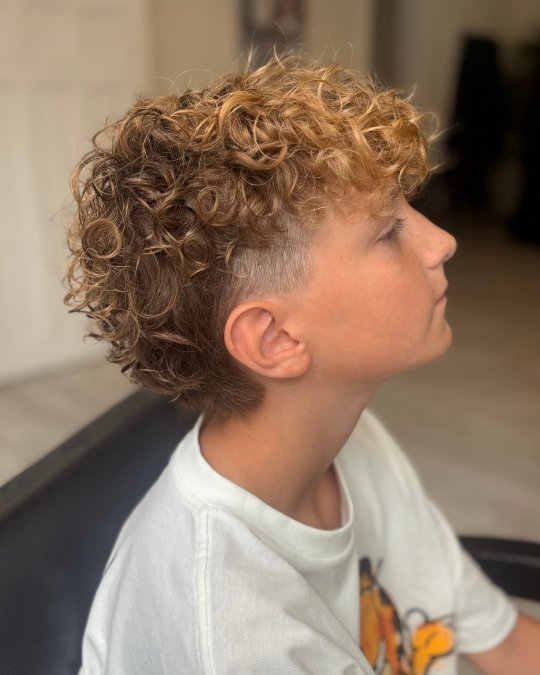
Honey-gold ringlets with deeper brown tones underneath stack high across the top and crown. A short curly fringe falls forward above the brow, and the sides fade down close to the skin around the temple and ear.
- Top: Medium length with loose ringlets. Ask your barber to keep enough length for the curls to spring, since cutting them too short makes the pattern look flat.
- Sides: A fade that blends up from the skin and stops fairly high, which leaves a clean gap between the sides and the curls.
- Back: The curls stack at the crown, and the nape is tapered close. This gives a shorter, tidier mullet shape than the longer back styles earlier in the list.
The lighter tips make each ringlet easier to see, while the short sides keep the volume from spreading outward. Curls this open also hold their shape well when air dried.
Maintenance tip: Fresh fades soften within a few weeks, so plan regular visits for the sides and nape. Lightened curls run drier, so a leave-in conditioner and a light curl cream will help keep them soft.
19. Short Textured Taper Mullet
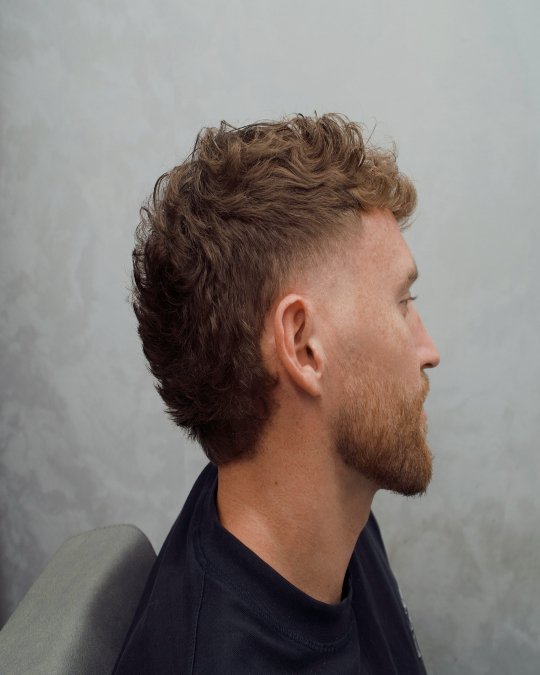
Light brown waves with copper tones sit on top with loose, broken ends. The front is brushed up and slightly forward, so the hair has lift without looking styled stiff. The sides taper close at the temple and fade toward the skin around the ear.
The back is longer than the sides but stays compact, ending in a tapered, slightly choppy edge above the collar. That makes this a good first mullet, since the shape reads as modern and controlled.
Beard pairing: The short copper beard has a defined cheek line and sits close along the jaw. It blends into the faded sideburn, which keeps the head and face looking like one clean shape.
Wavy hair like this needs only a light sea salt spray or styling cream on damp hair. Scrunch it, then let it dry or use a diffuser. Keep the taper fresh every few weeks, and trim the back lightly so it holds its compact shape.
What to Say to Your Barber
- Sides: “Taper or fade the sides short, and blend them into the top.”
- Top: “Keep enough length for my curls to form, with texture through the crown.”
- Fringe: “Short and broken up, ending above the brows.”
- Back: “Keep it longer, with soft, tapered ends and no blunt line.”
- Neckline: “Taper it clean so the shape stays tidy between visits.”