
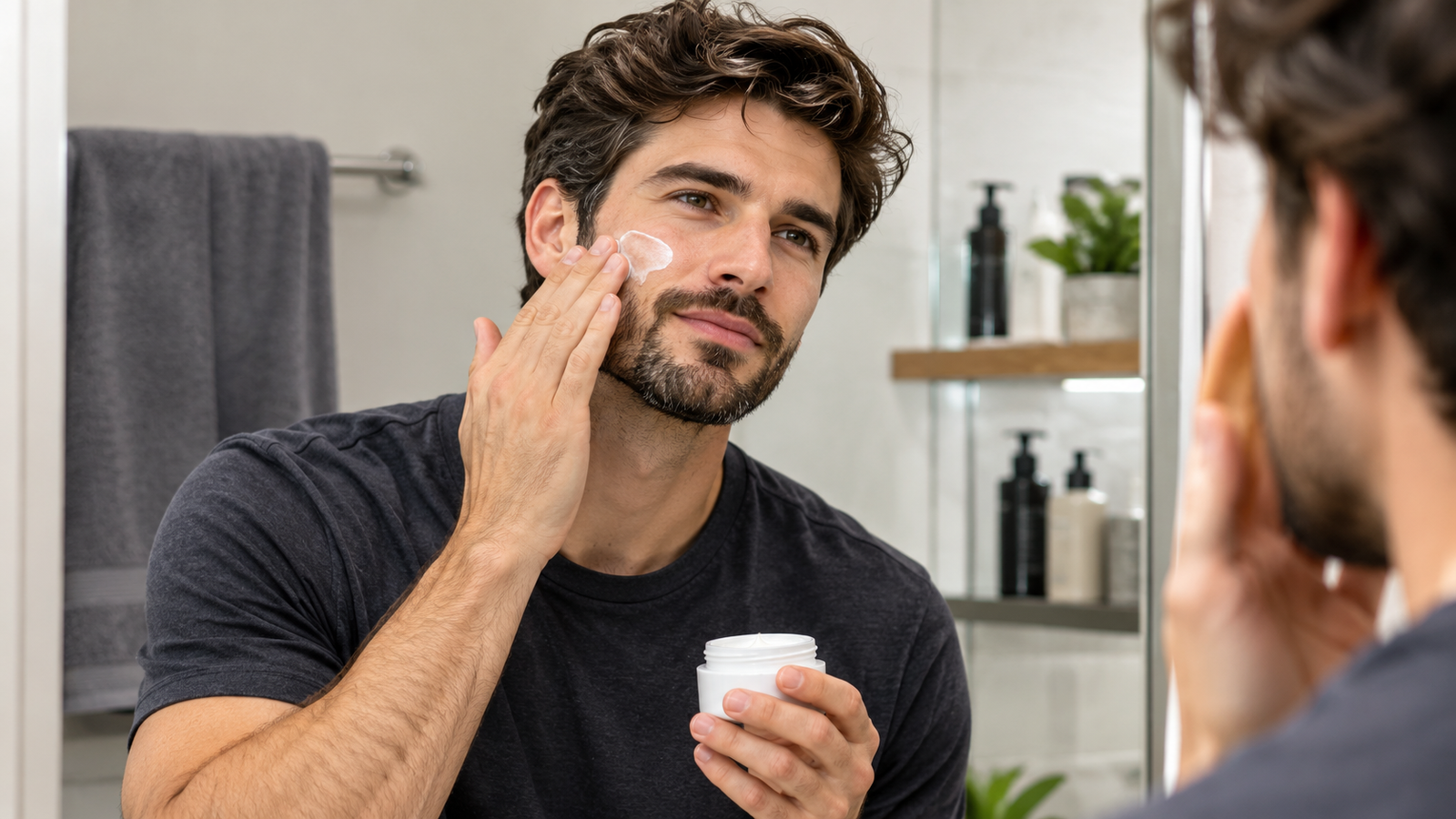
A simple skincare routine for men should take less time than brushing your teeth. Yet most beginners get stuck in the store aisle, looking at dozens of bottles that all make big promises.
They either buy nothing or buy five things at once and end up with irritated skin. You only need three steps to start: cleanse, moisturize, and protect with sunscreen.
This guide explains what each step does, how to match it to oily, dry, combination, or sensitive skin, and how to fit shaving around it. You can start tonight with products you can find at any drugstore.
Three Steps Cover the Basics Because Each One Does a Different Job
Each step has its own purpose, so none of them is filler:
- Cleanser removes sweat, excess oil, sunscreen, and daily grime.
- Moisturizer helps skin hold water and keeps the surface comfortable and flexible.
- Sunscreen reduces the damage from UV light, a major outside cause of early lines and uneven tone.
Serums, toners, masks, and exfoliants can wait. Skin does better when you learn how it reacts to a few basics first.
Formula: gentle cleanser + lightweight moisturizer + broad spectrum SPF 30 or higher
Morning takes about two minutes. Night takes about one to two, because sunscreen is a morning step.
Step 1: Pick a Cleanser Based on How Your Face Feels by Midday

Most men grab whatever body wash is in the shower. Body wash is often made for tougher skin and can leave the face feeling tight or squeaky. A face cleanser is usually milder.
Try this to find your skin type: wash your face with a gentle cleanser, pat dry, and apply nothing. Check it again after an hour or two.
- Tight or flaky: your skin leans dry.
- Shiny all over: your skin leans oily.
- Shiny only on the forehead and nose: you likely have combination skin.
- Stinging, redness, or itching after cleansing: your skin is sensitive, and you should look for gentler formulas.
| Skin type | Cleanser texture | Look for | Skip for now |
|---|---|---|---|
| Oily | Gel or foaming gel | Salicylic acid in a low strength, or simple surfactants | Gritty scrubs that scrape the skin |
| Dry | Cream or lotion | Glycerin, ceramides | Strong foaming formulas that leave skin tight |
| Combination | Light gel or gentle foam | Mild, fragrance-free formulas | Heavy cream cleansers on the T-zone |
| Sensitive | Cream or milky gel | Fragrance-free, short ingredient list | Heavy scent, menthol, harsh scrubs |
Technique note: Use lukewarm water, since hot water can leave skin feeling dry. Massage the cleanser in for 30 to 60 seconds with your fingertips, rinse well, and pat dry with a clean towel. Rubbing with a towel causes more irritation than most people expect.
Step 2: Moisturizer Is for Oily Skin Too, Just in a Lighter Texture
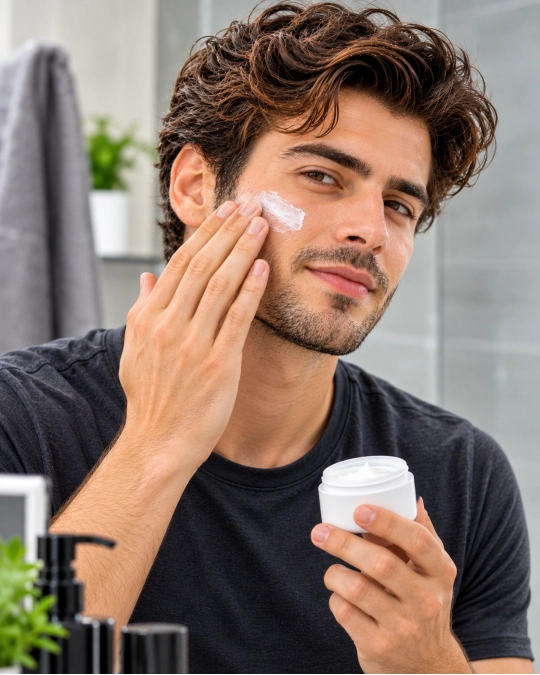
Many men with oily skin skip moisturizer because they already feel greasy. The fix is a lighter texture, not no moisturizer. Skin that feels tight after washing often looks shinier by afternoon, and a light gel-cream can help it feel more balanced.
Match the texture to your skin:
- Oily: oil-free gel or gel-cream.
- Combination: lightweight lotion.
- Dry: thicker cream, especially in cold weather.
- Sensitive: fragrance-free cream with a short ingredient list.
Label check: Common helpful ingredients include glycerin, hyaluronic acid, and ceramides. They help skin hold water or support the skin’s outer layer. Terms like “non-comedogenic” and “fragrance-free” are good starting filters.
Apply a pea-sized to coin-sized amount while your face is still slightly damp. That helps lock in water. Spread it over the cheeks, forehead, nose, and chin, and don’t forget the neck.
Budget swap: A basic, fragrance-free lotion that feels light on your skin can do the job. Skip anything greasy or heavily scented, and give it two weeks to see how your skin responds.
Step 3: Sunscreen Is the Morning Step That Matters Most
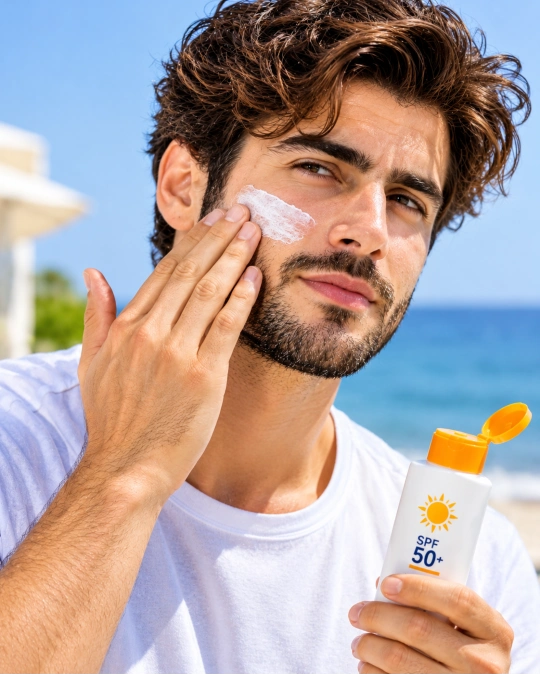
If you can only do one thing in this routine, do this one. Sunscreen is the step most guys skip, and it protects the skin every day, including on cloudy days.
What to buy:
- SPF 30 or higher
- Labeled “broad spectrum,” which covers both UVA and UVB light
- A texture you will actually wear
Pick a format you like:
| Format | Works well for | Watch out for |
|---|---|---|
| Lightweight fluid or gel | Oily or combination skin | Can sting eyes if applied too close |
| Cream | Dry skin | May feel heavy in summer |
| Mineral (zinc or titanium) | Sensitive skin | Can leave a slight white cast |
| Stick | Quick touch-ups, around the eyes | Easy to apply too thinly |
How much: About two finger lengths for the face and neck is a common guideline. Most people use less than they need, so measure it out a few times.
Skin note: If you have a shaved head, short hair, or a thinner hair part, add your scalp, ears, and the back of your neck. For beards, work sunscreen into the skin on your cheeks and neckline, even if hair covers part of it.
Seasonal swap: In humid summers, choose a gel or fluid sunscreen. In winter, go for a cream and keep wearing it, since UV light is still present.
Your Morning and Night Plan, Side by Side
| Morning | Night | |
|---|---|---|
| Step 1 | Rinse with water if your skin is dry, or use cleanser if it is oily | Cleanse to remove sunscreen, sweat, and grime |
| Step 2 | Moisturizer | Moisturizer |
| Step 3 | Sunscreen | Not needed |
| Time | About 2 minutes | About 1 to 2 minutes |
Dry or sensitive skin often feels fine with a water rinse in the morning. Oily skin usually feels fresher with a cleanser. After a workout, cleanse no matter your skin type.
Give the routine four weeks before judging it. Skin changes slowly, and you may notice it feels more comfortable before it looks different.
Peak Groom · Skin Type Match Guide
Wash your face, apply nothing, and check it after an hour or two. Then find the card that matches how it feels.
Oily
Shiny all over
Gel or foaming gel. Low-strength salicylic acid or simple surfactants.
Oil-free gel or gel-cream.
Lightweight fluid or gel.
Cleanser usually feels fresher.
Gritty scrubs that scrape the skin.
Dry
Tight or flaky
Cream or lotion. Look for glycerin and ceramides.
Thicker cream, especially in cold weather.
Cream.
A water rinse is often enough.
Strong foaming formulas that leave skin tight.
Combination
Shiny on forehead and nose only
Light gel or gentle foam. Mild and fragrance-free.
Lightweight lotion.
Lightweight fluid or gel.
Cleanser often feels better.
Heavy cream cleansers on the T-zone.
Sensitive
Stinging, redness or itching after cleansing
Cream or milky gel. Fragrance-free with a short ingredient list.
Fragrance-free cream with a short ingredient list.
Mineral (zinc or titanium). May leave a slight white cast.
A water rinse is often enough.
Heavy scent, menthol, harsh scrubs.
PeakGroom.com
Fit Shaving Into the Routine Without the Burn
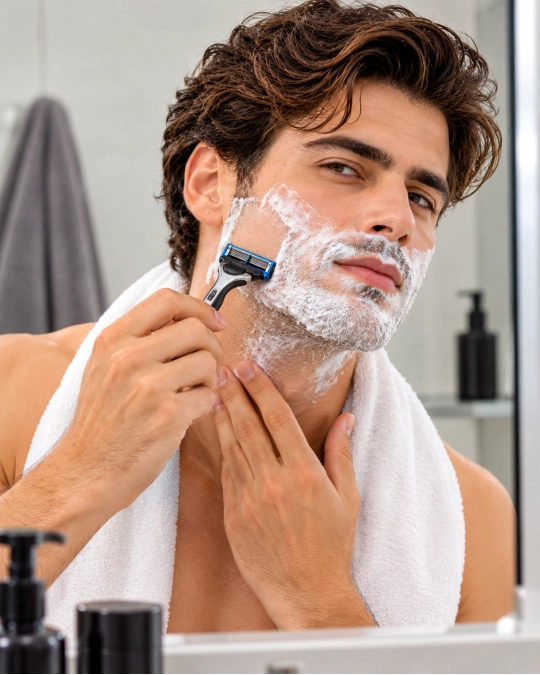
Shaving is where many beginners run into irritation, so it needs its own plan.
- Shave after cleansing. Warm water softens hair and makes the blade glide more easily.
- Use shaving cream or gel, not just water or soap.
- Shave with the grain (the direction your hair grows) first. Going against it can cause more irritation, especially on the neck.
- Replace dull blades. A dull blade drags and pulls.
- Rinse with cool water, pat dry, then apply moisturizer right away.
Product note: If aftershave stings, skip anything with a lot of alcohol or strong scent. A plain moisturizer is a gentle replacement.
For beards: Wash the skin under your beard the same way you wash your face. Moisturize the skin around the beard line, and use a light beard oil on the hair itself if it feels dry. If you have patchy growth or prefer a clean shave, the same three steps apply.
Beginner Mistakes That Make Simple Routines Complicated
- Starting everything on the same day. If your skin reacts, you won’t know which product caused it. Add one new product at a time and wait a week or two between additions.
- Scrubbing hard. Scrubbing doesn’t clean better. It often leaves skin red and tight.
- Skipping sunscreen on cloudy days. UV light still comes through clouds.
- Switching products every few weeks. Skin needs time to settle before you can tell what’s working.
- Using strong products too soon. Acids and retinol-type products are optional, and they are better saved for after the basics feel easy.
When to add a fourth step: After about four to six weeks of steady use, you can add one extra product if you want to target a specific concern. Introduce it slowly, a few nights a week.
When to see a professional: If you have ongoing breakouts, painful bumps, persistent redness, flaking, or patches that don’t improve, a dermatologist or doctor can look at your skin and recommend what to do. A basic routine supports healthy-feeling skin, but it doesn’t replace medical advice.
Frequently Asked Questions
Do I need to wash my face in the morning?
It depends on your skin. Oily and combination skin often feel better after a cleanser. Dry or sensitive skin can usually get by with a water rinse, then moisturizer and sunscreen.
Can I use a moisturizer that already has SPF?
Yes, if it is broad spectrum and SPF 30 or higher. The catch is that you need to apply enough of it, and many people use less than they would with a separate sunscreen. If your face feels like it needs more moisture, layer a plain moisturizer underneath.
What if sunscreen stings my eyes?
Try a mineral formula or a stick, and apply it a little away from your eyelids. Sweat can push any sunscreen into the eyes, so a stick is also handy for the forehead during workouts.
How long before I notice a difference?
Skin renews itself gradually, so give your routine around four weeks. You may notice it feels smoother or more comfortable before you see other changes.