
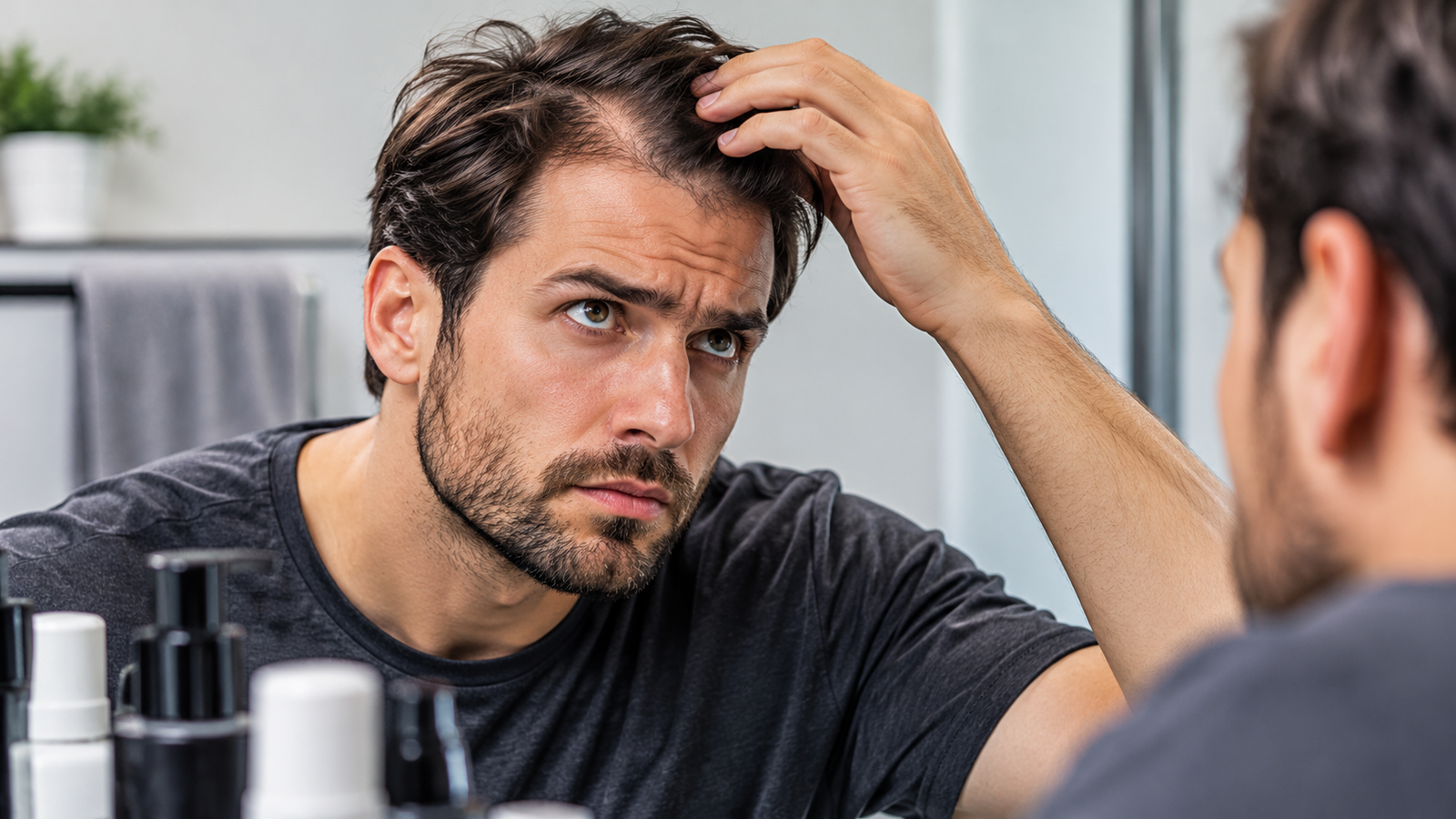
Hair loss treatment for men comes wrapped in a lot of hype, and most of it skips the useful parts: what has real evidence, how long it takes, and what you have to keep doing afterward. Miracle shampoos and “regrowth” gadgets cost money, while the options with the best track record sit in a pharmacy aisle or behind a short doctor’s visit. Dermatologists say men tend to get the best results when they start early.
This guide covers what each option does, what to expect at three, six, and twelve months, and how to get a haircut that looks sharp while you wait. No guarantees, and no pressure to treat anything you would rather just style.
Check Your Pattern First, Because Gradual Thinning and Sudden Shedding Need Different Answers
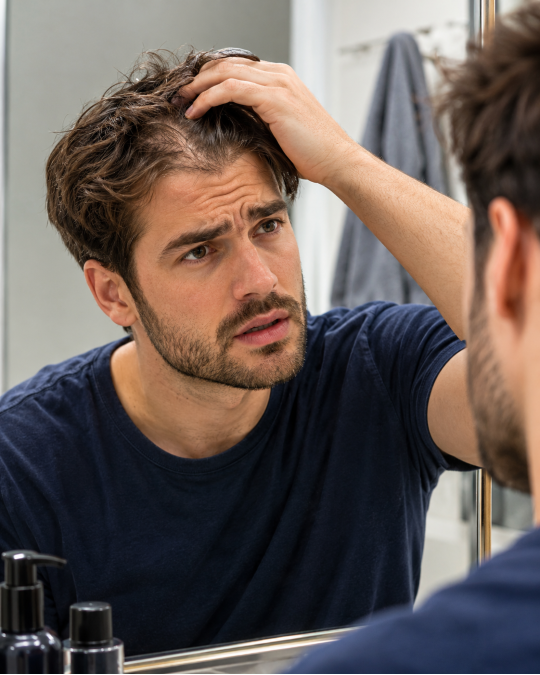
Male pattern hair loss is the most common cause of thinning in men, and it usually follows a recognizable path. The hairline pulls back at the temples, often into an M shape, and the crown thins into a widening spot. It tends to run in families and moves slowly, over years rather than weeks.
That pattern is what the best-known treatments are built for. If your hair loss looks different, the plan changes.
Book a doctor or dermatologist visit before trying anything if you notice:
- Hair coming out in clumps, or a sudden jump in shedding over a few weeks
- Round, smooth patches instead of gradual thinning
- A scalp that is itchy, sore, red, or scaly
- Hair loss that started after a new medication, an illness, or a very stressful period
These can have causes other than pattern hair loss, and some are temporary. Only an exam can sort that out, and treating the wrong problem wastes months.
Try This: build a baseline. Take three photos in the same spot, in daylight, with dry hair: straight on, a close-up of the hairline, and the crown from above (use a second phone or a mirror). Repeat once a month. Hair changes too slowly to judge in the bathroom mirror, and photos replace daily guessing with something you can compare.
Your hair type changes how visible loss looks. Fine, straight hair shows scalp sooner than thick or curly hair, because curls and coils add volume that covers gaps. Two men with the same amount of loss can see very different things in the mirror, so judge yourself against your own photos, not against someone else’s head.
Minoxidil Is the Easy Starting Point, and Finasteride Is the Conversation to Have With a Doctor

Only two medicines are FDA-approved for male pattern hair loss: topical minoxidil, sold without a prescription, and finasteride, a prescription pill. Major medical sources treat them as the first-line options, and they can be used alone or together.
Minoxidil goes on the scalp, usually twice a day, as a 2% or 5% liquid or a 5% foam. It is meant to slow loss and encourage thicker growth, not bring back a full head of hair. Some men respond well and some see no difference. Possible side effects include scalp irritation, itching, and headaches, and the foam may be gentler than the liquid if your scalp reacts.
Finasteride is a daily 1 mg pill that lowers DHT, a hormone linked to pattern hair loss. It has been approved for this use since 1997. Because it works on hormones, it comes with a side-effect conversation. The American Academy of Dermatology lists reduced sex drive, erectile problems, breast tenderness or swelling, and depression
| Option | How you get it | How it is used | Worth knowing |
|---|---|---|---|
| Topical minoxidil (FDA-approved) | Over the counter | On the scalp, usually twice daily; 2% or 5% liquid, or 5% foam | Response varies; benefits fade if you stop |
| Oral finasteride (FDA-approved) | Prescription | 1 mg pill daily | Acts on DHT; go over side effects before starting |
| Oral minoxidil (off-label) | Prescription | Low-dose pill, doctor-directed | Not approved for hair loss; not to be combined with topical minoxidil |
| Dutasteride (off-label) | Prescription | Pill, doctor-directed | Same drug family as finasteride; a doctor decides if it fits |
Technique Note: Apply minoxidil to the scalp, not just the hair, and let it dry before any styling product goes on. Wash your hands afterward.
Budget Swap: Generic minoxidil has the same active ingredient as the name brands. Compare the percentage and the form (liquid or foam) instead of the packaging, and pick the one you will actually use twice a day.
Judge Treatment at Six Months, Not Six Weeks

Hair grows in cycles, so a treatment can only change what the next batch of hairs looks like. That is why nothing dramatic happens in the first month. Some men notice early changes around two to six months, the American Academy of Dermatology puts finasteride results at about six months and minoxidil at six to twelve, and the full effect can take up to a year.
| When | What to expect | What to do |
|---|---|---|
| Weeks 0 to 4 | Little visible change; some men notice extra shedding early on | Use it daily and take your baseline photos |
| Months 2 to 4 | First changes may start for some men | Retake photos in the same light |
| Months 4 to 6 | A fairer point to compare photos | If nothing has changed, check in with your doctor or pharmacist |
| Month 12 | Full benefit can take up to a year | Decide with your doctor whether to continue as is or adjust |
| After stopping | Hair loss is likely to resume | Treat it as a long-term habit, not a short course |
The realistic goal matters here. Treatment can reduce further loss, and some men regrow a bit of hair, but full regrowth is unlikely. If your hair looks about the same in photos a year from now, that counts as treatment working.
It is also fine to decide you do not want a daily commitment. Many men skip treatment and put their effort into a good cut instead, which the styling section below covers.
Light Devices, PRP, Shampoos, and Transplants: Which Extras Are Worth a Look
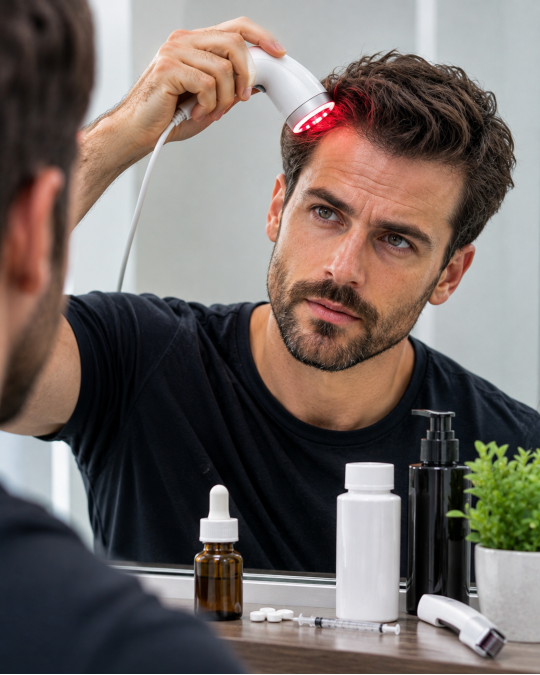
The evidence for add-ons is thinner than for the two approved medicines, so treat them as extras, not replacements.
- Home laser or light devices. Some are FDA cleared, which is a lighter review than FDA approval. Reviews describe encouraging results, but protocols are not standardized and many studies are short. They suit someone who wants a non-drug option and will follow the device’s schedule for months.
- Platelet-rich plasma (PRP). A clinic spins a sample of your blood and injects the plasma into the scalp. The American Academy of Dermatology describes a first round of monthly sessions for three months, then top-ups every three to six months, and says it is not permanent. Ask for the total yearly cost before you book.
- Ketoconazole shampoo. Used off-label by some doctors alongside other treatment. It is also an anti-dandruff shampoo, so it is a reasonable low-cost add-on if your scalp gets flaky.
- Supplements. None has the evidence of the approved medicines. If you suspect a nutrient gap, a blood test ordered by a doctor tells you more than guessing at a shelf of bottles.
- Hair transplant. Surgery moves hair from denser areas to thinner ones, and the results are described as permanent and natural looking when done well. It needs enough donor hair, takes months to grow in, and does not stop other hair from thinning, so many clinicians pair it with medication. Choose a surgeon by credentials and by results on men with your hair type.
Skip list: products that promise to “reverse” baldness, shampoos sold as “DHT blockers” with no active ingredient you can name, before-and-after photos with no details, and clinics that push prepaid packages before an exam.
Skin Note: As hair thins, more scalp is exposed to the sun. Wear a hat or put sunscreen on the scalp, because that skin burns like the rest of you.
Match the Cut to Your Stage: Short Sides and Matte Texture Make Thinner Hair Look Deliberate

Treatment works slowly, but a haircut changes how your hair looks this week. The main trick is contrast. When the sides and back are cut short, the hair on top reads as fuller, and the eye goes to the shape of the cut instead of the hairline.
Guard reference: a #1 leaves about 1/8 inch, a #2 about 1/4 inch, a #3 about 3/8 inch, and a #4 about 1/2 inch.
| Where you are now | Ask your barber for | Style it with | Why it works |
|---|---|---|---|
| Temples receding, hair still full on top | Textured crop, 2 to 3 inches on top, tapered sides starting at a #2 | Dime-size matte clay, pushed forward and slightly sideways | Movement across the front softens the hairline without hiding it |
| Thinning at the crown | 1.5 to 2.5 inches on top, sides and back at #2 to #3 with a taper | Matte texture powder or light paste, blow dried upward | Shorter length is less likely to split and show scalp at the crown |
| Thinning across the top | Buzz at #2 to #4, or a short crop with a skin fade | Moisturizer and sunscreen on the scalp | One even length hides density differences |
| Very little on top, comfortable going shorter | #1 or a razor shave, beard optional | Moisturizer and sunscreen | Clean and intentional, and the lowest upkeep |
Formula: textured crop + #2 taper on the sides + sea salt spray on damp hair + blow dry up and forward + a small amount of matte clay.
This works because sea salt spray adds grip to fine strands, the blow dry creates lift at the roots, and matte clay holds that lift without a wet shine. Shiny gels and heavy pomades tend to clump fine hair into strands, and clumps show scalp. If your hair is thick or coarse, skip the salt spray and use a bit more clay.
Barber Note: Say what you want, not just a style name. Try: “I’m thinning at the crown and I don’t want it to part. Keep the top short enough to stand up, and take the sides down with a taper.” Bring a photo of a cut on a man with similar hair density, since a photo of thick hair sets the wrong expectation.
Try This routine if you use minoxidil: wash, pat dry, apply minoxidil to the scalp, wait until it dries, then add styling product. Putting clay on first can leave a layer between the treatment and your scalp.
Tapered sides look crisp for the first couple of weeks, and by week four the contrast fades and the top can look thinner. For most men, a barber visit every three to four weeks keeps this look working.
Facial hair can balance a shorter cut. A short beard suits many men, and if yours grows patchy, short stubble or a clean shave looks just as sharp. For events, color-matched hair fibers or a scalp spray can add temporary density, and they wash out the same night.
Barber guide
Match the Cut to Your Stage
Short sides make the top read as fuller. Find where you are, then take this to your barber.
Guard reference
Stage 1
Temples receding, hair still full on top
Ask forTextured crop, 2 to 3 in. on top, tapered sides starting at a #2
Style withDime-size matte clay, pushed forward and slightly sideways
Why it worksMovement across the front softens the hairline without hiding it
Stage 2
Thinning at the crown
Ask for1.5 to 2.5 in. on top, sides and back at #2 to #3 with a taper
Style withMatte texture powder or light paste, blow dried upward
Why it worksShorter length is less likely to split and show scalp at the crown
Stage 3
Thinning across the top
Ask forBuzz at #2 to #4, or a short crop with a skin fade
Style withMoisturizer and sunscreen on the scalp
Why it worksOne even length hides density differences
Stage 4
Very little on top, comfortable going shorter
Ask for#1 or a razor shave, beard optional
Style withMoisturizer and sunscreen
Why it worksClean and intentional, with the lowest upkeep
“I’m thinning at the crown and I don’t want it to part. Keep the top short enough to stand up, and take the sides down with a taper.”
Book every 3 to 4 weeks, since the contrast fades by week four. Skip shiny gels and heavy pomades on fine hair, because clumps show scalp.
Peak Groom
Pick a Plan You Will Actually Stick With, Because Consistency Beats the Fanciest Option

A treatment you skip every third day does less than a simpler one you never miss. Choose based on how much daily effort, cost, and risk you are comfortable with.
Plan A: Style it. Get the right cut, learn one matte product, and keep monthly photos. This costs the least and involves no medication. You can still start treatment later.
Plan B: Add over-the-counter minoxidil. Tie it to something you already do twice a day, like brushing your teeth. Give it six months before judging, and stop and ask a pharmacist if your scalp stays irritated.
Plan C: Get a diagnosis and a doctor-led plan. This is the route for prescription options, for hair loss that does not look like the usual pattern, or if you simply want a professional to look at your scalp. It is also the way to ask about combining treatments.
Go into an appointment with your photos and your answers ready. These questions make the visit more useful:
- Is this pattern hair loss, or something else?
- What result is realistic for me: slowing loss, thickening, or some regrowth?
- What are the side effects of each option, and which ones would mean I should call you?
- How long before we reassess, and what would we change if nothing moves?
- What does this cost over a full year, including follow-ups?
Tell the doctor about any medications you take and your family history. Both change what is recommended.
Frequently Asked Questions
Can hair loss treatment bring back hair I have already lost?
Treatment is better at slowing loss and thickening hair that is still there than at refilling smooth areas. Some men regrow a bit of hair, especially if they start early, but full regrowth is unlikely. A dermatologist can tell you what is realistic for your pattern.
What happens if I stop treatment?
The benefits fade, and hair loss is likely to pick back up. That is why it helps to choose something you can keep up for years. If you want to stop, talk to your prescriber first about what to expect.
Is it too early to treat a slightly higher hairline?
Treatment is optional, and plenty of men choose not to do anything. If you do want to act, dermatologists say starting soon after you notice changes tends to give better results. A baseline photo set and a short appointment is a low-pressure way to find out where you stand.
Should I just shave my head instead?
It is a valid choice and looks sharp when done well. Start with a #1 or #2 guard so you can see how your head shape looks before going to a razor. Moisturize and use sunscreen on the scalp, since it will see more sun.
Do shampoos or supplements stop hair loss?
Neither has the evidence of the two approved medicines. Shampoo keeps the scalp clean, and an anti-dandruff formula can help if you get flakes. For supplements, ask a doctor about a blood test before buying anything to fill a gap you may not have.
The Takeaway
Treating hair loss is a long game, so start with something small and doable today. Take photos of your hairline and crown in daylight, then book a haircut that suits the density you have now