

The Layer Detail That Keeps Fine Hair From Falling Flat
- Ask for blended layers, not deep chops: Connected layers keep weight at the ends, so the shaggy outline holds. Very choppy cuts can leave fine hair see-through at the tips.
- Keep the length near the collar: Hair that sits between the ears and the collar usually holds lift better. Longer lengths pull fine strands straight down.
- Add lift at the crown: Shorter layers on top and around the crown give flat hair some height. Tell your barber where you want volume so the layers are placed there.
- Go light on thinning: Texture should add movement, not remove bulk you don’t have. Ask your barber to texturize with a light hand.
1. Layered Wavy Wolf Cut
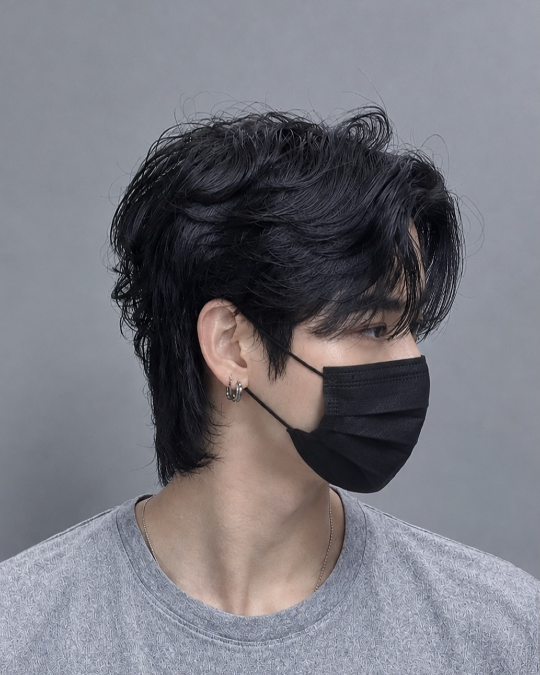
Loose black waves are lifted high on top and pushed back and to the side, with a few pieces falling over the forehead.
The top sits shorter than the back, and the layers drop past the ear into a longer, wispy nape. That step in length is what gives this wolf cut its shape.
The glossy, slightly damp finish shows each wave clearly, which can help fine hair look fuller than a dry, fluffy finish.
Ask your barber: Keep the crown layers short enough to hold lift, and leave the nape longer so the shape doesn’t collapse. Plan a trim every 6–8 weeks as the back grows out.
2. The Curtain Fringe Wolf Cut
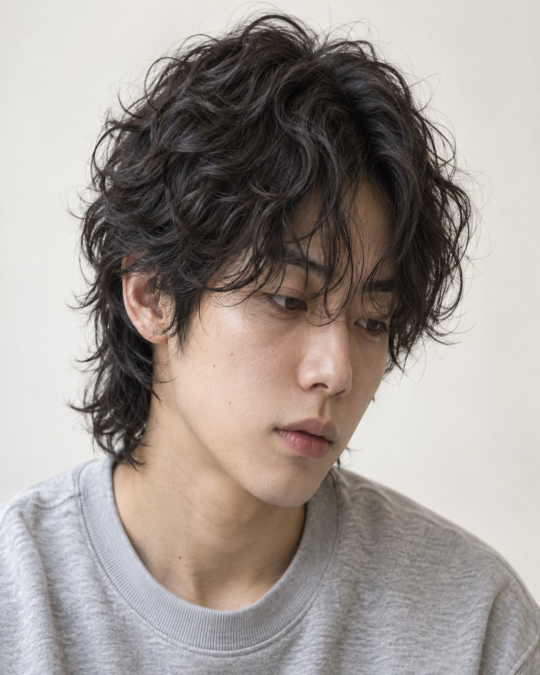
Dark, loose curls part down the middle and fall forward into a curtain fringe that frames the eyes. The sides tuck back past the ear, and the back stretches toward the collar with wispy, uneven ends.
- Why it works: The curls build width at the crown, and the longer back balances it, so the shape doesn’t turn top-heavy. The face looks oval here, and a middle part tends to work well with that shape.
- Ask your barber: Request a fringe long enough to split at the center, shorter layers through the top, and a longer, textured nape.
- Best for: Naturally wavy or curly hair. Fine, straight hair may need a texture spray or a stylist-applied texture treatment to hold this much movement.
3. Straight Hair Wolf Cut
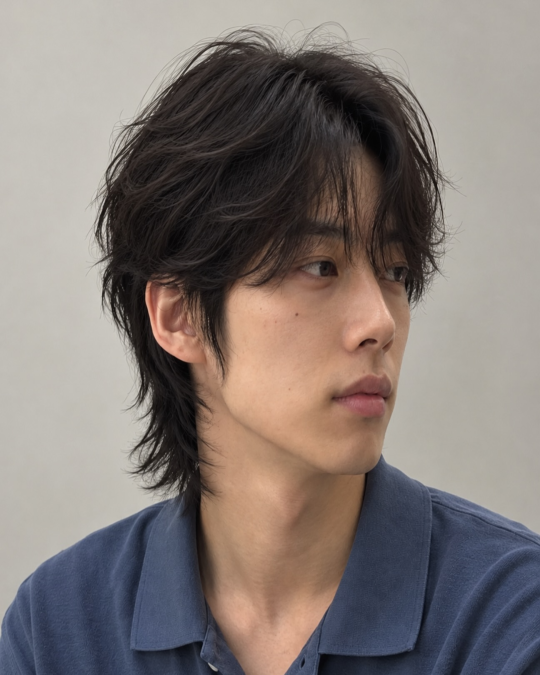
Haircut formula: center-parted fringe + choppy layers + feathered nape
Straight black hair is cut into airy, uneven layers, with long fringe pieces that split at the center and skim past the eyes. The sides tuck behind the ear, and the feathered back falls to the collar. Because the layers are choppy rather than blunt, the hair has movement and doesn’t lie flat, which is useful for a wolf cut for fine hair.
4. Wolf Cut With Choppy Nape
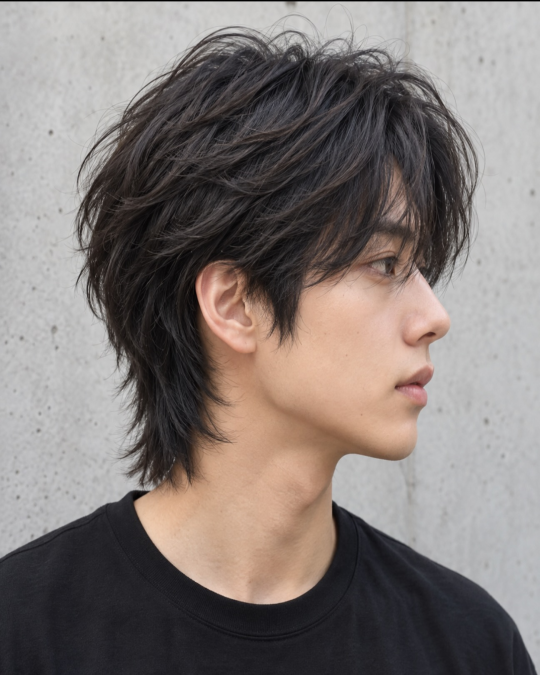
The profile view shows how the layers step down from the crown to the back. Each piece ends at a different length, which keeps the shape light and uneven.
- Top: Medium-length and lifted, with a tousled, matte-looking texture that stands up instead of lying flat.
- Sides: Tucked back behind the ear, so the ear shows and the sides stay slim.
- Fringe: Long and side-swept, falling across the forehead toward the eye.
- Back: Pointed, stepped layers that reach the nape and end in sharp, separate pieces.
This works for fine hair because short pieces on top add lift, while the staggered back lengths stop the ends from hanging in one heavy line. Ask your barber to cut the nape layers by hand rather than thin them out, so each piece keeps some weight.
5. Heavy Fringe Wolf Cut
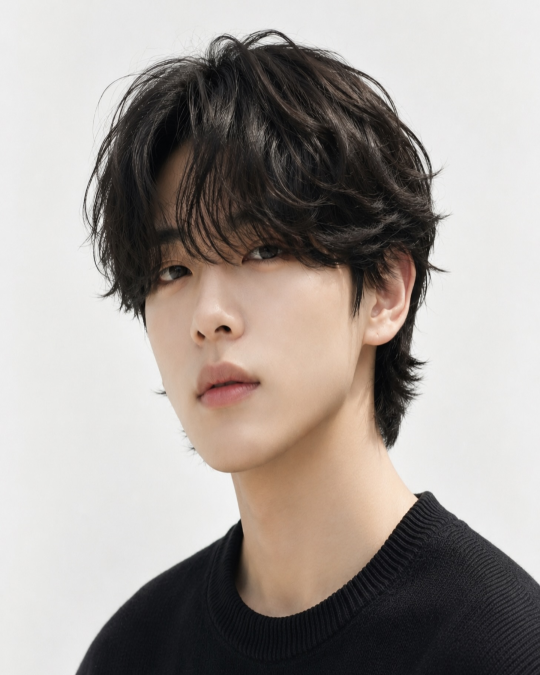
Best for: Men with wavy hair who like a long, eye-skimming fringe and a rounder, softer shape.
The center-parted fringe sweeps down over the forehead and partly covers the eyes, while waves on top build a full, rounded crown. The ears stay visible, and the back ends in short, flicked pieces at the nape. That keeps the wolf cut compact rather than long and stringy.
Fine hair can separate into thin strands if the fringe is cut too light. Ask your barber to keep the front thick, then blow-dry it forward while damp so it sits in one soft piece.
6. Jaw-Length Middle Part Wolf Cut

Haircut formula: middle part + face-framing layers + glossy finish
Long strands start at the center part and fall past the cheekbones toward the jaw, ending in wavy, uneven tips. The ears stay clear, and the back shows wispy points at the nape. On a longer face like this one, layers that fall along the cheeks add width at the sides.
A glossy finish makes fine strands clump into defined pieces, but too much product can weigh the shape down. Use a small amount of light styling cream on damp hair and let it dry with some movement.
7. Messy Wolf Cut for Wavy Hair

Why this style works:
- Volume without extra length: Loose waves stack up on top, so the hair looks full while the sides stay close at the ear.
- Uneven ends: The wispy nape pieces finish at different lengths. That keeps the outline soft and hides regrowth between trims.
- Face balance: The side-swept fringe breaks up the forehead, and the fuller crown balances a narrower jaw.
- Fine hair adjustment: Fine hair may need help holding these waves. Scrunch in sea salt spray on damp hair and air-dry for added grip.
8. Sleek Feathered Wolf Cut
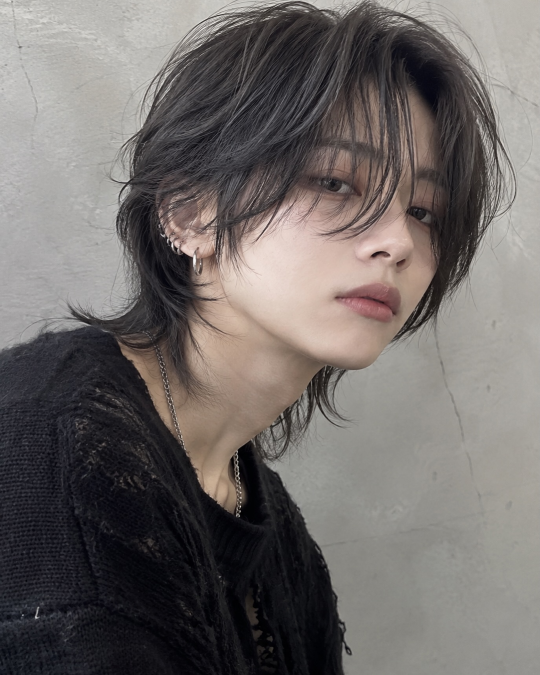
Dark, straight hair parts in the center, with long curtain pieces that sweep past the eyes and down along the cheeks. The crown has light lift, while the sides drop in thin, feathered layers around the ear.
At the back, the layers step down into a longer tail that reaches the neckline and ends in sharp, wispy points.
The finish is sleek rather than messy, so the layers do the styling work. Thin ends show quickly at this length, so a light trim every couple of months keeps the tips from looking see-through.
9. Shaggy Wolf Cut + Wispy Fringe
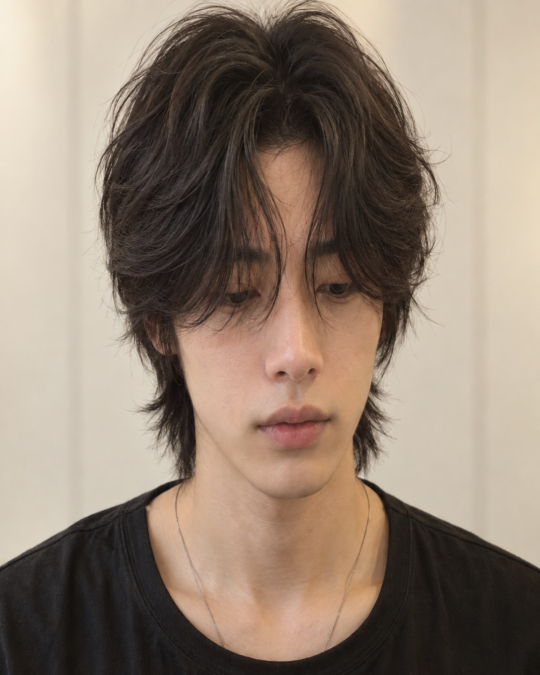
Soft waves rise from a center part and spread into a full, rounded top. The fringe splits in the middle and drops to the cheekbones in thin, wispy pieces. The sides cover most of the ears, and the back falls to the jaw and nape in short, pointed ends.
Face shape note: This face looks long and narrow. The fullness at the sides and the cheek-length fringe add width where it’s needed.
Fine hair needs help keeping that fullness on top. Ask for shorter layers at the crown, then lift the roots with your fingers while blow-drying before the waves settle.
10. A Shoulder-Length Wolf Cut
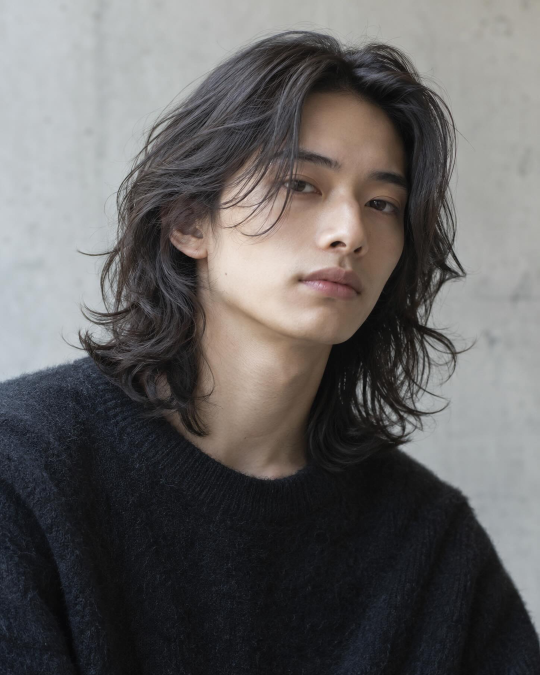
Dark waves fall from a part near the center, with long face-framing pieces tucked behind the ear. The layers start around the cheeks and run to the top of the shoulders, ending in soft, curved tips. It’s a longer take on the wolf cut, where the shape comes from the layers rather than a short top.
Hair length note: Fine hair can go flat at this length. Ask for the first layers to start near the cheekbones so the lengths have room to move.
- Styling: Air-dry with sea salt spray, or bend the ends with a curling iron for the soft outward flip.
- Maintenance: Trim the ends every two to three months so the layers don’t blur into one length.
11. Wolf Cut From Every Angle
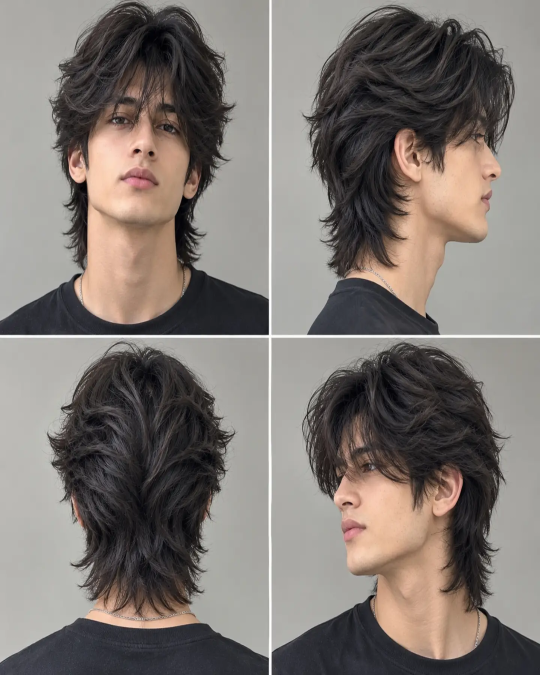
The four angles show how this wolf cut is built from the top down. From the front, choppy black layers sweep across the forehead, with side pieces that stop near the ears.
The profile and back views show the real structure. Height sits at the crown, then stepped layers narrow into a pointed tail at the nape. The outline is wide on top and slim at the neck.
That shape suits fine hair because the volume sits where hair tends to go flat. Bring a back-view reference photo to your barber, since a wolf cut is judged from behind as much as from the front.
12. Soft, Flowing Wolf Cut
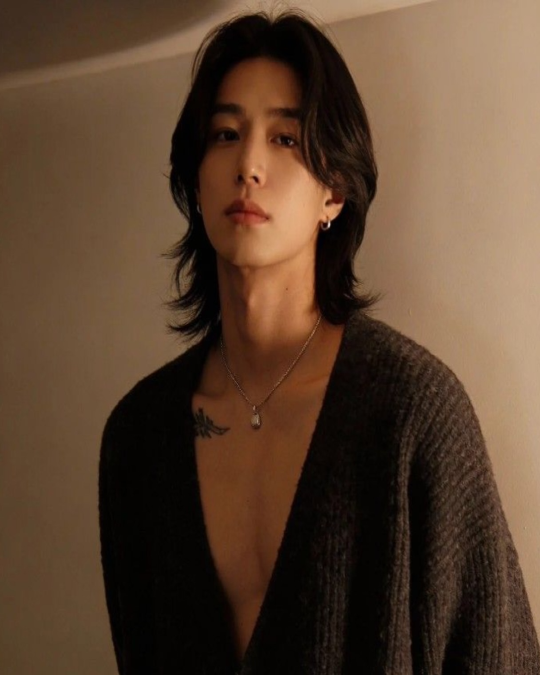
Haircut formula: center part + long layers + soft flicked ends
Smooth, dark hair splits at the center and falls past the cheeks in long curtain pieces, with the ears peeking out around small hoops. The layers end near the shoulders, where the tips curve out in a soft flick. It reads as a wolf cut by shape alone, with no short, spiky top.
For fine hair, ask your barber to keep the ends slightly fuller than the layers above them. That helps the flick hold its shape instead of thinning out.
13. Flared Layer Wolf Cut

The flicked-out layers at jaw level set this cut apart. They add width exactly where fine hair tends to hang straight down.
- Top: Sleek and fairly flat, with a clean center part and very little lift.
- Fringe: Long curtain pieces split at the center and fall past the cheeks.
- Sides: Layers flare outward around the jaw, then continue down in feathered ends.
- Finish: Smooth with a slight shine, and loose, wispy tips.
The flat top is optional if your hair is fine. A little root lift at the crown keeps the whole shape from looking narrow.
14. A Side-Swept Wolf Cut
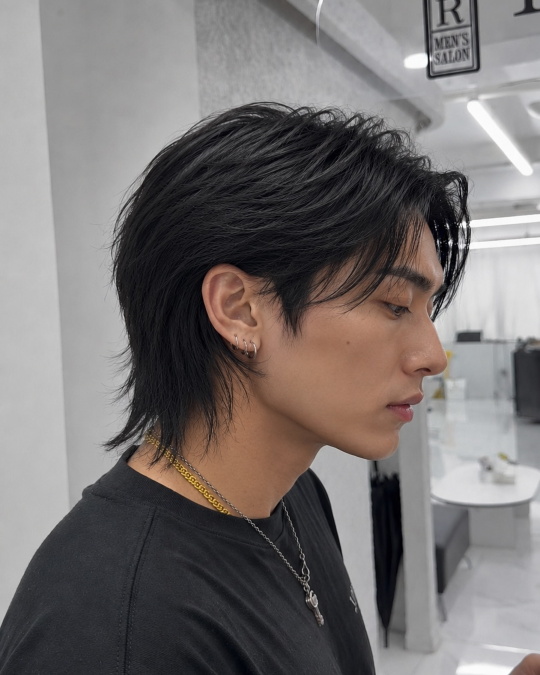
In profile, the slim sides stand out. The hair tucks behind the ear, so the ear and three small hoops stay visible and the shape doesn’t puff out.
On top, the hair is lifted and piecey, with a longer fringe that sweeps down past the brow. Behind the ear, stepped layers run to the collar and end in sharp, separate points.
Slim sides and a long back add length without bulk, which helps fine hair. Ask your barber to blend the tucked sides into the nape layers.
15. Voluminous Wolf Mullet
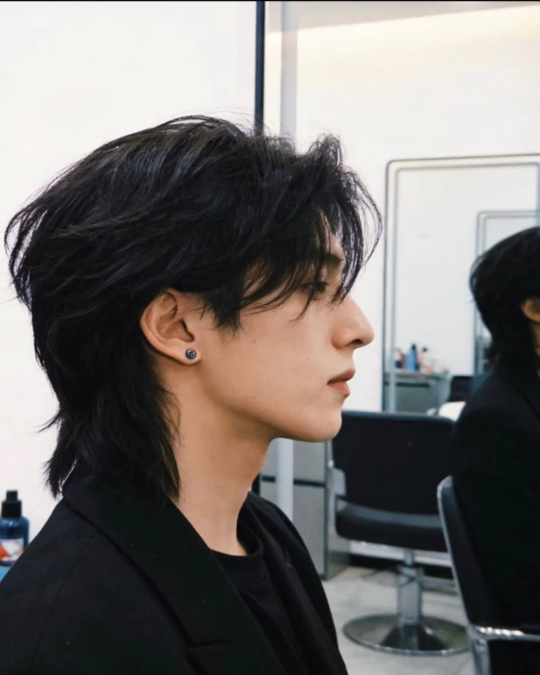
Haircut formula: voluminous top + long fringe + stepped nape layers
Black hair lifts into a full, feathery top, with a long fringe that sweeps across the forehead toward the eyes. The sides tuck behind the ear, and the back drops in stepped layers to the collar. The contrast between the airy top and the slim sides gives fine hair the fullness it usually lacks.
That’s all 15 images. If you want, I can write a short closing section or an FAQ block next, such as how often to trim a wolf cut or which products work best for fine hair.