

Shag mullet haircuts for men look relaxed in photos, but asking for one at the barbershop is harder than it seems.
Too much length at the back can feel dated. Too many choppy layers on top can leave thin, stringy ends that fall flat by day two.
These 17 ideas show how soft layers, light texture, and balanced length work on different hair types. Each one includes styling or barber advice, so you can pick a cut that suits your hair and your routine.
What Keeps a Shag Mullet Soft Instead of Stringy
- Mistake: top layers cut too short. Short layers stand straight up and break the flow into the back. Ask for a top length that can reach the fringe area so the layers connect to the longer lengths behind.
- Mistake: a heavy, blunt back. A straight-cut nape can make the mullet look boxy. Ask your barber to shape and soften the back so it tapers naturally instead of ending in a hard line.
- Mistake: too much product. Wet-look gels and heavy pomades flatten the layers. Use a light texture cream or sea salt spray on damp hair, then scrunch and let it air dry or dry it loosely.
- Mistake: waiting too long between trims. The shape loses its balance as the sides and neckline grow out. A trim every six to eight weeks keeps the layers looking intentional.
1. Textured Shag Mullet
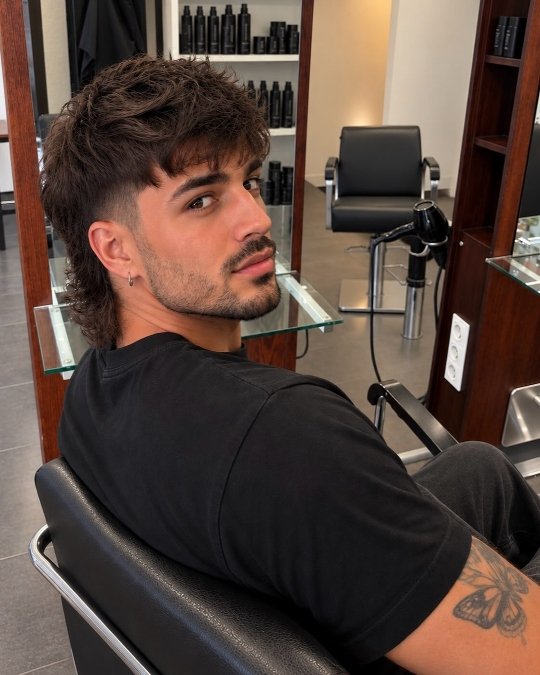
Dark brown layers fall forward into a choppy fringe, while the sides stay short and tapered around the ear. The back is visibly longer and falls down the neck, which gives the mullet its shape without making it heavy.
The top has a loose wave and uneven ends, so the finish looks lived-in instead of styled. That soft texture keeps this shag mullet haircut from feeling stiff against the shorter sides.
Short, trimmed stubble and a neat mustache balance the length on top. This cut works best on medium-density hair with some natural wave. Fine, straight hair may need a light texture spray to hold the layers.
2. Choppy Mullet Fade

Haircut formula: voluminous wavy top + faded sides + choppy fringe
The faded sides sit tight against the head, which makes the thick, tousled top stand out more. The fringe breaks into uneven pieces across the forehead, so the front still looks soft next to such a sharp side. Wavy or curly hair holds this shape best, and a matte texture product helps the layers keep their separation.
3. Curly Taper Mullet

The back view shows how a curly mullet holds its shape: close sides and a longer, softer neckline.
- Top: Medium-length curls stack into a full, rounded crown with plenty of natural body.
- Sides: The hair is tapered tight around the ear and temple, then blends up into the curls.
- Back: The curls grow longer toward the nape and end in loose, uneven pieces. In the photo, the barber is shaping this area with scissors and a comb.
- Fringe: The mirror shows curls falling forward over the forehead in a loose, broken line.
Tight sides stop curly hair from spreading outward, so the volume stays on top and the length stays at the back. Let the curls dry naturally with a light curl cream, and avoid brushing them dry, which can turn the shape into frizz.
4. The Spiky Taper Shag
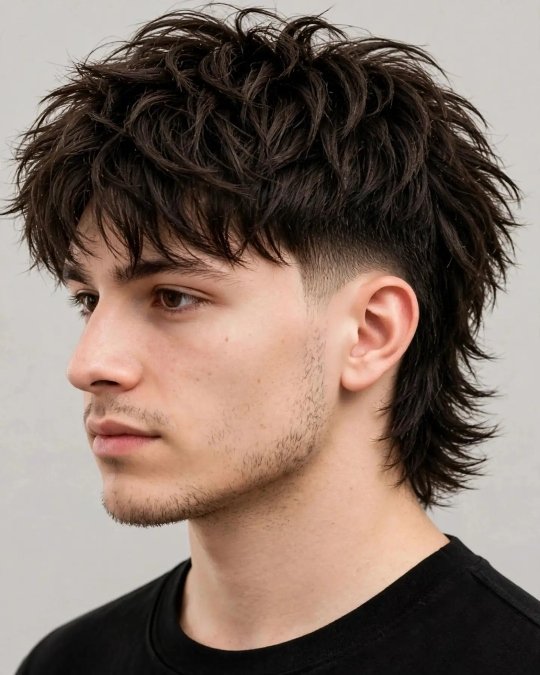
Best for: Men with thick, dark, straight to slightly wavy hair who want a sharp, messy shape.
Choppy layers spike upward on top and end in a short, uneven fringe just above the brows. The sides are faded close around the ear, so the long, wispy pieces at the back stand out in profile. That contrast keeps the shag mullet haircut from looking blocky, because the ends stay light and separated.
Use a small amount of matte clay on dry hair and twist the ends apart with your fingers. Combing it through will smooth out the texture that gives this cut its edge.
5. Long Layered Shag
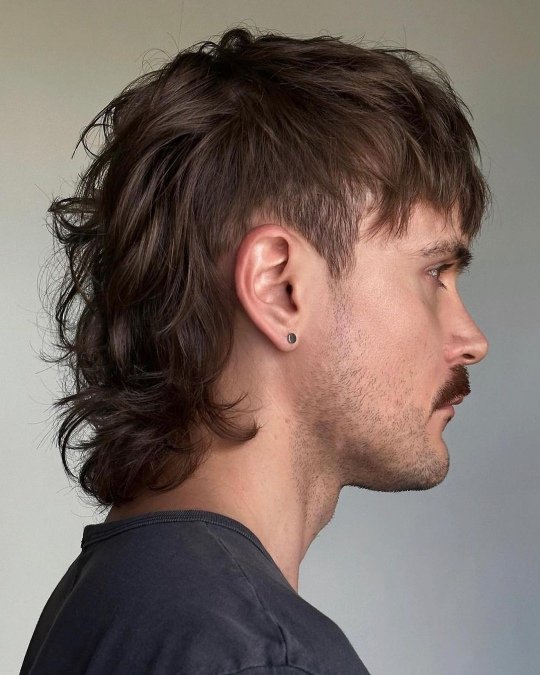
Soft, wavy layers fall past the collar at the back, while a short, blunt fringe sits just above the brows. The sides are cut close around the ear and temple, which keeps the long back section from looking bulky. It is one of the softer takes on shag mullet haircuts for men, and light stubble with a trimmed mustache keeps the profile clean.
Hair length note: This shape depends on the length at the back, so expect a grow-out period before it looks full. Ask your barber to build the layers while it grows instead of cutting it back to a blunt line.
- Styling: Dry the hair with a light cream or sea salt spray, then scrunch the layers and let the waves settle on their own.
- Maintenance: The short sides and fringe lose their shape faster than the long back, so tidy those first and trim the ends only when they start to look thin.
6. Swept Back Mullet With Beard
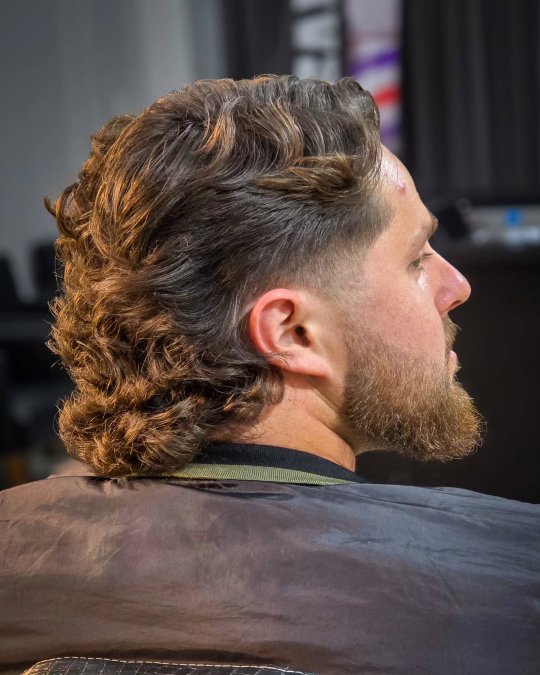
Haircut formula: swept-back waves + faded temples + long curly back
The top is brushed back from the forehead in loose waves, then picks up curl and length toward the nape. It ends in a tight cluster of warm copper-brown curls at the collar.
A fade at the temple and around the ear keeps the sides clean, so the thick curls at the back get the attention. The full, neatly shaped beard adds weight to the lower face and balances that volume.
Ask your barber to blend the fade into the beard line so the sides look connected, not cut off. Curly hair like this holds its shape better with a little moisture, so a light curl cream works better than heavy wax.
7. Wavy Temple Fade Mullet
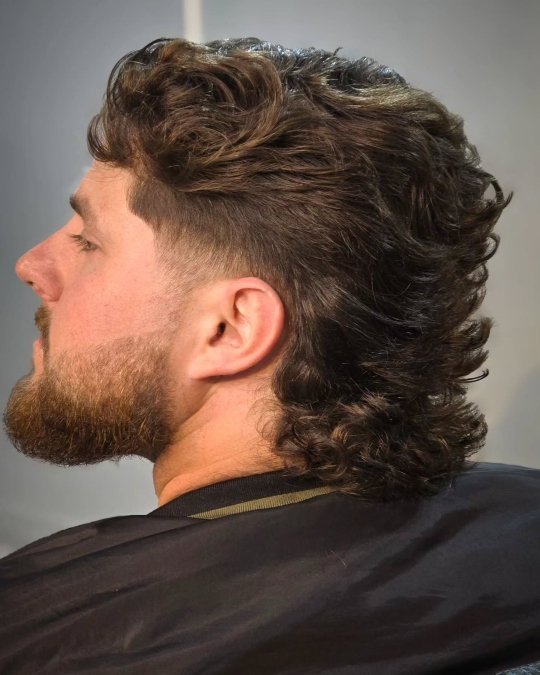
Why this style works:
- Shape: The waves sweep back and widen through the crown, then drop into longer curls at the collar. That keeps the outline full from the side and back.
- Fade placement: The fade begins near the temple and wraps around the ear, so the ears and neck stay clear. This keeps the long hair looking deliberate, not overgrown.
- Color and texture: The warm copper-brown tone catches the light on each wave, which makes the layers easy to read. Thick, wavy hair gives this cut the body it needs.
- Beard balance: The full beard is shaped close along the jaw and neck. It adds weight at the front to match the length at the back.
8. Curly Mullet for Thick Hair
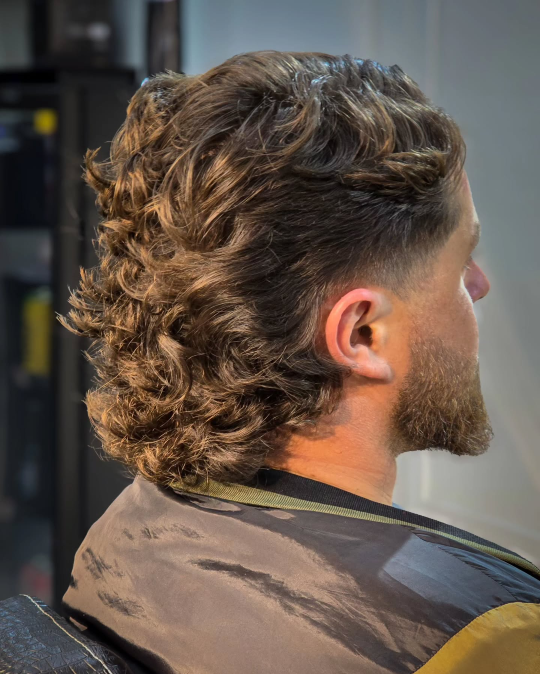
Springy curls stack up through the crown and drop into a rounded cluster at the collar. A smooth fade around the ear keeps the sides tight.
- Why it works: The fade removes bulk from the sides, so the curls look shaped and dense instead of puffy.
- Ask your barber: Request a fade that blends into the curly top, and have the back shaped into a rounded curl line instead of a straight edge.
- Best for: Men with naturally thick curly or wavy hair who don’t mind growing out the length at the back.
9. Relaxed Curly Mullet Fade
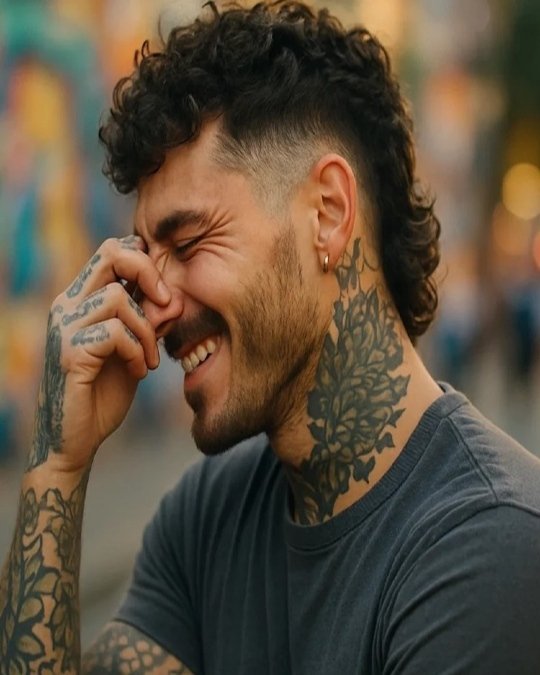
Dark, tight curls sit on top with soft forward volume, while the sides are faded close at the temple and around the ear. Longer curls at the back fall behind the ear and onto the neck, ending in loose, uneven spirals.
Fade detail: The fade climbs fairly high on the temple, so the hairline looks clean and the curls on top look fuller by contrast.
Short stubble and a trimmed mustache keep the jaw defined without competing with the hair. This cut suits men with tight curls who want volume without too much length, and daily styling can stay simple. A light cream worked through with your fingers is usually enough to keep the curls separated.
10. Curly Fringe + Taper Fade
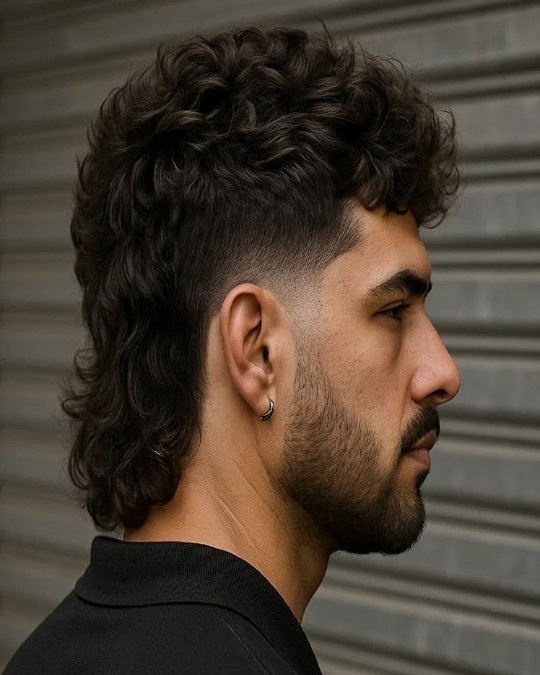
Dense curls roll forward into a loose, broken fringe at the forehead, and the volume carries evenly across the crown. At the sides, the hair tapers short around the ear and temple, then opens into longer, softer waves that follow the neck. The outline stays rounded and full, with no hard edge at the nape.
The even volume may suit oval and slightly longer faces well, since the width at the top and back balances the profile. Regular trims around the ears and neckline matter most with this cut, because they keep the shape neat while the curls stay natural.
11. A Fresh Skin Fade Mullet
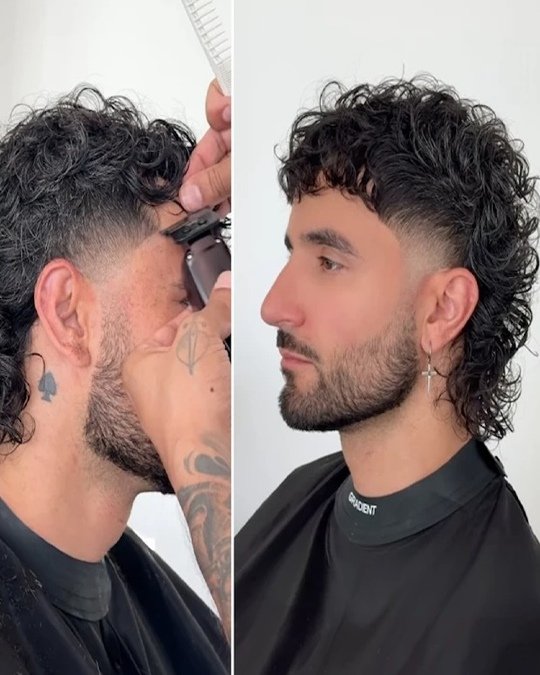
Haircut formula: curly fringe + temple fade + long curly back
The split photo shows the clippers working at the temple on the left and the finished cut on the right. Short curls break over the forehead, the fade sits tight around the ear, and the curls grow longer toward the neck.
That tight fade is what gives the curls their shape. Ask your barber to keep the line around the ear clean, because the length behind it makes any uneven edge easy to see. A trimmed beard with a defined cheek line frames the jaw without crowding the haircut.
12. Wispy Mullet, Sharp Fade
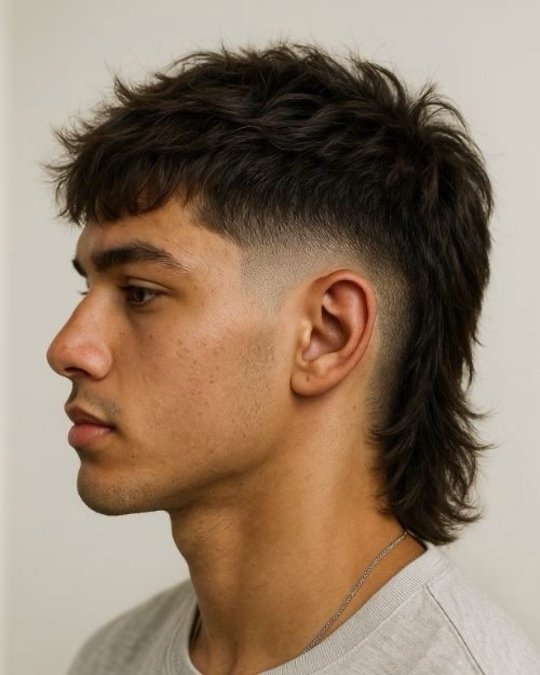
Dark brown hair is cut into light, choppy layers, with a short fringe sitting just above the brows. The top has pieces lifting in different directions, which gives it a messy, lived-in shape.
The sides are cut very close around the ear and fade almost to skin at the temple. Behind that, long, wispy strands fall past the nape and thin out at the tips instead of ending in a blunt line.
That sharp contrast is what keeps the layers looking soft. Straight to slightly wavy hair works well here, though a close fade like this needs a touch-up every few weeks to stay crisp.
13. Feathered Undercut Mullet
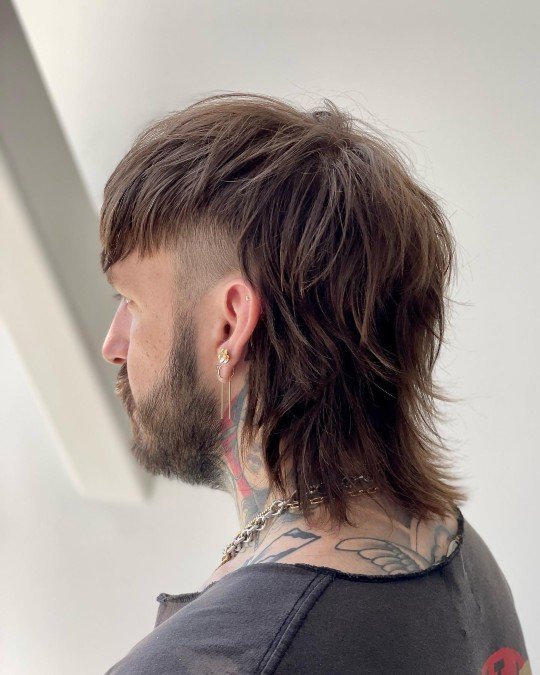
Haircut formula: feathered layers + faded temples + short blunt fringe
Soft, straight layers sweep back from the crown and flick out at the nape, while the fringe is cut short and blunt above the brows. The longer top lays over the faded sides, giving a clear break between the two lengths. Ask your barber to keep the top layers long enough to cover the fade line, and a full beard with a tidy neckline will balance the length at the back.
14. Soft Shag Mullet for Straight Hair
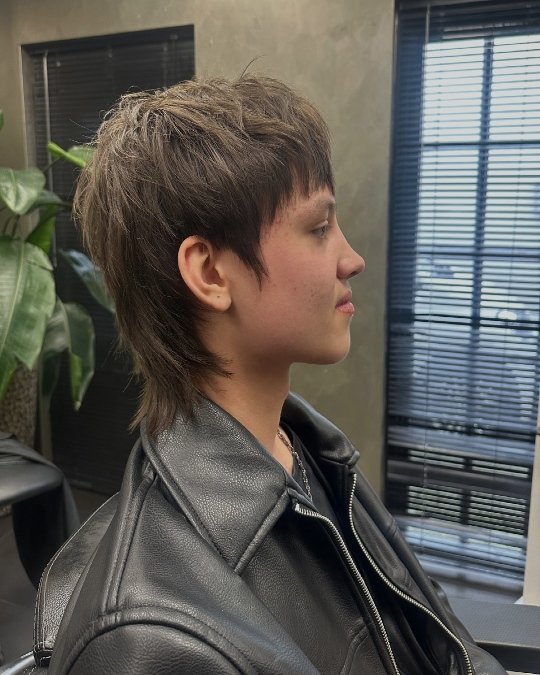
Short, choppy layers sit on top with a wispy fringe that stops just above the brows. The sides are cut short but not faded, with the hair tapering back around the ear, and a thin tail falls to the collar at the back.
The ends are wispy instead of blunt, which keeps this shorter shag mullet haircut soft. The ash-brown color with lighter strands adds depth to the texture.
It suits straight hair with some natural movement and works for men who want the mullet shape without a lot of length. Face shape note: the short sides and light fringe show off the cheekbones and jaw, so it may flatter narrow and oval faces. A little matte texture spray on dry hair keeps the layers separated.
15. Tousled Taper Mullet
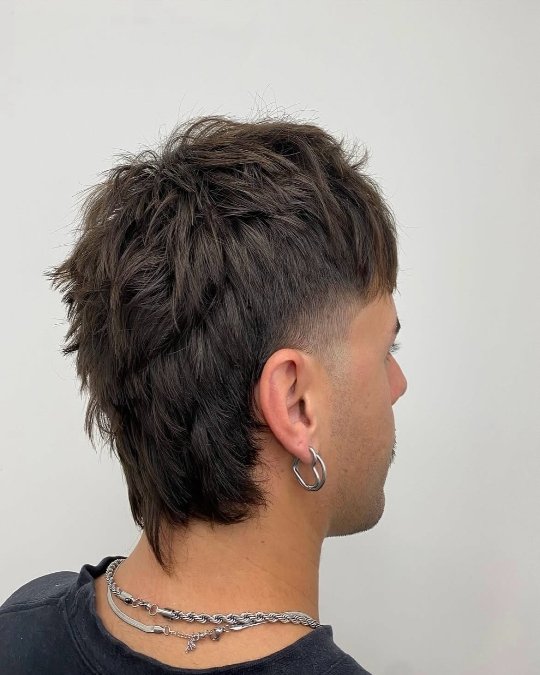
A shorter, more compact take on the mullet, with all the length kept to a small tail at the nape.
- Top: Choppy layers with pieces pointing in different directions, so the crown looks full and textured.
- Sides: Tapered close around the ear and temple, with the hair shortening toward the sideburn.
- Fringe: Cut short with a slightly blunt edge just above the brow.
- Back: A short tail of layered pieces ends at the nape, and the ends are cut to a soft point, not a straight line.
The tight sides keep the volume on top, so the layers read clearly without extra length. A matte texture product worked through dry hair helps keep the pieces separated and stops the top from looking flat by midday.
16. Layered Nape Mullet

Haircut formula: spiky top + taper fade + layered nape
From this angle, the hair at the back steps down in soft, uneven points along the neck. The top stays choppy and upright above a taper that shortens around the ear and temple.
Ask your barber to cut the nape layers so they follow the shape of the neck. That keeps the tail looking shaped instead of tacked on, especially when the sides are this close. A quick trim around the neckline every few weeks stops the back from growing into a heavy block.
17. Shag Mullet and Mustache
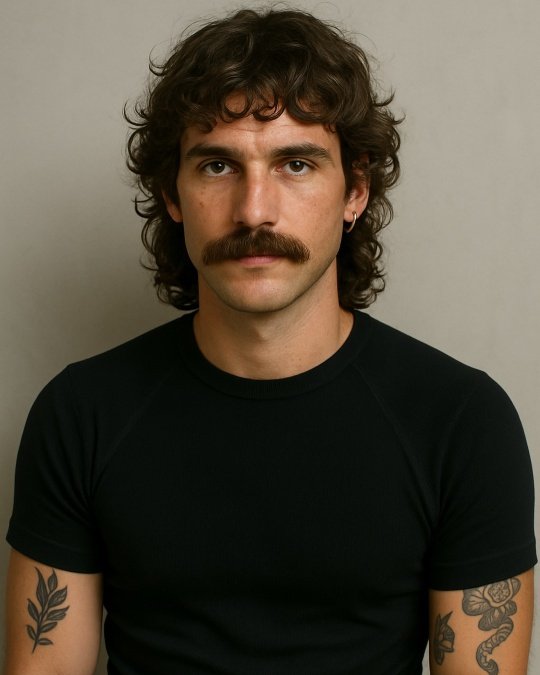
Best for: Men with naturally wavy or curly hair who want a longer, vintage-leaning shag mullet with no fade.
Loose curls fall into a rounded fringe that brushes the brows. The length stays full down the sides, covers part of the ears, and drops toward the jaw and neck. With no fade anywhere, the layers blend all the way around, which makes this the softest cut in the list.
The thick mustache is the only facial hair, so it becomes the focal point. The extra width at the sides may also balance a longer or narrower face. Keep the fringe trimmed to the brow line so it doesn’t fall into the eyes, and dry the curls naturally with a light cream.