
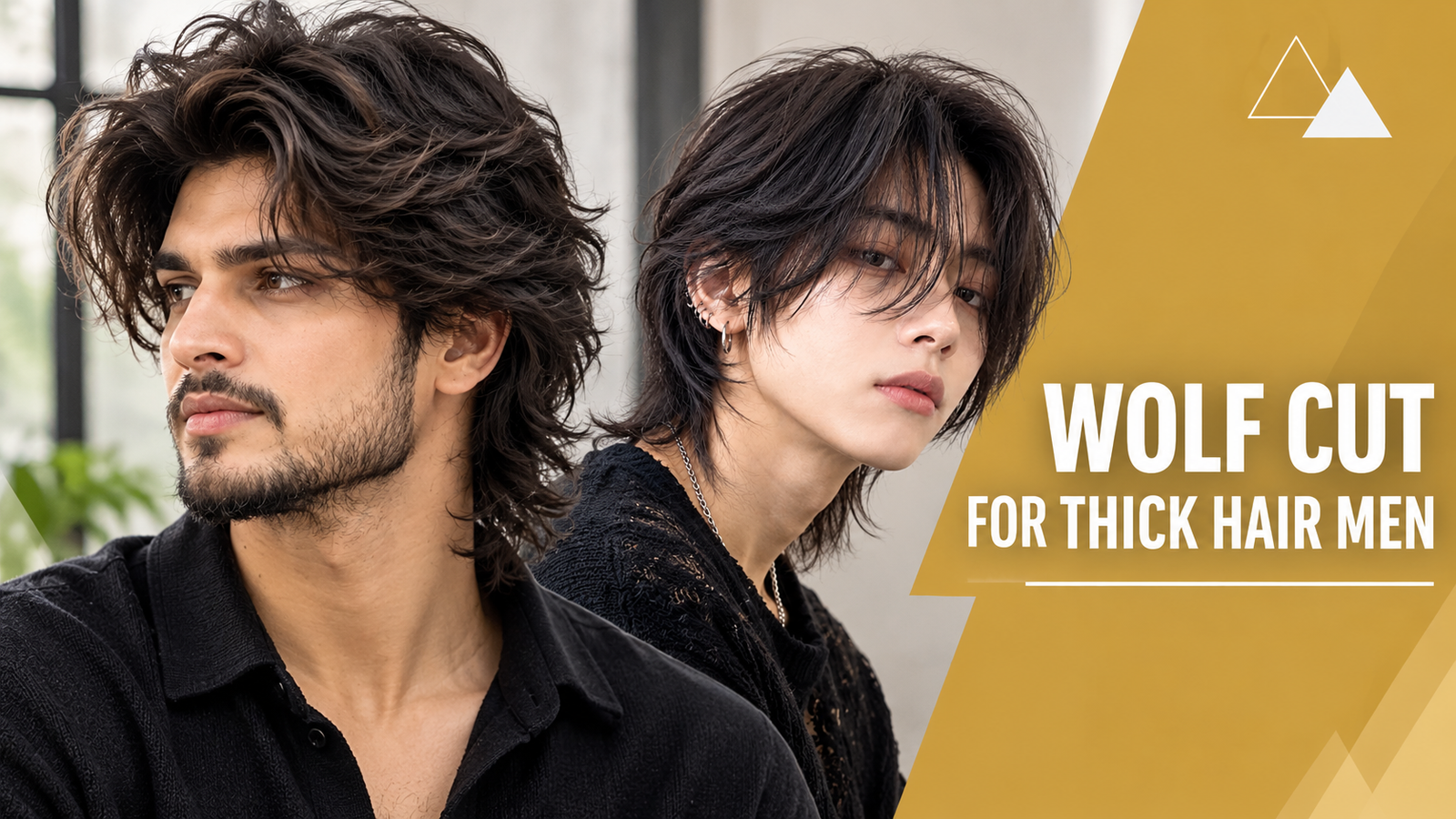
Wolf cut for thick hair can go wrong fast. Without enough weight removed, the top puffs out, the sides flare, and the back turns into a heavy block.
Many men leave the barbershop with a shape that looks great in photos but feels bulky by midday. Thick hair keeps its volume, so the layers have to be cut with purpose.
These 17 men’s cuts show how barbers shape thickness into movement. You will find layered, tapered, and textured options, plus notes on what to ask for and how to style each one.
What to Ask Your Barber for a Wolf Cut on Thick Hair
- Remove weight inside the length: Ask for texturizing or thinning through the mid-lengths, not only the ends. This lowers bulk while keeping the shaggy length.
- Shorten the sides: Request tapered or shorter sides around the ears so thick hair doesn’t flare out into a triangle.
- Keep crown layers short: Shorter layers at the crown stop the top from stacking into a dome. Leave the front a little longer for a soft fringe.
- Blend the neckline: A softly blended back lies flatter on thick hair than a blunt edge, and it grows out more naturally.
1. Long Feathered Wolf Cut
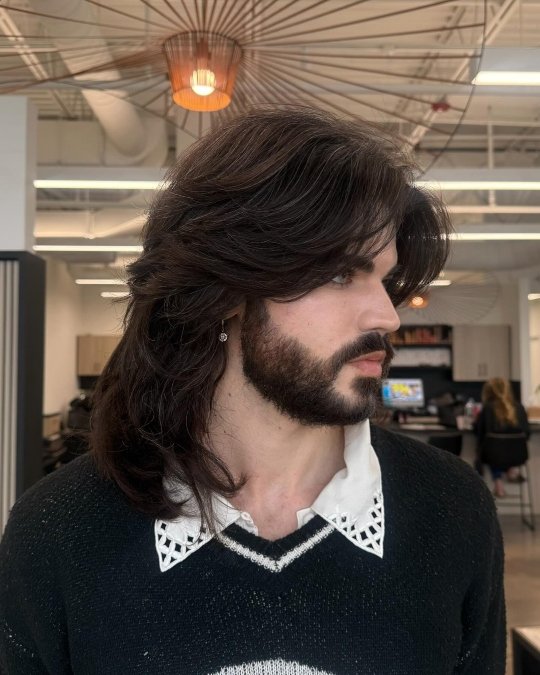
Haircut formula: long layers + side-swept fringe + full beard
The dark brown hair falls past the collar in soft, feathered layers. The top is swept up and back from the forehead, then drops into a curtain fringe that frames the eye. The ends flick outward instead of hanging straight down.
This works for thick hair because the layers start high and stack in steps. Each layer carries its own weight, so the hair moves instead of sitting in one heavy block. The slight wave in the lengths adds shape without extra bulk.
Ask your barber: Request long, blended layers with a longer fringe that can be swept to the side. Ask for texturizing through the mid-lengths if your hair is dense.
The short, full beard keeps the look balanced. Its squared shape and clean cheek line add structure under all that flow, which suits oval and slightly long faces.
Maintenance tip: Expect a trim every 8 to 10 weeks to keep the layers and ends from blurring. A blow dryer and a light styling cream will help the top lift and the ends flick out.
2. Medium Layered Flow
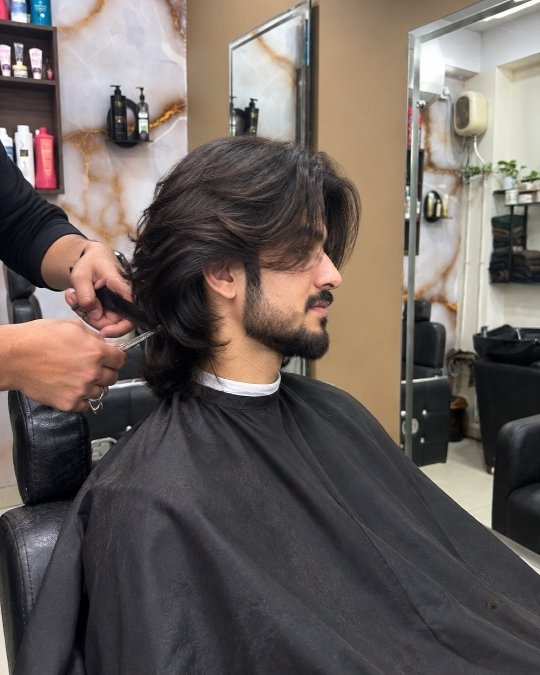
The dark brown hair falls to about the jaw and neckline in loose layers, with a center-leaning fringe that sweeps back from the forehead. The top has natural lift, and the sides fall in soft waves rather than straight lines. A barber is mid-trim in the photo, working scissors along the back and side lengths.
Thick hair tends to puff outward at this length, so the layering does the heavy lifting. Shorter layers on top and around the face release weight, while the longer lengths underneath stay full without ballooning. The waves also help hide the steps between layers, so the shape looks blended.
Best for: Men with dense, wavy hair who want length without the shaggy, tapered edge of a full wolf cut.
The trimmed beard is short and fairly full, with a defined cheek line and a rounded jaw shape. It adds contrast against the soft hair and keeps the lower face looking sharp.
Ask your barber: Request point cutting or slide cutting through the layers instead of heavy thinning. That keeps the ends soft and prevents frizz as the hair grows out.
3. Shaggy Wolf Cut
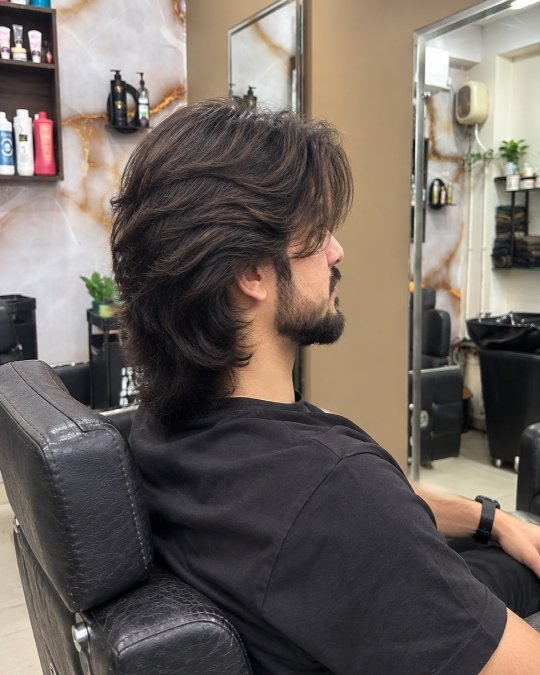
Dark brown layers fall in loose, feathered pieces from the crown. A heavy fringe sweeps forward across the forehead.
The sides cover the ears, and the ends flick outward at the nape instead of hanging flat. That movement makes this a wolf cut for thick hair that looks shaped rather than bulky.
Wavy texture helps the layers separate, so the hair never stacks into one dense block. The short, full beard, trimmed neatly along the jaw, balances all that length.
Styling takes a few minutes with a light cream and a blow dryer. Trims every six to eight weeks keep the shape from growing heavy.
4. A Sleek Straight Wolf Cut
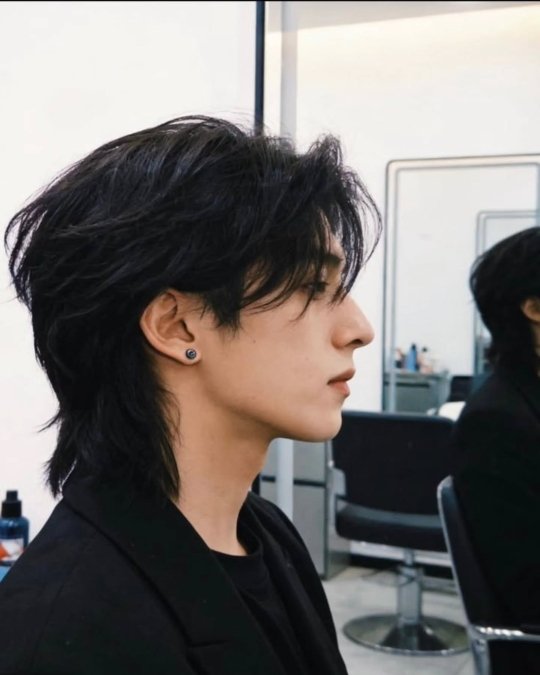
Haircut formula: feathered top + long curtain fringe + tapered nape tail
Black hair lifts at the crown, then falls into a long fringe that sweeps across the forehead and brushes the eye. The hair around the ear is cut slim, and the length narrows into a thin tail at the back.
That slim shape at the sides and nape is the detail to borrow if your hair is thick. Less hair sits around the ears, so the volume stays on top where it looks intentional.
The smooth, slightly wavy texture shows the choppy ends clearly, but it also means the fringe loses its shape fast. Expect a trim every six weeks or so to keep the tail from thickening.
5. Medium Length Middle Part Flow
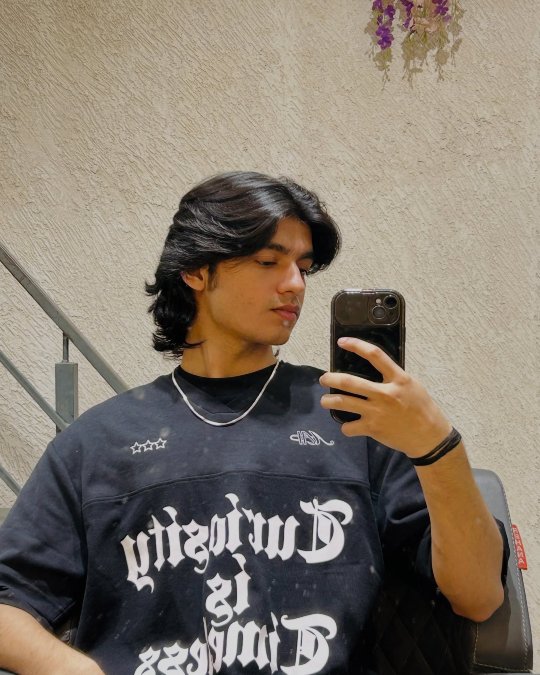
Best for: Men with thick, straight to slightly wavy hair who want length without a bulky shape.
Glossy black hair splits near the center and sweeps back over the temples. The ends sit around jaw level and flick outward near the ears and neck.
Because the hair is long enough to hang, the weight pulls the volume down instead of letting it puff out. The soft layers at the ends keep the sides from looking like a solid curtain.
Styling tip: Blow dry the hair backward while it’s damp, then finish with a light cream so the part stays natural. Thick hair may need layers thinned through the mid-lengths if the ends start to look heavy.
6. Soft Wavy Wolf Cut
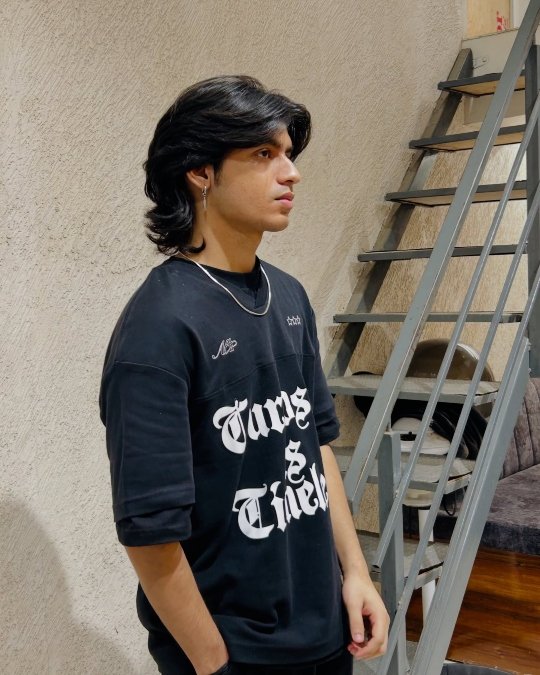
The side view shows how the hair sits behind the ear, with the ends curling outward at the neck. The black hair has a glossy, wavy finish, and the length reaches about the collar.
- Top: Medium length with a smooth lift at the crown, brushed back from the forehead in one soft wave.
- Sides: Swept back behind the ear, which leaves the ear exposed and keeps the sides from puffing out.
- Back: Layered ends that flip slightly outward, so the length looks light instead of blunt.
- Finish: Natural and glossy, with just enough wave to show the layers.
This shape works on thick hair because the bulk is spread over several layers instead of sitting at one length. Ask your barber to cut the layers on the longer side. Shorter, heavier layers can make dense hair flare wider.
7. Modern Wolf With Wispy Fringe
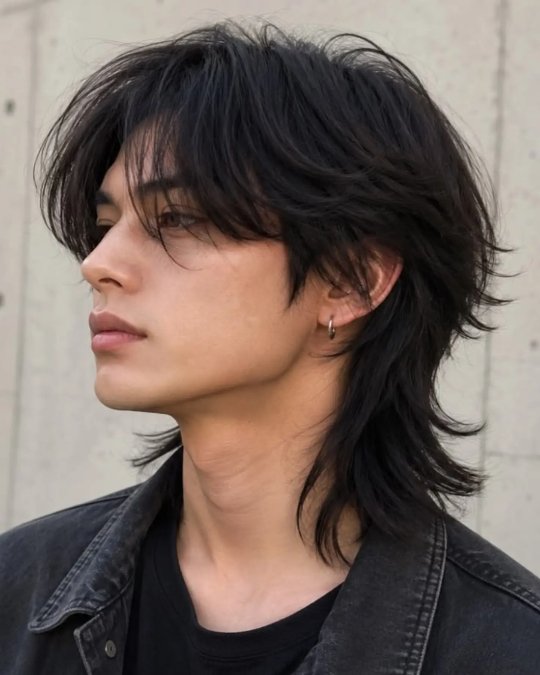
Black hair lifts at the crown, then drops into a long, broken-up fringe that covers part of the forehead and brow. The sides are swept behind the ear, and the back falls in separate, pointed pieces to the collar.
Why this style works:
- Broken-up ends: The layers are uneven, so the hair separates into strands instead of one heavy curtain. Thick hair needs this to avoid a dense, wide shape.
- Exposed ear: Less hair around the sides keeps the width down and puts the focus on the top and tail.
- Natural lift: The top sits full but loose, so it reads as texture rather than a dome of bulk.
Ask your barber: Request a longer, wispy fringe and a tail with visible layers. Thick hair may need extra weight removed through the top so it doesn’t puff up.
The fringe grows into the eyes quickly, so plan a trim every six to eight weeks.
8. Tousled Wavy Wolf
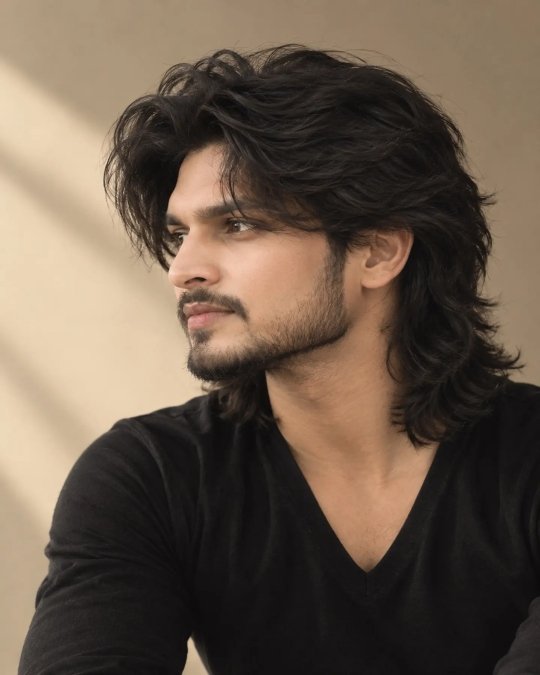
Dense black waves rise off the forehead and sweep back in loose, uneven pieces. A few strands fall toward the brow, while the sides tuck behind the ear and run into layers that reach the collar.
The ends flick outward in separate chunks instead of hanging as one block. That keeps this much hair from turning into a heavy mop.
Beard pairing: A short beard with a tidy mustache, like the one shown, adds structure to the jaw and balances the length on top. Keep it noticeably shorter than the hair so the two don’t compete.
Thick, wavy hair can swell in humid weather, so a light cream or sea salt spray helps hold the shape. Ask your barber to thin the top and mid layers every couple of months so the volume stays loose.
9. Modern Wolf With Wispy Fringe
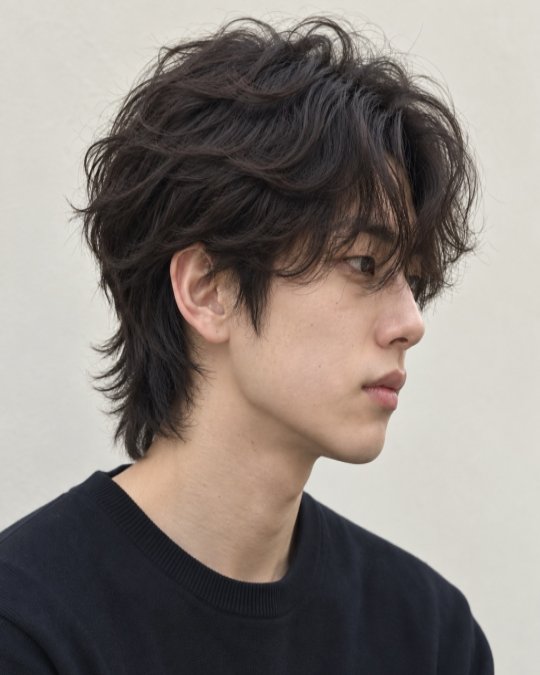
Haircut formula: curly textured top + wispy fringe + slim sides + choppy tail
Dark, wavy hair sits full and loose on top, with thin pieces of fringe falling across the forehead and brow. The hair around the ear is cut close and light, and the back drops into a short, pointed tail.
The slim sides are the part to copy if your hair is thick. Cutting weight away around the ears keeps the cut narrow, so the volume stays on top.
Ask your barber to point-cut the fringe and top so the curls separate instead of clumping. A little sea salt spray or light cream on damp hair keeps the texture loose without making it stiff.
I kept your heading as written, but it’s close to #5. If you’d like a more distinct H2, “Curly Wolf Cut” or “Wavy Wolf Cut” would work.
Planning the hairstyle headings: choosing a wavy curtain fringe look
10. Wavy Curtain Fringe Wolf Cut
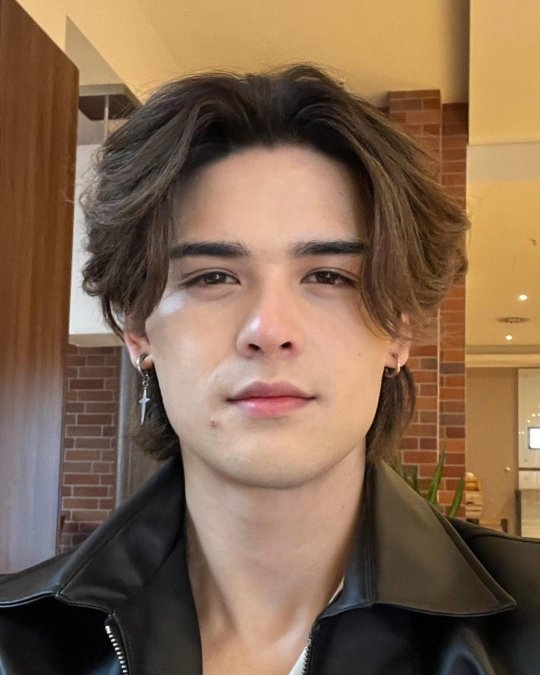
Brown hair splits down the middle and falls in loose waves on both sides of the face. The curtains land between cheekbone and jaw, and the ends flip outward near the neck.
Center parts can look flat on thick hair, since the weight pulls everything straight down. The waves here add movement, so the sides read as soft layers instead of two heavy panels.
Face shape note: The curtains soften the jaw without hiding it, which suits oval and slightly angular faces. Round faces may want the sides cut a little longer so they don’t add width.
- Styling: Blow dry the roots away from the part, then add a light cream or sea salt spray to keep the waves loose.
- Maintenance: Plan a trim every six to eight weeks. The curtains lose their shape once they grow well past the jaw.
11. Choppy Wolf Cut for Thick Hair
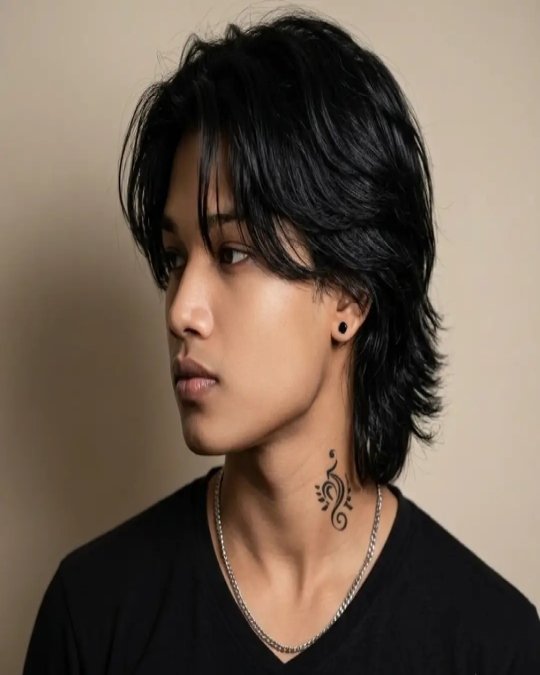
Jet black hair falls from a lifted crown into a fringe that sweeps across the forehead and stops near the brow. The sides tuck behind the ear, leaving it fully exposed.
At the back, the layers break into short, pointed pieces that flare outward just past the jawline. Each piece is cut at a different length, so the ends separate instead of stacking into one wide, solid edge.
That uneven cutting suits thick, glossy hair, which tends to hang heavy and flat when it’s all one length. The exposed ear also keeps the sides narrow, so the fullness stays on top.
A texturizing spray or light cream on damp hair helps keep those ends defined. Shorter layers like these grow out quickly, so book a trim about every six weeks.
Choosing headline sentence patterns for variety
12. Wet Look Shaggy Wolf Cut
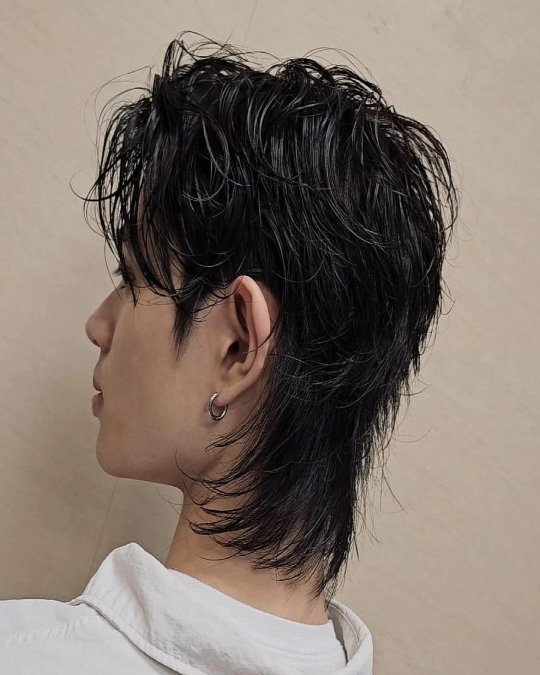
Haircut formula: tousled wavy top + short fringe + slim sides + long wispy tail
Glossy black hair stands up in loose, curling pieces on top, with a short fringe cut across the forehead. The hair around the ear is cut slim, and the back stretches into a long tail of thin, pointed layers that reach the collar.
The big gap between a full top and a narrow side is what keeps thick hair from looking boxy here. Weight is cut away at the sides, so the volume sits at the crown and the length falls straight at the nape.
Product tip: The wet look comes from a light gel or shine cream scrunched into damp hair. Use a small amount, since thick hair can clump and look greasy if you add too much.
The tail grows fast and loses its shape, so plan a trim every six weeks.
13. Tapered Nape Wolf Cut
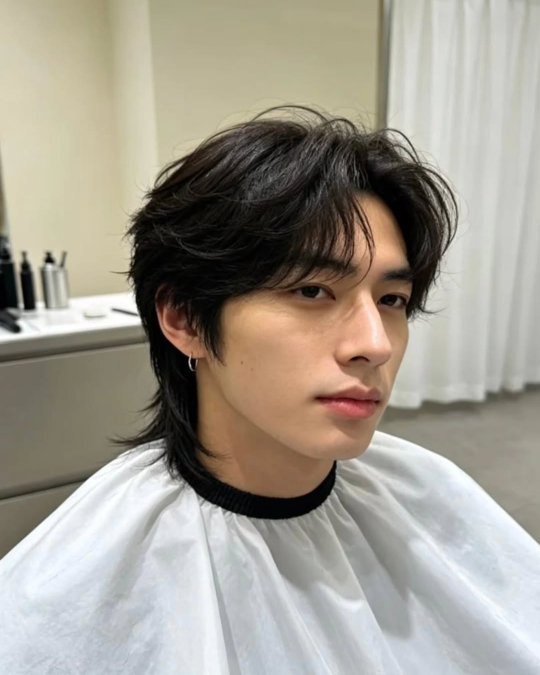
Black hair sits loose and slightly wavy on top, with a fringe that splits near the center and frames both sides of the forehead. The sides tuck behind the ear, and the back narrows into a thin tail that stops at the collar.
The tail tapers to a point at the nape, so the length doesn’t spread wide across the neck. On thick hair, that narrow back helps the whole cut sit closer to the head.
Face shape note: The fringe falls down the sides of the face and shortens the forehead. That suits long and oval faces, while rounder faces may want the front pieces cut a bit longer to avoid adding width.
Ask for the fringe to be point-cut so it breaks into soft pieces. A thick, blunt fringe can look heavy at this length.
Dry the top with your fingers and a blow dryer, then use a little styling cream to keep the waves loose. A trim every six weeks keeps the tail from thickening.
14. Short Wavy Wolf Cut

Dense black waves sit rounded and full on top, with a heavy, broken-up fringe that falls to the brows. The sides taper in close around the ear, and the back ends in a short tail of pointed pieces at the nape.
This is a shorter take on the wolf cut, so it suits thick hair that gets too heavy at longer lengths. There is less hair to hang, and the bulk stays on top.
- Why it works: The tight sides and short tail keep the outline narrow. The wavy top gives volume without a wide, boxy shape.
- Ask your barber: Request a point-cut fringe and a top that’s thinned through the inside. The tail should be short with uneven ends.
- Best for: Men with thick, wavy hair who want the wolf shape without years of growing it out.
The fringe is the part that needs upkeep. Once it reaches the eyes, the cut loses its shape, so plan a trim every five to six weeks.
15. Tiered Wolf Cut
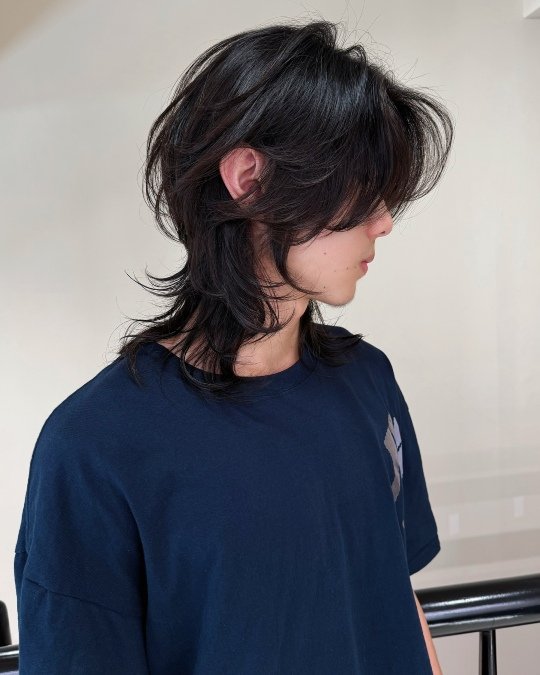
Glossy black hair rises off the crown and sweeps forward into a long fringe that covers the brow and part of the eye. The ear stays exposed, and the layers stack below it in clear steps, each one flicking outward before the longest pieces end near the collar.
Those steps keep long, thick hair from hanging as one heavy sheet. Each layer carries less weight, so the hair moves and the back stays light.
Hair length note: This is the longest cut in the list, so it needs more layering than the shorter ones. Ask your barber for visible, well-spaced layers. Layers cut too close together can leave thick hair puffy instead of airy.
Lift the crown with a blow dryer or your fingers, then work a small amount of texture cream through the ends. Trims can wait about eight weeks, since the extra length hides growth better than a shorter wolf cut.
16. Cropped Wolf Cut Back View
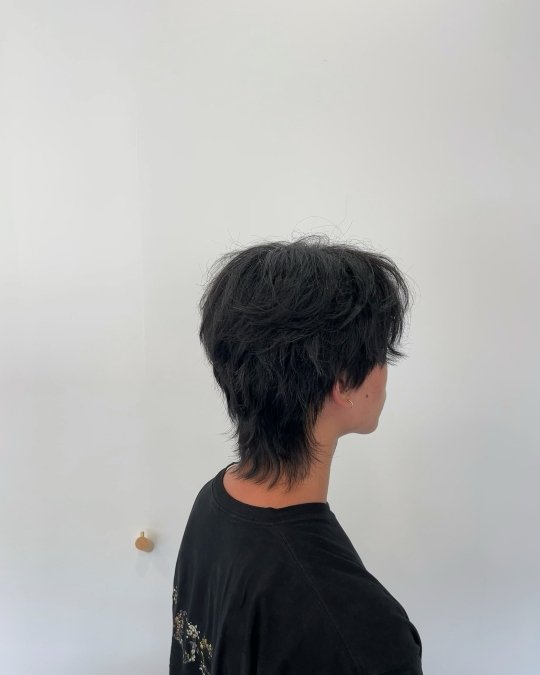
The back view shows a rounded, textured top in black, with loose pieces lifting off the crown and stray strands standing up at the top. Below it, the sides sit short and close to the head, and the hair behind the ear is cut tight.
At the nape, a short tail of pointed layers drops to just above the collar. The ends are uneven, so the tail looks broken up instead of cut in a straight line.
This is the lightest cut in the list, and it suits thick hair that gets heavy as it grows. The tight sides remove bulk where thick hair puffs out most, and the tail keeps the wolf shape without much length.
The top needs the most upkeep. Once it grows long and flat, the contrast with the sides fades, so plan a trim every five to six weeks and use a little texture cream to keep the crown lifted.
17. Messy Center-Part Shag
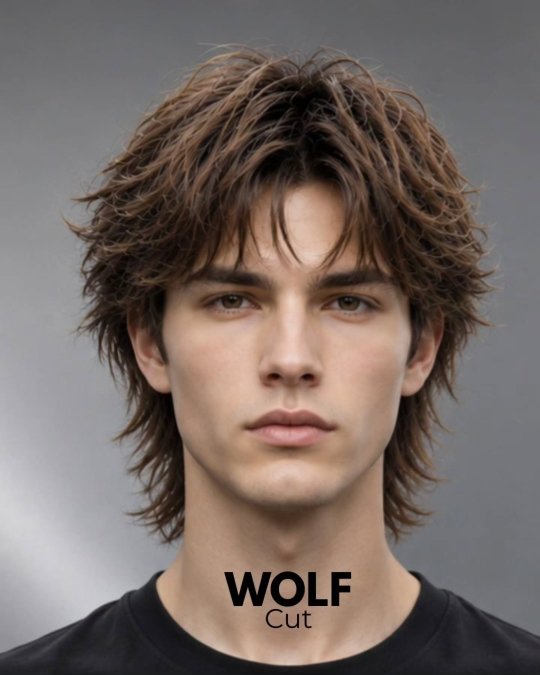
Brown hair splits near the center and falls into a choppy fringe that stops at the brows. The top sits loose and uneven, with fine strands lifting at the crown.
Ask your barber:
- Top: Medium length with heavy texturizing, so the crown looks broken up instead of dense.
- Sides: Layers that sweep outward past the ears and end around the jaw.
- Fringe: Long, thin pieces that part in the middle and don’t form a blunt line.
- Finish: Matte and loose, with visible separation between the strands.
The cut adds width at the sides, which suits long and oval faces. Thick hair needs those layers cut thin and well spaced. Otherwise the side flare can turn into a wide, boxy shape. The lighter brown ends also make the choppy layers easier to see.