

Anti-aging tips for men usually fall into two piles: expensive creams that promise a lot, and advice to “just accept it.” Neither helps much. Wrinkles and grey hair have different causes, so they need different plans
Skin responds well to a few steady habits: sun protection, a gentle retinoid, and basic moisture. Grey hair is mostly set by genetics, so the smart move is deciding how you want to wear it. This guide covers both, with routines
barber requests, and budget swaps that work at any age and for any skin or hair type.
Sun Protection Does More for Wrinkles Than Any Cream
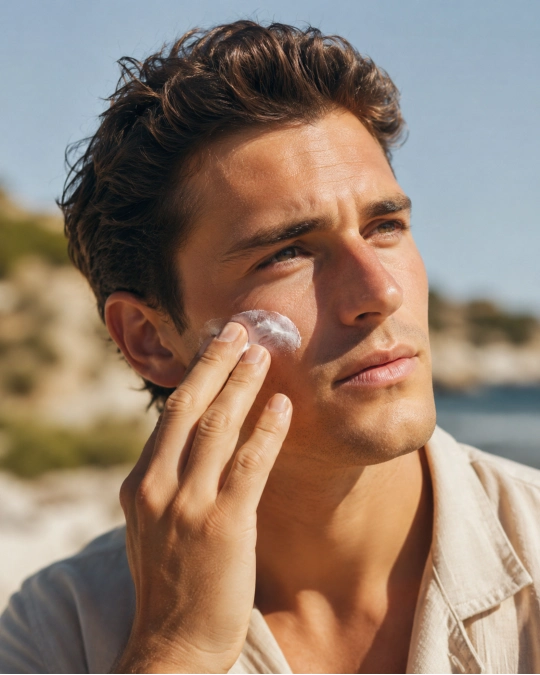
Sun exposure is one of the biggest outside causes of lines, rough texture, and uneven tone. UV light breaks down the collagen and elastin that keep skin firm. That is why the forehead, the tops of the cheeks, and the backs of the hands often show age first.
A daily broad-spectrum sunscreen of SPF 30 or higher is the most useful anti-aging step you can take. It works best when you use it every day, not just at the beach.
- Use enough. About two finger lengths for the face and neck is a common guide.
- Don’t skip the neck, ears, and the top of a thinning or short-cut head.
- Reapply if you are outside for hours, sweating, or swimming.
- Choose by feel. Gel and fluid formulas sit lightly on oily skin. Cream formulas suit dry skin. Mineral sunscreens with zinc oxide are often easier on sensitive skin.
Budget swap: If a separate sunscreen feels like one step too many, use a daily moisturizer that already has SPF 30. Check that the label says broad-spectrum.
A Five-Minute Routine, Matched to Your Skin Type
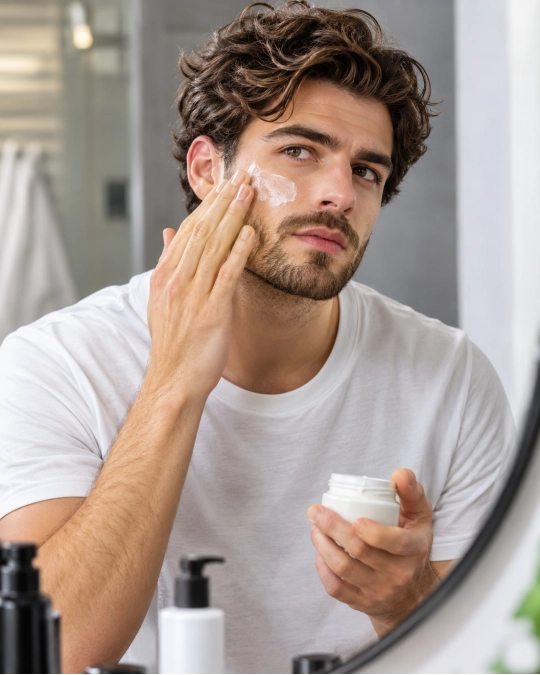
More products do not mean better results. Most men do well with a short routine done consistently. The order matters because thin, water-based products go on first and heavier ones seal them in.
Morning: cleanse (or just rinse if your skin feels dry) → vitamin C serum, if you use one → moisturizer → sunscreen.
Night: cleanse → retinoid on dry skin, a few nights a week → moisturizer.
| Skin type | Cleanser | Moisturizer to look for | Skip or limit |
|---|---|---|---|
| Oily | Gel or foaming, once or twice a day | Light gel with hyaluronic acid or niacinamide | Heavy balms and thick creams |
| Dry | Creamy, low-foam | Cream with ceramides or glycerin | Hot water, harsh scrubs |
| Combination | Gentle gel | Lotion-weight with hyaluronic acid | Using one heavy product on the whole face |
| Sensitive | Fragrance-free, mild | Plain, fragrance-free cream | Strong acids and many new products at once |
Skin Note: Men’s skin is often oilier and thicker than women’s on average, but shaving strips moisture and causes irritation. Moisturizer helps even if your face feels oily. If you add one new product at a time, you can tell which one causes a problem.
The Daily Anti-Aging Grooming Routine
A simple morning and evening framework for skin care and maintaining a well-groomed grey hairstyle.
Start Fresh
Wash your face with a gentle facial cleanser.
Apply a moisturizer suitable for your skin.
Use broad-spectrum SPF 30 or higher sunscreen.
Reset & Care
Remove daily dirt, sweat and sunscreen.
Keep your skin comfortable with a suitable moisturizer.
Keep grey hair neat with gentle combing and regular maintenance.
Keep your hairstyle clean, choose suitable grooming products, and maintain your natural grey or salt-and-pepper look.
How to Start a Retinoid Without Irritating Your Skin
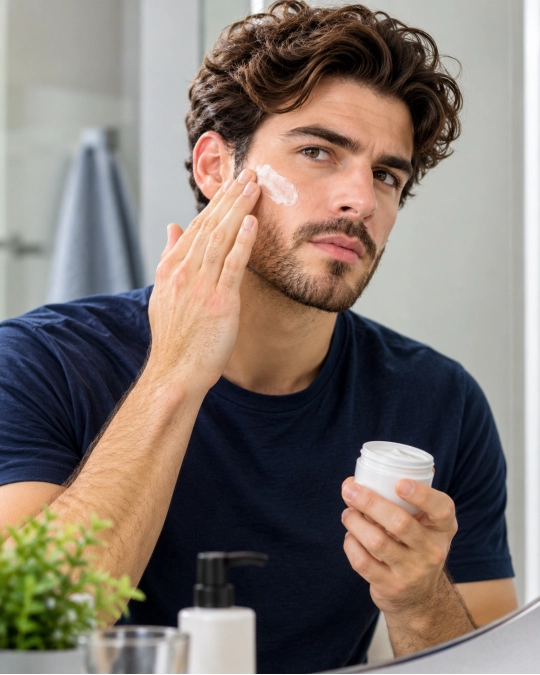
Retinoids are a family of vitamin A ingredients. Over-the-counter options include retinol and adapalene, while stronger prescription versions come from a doctor. Dermatologists commonly recommend them because they can improve the look of fine lines and rough texture over several months. Results vary, and none are guaranteed.
The common mistake is using too much, too fast. This leads to dryness, peeling, and redness, and many guys give up after two weeks.
Try this schedule:
- Weeks 1 to 2: a pea-sized amount for the whole face, two nights a week.
- Weeks 3 to 4: three nights a week, if skin feels comfortable.
- After that: every other night, or nightly if your skin tolerates it.
Technique Notes:
- Apply to fully dry skin. Damp skin absorbs more and gets more irritated.
- Put moisturizer on first, then retinoid, if your skin is dry or sensitive.
- Avoid the corners of the nose and mouth, where skin is thin.
- Go easy on shaving days. Use the retinoid on a non-shaving night instead.
- Use sunscreen every morning, because retinoids can make skin more sun sensitive.
If you are using a prescription product or have eczema or very sensitive skin, ask a doctor or dermatologist first.
Eyes, Forehead, and Shaving: Small Fixes for the Areas That Show First
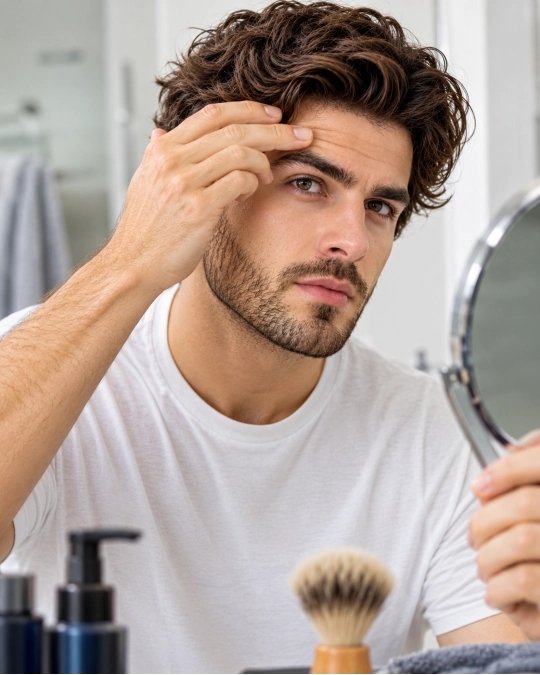
Some areas age visibly sooner because the skin is thinner or moves more.
Under the eyes. Skin here is delicate. Use a gentle eye cream with hyaluronic acid or peptides, and pat it on with a ring finger instead of rubbing. Caffeine eye products can reduce puffiness for a short time, though they will not remove lines. Dark circles also come from genetics and sleep, so sunscreen and rest matter most.
Forehead and between the brows. These lines come from repeated expressions and sun. Sunscreen and a retinoid help the skin’s look. If lines bother you, a dermatologist can explain professional options.
Shaving habits that add irritation:
- A dull blade drags across skin. Swap blades or cartridges on a regular schedule, as soon as pulling begins.
- Shave after a warm shower, when hair is softer.
- Shave with the direction of growth first. Go against it only if your skin handles it.
- Rinse with cool water and moisturize right after.
Daily habits that show on your face: Smoking has been linked to earlier visible skin aging. Poor sleep and heavy drinking can leave skin looking dull and puffy. You do not need a perfect lifestyle. Drinking water, sleeping consistently, and cutting back on the worst habits all help your skin look better.
Grey Hair: What You Can and Cannot Change

Genetics decide most of when you go grey. Hair turns grey when the pigment cells in follicles make less melanin. Many men see first greys in their 30s, and some earlier. Both are normal.
Here is what is worth knowing:
- You cannot reverse grey hair with a supplement, shampoo, or oil. Be cautious with any product that says it can.
- Smoking has been linked to earlier greying. Quitting is good for many reasons.
- Nutrition matters at the basics level. A balanced diet supports healthy hair. If you go grey suddenly or lose hair along with other symptoms, a doctor can check for things like low B12 or thyroid issues.
- Stress is often blamed. Research is still developing, so avoid anyone claiming certainty either way.
Grey hair feels different. It is often coarser, drier, and wirier, so it can look frizzy or sit differently. A moisturizing shampoo, a bit of conditioner, and a light styling cream or balm help it behave. Sun and hard water can also give grey hair a yellow tint. A purple shampoo used once a week can cool that tone.
Blend, Cover, or Keep It: Choosing What to Do with Grey
There is no right answer here. The best choice depends on how much grey you have and how much upkeep you want.
| Option | Best when | Upkeep | Worth knowing |
|---|---|---|---|
| Leave it natural | Grey is scattered or at the temples | None | Often reads as distinguished with a clean cut |
| Gradual color or blending | You have 10 to 40 percent grey | Every 4 to 8 weeks | Fades out slowly, so no hard regrowth line |
| Full color | Grey is widespread | Every 3 to 5 weeks for roots | Pick a shade close to your natural color |
| Beard-only color | Beard greys faster than the head | Every 2 to 4 weeks | Test a patch first, as skin on the face is sensitive |
| Salon visit | You want a custom shade | Varies | Show a photo, and say whether you want natural or fully covered |
Barber Note: If you want to try color, ask a barber or colorist for a shade one step lighter than your natural color. Fully matched dark shades can look flat and harsh as skin and hair change.
Always follow the patch test instructions on the box. If you have scalp irritation, see a doctor before coloring.
Cuts and Beard Shapes That Make Grey Look Deliberate
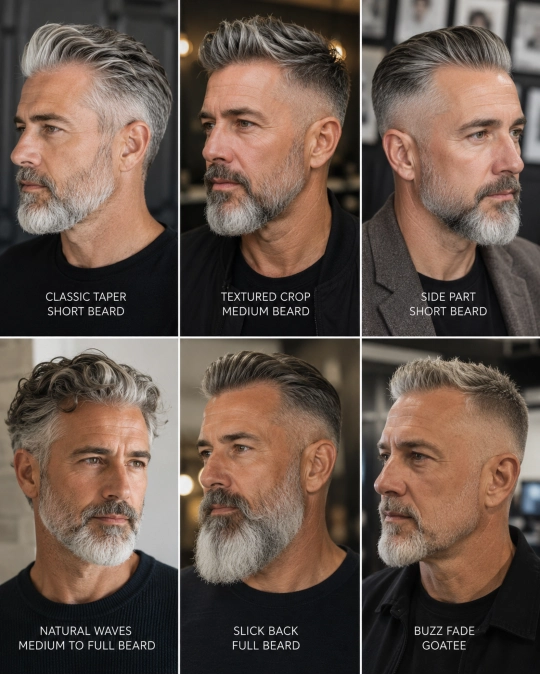
Grey looks sharpest when the shape around it is clean. A frayed, uneven cut makes grey look neglected. A tidy one makes it look chosen.
Haircuts that work with grey:
- Short textured crop: Ask for a number 2 to 3 guard on the sides, scissors on top, and light texture. Grey blends into the shorter lengths.
- Taper with a longer top: Good if you have thick hair or a strong salt-and-pepper mix. Keep the top at 2 to 3 inches.
- Short sides with a clean neckline: Grey at the temples looks neat when the edges are sharp.
For a grey beard, keep it shorter and well outlined. Grey beards often show more patchiness, and the hairs are coarser.
Formula: short beard trimmed with a number 3 to 4 guard + clean cheek line at the natural edge + neckline one finger above the Adam’s apple + beard balm for softness
Why it works: Short length keeps coarse grey hairs from sticking out, and a clear outline makes the beard look intentional. If growth is patchy, go shorter (stubble length) or ask your barber about a closer fade. A clean shave is also a good option.
Maintenance: Visit your barber every 3 to 4 weeks for a cut and every 2 weeks for a beard tidy-up. In week one, edges are crisp. By week four, the outline softens, so a quick home trim between visits keeps it neat.
Frequently Asked Questions
At what age should men start an anti-aging routine?
Sunscreen helps at any age, so start as soon as you can. Retinoids are often introduced in the late 20s or 30s, though there is no strict starting line. Begin with the basics and add steps only if you want them.
Can vitamins or supplements stop grey hair?
No supplement is proven to reverse grey hair caused by genetics. If you are low in something like B12 or iron, correcting it supports general hair health. Check with a doctor before starting high-dose products.
Is retinol safe to use with sunscreen?
Yes. In fact, you should use them together. Apply the retinoid at night and sunscreen every morning.
Does shaving cause wrinkles?
No, but a dull blade or harsh technique can cause irritation and dryness. Use a sharp blade, shave after a warm shower, and moisturize afterward.
Should I pluck a grey hair?
Plucking does not make more grow, but it can irritate the follicle. Trimming it close with scissors is gentler.
Conclusion
Healthy-looking skin comes from boring habits done often: sunscreen every morning, moisturizer, and a slow-start retinoid at night. Grey hair is mostly out of your hands, but the cut, beard shape, and upkeep are fully yours to choose.
Start with one change this week. Put sunscreen next to your toothbrush so you see it every morning. Once that is routine, add the next step.