
Bold mustache with a short beard sounds simple until the trim goes wrong. Too much cheek length hides the mustache, and too little leaves the look patchy.
The balance is what makes beardstache styles tricky. One uneven line or overgrown chin can turn a sharp look messy within a few days.
These 17 ideas show how mustache weight, beard length, and cheek lines work together. You will see what to ask your barber and how to keep each look clean at home.
What to Ask Your Barber Before Getting a Beardstache
- Mustache: Ask for it to stay fuller than the beard, with the lip line cleaned up so hair doesn’t cover the lip. The contrast is what makes the mustache the main feature.
- Beard length: Keep the beard short and even, closer to stubble or a light boxed shape. A shorter beard keeps attention on the mustache and stops the jaw from looking heavy.
- Cheek line and neckline: Request a defined cheek line and a neckline set just above the Adam’s apple. These two edges give a short beard its shape.
- Upkeep: Plan on a quick cleanup every couple of weeks. Short beards lose their outline fast, and a clean edge makes the mustache look intentional.
1. Neat Boxed Beard
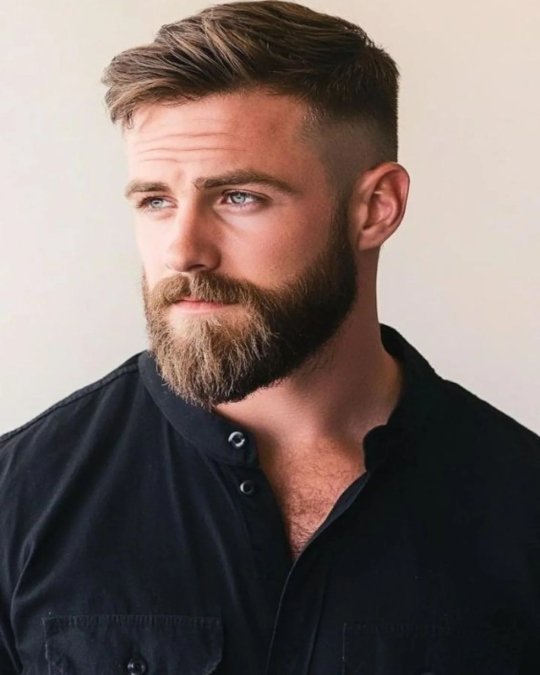
A trimmed brown beard with reddish tones near the chin frames the jaw here, and the mustache sits slightly fuller above the lip. The cheeks stay even, and the lower edge follows the jawline cleanly.
The short sides tighten into a high fade, while the top is swept up and to the side with natural volume. That contrast keeps the beard from looking heavy and shows off a strong, angular jaw.
Maintenance tip: A beard this full needs a trim every two to three weeks, mainly along the neckline and cheek edge. To make the mustache stand out more, keep it a touch longer than the beard around it.
2. A Soft Beard Fade
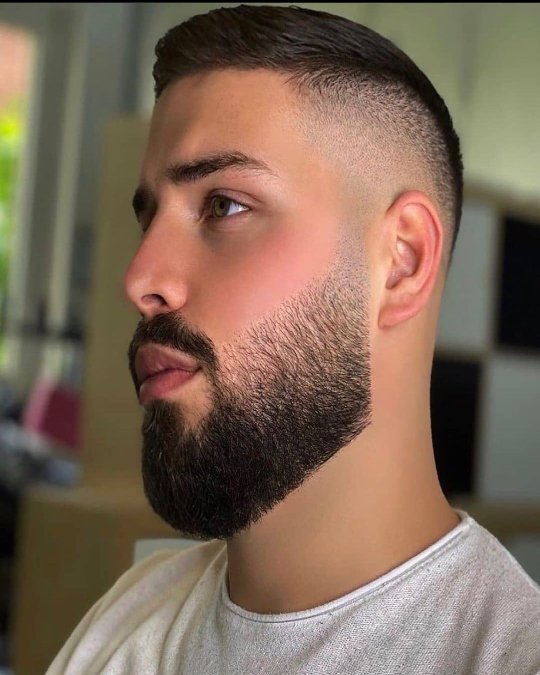
The beard here fades from skin at the cheek into a fuller, darker length along the chin and jaw. The mustache is trimmed close and blends into the beard rather than standing apart.
Top: Short and combed back, with a smooth, slightly glossy finish.
Sides: A high skin fade that rises toward the temple and tightens around the ear.
Beard: Faded on the cheeks, with a rounded shape under the chin and a visible neckline.
Finish: Clean and polished, with sharp contrast between skin, stubble, and full beard.
The fade on the cheek keeps the beard from looking bulky and makes the jaw look more defined. Because the hair is short, the beard becomes the main detail.
Ask your barber: Request a beard fade that starts low on the cheek and gets fuller toward the chin. For a bolder mustache, ask them to leave it slightly longer than the beard around it.
3. Sharp Cheek Line Beard
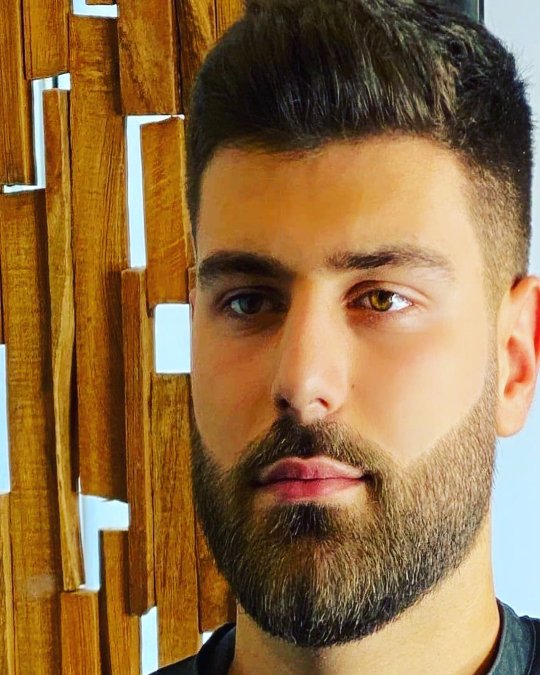
Beard formula: short full beard + curved cheek line + natural mustache
The beard is dense and dark with lighter flecks near the chin, and it stays short enough to look tidy. The cheek line curves up toward the sideburn, which gives the jaw a strong frame.
The mustache blends into the beard and sits just over the lip edge, so it reads as part of the whole shape. Above it, the dark top is textured and brushed forward with short, tapered sides.
Face shape note: A high, curved cheek line works well on broader faces because it adds structure along the jaw. Keep the length even through the chin, or the beard can start to look rounder and heavier.
4. Full Beard With Swept Top
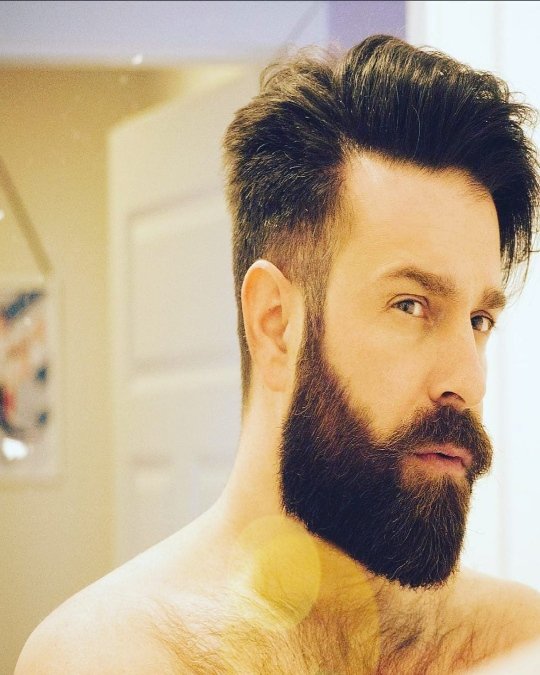
This dark, dense beard is rounded at the chin, with a thick mustache over the upper lip. It sits on the fuller side of a short beard, so the shape depends on a clean neckline and even cheeks.
Up top, the hair is longer and swept up and across with a loose, textured finish. The sides taper in close around the ear, which keeps the volume from looking bulky.
- Why it works: The longer top and full beard balance each other, so neither one takes over the face.
- Styling: Blow dry the top up and back, then use a light styling cream or clay for a natural hold that doesn’t look stiff.
- Keep in mind: Trim the mustache along the lip often. Otherwise it blends into the beard and loses its bold look.
5. Textured Quiff Beard
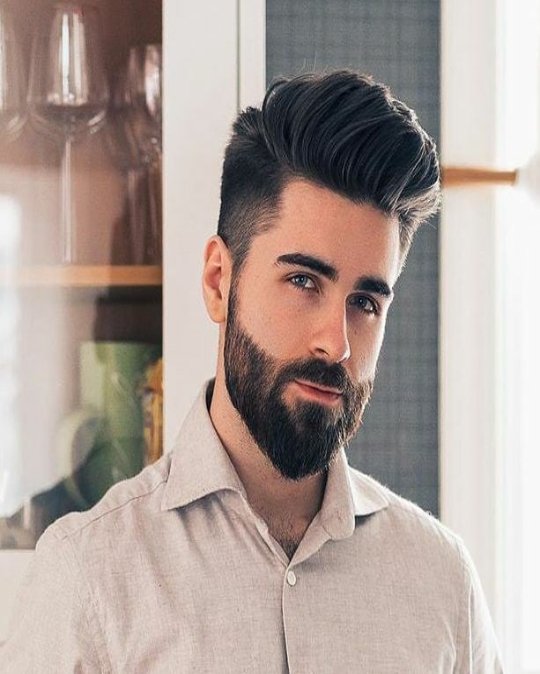
Best for: Men with thick, dark hair who want a polished beard look with a bit of height on top.
The quiff is brushed up and back with plenty of volume at the front, while the sides stay short and taper in around the ear. That contrast makes the face look longer and sharper. The beard is trimmed close and rounded under the chin, with a clean cheek line and a neat mustache just above the lip.
Because the beard stays short and tidy, the mustache shows clearly without looking heavy. To make it bolder, ask your barber to keep it slightly longer than the cheeks.
Blow dry the front upward first, then add a matte clay or pomade for hold. The volume stays natural that way instead of looking stiff or shiny.
6. Slick Back + Faded Beard
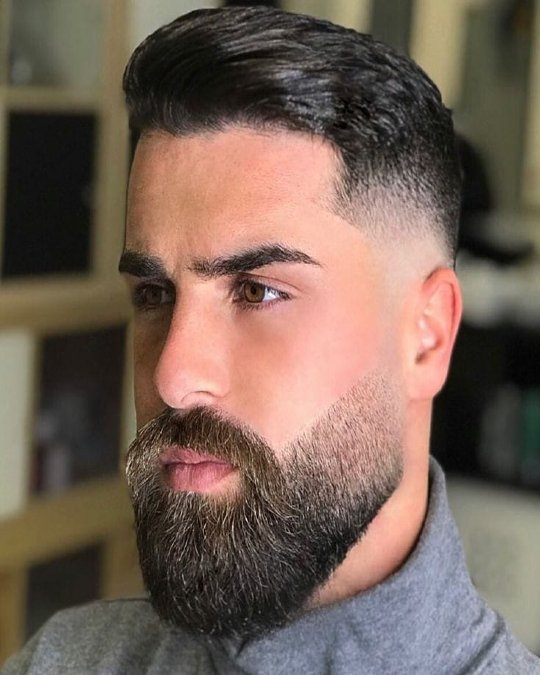
The dark hair is combed straight back with a smooth, glossy finish and a little lift at the front. The hairline is crisp across the forehead, and the sides drop from short hair to skin around the temple and ear.
The beard follows the same idea. It fades from skin on the cheeks into a thick, rounded chin, with lighter gray flecks adding depth. The mustache is full and blends into the beard, but it keeps a defined edge over the lip.
Fade detail: The look is sharpest when the cheek fade sits at about the same height as the fade around the ear. Ask your barber to match the two so the face looks balanced from the side. The collar hides the neckline here, so have that edge set during the same visit.
A light pomade or gel gives the wet-look shine on top. Comb it through while the hair is slightly damp for a smooth finish.
7. Long Swept Fringe Beard
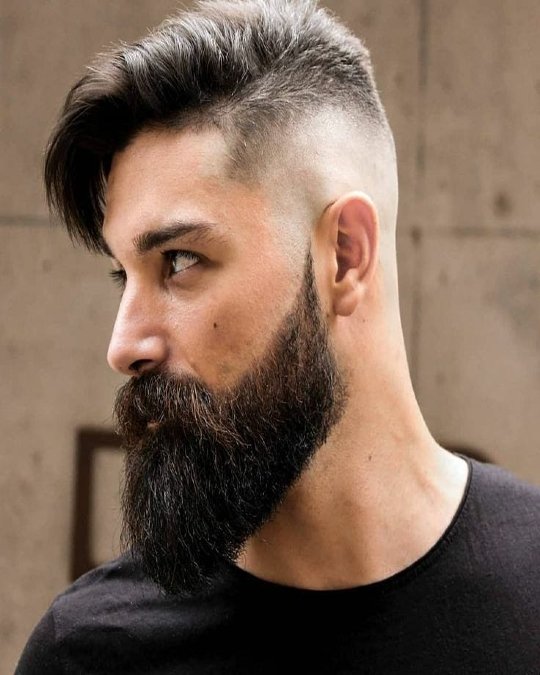
Haircut formula: long fringe + high skin fade + full beard
The top is longer and brushed forward and to the side, so the fringe drops low over the forehead. Below it, the sides shave down to skin above the ear, which creates a strong cut-off line.
The beard is thick and dark, with a rounded shape under the chin. It is longer than most styles in this list, and it carries about as much weight as the fringe, so the head and face stay balanced.
To bring this closer to a beardstache, ask your barber to cut the cheeks and chin shorter and leave the mustache fuller. That puts the focus on the lip area while keeping the fade contrast.
A skin fade grows in quickly, so expect a touch-up every two to three weeks. A beard this length also looks better with regular brushing.
8. Short Spiky Quiff
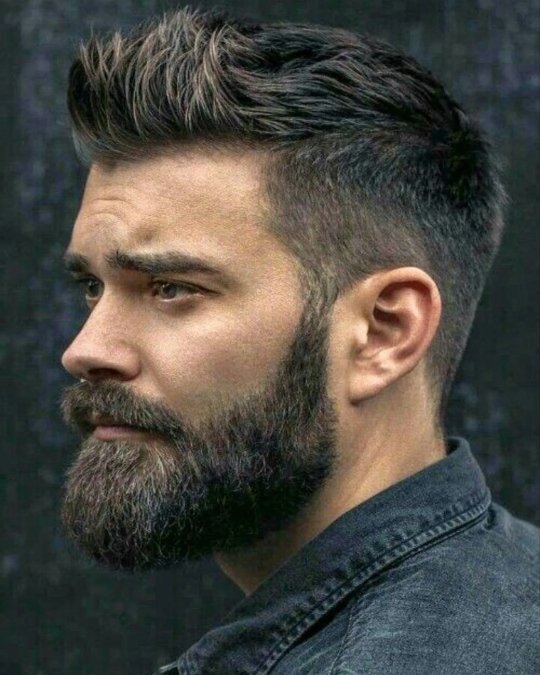
The top is cut short and pushed up at the front into choppy, pointed texture. Lighter strands run through the dark hair, so the volume looks dimensional instead of flat. The sides taper close and darken toward the ear, which keeps the shape tight.
The beard is full and dark with gray flecks at the chin. The cheek edge is fairly square, and the mustache blends into the beard instead of standing apart.
Hair texture tip: This look suits thick, coarse hair that holds height on its own. Fine hair will need a blow dry and a matte paste to keep the spikes from flopping.
- Styling: Push the front up and forward with your fingers, then break the hair apart with a small amount of paste.
- Maintenance: Trim the cheek line and neckline every two to three weeks. A beard this full gets bulky fast if the edges grow out.
9. Rugged Full Beard
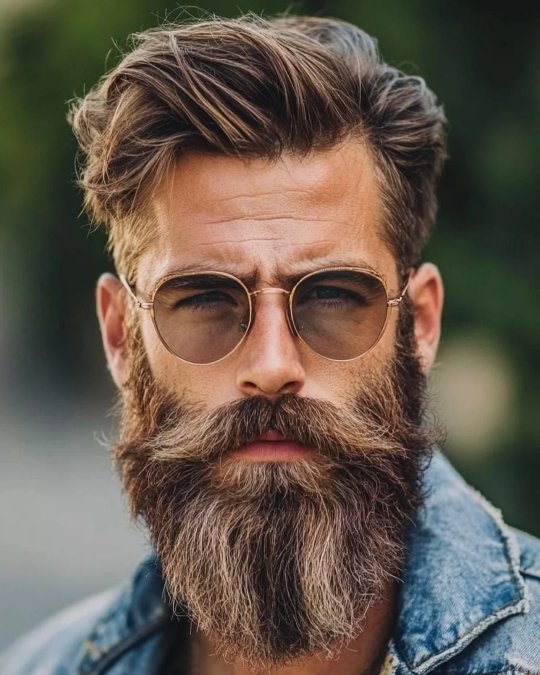
A thick brown beard reaches well below the chin, with lighter, grayer strands through the center. The mustache is full and curves outward at the ends, so it blends into the cheeks and covers part of the upper lip.
What to avoid: Don’t let the mustache grow over the lip line. It makes the whole beard look unkempt and gets in the way when you eat. Trim along the lip every week or so with small scissors.
On top, the wavy brown hair is swept back and slightly to the side with a loose finish. The sides stay shorter, so the top has volume without adding bulk around the ears.
The round gold frames soften the sharp lines of the beard and brow. Wide, dense beards like this suit men with strong hair growth, and a comb or brush keeps the length neat. To make the mustache the main feature, ask your barber to shorten the chin length and leave the mustache untouched.
10. Glossy Side Part Fade
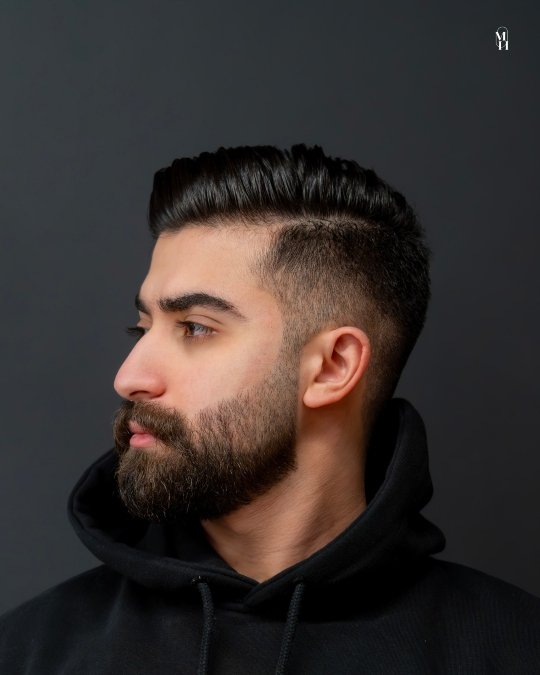
The top is combed back with a defined side part. The comb lines stay visible through the wet-look shine, and the front sits with a little height. Below it, the sides fade from short hair to skin around the temple and ear.
The brown beard is trimmed short and even, with gray flecks near the chin. The mustache is neat and blends into the beard, and the cheek line meets the sideburn cleanly.
Why this style works:
- Contrast: The shiny, sleek top sits against the matte stubble texture of the beard, so each part stays distinct.
- Balance: The beard is short enough that the hair and fade stay the main focus, and the jaw still looks defined.
- Length: The beard is a bit fuller at the chin than on the cheeks, which adds shape without extra bulk.
Daily styling: Apply a water-based pomade to damp hair and comb it back with a fine-tooth comb. Set the part first, then shape the front. The hood covers the neckline, so ask your barber to clean it up at the same visit.
11. Taper Fade for Thick Beards
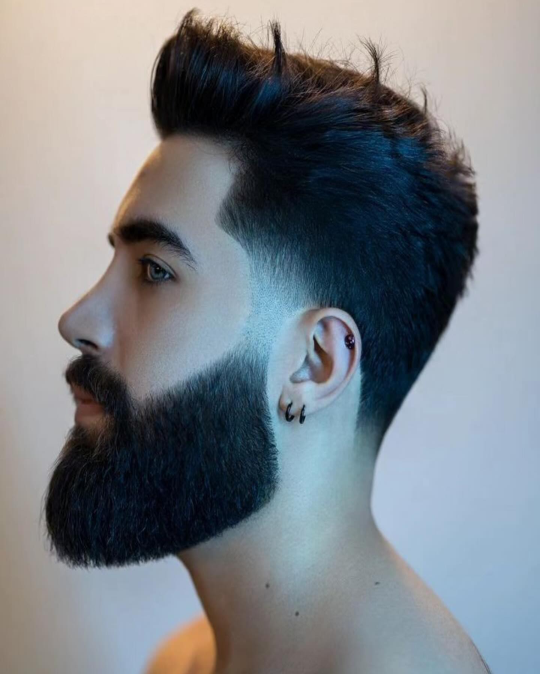
Haircut formula: swept-up top + skin taper + full squared beard
The top is longer and brushed up and back, with height at the front and a few loose strands lifting off the shape. The sides drop into a tight taper that reaches skin around the ear and down the neckline. That makes the head look narrow and clean.
The beard is dense and dark, with a squared cheek line and a rounded chin. The mustache blends into the rest, so the sharp jaw edge does most of the work. Ask your barber to match the cheek line to the sideburn edge, so the beard and taper meet cleanly.
To push this toward a beardstache, keep the mustache a little longer and shorten the chin and cheeks. Thick, dark hair like this holds its shape well, but the neckline grows out quickly and needs a regular cleanup.
12. Tousled Fringe Long Beard
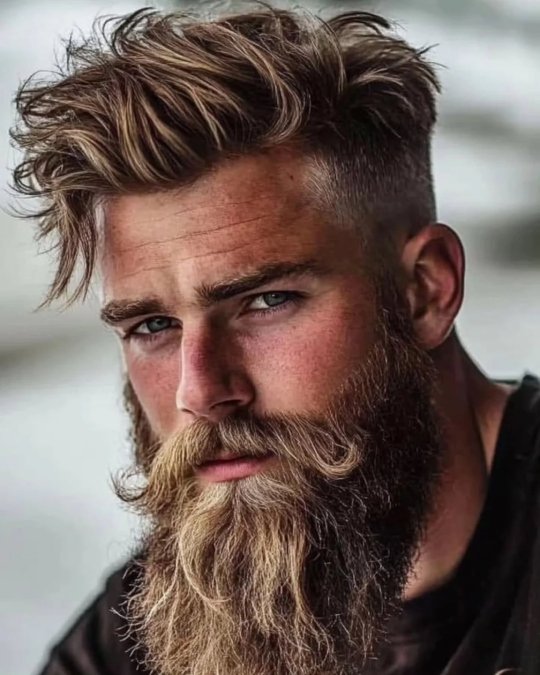
The top is long and messy, swept forward and to the side with a loose, wavy finish. Lighter golden strands run through the brown, which adds depth to the texture. The sides fade short around the ear and temple, so the volume sits on top.
The beard is long and dense, darker along the cheeks and lighter toward the chin. The mustache is the standout, with ends that curl outward over the beard.
- Top: Longer, with texture and a side-swept fringe.
- Sides: Faded short, with a clean line around the ear.
- Beard: Full on the cheeks, with length through the chin.
- Mustache: Fuller than a typical trim, with curled ends.
This is a longer look than most on the list. For a beardstache, ask your barber to shorten the chin and cheeks and leave the mustache as is.
Styling tip: Work a bit of sea salt spray or texture paste into dry hair and push it forward with your fingers. A small amount of mustache wax can help keep the curled ends in place.
13. Curled Handlebar Mustache
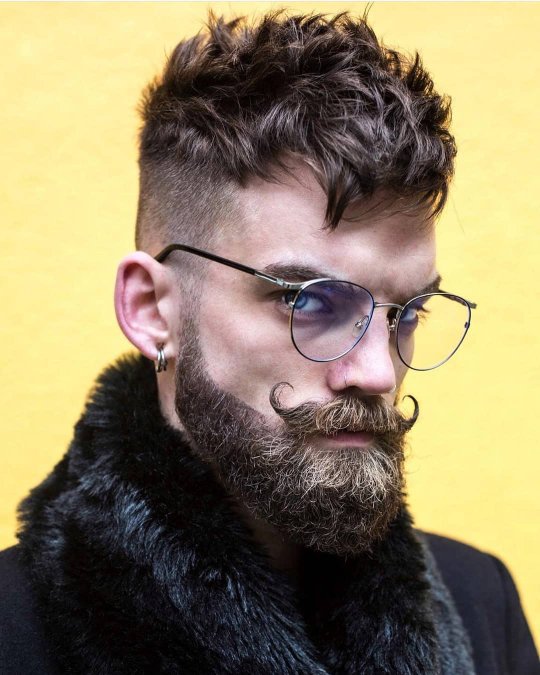
The mustache is the main feature here. It is wide and full, and the ends twist upward into small curls. The beard under it is shorter and denser, darker along the cheeks with lighter hair at the chin. That contrast keeps the mustache from getting lost.
Make it work: Use a small amount of mustache wax on the ends and shape them while the wax is warm. Keep the beard shorter than the mustache. If the chin grows too long, the curls start to look like part of one big beard.
Up top, the choppy, wavy hair falls forward into a short fringe. The sides are faded high, which keeps the shape tight and gives the textured top room to stand out.
This look suits angular faces and men who enjoy styling their facial hair daily. It needs steady upkeep, since the cheek line and mustache edges lose their shape within a couple of weeks.
Choosing a short, choppy crop headline for the image
14. Short Choppy Crop Fade
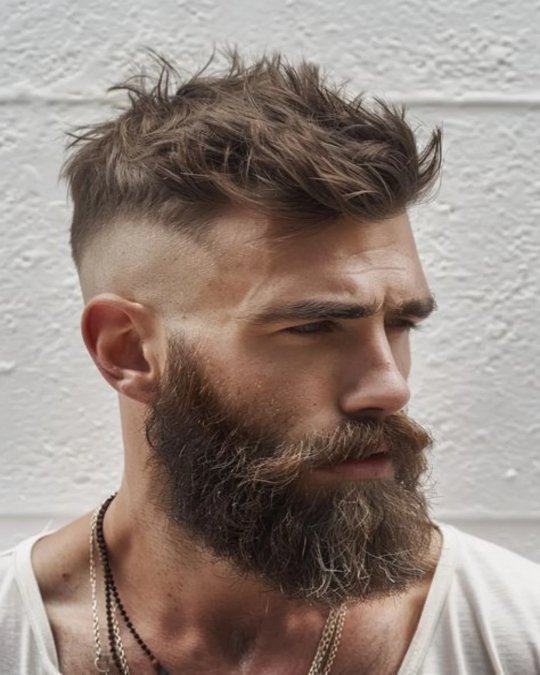
The top is short and choppy, with pieces pushed forward and up for a rough, lived-in finish. Light brown tones show through the strands. Underneath, the sides fade down to skin around the temple and ear, so the textured top stands out against a clean base.
The brown beard is full and rounded, with gray flecks through the chin. The mustache is slightly fuller than the cheeks and blends into the beard, while the cheek line sits high and angled toward the sideburn.
Ask your barber: For the fade contrast, request a high skin fade with a textured crop on top. To bring the mustache forward, ask for the chin and cheeks to be cut shorter while the lip area stays fuller.
This cut suits men with thick, wavy, or coarse hair, since it holds texture well. Work in a little matte paste with your fingers and skip the comb. The skin fade grows out quickly, so plan a touch-up every two to three weeks.
15. Angled Fringe Crop
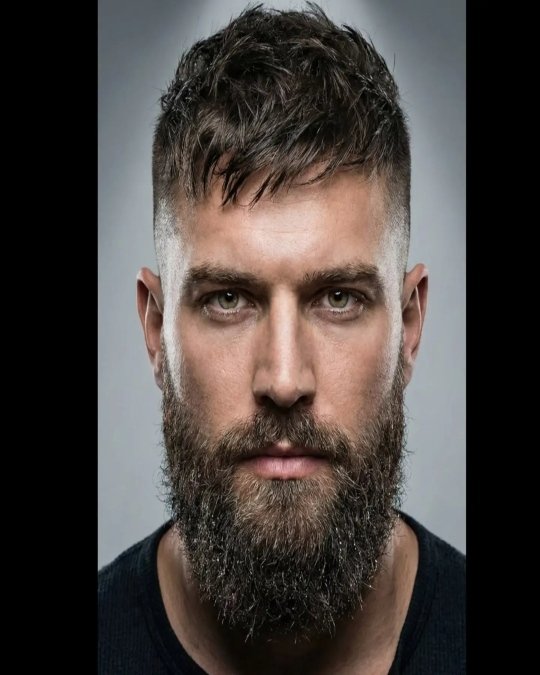
The short crop has a fringe that cuts across the forehead at an angle, with choppy, slightly damp-looking texture. The sides fade to skin at the temples and around the ears. That sharp contrast frames the eyes and brings attention to the center of the face.
Face shape note: The beard is full and long through the chin, which adds length to the lower face. A strong, square jaw handles that well. On a rounder face, ask your barber to keep the sides shorter and the chin a bit tighter.
The mustache blends into the beard and sits right at the lip, so it reads as part of the whole shape. For a bolder beardstache look, shorten the cheeks and chin and leave the mustache fuller.
Use a little matte paste or clay and push the fringe across with your fingers. A fade this high needs a touch-up every two to three weeks to stay clean.
16. A Salt-and-Pepper Beard
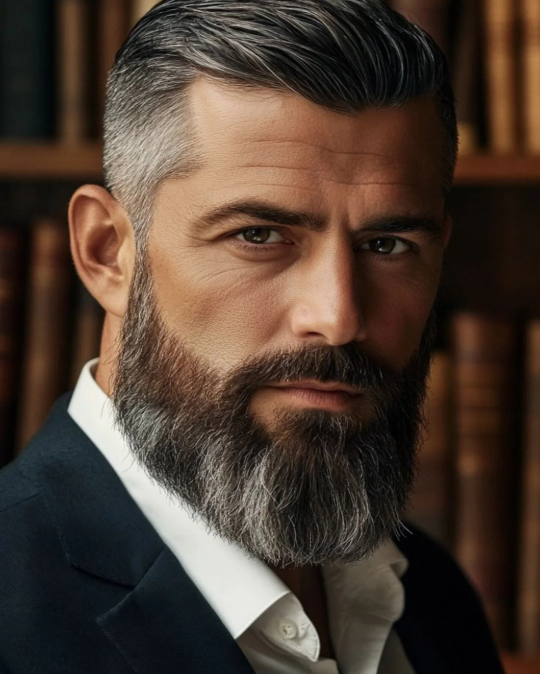
The hair is combed back and slightly to the side with a smooth, polished finish. Silver strands run through the dark hair and get lighter at the temples, where the short sides taper in around the ear.
Ask your barber:
- Top: Combed back with a little length, so the gray streaks stay visible.
- Sides: Tapered short, with the gray left in rather than dyed or cut away.
- Beard: Shorter on the cheeks and longer toward the chin, so it narrows into a soft point.
- Mustache: Full and dark, sitting just over the lip.
The beard is brown near the mouth and turns gray toward the chin. That gradient adds depth and gives the face a distinguished, mature look. The shape stays tidy because the cheeks are kept shorter than the chin.
Beardstache angle: The mustache is already the darkest part of the beard. To make it the main feature, keep it as it is and trim the chin a little shorter.
A light pomade or gel keeps the slick finish without looking stiff. Comb it through while the hair is slightly damp, then let it set.
17. Short Beard for Silver Hair
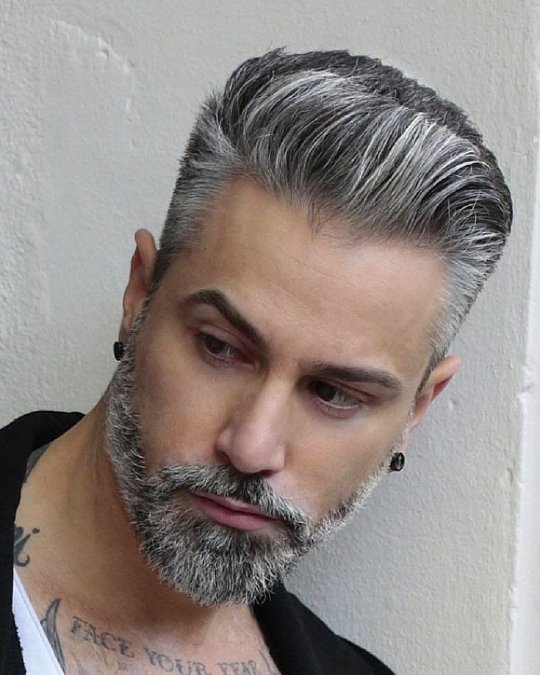
Haircut formula: silver swept-back top + short taper + trimmed gray beard
The silver hair is brushed up and back with a little lift at the front, and dark roots show underneath. The sides stay short and tight around the ears. The mix of light and dark strands gives the top texture without any heavy product.
The beard is short and trimmed close, with a high cheek line that runs toward the sideburn. The mustache is a touch fuller than the cheeks and rests just above the lip. It is the closest match to the beardstache idea in this list, since the mustache has more weight than the beard around it.
Hair texture tip: Gray hair can feel coarser and harder to control. A light pomade or matte clay keeps it in place without a stiff finish.
Keep the chin slightly longer than the cheeks so the beard has shape. Gray stubble loses its edge quickly, so a cleanup every two weeks keeps it looking sharp.