
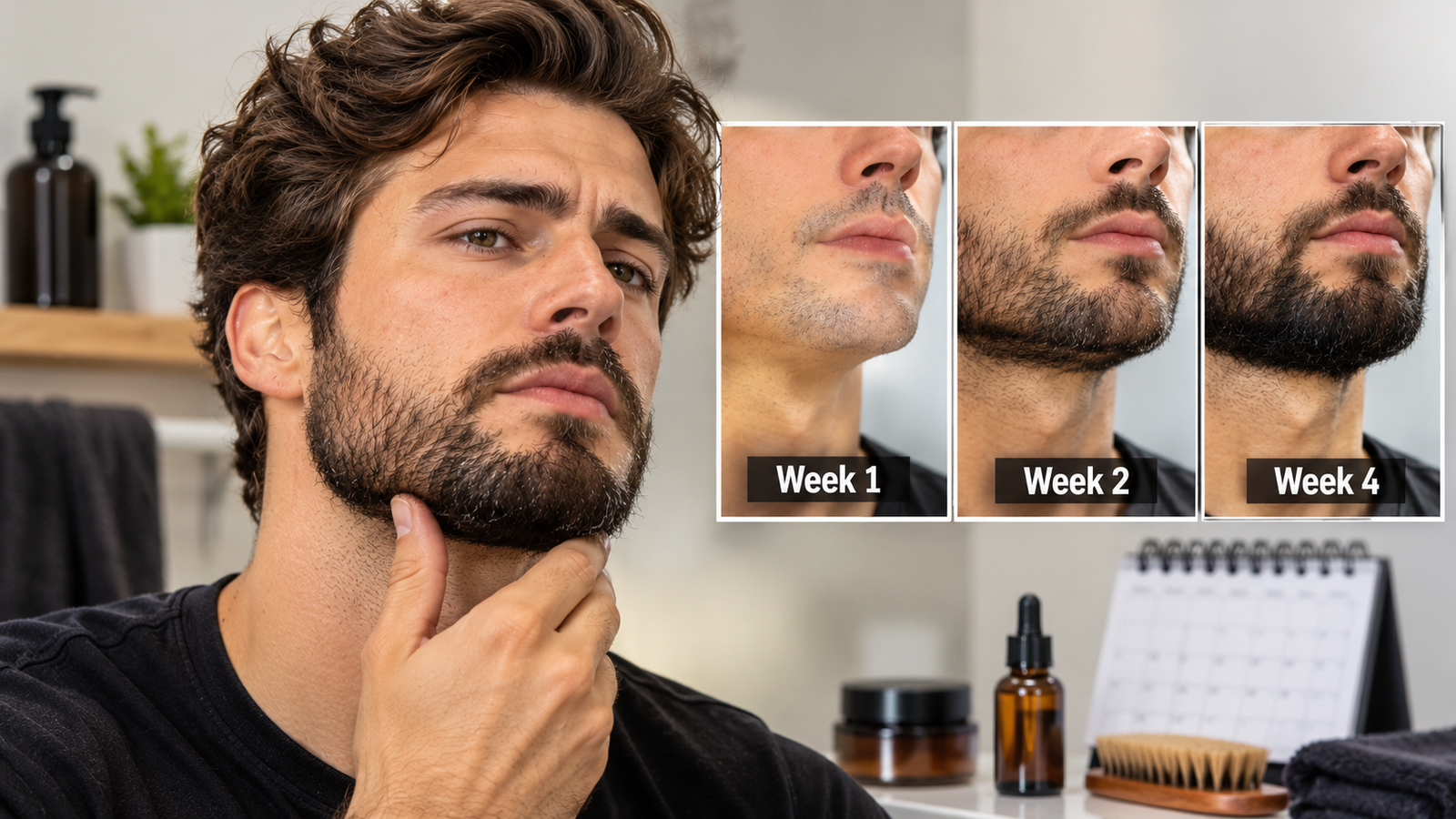
Growing a beard in 30 days sounds simple, but most guys quit around day 10. That’s when the itch peaks and the cheeks look uneven.
The usual advice is to leave it alone and wait. That works for some faces and fails for many others. This guide shows what each week usually looks like, how to read your growth pattern early, and how to handle itch and shaping.
It also gives you a simple routine and a trimming plan. Thirty days won’t give everyone a full beard, but it can give you a short, clean beard that looks chosen, not accidental.
What 30 Days of Beard Growth Actually Looks Like
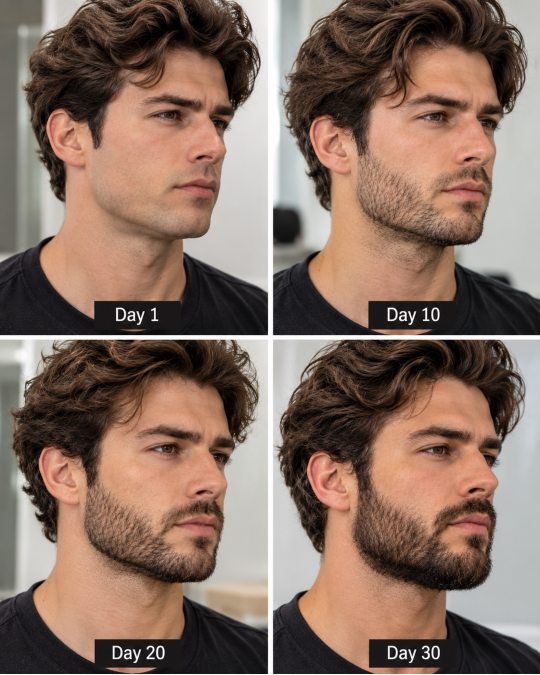
Facial hair often grows around half an inch a month, but speed and density vary a lot from man to man. Genetics set most of this. So the goal for month one is a short beard with a clear shape, not a long, full one.
| Week | What you’ll usually see | What to do |
|---|---|---|
| Week 1 | Stubble that feels rough and looks uneven | Stop shaving, wash gently, moisturize |
| Week 2 | Peak itch, visible patches and gaps | Skip scratching, map your growth, do a light neckline trim |
| Week 3 | Hair gets longer, softer and starts to lie down | Brush or comb daily, trim stray hairs |
| Week 4 | A short beard with a readable shape | Clean up cheek line and neckline, choose your final length |
The first two weeks look the worst. Week one versus week four is a big difference, so judge the result at day 30, not day 8.
Try This: Take one photo in the same bathroom light on day 1, day 14 and day 30. Progress is hard to see in the mirror, and photos show growth you’d otherwise miss.
Check Your Growth Pattern in Week Two, Before You Decide on a Shape

By day 10 to 14, the hair is long enough to show where it grows thick, where it’s thin, and which way it points. This is the best time to decide what kind of beard you’re building.
Look at three areas under bright light:
- Cheeks: Hair often grows thinner here, especially near the top.
- Chin and jaw: These areas are often the densest.
- Around the mouth: Hair here may grow in a different direction from the rest.
Run your fingers down your neck and jaw to feel which way the hair points. Many beards grow downward on the cheeks but curl sideways or forward on the neck. This matters later when you trim.
Gaps don’t mean the beard failed. They mean you have a different set of good options:
| What you see at day 14 | Day 30 option |
|---|---|
| Even growth across cheeks and chin | Short boxed beard, about 6 to 10 mm |
| Thin cheeks, dense chin and jaw | Chin-focused beard with a defined cheek line, or short stubble |
| Patchy spots in several areas | Short, even stubble that blends the patches |
| Slow or very light growth overall | Stubble, a goatee or a clean shave, all of which are fine choices |
Barber Note: If you’re unsure, ask your barber to look at it at week three. Say, “I’m growing this out. Can you shape it without taking length?” Most barbers can set a cheek line and neckline while keeping your length.
Get Through the Itch Phase With a Short, Gentle Routine

Itch usually peaks in the first two weeks. The hair is short and stiff, and the skin underneath is adjusting. Scratching can irritate the skin and make the itch worse, so a calm routine helps more than any product.
Skin Note: If your skin stays red, painful or very itchy after a few weeks, or you see bumps that don’t settle, check in with a dermatologist or doctor. That’s worth sorting out before you try more products.
A simple routine for the itch phase:
- Wash once or twice a day with a gentle face wash. Skip harsh bar soap, which can leave skin tight and dry.
- Pat dry. Rubbing with a towel can irritate skin under short hairs.
- Moisturize the skin under the beard. A plain, fragrance-free moisturizer works. Use a pea-sized amount per side and work it down to the skin.
- Optional: add 2 to 3 drops of beard oil once the hair is long enough to grab, around week three.
- Brush or comb daily. Brushing lifts the hairs, spreads natural oils, and trains the hair to lie in one direction.
Budget Swap: You don’t need beard oil to grow a beard. A good moisturizer on the skin does most of what you need in month one.
Seasonal Swap: In cold, dry weather, use a richer moisturizer and a slightly cooler shower. Hot water strips oil from both skin and hair. In humid weather, a lighter lotion works better and keeps pores from feeling heavy.
Build a 30-Day Routine Around Four Tools
Most of the work happens in the first few weeks. You only need a few basics:
- A gentle face wash
- A moisturizer you already like
- A beard brush or wide-tooth comb
- A trimmer with guards, plus a mirror and good light
Formula: gentle wash + moisturizer on the skin + daily brushing + light trim at week 2 + shaping at week 4
Habits can help your skin and hair stay healthy, but no food or supplement can promise a thicker beard. Reasonable basics are enough: regular sleep, enough protein and water, and not picking at the beard. Genetics and hormones set the ceiling for density, so avoid any product that guarantees growth.
Peak Groom Roadmap
Your 30-Day Beard Plan, Week by Week
The first two weeks look the worst. Judge the result at day 30, not day 8.
Every day
Gentle wash
Pat dry, don’t rub
Moisturize the skin
Don’t scratch
Week 1 · Days 1–7
Stop shaving and keep it simple
- Rough, uneven stubble is normal
- Wash gently and moisturize the skin underneath
Take your Day 1 photo
Week 2 · Days 8–14
Ride out the itch, read your growth
- Peak itch: moisturize instead of scratching
- Check cheeks, chin and jaw, and mouth area in bright light
- Do a light neckline cleanup
Day 14 photo + pick your shape
Week 3 · Days 15–21
Brush the hair into shape
- Brush or comb daily so hair lies one way
- Trim strays, not length
- Optional: 2 to 3 drops of beard oil
- Optional barber visit: “Shape it without taking length”
Set the neckline by day 21
Week 4 · Days 22–30
Shape it and choose your length
- Clean up the cheek line: remove only clear strays, keep it soft
- Choose your final length: stubble, short boxed (6 to 10 mm) or chin-focused
Day 30 photo: compare all three
Genetics set how full your beard gets. Thirty days gives most men a short, shaped beard, and that’s a solid start.
Trim Early: How to Shape the Neckline and Cheek Line Without Losing Length
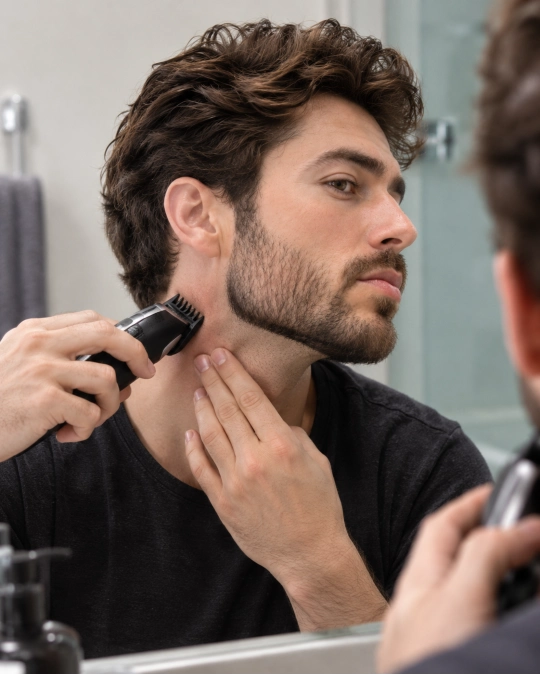
Trimming doesn’t stop a beard from growing. It removes stray hairs so the beard looks planned instead of messy. Shaping early is often the difference between “growing out” and “forgot to shave.”
Neckline (day 14 or day 21):
- Tilt your head back and find your Adam’s apple.
- Imagine a curved line from behind one ear, about two fingers above the Adam’s apple, to behind the other ear.
- Trim or shave everything below that line.
A neckline set too high makes the beard look short. One set too low looks heavy. Two fingers above the Adam’s apple is a safe starting point for most men.
Cheek line (day 21 or day 28):
Keep the natural line where hair starts to thin. Only remove clear strays above it. A straight, hard line across the cheek looks forced on most faces. Soft and natural reads better.
Guard length guide (these sizes vary a little by brand):
| Guard | Approximate length | Best for |
|---|---|---|
| #1 | 3 mm | Close stubble, patchy growth |
| #2 | 6 mm | Short stubble, early beard |
| #3 | 10 mm | Short boxed beard |
| #4 | 13 mm | Fuller short beard if you have density |
| #5 | 16 mm | Longer, softer finish |
Technique Note: Always start with a longer guard than you think you need. You can go shorter, but you can’t add length back. Trim in the direction of growth first. If hair sticks out, you can then go against the grain with a longer guard.
Face shape tip: A rounder face can look longer with a bit more length at the chin and shorter sides. A longer face can look more balanced with shorter chin hair and a bit of fullness on the cheeks. Treat these as options, not rules.
Mistakes That Make a 30-Day Beard Look Worse Than It Is
A few habits cause most of the frustration:
- Quitting before day 14. The itchy, uneven phase is temporary, and the shape usually improves by week three.
- Trimming the cheeks too high. A high, hard cheek line can expose gaps. Leave it softer.
- Using too many products. Layering oils, balms, serums and sprays can clog pores or leave hair greasy. Start with a moisturizer and add one product at a time.
- Shaving “to thicken it.” Shaving doesn’t change how thick the hair grows. It may feel coarser when it grows back because the tip is blunt, not because it’s thicker.
- Comparing your day 30 to someone else’s. Photos online often show months of growth, filters or different genetics.
- Scratching. It irritates skin and can lead to redness. Moisturize and brush instead.
Real life use: For work, keep the neckline sharp and the beard brushed, because that alone signals “intentional.” After the gym, rinse your face and pat it dry, since sweat can add to itch.
Frequently Asked Questions
Can you grow a full beard in 30 days?
For most men, no. Thirty days gives you a short beard, and many need two to four months to see how full it will get. By day 30 you’ll know your growth pattern and can decide if you want to keep growing it, keep it short, or switch to stubble.
Does shaving make a beard grow back thicker?
No. Shaving cuts the hair at the surface and doesn’t change the follicle underneath. Regrowth can feel stubbly because the tip is blunt, but the density stays the same.
When should I first trim my beard?
Wait until around day 14, then do a light neckline cleanup. Wait until week three or four for cheek line shaping. Early trims should remove strays, not length.
Do I need beard oil?
Not in the first few weeks. A plain moisturizer on the skin handles most dryness and itch. Beard oil can help soften longer hair after week three, and a few drops is plenty.
Final Thoughts
A good 30-day beard comes from small, boring habits: wash, moisturize, brush and trim a little. Use week two to read your growth pattern, then pick the shape that fits it, whether that’s a boxed beard, stubble or a chin-focused style. Take your day 1 photo today and your day 30 photo next month. Comparing the two will show your progress better than the mirror.