
Start With the Hair He Has Today
- Fine or thin hair: Keep some soft length and ask for a light trim. Very short cuts can make sparse areas easier to see, while a gentle forward shape keeps the look simple.
- Thick hair: A rounded crop with neat edges around the ears can control bulk. Ask the barber to keep enough length on top so the shape still looks soft.
- Curly or wavy hair: Start by trimming a small amount. Curls can look shorter once they dry and spring up, so leave extra length if you want to keep their shape.
- Cowlicks and swirls: Ask for a cut that follows the natural growth direction. A little more length may help some areas sit flatter, while a very short trim may make them stand out.
1. Short Textured Crop + Fade
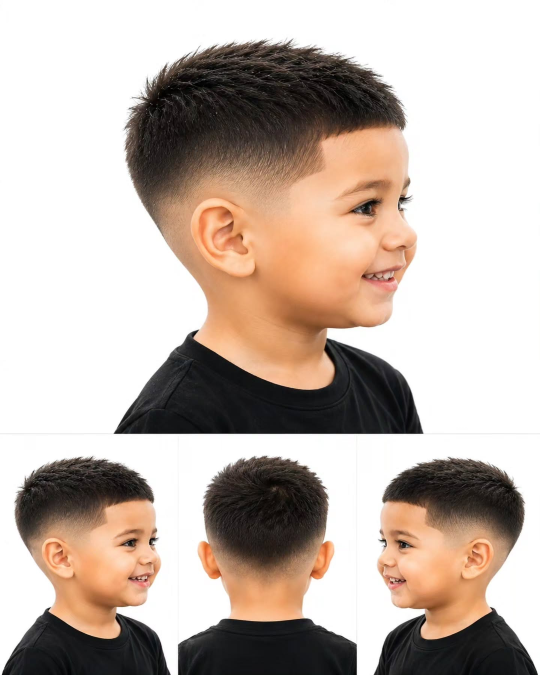
This baby boy haircut keeps short, choppy texture on top, with a cropped fringe across the forehead. The dark top stands out against sides that fade close to the skin, giving the cut a neat shape that suits a toddler or little boy.
- Top: Ask for a short crop with enough length to show texture. The hair here points mostly forward, with slightly spiky ends.
- Sides and back: Request a gradual fade that gets darker toward the top. For a softer look, ask the barber to leave more hair around the ears and neckline.
- Fringe and edges: The front is short and fairly straight, with a crisp corner near the temple. A natural hairline is a gentler choice that avoids detailed edging.
- Finish: Brush the top forward with a soft baby brush. The short length can show texture without a stiff, styled finish.
Why it works: The fade keeps the sides light, so attention stays on the textured top. Straight, thick hair like this can show the shape clearly, while fine hair may give a softer result.
Maintenance tip: A close fade can lose its clean blend within a few weeks. Choose longer tapered sides if your child finds frequent clipper visits hard.
2. Choppy Fringe With Faded Sides
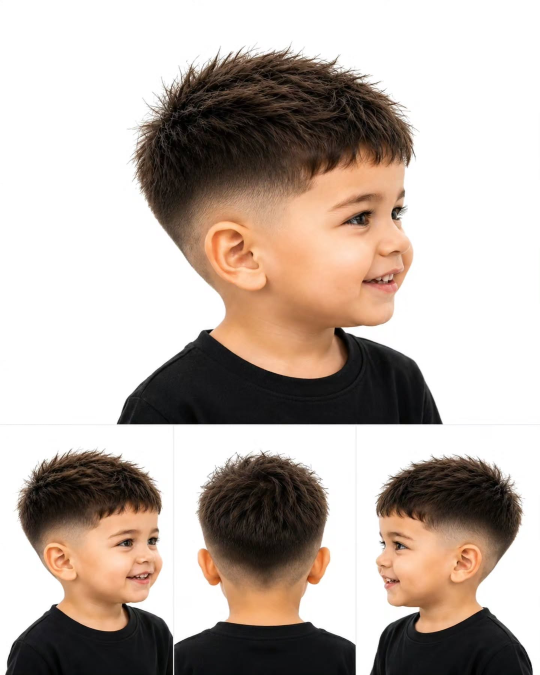
Haircut formula: tousled top + jagged fringe + faded sides
Piece-like layers give this dark brown crop a full, playful shape. The hair on top is long enough to show movement, while the uneven fringe sits above the eyebrows and softens the front.
The sides fade close to the skin near the bottom. At the back, the darker hair dips toward the center of the neck. This contrast helps the thicker top stand out without needing much height.
Ask your barber to keep length through the top and texture the fringe lightly. A broken edge gives this toddler boy haircut a more relaxed finish than a straight, sharply lined front.
This shape can work well for thick, straight, or slightly wavy hair. If your child’s hair is fine, ask for less texturing so the fringe doesn’t look thin.
For everyday styling, brush the hair forward, then gently loosen the top with your fingers. The spikes may look softer at home, especially without styling product.
3. Rounded Short Curls + Fade
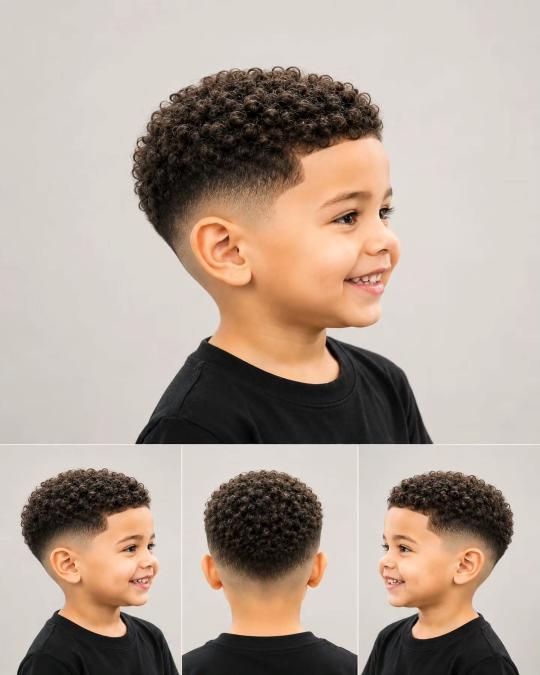
Best for: Little boys with natural, tight curls who have enough growth to form a full shape on top.
Small, defined curls create a rounded crown with plenty of texture. The sides fade close to the skin near the bottom, while a crisp front hairline and squared temple corners frame the face.
This curly baby boy haircut works because the lighter sides make the curls stand out. The top stays compact, so the style has volume without a long fringe falling toward the eyes.
Ask your barber to shape the top gently and keep its curl length. For a softer, lower-upkeep version, leave the front hairline natural and choose a longer taper.
Hair texture tip: Avoid brushing these curls when dry, which can separate them and add frizz. Loosen tangles gently with your fingers or a wide-tooth comb while the hair is damp.
Expect the faded sides to lose their sharp contrast sooner than the curly top changes shape. You can let the fade soften between trims if longer sides suit your child.
4. Layered Wavy Flow With Curtain Fringe
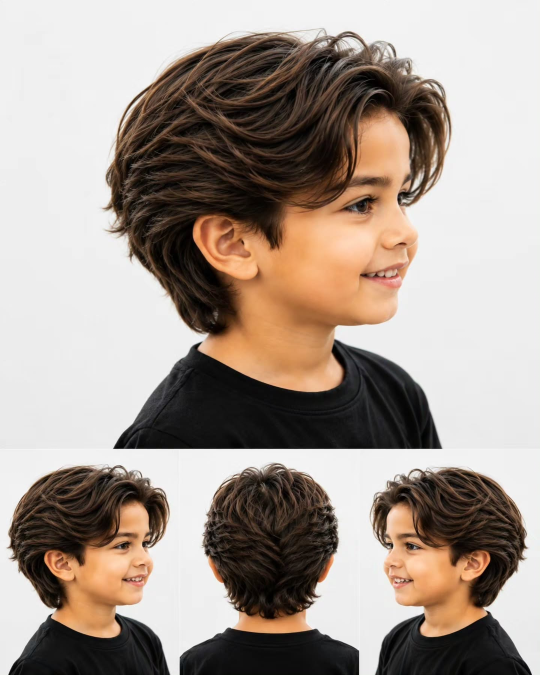
Soft brown waves sweep away from a parted front, with curtain-style pieces falling near the brows. The sides flow back around the ears, while layered ends reach down the neck. There’s no fade, so the shape looks full and relaxed.
This medium length haircut for little boys works because the layers follow the hair’s movement. They add shape through the top and back, while the longer fringe frames the face without forming a heavy, straight line.
Hair length note: This look takes time to grow. Ask your barber to tidy uneven ends along the way while keeping length around the fringe, sides, and back.
- Daily styling: Gently detangle the hair, then guide the damp front to each side with your fingers. Let it air-dry, and expect less lift than shown if your child’s hair is fine or straight.
- Maintenance: Trim the fringe when it starts bothering his eyes. Longer hair may need more combing after sleep and play, especially around the back of the neck.
5. Wavy Mullet With Faded Temples
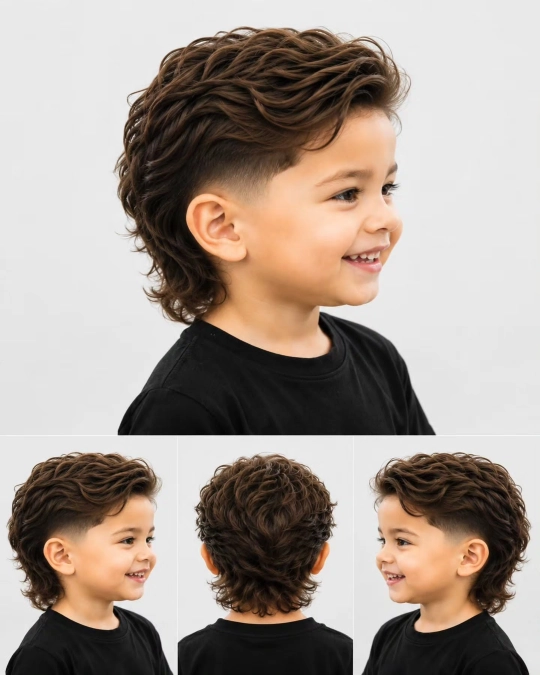
Haircut formula: swept-back waves + faded temples + longer back
This toddler mullet haircut lifts brown waves up and away from the forehead, while loose layers reach down the neck. Short, faded patches at the temples contrast with the fuller top and back, giving the mullet a clear shape without cutting all the sides short.
Ask your barber to fade only the front side areas and keep length behind the ears and at the back. For a softer mullet, choose short scissor-trimmed temples instead of a close fade.
Naturally wavy hair is a good match for this movement. To style it, dampen the top slightly and guide it back with your fingers. It may sit flatter at home than it does here, especially if the hair is fine or straight.
Make it work: Gently detangle the back after sleep and play. Regular tidy-ups can keep the temples neat, while light trims stop the longer ends from looking uneven.
6. Curly Top Knot + Short Sides
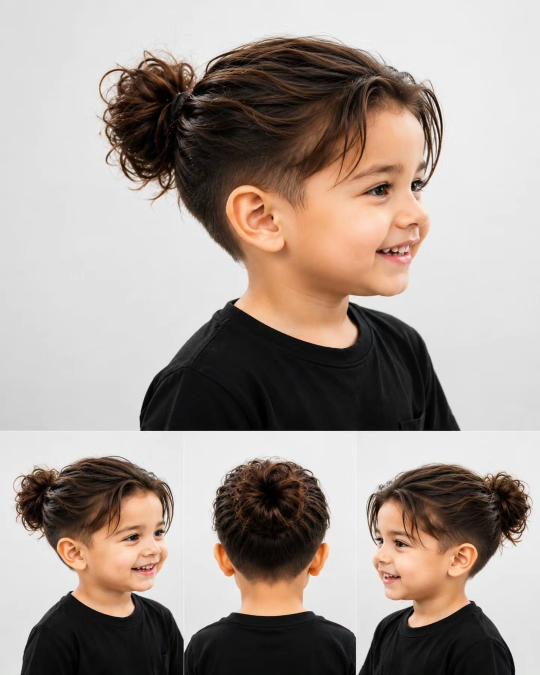
A loose, curly knot sits high at the back of the head, secured with a black hair tie. Dark brown lengths sweep toward it, while thin front pieces fall around the forehead. The short sides and neckline keep the lower half neat against the fuller bun.
What to avoid: Don’t pull the knot tight. Tight styles can strain the hair and scalp, so use a soft tie and remove it before sleep. Check that it’s secure, and keep loose ties away from young children because they can be a choking risk.
- Why it works: This little boy bun hairstyle moves most of the long hair away from the face. The short lower section also creates a clear contrast with the curly knot.
- Ask your barber: Keep enough length on top to reach the back without pulling. Trim the sides and neckline short, but skip a skin-close finish for the look shown.
- Best for: It suits boys with enough hair to tie comfortably. Wavy or curly ends can create a fuller knot, while straight hair may form a smoother, smaller one.
For a relaxed finish, dampen the hair lightly and guide it back with your fingers. Leave the front loose, or let it down fully when your child finds the knot uncomfortable.
7. Neat Side-Swept Crop
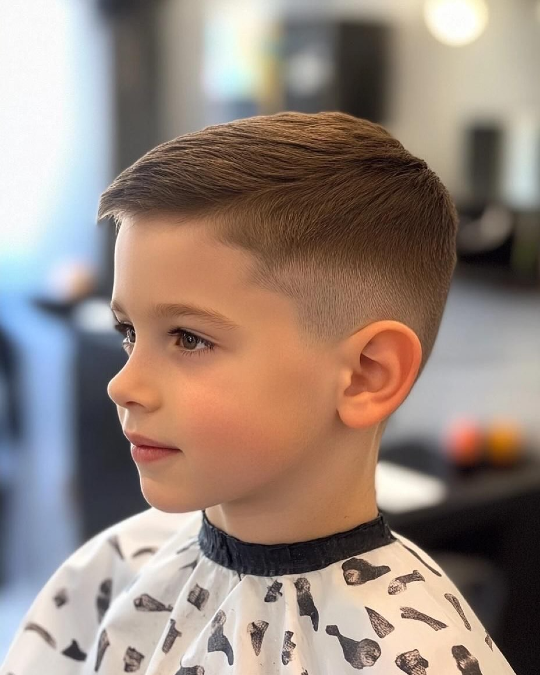
Light brown hair lies close and smooth, with slightly longer strands sweeping across the front. The visible side fades shorter toward the ear, creating a clean shift from the darker top. A small amount of lift at the forehead gives this short crop shape without a tall style.
This short haircut for little boys works because the hair follows one clear direction. Straight or slightly wavy hair can show that smooth finish well, while strong cowlicks may need extra length.
Ask your barber to keep enough length at the front to brush sideways, then blend the sides gradually. A longer taper offers a softer choice with less contrast.
At home, lightly dampen the top and comb it into place. This photo shows only one side, so discuss the back and neckline separately.
8. Soft Textured Quiff
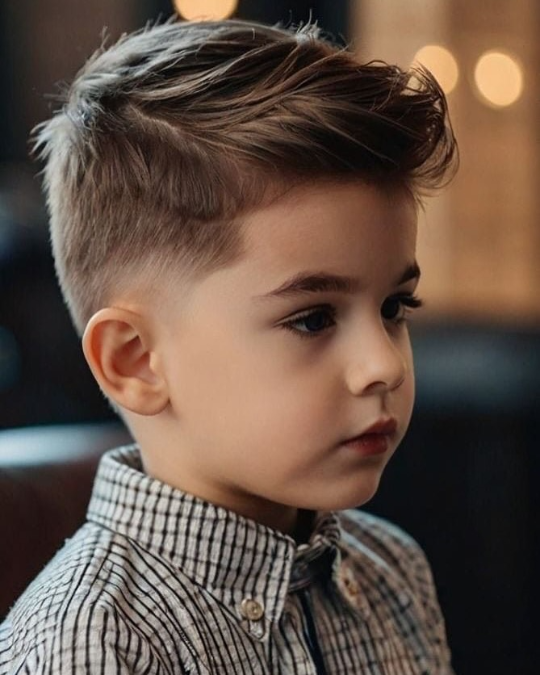
Haircut formula: lifted front + textured top + faded sides
A brushed-up front gives this quiff haircut for little boys its height. The brown strands sweep upward and back with a piece-like finish, while the shorter faded side keeps attention on the top.
Why this style works:
- Clear shape: The height sits mainly at the front, so the quiff stands out without needing long hair over the ears or eyes.
- Visible texture: Separated strands keep the top from looking flat. Thick, straight, or slightly wavy hair may show this shape well.
- Flexible finish: You can brush it up for photos or sweep it gently to the side for a simpler everyday look.
Daily styling: Lightly dampen the front and lift it with your fingers as it dries. Without a dryer or styling product, expect a lower, softer quiff than the one shown.
When visiting the barber, ask for extra length at the front and a gradual blend through the visible side area. Fine hair may look fuller with less thinning on top. Regular trims will help control the shape as the front grows heavier.
9. Wavy Top With Shaved Line Design
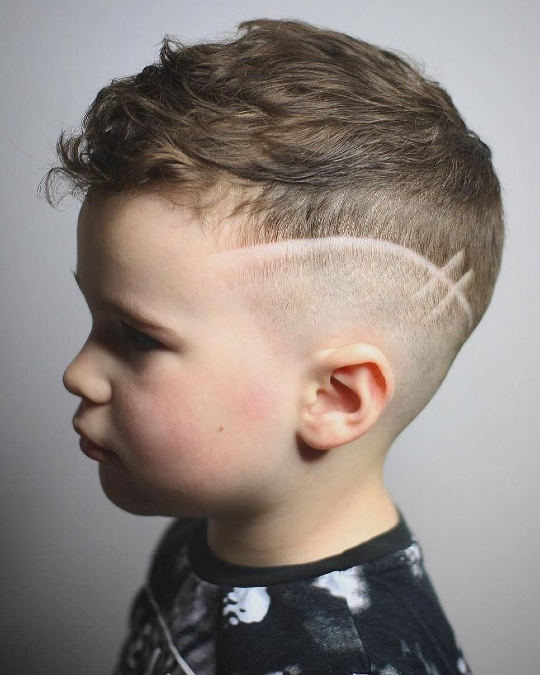
Loose brown waves lift above the forehead and move back across the top. Below them, closely cut sides make the curved line easy to see. Two short lines cross it toward the back, adding a bold detail to this little boy haircut with a design.
Barber note: Sharp design work needs a still head. Ask your barber to avoid using a bare razor on your child’s skin, and skip the lines if he’s wiggly or upset. The haircut still has plenty of shape without them.
The textured top and short sides create a strong contrast. Natural waves can give the front a similar loose lift, while straight hair may need more styling to get this movement.
Ask your barber to keep more length through the top, especially near the front. Choose longer faded sides if you prefer a softer finish, but a design may look less defined.
For daily styling, dampen the waves lightly and guide them up and back with your fingers. The shaved lines will blur quickly as hair grows, so treat them as a short-term detail that you can let fade out.
10. Sleek High-Volume Pompadour
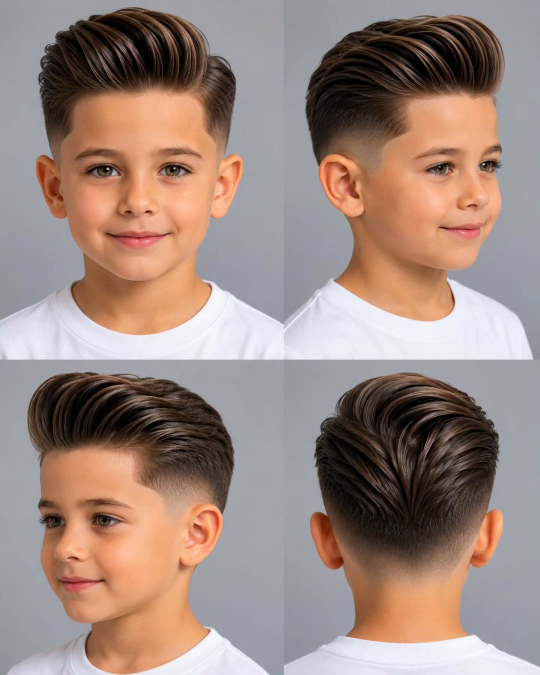
A tall front wave rolls up and back, with smooth comb lines running through the dark brown top. Lighter strands highlight its curved shape. The sides and neckline fade shorter toward the bottom, while neat temple corners give the front a crisp outline.
From behind, the longer hair flows toward the center and blends into the shorter lower section. This pompadour haircut for little boys stands out because the height and shine contrast with the soft fade. It’s a dressy choice for a family event or photo day.
The look needs enough front length to bend back without separating. Thick, straight, or slightly wavy hair may hold this shape better. Fine hair can create a lower version, while a strong cowlick may change the direction.
Styling tip: Comb slightly damp hair upward and back for a softer finish. The height and gloss shown will likely need extra styling. If you use a product, check that its label allows use at your child’s age, use a small amount, and wash it out gently.
The practical takeaway: Ask your barber for a longer front and gradually faded sides. For everyday wear, let the pompadour sit lower instead of trying to rebuild its full height each morning.
11. Fuller Curls With a Forward Fringe
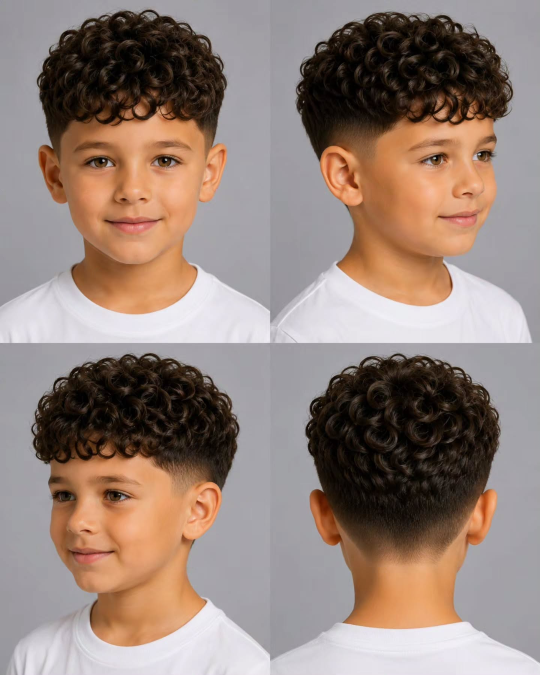
Dark, springy curls build a rounded shape on top and spill over the upper forehead. This curly fringe haircut for boys keeps more length than a tight crop, while the faded sides and neckline stop the lower half from looking bulky.
- Top: Ask your barber to keep enough length for the curls to form full loops. Light shaping can balance the volume without removing its rounded outline.
- Sides: Request short sides that blend gradually into the curls, with a softer fade around the ears and neck.
- Fringe: Keep the curls above the brows. Leave extra length during the first trim because they may spring higher as they dry.
- Finish: Let the curls keep their natural, uneven edge. It looks relaxed from the front and doesn’t need a sharp straight line.
Why it works: The forward curls draw attention to the front, while the shorter sides make their shape and texture stand out. It suits boys whose hair already curls well, since straight hair won’t create this finish through cutting alone.
Maintenance tip: Detangle gently while the hair is damp, using your fingers or a wide-tooth comb. Then let it dry with little handling. Trim the fringe if it starts getting into his eyes.
12. French Crop + Pointed Fringe
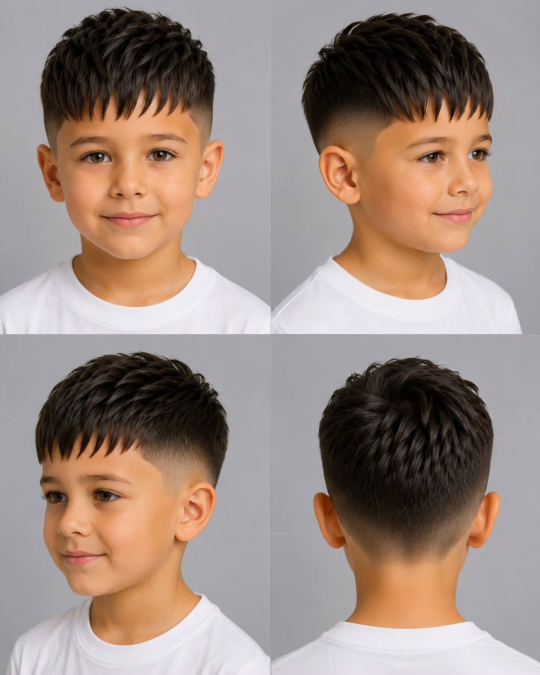
Haircut formula: forward texture + pointed fringe + faded sides
Dark, layered strands move forward from the crown and finish in a spiky-edged fringe above the brows. This French crop for little boys has less height than a quiff, with its detail coming from the separated ends. The sides and neckline fade shorter, making the fuller top stand out.
For a similar shape, ask your barber to keep enough length at the front and add light, pointed texture to the edge. A heavily thinned fringe may look sparse on fine hair, so a fuller edge can work better there.
Straight, thick hair can show these defined pieces clearly. Wavy hair will usually create a softer outline, while a strong front cowlick may split the fringe.
At home, comb the hair forward while it’s slightly damp. Let it dry, then gently loosen the ends with your fingers. The finish may look fluffier than the photo without product.
Hair length note: Check the fringe as it grows. A small trim can keep it clear of his eyes, even if you decide to let the faded sides grow longer.
13. Wavy Curtains With Soft Sides
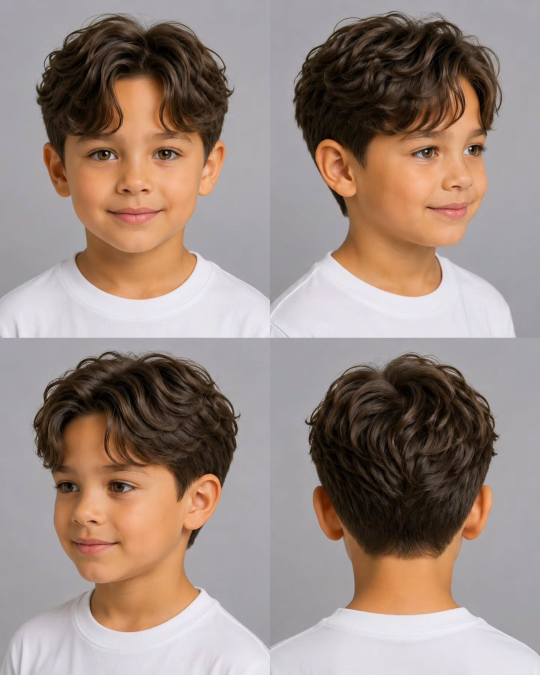
Best for: Boys with naturally wavy hair who have enough front length to fall on both sides of a part.
A near-center part opens up the forehead, while loose brown waves curve down toward the brows. The top and crown stay full. Shorter sides and a neat neckline keep the shape controlled without the pale contrast of a close skin fade.
This middle part haircut for little boys works because the two front sections create a balanced frame. Their curved ends also keep the look soft, even with plenty of volume on top.
Ask your barber to leave length through the fringe and crown, then taper the sides and back gently. Keeping some weight in the top will help preserve the full shape.
For daily styling, dampen the front and guide each section away from the part with your fingers. Let the waves dry naturally. If his hair resists a center part, follow its natural split and place it slightly to one side.
Growing-out tip: Trim the neckline and around the ears when they start looking uneven. The front can keep growing as long as it stays comfortable and out of his eyes.
14. Defined Side Part + Fade
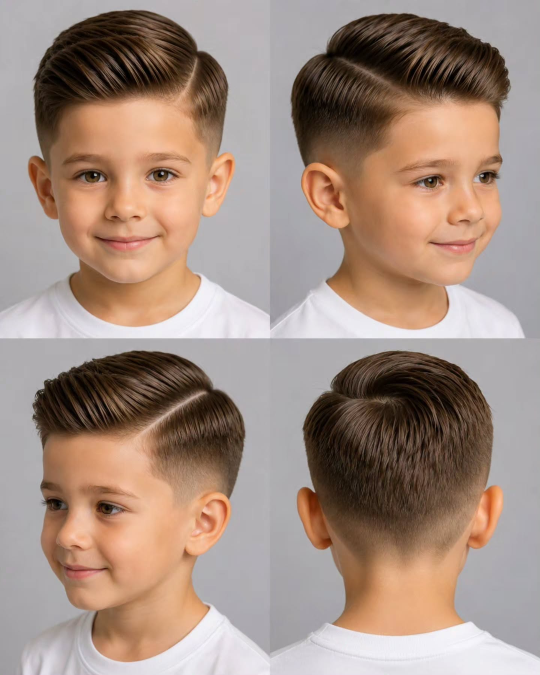
Haircut formula: clear side part + combed-over top + faded sides
This side part haircut for little boys sweeps glossy brown hair across the top, with a small lift at the front. The pale part line separates it from the flatter side, while the faded sides and neckline give the cut a neat finish for school photos or family events.
Ask your barber for enough top length to comb across and a gradual fade below it. Choose a combed part for a softer look, which avoids shaving a line that must grow back.
Make it work: Find where the hair separates on its own, then comb it while slightly damp. Following that split can be easier than forcing a part, especially when there’s a swirl at the crown.
Water can guide the shape, but it may not hold this smooth finish after drying. For everyday wear, let the top sit a little looser and trim it when it becomes hard to comb across.
15. Wavy Quiff With a Faded Finish
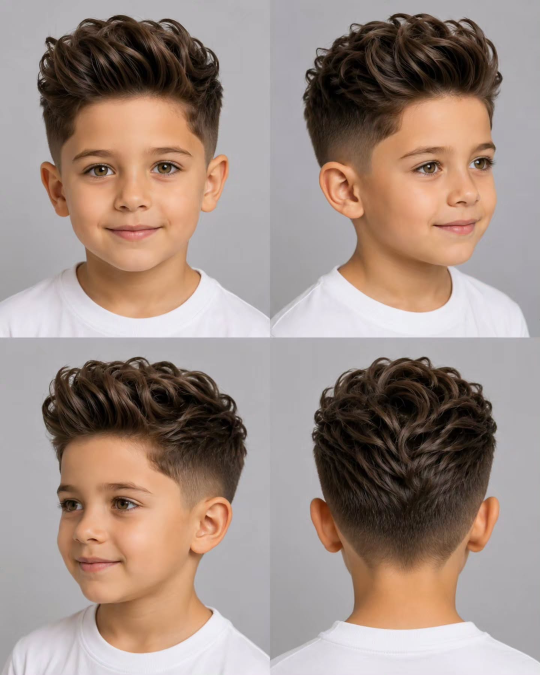
Brown waves rise from the forehead and roll back into loose, curled texture across the crown. Short faded sides and a tapered neckline keep the lower half neat, which makes the fuller top the main feature.
This wavy quiff haircut for little boys has more broken texture than a sleek pompadour. The separate bends add movement, so every strand doesn’t need to line up. Natural waves suit the shape, while straight hair may need extra styling to look similar.
Ask your barber to leave good length near the front and blend the crown into shorter sides. For daily wear, guide damp waves upward with your fingers and let them settle. A lower lift is a simpler choice for school mornings.
16. Textured Crop With Blunt Fringe
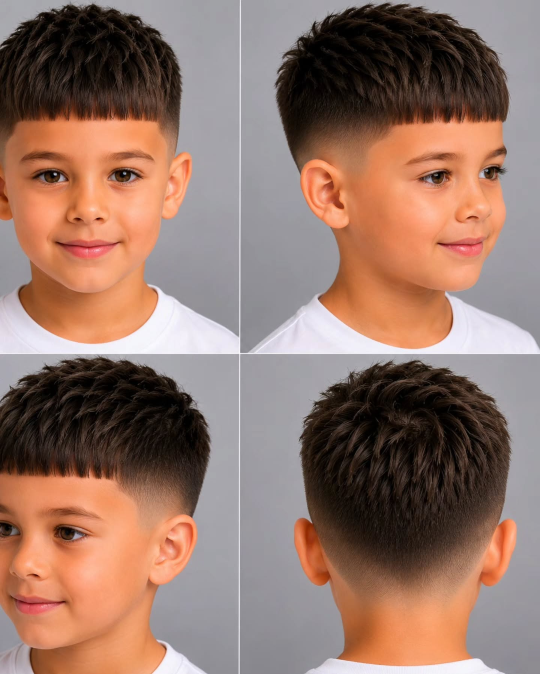
A straight fringe cuts cleanly across the forehead, while short, pointed layers add texture from the crown forward. The dark top contrasts with the faded sides and neckline. This blunt fringe haircut for little boys has a sharper front than the pointed French crop, but it stays low and compact.
The straight edge gives the style its bold shape. Thick, straight hair can create a similar full line, while waves and cowlicks may make the fringe lift or separate.
Easy upgrade: For a softer look, ask your barber to break up the fringe edge slightly. Keep enough thickness at the front so it doesn’t look thin.
- Morning routine: Lightly dampen any sticking-up sections and brush them forward. Loosen the upper layers with your fingers, while keeping the fringe mostly smooth.
- Trim timing: A blunt edge makes uneven growth easier to notice. Tidy it before it reaches his eyes, and decide separately whether the faded sides need another trim.
17. Shaggy Mullet With Forward Fringe
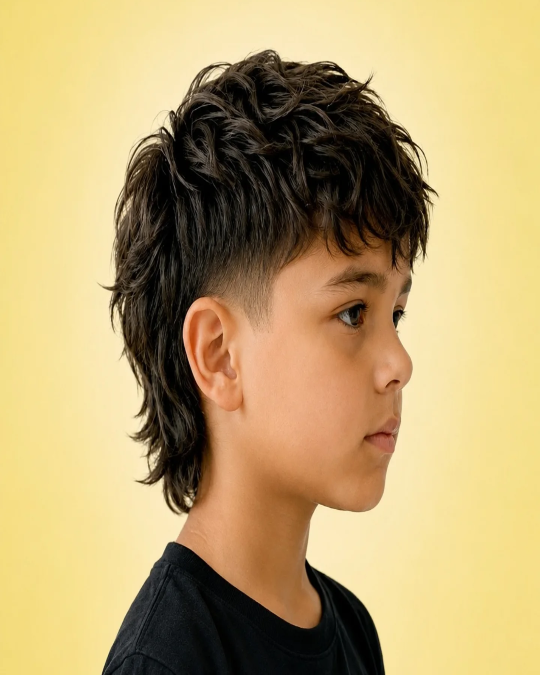
Choppy, dark waves fall forward into a broken fringe, while longer layers extend down the back of the neck. A short, faded patch around the temple and in front of the ear separates the textured top from the flowing back.
Why this style works:
- Strong outline: The shorter side makes the longer back easy to see, giving this mullet haircut for boys its recognizable shape.
- Relaxed texture: Uneven waves suit the shaggy finish. Unlike a swept-back mullet, this version lets the front fall toward the brows.
- Adjustable contrast: Your barber can leave the temple longer for a softer cut that still keeps length at the back.
Ask your barber for textured layers on top, a manageable fringe and a longer neckline. Keep enough weight at the back so the ends don’t look thin.
For daily styling, dampen flattened sections and gently scrunch the waves with your fingers. Straight hair may give a smoother result. Comb through knots carefully, especially where the longer ends rub against collars.
18. Mid Fade + Spiky Textured Top
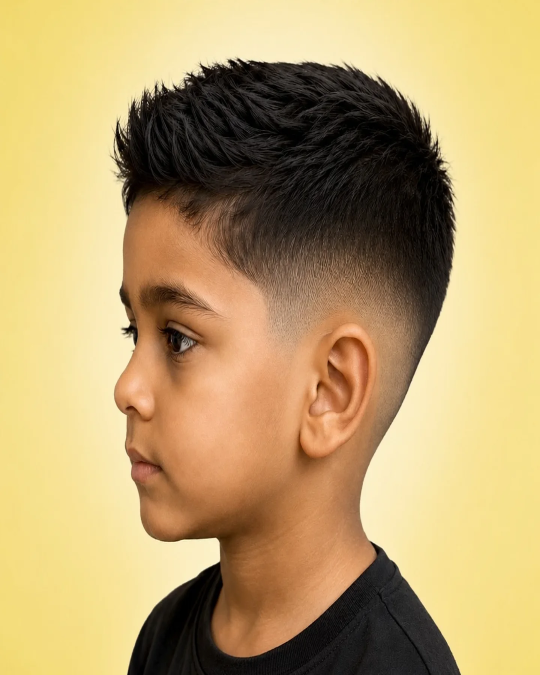
Haircut formula: lifted spiky texture + mid fade + short top
Black, textured strands lift at the front and angle back across the short top. Along the visible side, the fade rises above the ear and shifts from close at the bottom to dark through the upper section. The pointed finish adds detail without much length.
This mid fade haircut for little boys works because the lighter sides make the textured top stand out. Fade detail: Ask your barber for a gradual blend at mid-height above the ear. For less contrast, request a lower taper that leaves more hair on the sides.
Thick, straight hair can show these separated points clearly. Finer hair may look softer, so ask your barber to go easy on thinning. Only the side is shown, so discuss the back and neckline before the cut.
At home, lightly dampen the front and lift it with your fingers. It may settle lower as it dries without a styling product. A close blend will soften as it grows, but the sides don’t need to stay this sharp for everyday wear.
19. Wavy Brushed-Up Top With Fade
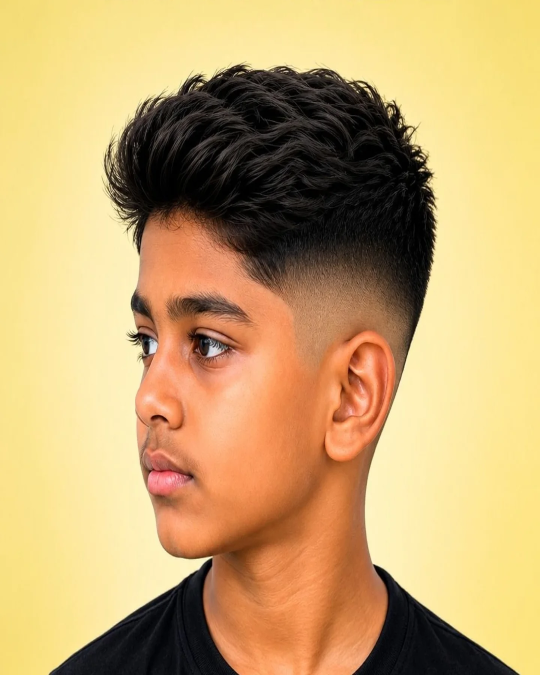
Thick, black waves lift at the front and sweep back across the crown. The faded side rises well above the ear, creating a strong contrast with the full top. This textured fade haircut for boys has height, but its broken waves keep the finish relaxed.
- Why it works: The short side draws the eye to the wavy texture and lifted front.
- Ask your barber: Keep extra length at the front and through the top. Show this photo to explain the fade height instead of relying only on its name.
- Best for: Boys with thick, wavy hair can get a similar full shape. Straight hair may look smoother, while fine hair may sit lower.
For everyday styling, dampen the top lightly and guide it up and back with your fingers. Let the waves keep their uneven edges. For a softer version, choose a lower, longer taper that leaves more hair around the temple.
20. Short French Crop With Straight Fringe
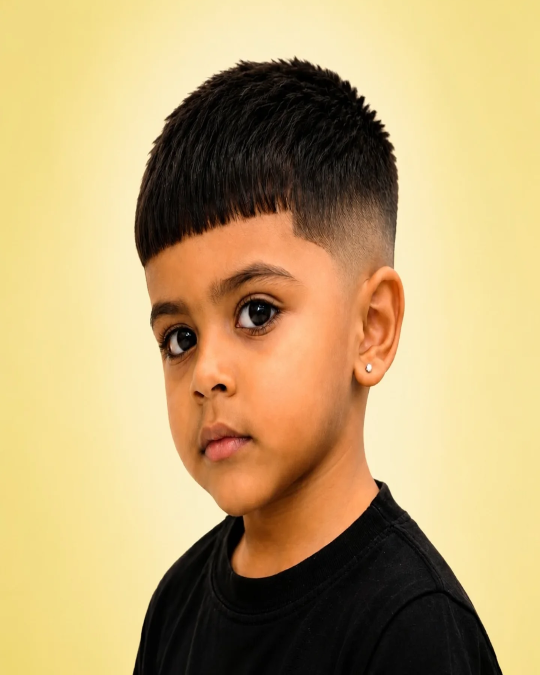
Black hair moves forward into a straight fringe that sits high on the forehead. The top stays short with fine texture, while the visible side fades lighter above the ear. A squared temple corner gives the whole outline a crisp finish.
Hair texture tip: Straight, dense hair can create a similar full edge. With fine or wavy hair, expect a softer line and ask your barber to avoid heavy thinning at the front.
This short French crop for boys keeps the forehead clear without needing a lifted style. Its smooth, compact top also differs from longer crops with separated, spiky ends.
Ask your barber for short forward texture, a high straight fringe and a gradual side fade. For a gentler version, keep the temple edge natural and leave more length on the sides.
At home, brush the top forward with a soft brush. A little water can help settle flattened sections. The fringe and corner will lose their sharp shape as they grow, so a softer outline works well if you’d like fewer detailed touch-ups.
21. Side-Swept Fringe With Short Sides
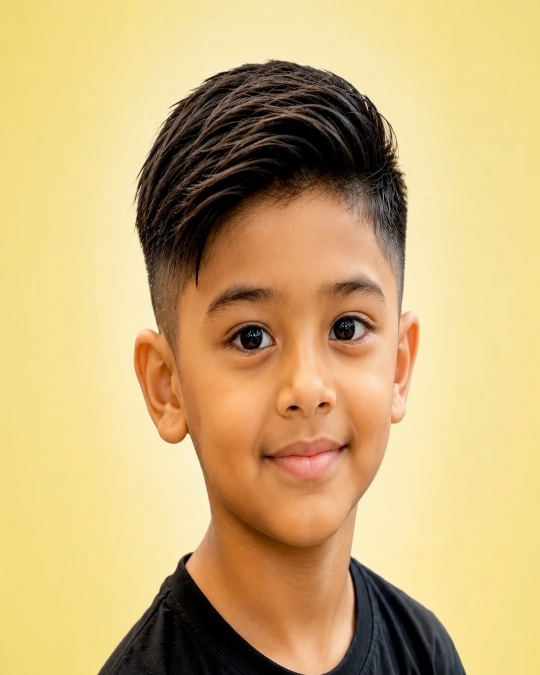
Haircut formula: longer top + diagonal fringe + faded sides
Dark, layered hair sweeps across the forehead, with extra lift through the front and a few longer strands at the tip of the fringe. This side swept haircut for little boys needs no hard part. The faded sides make the angled top the clear focus, while the slant adds movement to an otherwise neat cut.
Ask your barber to leave the top long enough to brush sideways and blend the sides gradually. For a softer finish, choose a longer taper and keep the fringe slightly shorter, so it stays clear of his eyes.
Hair length note: Straight hair can show this smooth sweep clearly, but a strong cowlick may push the front another way. Follow its natural direction where possible.
At home, dampen the top lightly and comb it diagonally while lifting the front with your fingers. It may fall flatter than shown without a styling product. Trim the fringe when the longer tip starts getting in the way.
22. Messy Fringe + Faded Sides
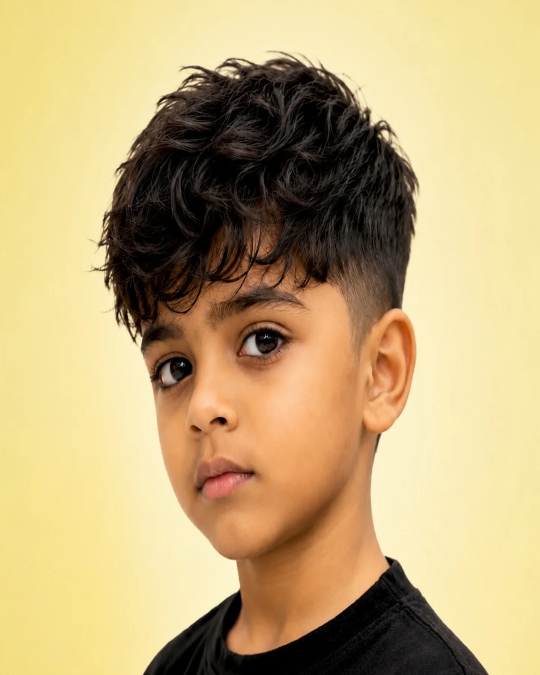
Loose, dark waves build height on top and tumble forward in a ragged fringe near the brows. The pieces bend in different directions, giving the front plenty of movement. Along the visible side, the hair shortens into a neat fade that sets off the fuller top.
This messy fringe haircut for little boys works because the texture looks relaxed, while the shorter side keeps the shape controlled. Naturally wavy hair is well suited to it. Straight hair may fall in a smoother line, even with the same cut.
When you visit the barber, ask for length through the top and an uneven, textured fringe. Keeping enough weight at the front helps it fall forward. If your child’s hair is fine, limit thinning so the fringe still looks full.
For daily styling, dampen flattened areas and gently scrunch the top with your fingers. Let the waves dry without brushing them smooth. The fringe already sits low in places, so trim it before it starts covering his eyes.
23. Short Textured Cut With High Fade
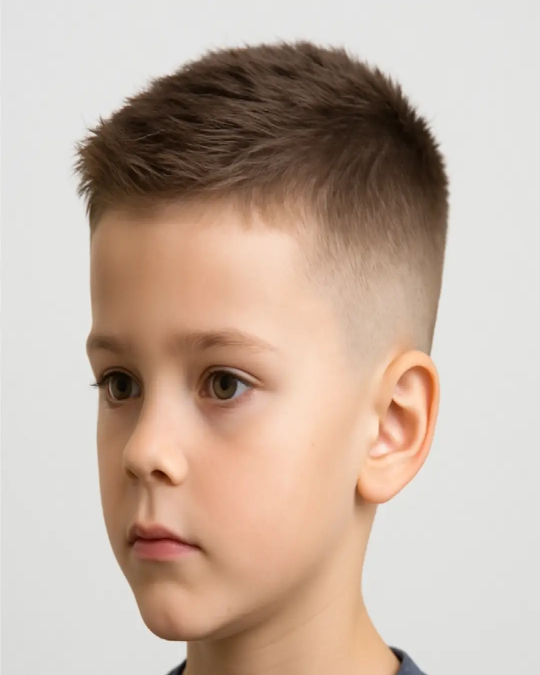
Light-to-medium brown hair stays short on top, with small spiky pieces lifting slightly at the front. On the visible side, a pale fade climbs high above the ear, creating a strong contrast with the darker crown.
- Top: Ask your barber to keep enough length for light texture and a small lift at the front.
- Sides: Request a gradual high fade. Choose longer tapered sides if you want less scalp showing.
- Fringe: Keep it short and uneven, with a soft edge instead of a heavy straight line.
- Finish: Brush the top forward, then lift the front gently with your fingers.
Why it works: The short sides draw attention upward, while the textured top keeps the cut from looking completely flat. It’s a practical choice if you want hair well clear of the eyes, though the close blend will show regrowth sooner than a longer taper.
Outdoor care: Closely cut areas offer the scalp less cover. A hat with a brim and time in the shade can help protect your child from the sun.
24. Four Textured Looks to Compare
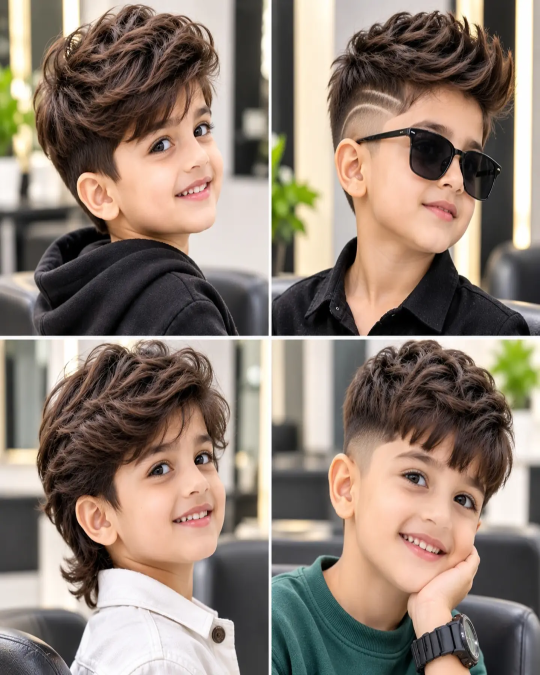
These textured haircuts for little boys show how fringe direction, side length and neckline shape can change the finish. All four have fuller brown hair on top, but each asks for a different cut and daily routine.
- Top left, soft swept fringe: Layered hair falls diagonally across the forehead, with short, dark sides. It’s a good pick if you want texture without a pale fade.
- Top right, lifted quiff and line design: The front rises into separated points above a faded side with two curved lines. The lift may need extra styling, and the lines will blur as hair grows.
- Bottom left, layered mullet: Loose waves sweep away from the face and extend down the neck. Choose it if your child is comfortable with length at the back.
- Bottom right, choppy fringe and fade: Textured hair moves forward into an uneven fringe, while the visible side fades much shorter. The contrast makes the full top stand out.
Ask your barber which shape suits your child’s growth pattern and hair density. Show one panel as your main reference, so details from different cuts don’t get mixed together.
For a gentle everyday finish, guide damp hair in its natural direction with your fingers. The fuller shapes shown here may sit flatter on straight or fine hair.
25. Soft Toddler Mullet With Temple Fade
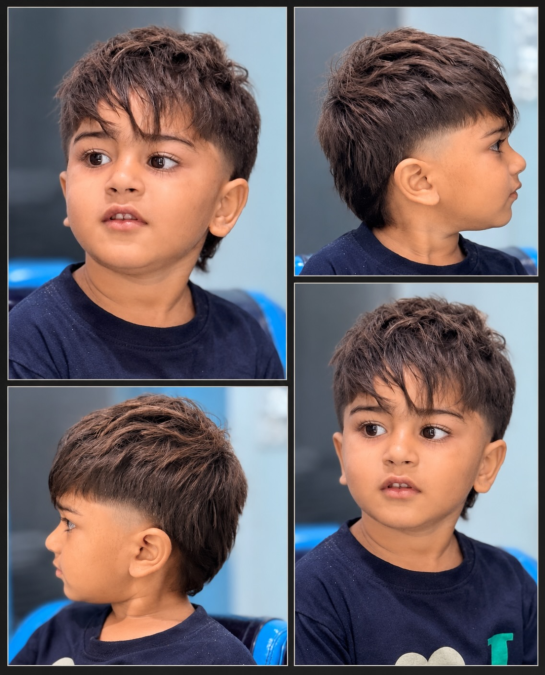
Piece-like layers fall into a wispy, uneven fringe, while the brown hair at the back extends down toward the collar. A pale fade around the temple and above the front of the ear breaks up the fuller shape. The top has loose texture without much height.
Barber note: Ask to keep length behind the ears and at the back. If your toddler dislikes clippers or moves a lot, a scissor-trimmed side can be a gentler choice than a close fade.
This toddler mullet with a fade works because the short side patch defines the longer back. It has a softer front than a lifted mohawk or quiff, so it can look good without being styled upward.
At home, smooth flattened pieces with damp fingers and brush the top gently. Let the fringe fall in its natural direction. Check the front as it grows, and trim any strands that reach his eyes. Detangle the back if it gets knotted after naps or play.