
How to Map an Anchor Beard Before You Trim
- Start with some growth: Let your facial hair grow until you can see its density. Check the chin, under the lower lip, and along the front jaw for thin spots.
- Set the base: Keep a line of hair along the chin and partway along the jaw. Remove cheek and sideburn growth, then clean below your planned lower edge.
- Shape the center: Leave a strip from below your lower lip to the chin. Trim the mustache separately, and clear the space between it and the base for a classic outline.
- Adjust the balance: A slightly longer chin point can help lengthen a round face. For a long face, keep the chin shorter. Trim a little at a time and check both sides.
1. Full Beard Before Anchor Shaping
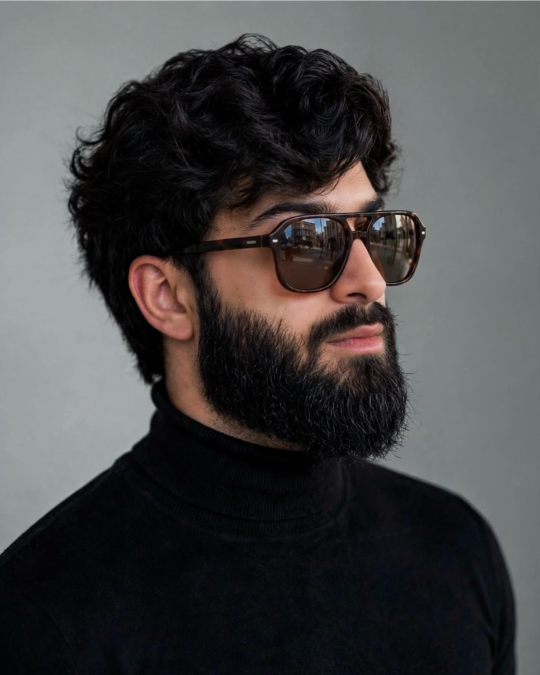
Beard formula: dense full beard + connected mustache + joined sideburns
This thick black beard runs from the sideburns to a full, slightly rounded bottom. The extra length below the chin adds weight, while the mustache blends into the sides and stays mostly clear of the upper lip.
Its density gives you room to map an anchor shape. The wavy, voluminous hair on top also balances the beard’s size, so the lower face doesn’t carry all the visual weight.
Make it work: To get an anchor beard, ask your barber to clear the cheeks and sideburns. Keep hair along the front jaw and chin, plus a strip below the lower lip.
Then separate the mustache from the chin section and shorten the length in stages. Be sure you want this change, since regrowing the full sides takes time. To keep the current look instead, comb it often and trim stray ends.
2. A Long Graying Full Beard
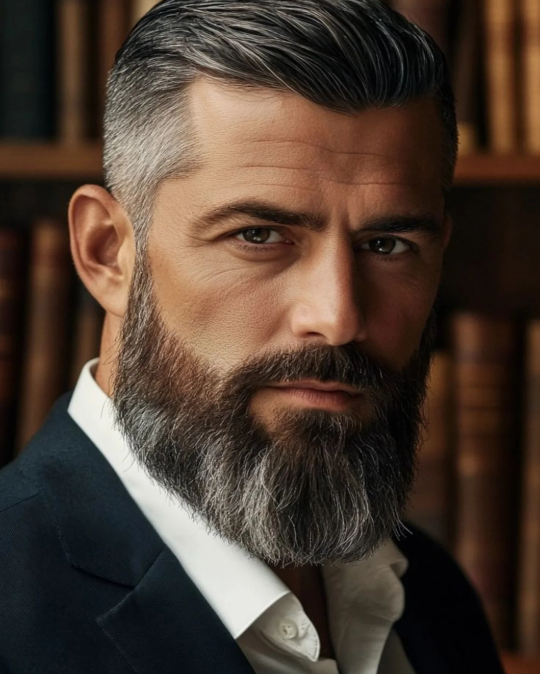
Dark brown and gray tones give this dense beard plenty of depth. It stays closer near the sideburns and grows much longer below the chin, finishing in a soft, narrowed curve.
That change in length draws the eye downward without adding too much width. It can help balance a round face. If your face is already long, ask for less length at the bottom.
Ask your barber for:
- Sides: Keep them shorter near the sideburns, with a gradual increase in fullness toward the jaw.
- Chin: Leave the most length here, and shape the bottom into a soft taper instead of a sharp point.
- Mustache: Keep it full and connected to the beard, with the edges trimmed to clear your mouth.
- Cheek line: Follow your natural growth and tidy loose hairs without carving the line too low.
The slicked, side-swept hair and short sides give the long beard a polished partner. At home, comb the beard through and shape it downward. A little beard balm can help control flyaway hairs.
3. Full Beard With Handlebar Mustache
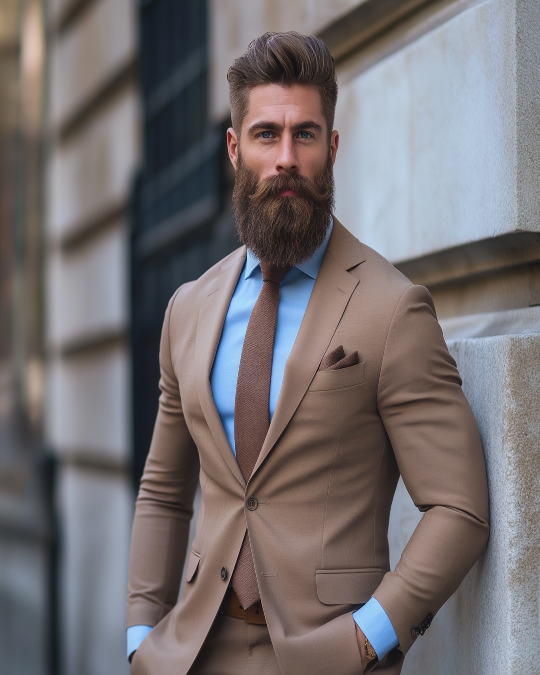
Best for: Men with dense facial hair who don’t mind styling their beard and mustache.
This long brown beard has full sides and a broad, rounded bottom that reaches the collar. The thick mustache sweeps outward into curled tips, so it stands out clearly against all that length.
The tall, swept-back hair and shorter sides balance the weight of the beard. If your face is round or wide, ask your barber to keep the beard’s sides tighter. This helps the shape look longer and less bulky.
Daily styling: Comb the mustache from the center toward each side. Warm a small amount of mustache wax between your fingers, then work it through and twist the tips.
You’ll need enough mustache length to hold this curve. Between barber visits, brush the beard into shape and snip only the stray hairs that break the rounded outline.
4. Brushed Brown Full Beard

Beard formula: full sides + longer chin + connected mustache
Warm brown tones show off the texture in this dense beard. The sides follow the jaw closely near the top, then build into a longer, rounded shape below the chin. A defined cheek line keeps all that fullness looking neat.
The thick mustache blends into the beard while leaving the lower lip clear. Up top, swept-back volume and shorter sides give the whole look a balanced, polished shape.
Grooming tip: Brush the beard in its growth direction first. Then guide the sides inward and the chin hair downward to see which ends need trimming.
- At home: A small amount of beard balm can help tame loose hairs. Work it below the surface instead of coating only the outside.
- At the barbershop: Ask to keep the length at the chin while tidying the cheek line and reducing any bulk along the sides.
5. Wavy Handlebar Beard
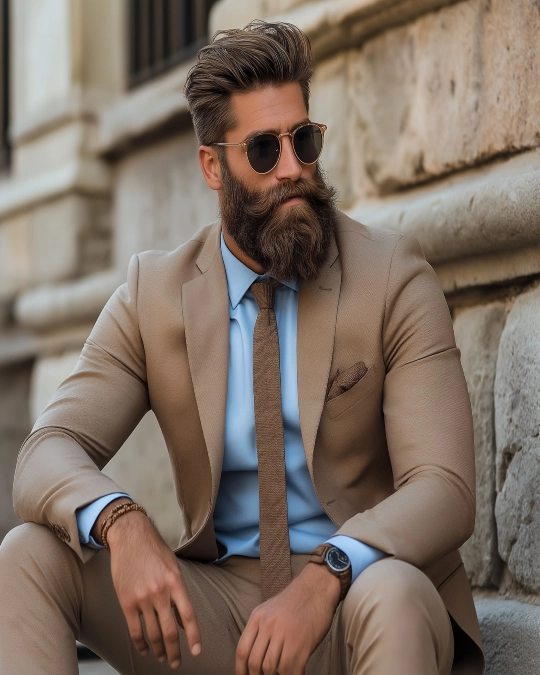
Loose waves give this long brown beard a thick, rugged shape that rounds off below the chin. A heavy mustache sweeps out to both sides, with wispy ends that look more relaxed than a tight curl.
The textured, swept-back hair matches that sense of movement. Shorter hair on the sides of the head keeps the overall look from feeling too heavy.
- Why it works: The waves add fullness and depth, while the sideways mustache creates a clear break above the long chin section.
- Shaping tip: Dry the beard on low heat, guiding it down with your fingers or a brush. Leave some bend in the hair to keep its natural texture.
- Trim with care: Cut only when the beard is dry and settled. Waves can spring up, so removing too much at once may leave the shape uneven.
6. A Dark Tapered Full Beard
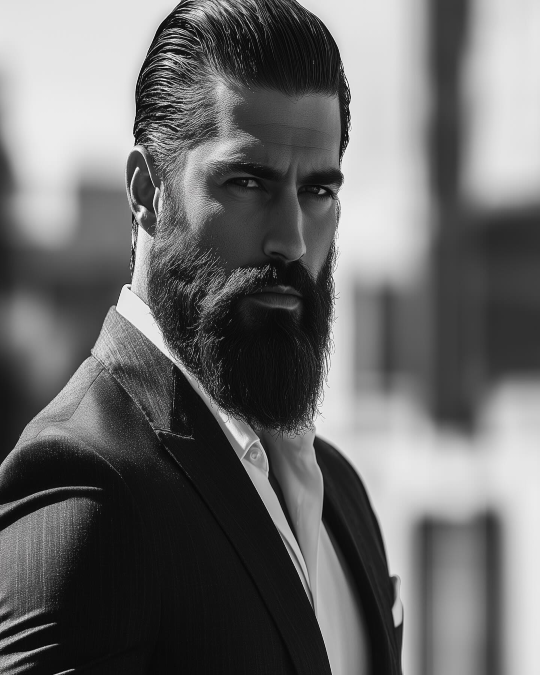
Dense, dark hair creates a bold frame from the sideburns to the chin. This full beard grows longer toward the bottom, where it narrows into a soft curve. The thick mustache joins the sides and partly covers the upper lip.
What to avoid: Don’t trim the bottom straight across if you want this shape. Ask your barber to blend the corners gradually and keep the most length at the center.
Sleek, brushed-back hair makes a sharp contrast with the beard’s fuller texture. This pairing suits men who like a dressed-up finish and have enough density to carry the length.
For daily care, comb the mustache slightly to each side and brush the rest downward. A light beard oil can soften the hair, while trimming helps keep it clear of your lips.
7. Sharp Cheek Line Full Beard
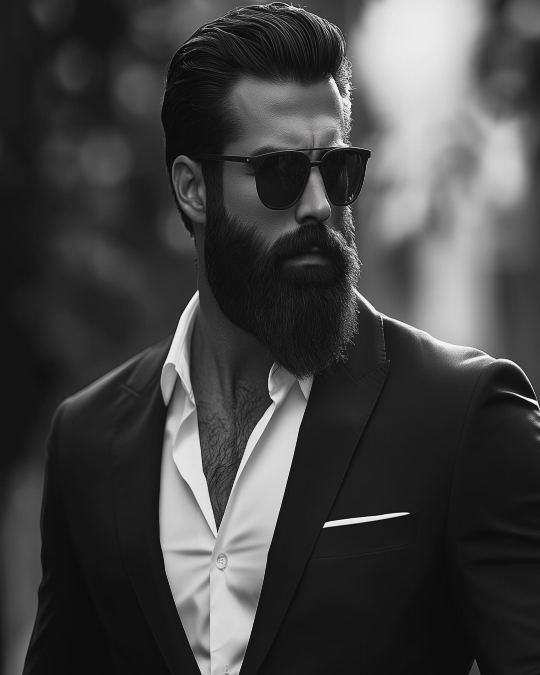
Beard formula: crisp cheek line + dense sides + long, rounded chin
A clean diagonal cheek line gives this dark, thick beard a tidy edge. Below it, full sides flow into longer chin hair, while a heavy mustache connects the shape. The brushed-back hair adds height and balances the length below.
Maintenance tip: Tidy stray cheek hairs as they appear, but don’t move the main line lower each time. Small changes can slowly shrink the beard’s fullness and leave the two sides uneven.
Ask your barber to follow your natural cheek growth as closely as possible. If you have thin spots near the top, a softer line may look more natural than a very sharp one.
8. Thick Beard With Swept-Back Flow
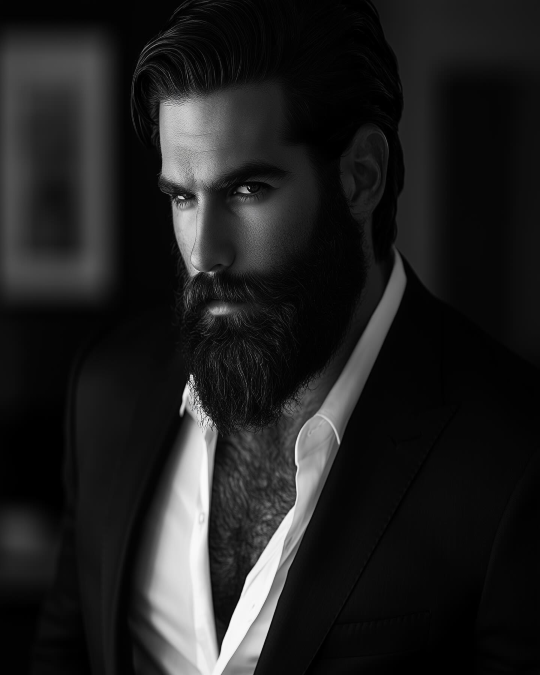
Curly, wispy texture gives this dense beard a rugged finish below the chin. It has full sides, a rounded bottom, and a thick mustache, while the longer hair on top sweeps back in a smooth wave.
Hair texture tip: A textured beard doesn’t need to lie completely flat. Use a wide-tooth comb to loosen tangles, starting at the ends, then shape it gently with your fingers.
Why this style works:
- Softer cheek edge: The less rigid line suits the beard’s natural texture and avoids a heavily carved finish.
- Rounded outline: Extra chin length adds shape without creating a sharp point.
- Relaxed contrast: The sleeker hair keeps the look polished, while the beard keeps its rough texture.
For a similar cut, ask your barber to tidy uneven ends while keeping the soft outline. A few drops of beard oil can help if the hair feels dry.
9. Short Boxed Beard
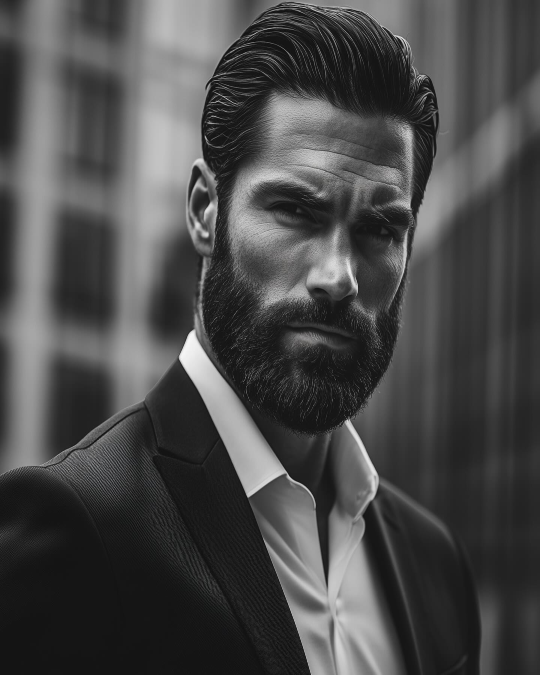
This short boxed beard stays close to the jaw, with a little more fullness around the chin. A tidy mustache connects to the sides without covering much of the mouth, while the neat cheek line keeps the shape clear.
Its compact outline adds definition without the weight of a long beard. It suits men with fairly even growth who want a sharp look that works with business or casual clothes. On a long face, avoid adding much length below the chin.
The slicked-back hair gives this pairing a polished finish. To maintain it, trim the beard regularly, brush it into place, and tidy loose hairs along the cheeks and below the jaw.
10. Rounded Beard + Slick Back
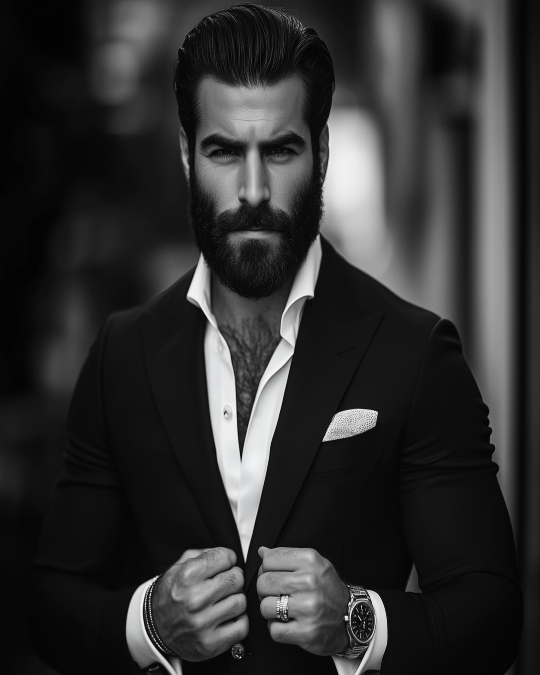
Viewed from the front, this dense beard forms a compact, rounded frame around the jaw and chin. The sides stay fairly close, while slightly more length at the bottom adds depth. A full mustache blends in and covers part of the upper lip.
Above it, the brushed-back hair brings height to the style. This keeps the lower half from feeling too dominant. If you have a round face, ask your barber to keep the beard’s sides tight and avoid widening the curve.
The takeaway: Check the shape from straight ahead when trimming. Comb both sides the same way first, then compare their width before cutting. Hair that’s only out of place can easily look like extra length.
11. Short Peppered Beard
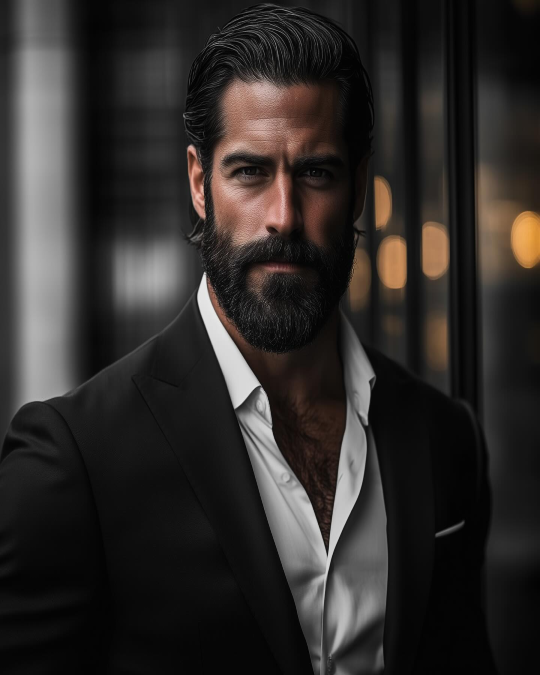
Beard formula: short full beard + gray flecks + defined mustache
Small touches of gray bring out the texture in this dark, short beard. It has slightly more fullness at the chin, while thinner areas below the lip corners help the mustache and center hair stand out.
When visiting your barber, ask to keep the chin rounded and the sides neat without trimming those thinner areas wider. This preserves the natural contrast and avoids an overly carved look.
The swept-back hair, with loose ends behind the ears, adds a relaxed touch. At home, brush the beard before trimming and shorten the mustache only where it crowds your mouth.
12. Faded Beard With Angular Chin

A low cheek line and softly faded upper edge give this short black beard a lean shape. Fullness builds toward the angular chin, drawing attention to the lower face. The neat mustache appears separate at the sides.
Ask your barber for:
- Upper sides: Blend the beard from very short near the ear into denser hair along the jaw.
- Cheek line: Create a clean, low edge that your natural growth can support.
- Chin: Keep extra length and shape it into a slight angle.
- Mustache: Trim it neatly and keep a clear break from the chin beard.
The textured, lifted top and faded sides match the beard’s sharp finish. Expect regular touch-ups, since new growth can soften both the fade and the cheek line.
Easy upgrade: For a true anchor shape, remove the hair along the sides, keeping only the front jaw, chin, and strip below your lip.
13. Tapered Jawline Beard

Beard formula: faded sides + fuller chin + neat mustache
This angle shows how the beard builds from light stubble near the ear into darker, denser hair at the chin. The center patch under the lip stands out against the thinner areas beside it, while the shaped mustache frames the mouth.
Face shape note: The extra length and angled finish at the chin can help a round face look longer. If your face is already long or your chin is prominent, ask for a shorter, softer shape.
To keep the contrast clear, trim the sides a little shorter than the chin. Check your profile as you work, and avoid cutting into the lower edge too far. This can quickly weaken the jawline shape.
14. Short Beard With Disconnected Mustache

Best for: Men with solid mustache and chin growth who like a short beard with clear details.
The front view shows a curved mustache separated from the beard by small gaps at the sides. Darker hair is concentrated around the chin, while lighter coverage along the upper sides keeps the outline lean.
A patch below the lower lip links visually with the chin, giving the center an anchor-inspired feel. The short, brushed-up hair and tapered sides keep attention on these sharp details.
Make it work: Comb the mustache before trimming, then clean the side gaps a little at a time. Keep its curve above your upper lip and compare both ends from straight ahead.
Don’t widen the gaps just to fix a small difference between sides. Trim the longer side carefully, or ask your barber to reset the shape if it starts to look uneven.
15. Short Beard Fade
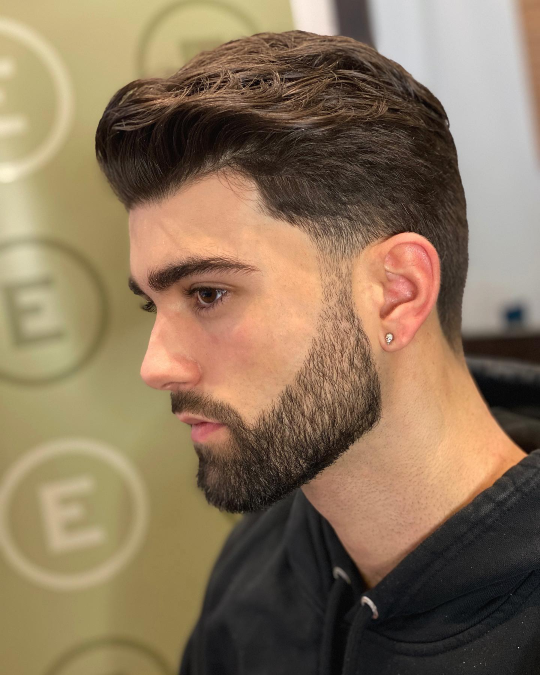
Seen from the side, this brown beard starts light near the ear and grows darker toward the jaw and chin. A curved cheek line and short mustache keep it neat, while the slightly fuller chin adds definition.
Fade detail: Ask your barber for a gradual change from the sideburn into the beard. This links it smoothly with the tapered hair above and avoids a heavy block beside the ear.
The wavy, swept-back top brings height, balancing a beard that stays close to the face. This pairing can suit men who want visible facial hair without much length.
- Neckline: Keep the lower edge clean, following the shape already set below the jaw. Trimming it too high can make the beard look smaller.
- Upkeep: Touch up stray growth and keep the sides shorter than the chin. Thin patches may show more if you cut the whole beard very close.