
Staying active after 60 can become difficult when stiff joints, tired legs, or limited mobility make ordinary workouts feel uncomfortable. Many older adults want to exercise but have little interest in gym equipment, complicated routines, or movements that require getting down on the floor.
The problem is that spending too much time sitting can make everyday movement feel harder. Standing from a chair, reaching into a cabinet, or walking around the house may require more effort as strength and mobility decline.
A gentle 15-minute chair workout offers a practical starting point. It uses simple movements that can be adjusted to individual abilities.
Why a 15-Minute Chair Workout Can Make a Difference
A useful exercise routine does not need to involve heavy weights, expensive machines, or long training sessions. For someone who has been inactive, moving the arms and legs regularly can be a manageable way to become more physically active.
Chair exercises allow older adults to work on movement while sitting on a stable surface. This can be especially helpful for people who find standing exercises tiring or who need extra support.
The routine also has a practical purpose beyond exercise. Leg extensions, ankle raises, arm movements, and seated marching involve muscles and joints used during ordinary daily activities.
According to the CDC’s physical activity guidance for older adults, people aged 65 and older should include aerobic exercise, muscle strengthening, and balance activities in their weekly schedules. The agency also emphasizes that some activity is better than none.
A short seated routine can contribute to staying active, but it should not be treated as a complete replacement for other types of exercise. The goal is to make movement more accessible and establish a habit that can grow over time.
How the 15-Minute Routine Works
This workout follows a simple structure of 15 movements performed in sequence. Most exercises take place entirely in the chair, while the final movement involves standing up and sitting down for those who can do so safely.
Each movement is assigned 50 seconds, followed by a 10-second transition or rest period. That creates a simple 15-minute schedule without requiring complicated sets or repetition counts.
| Workout Detail | Duration | Purpose |
|---|---|---|
| Total exercises | 15 | Full-body movement |
| Each exercise | 50 seconds | Controlled repetitions |
| Rest or transition | 10 seconds | Brief recovery |
| Total routine | 15 minutes | Daily activity session |
| Equipment | One sturdy chair | Stable support |
The 50-second periods are targets rather than requirements. Beginners can exercise for 20 to 30 seconds and use the remaining time to rest.
There is also no requirement to complete every movement perfectly. Taking breaks, reducing the range of motion, and skipping uncomfortable exercises are reasonable adjustments.
Prepare Your Chair Before Starting
Chair selection matters because even gentle movements require a stable surface. A firm dining chair is often more suitable than a soft couch, reclining chair, or rolling office chair.
Choose a chair without wheels and place it on a level, nonslip floor. It should allow both feet to rest comfortably on the ground, and placing it against a wall can add stability.
Sit upright with your shoulders relaxed and your feet approximately hip-width apart. Keep your movements controlled, breathe normally, and avoid holding your breath while exercising.
Wear comfortable clothing and supportive footwear when appropriate. Keep some drinking water nearby and remove loose rugs or other obstacles from the exercise area.
People recovering from surgery, experiencing unexplained pain or dizziness, or managing conditions that affect exercise safety should ask their healthcare professional which movements are suitable. Anyone with significant balance difficulties may need an individually adapted routine or supervision.
Part One: Five Gentle Exercises for the Legs and Ankles
The workout begins with five seated exercises that focus on the lower body. These movements involve the thighs, calves, ankles, and hips, which all contribute to comfortable movement during everyday activities.
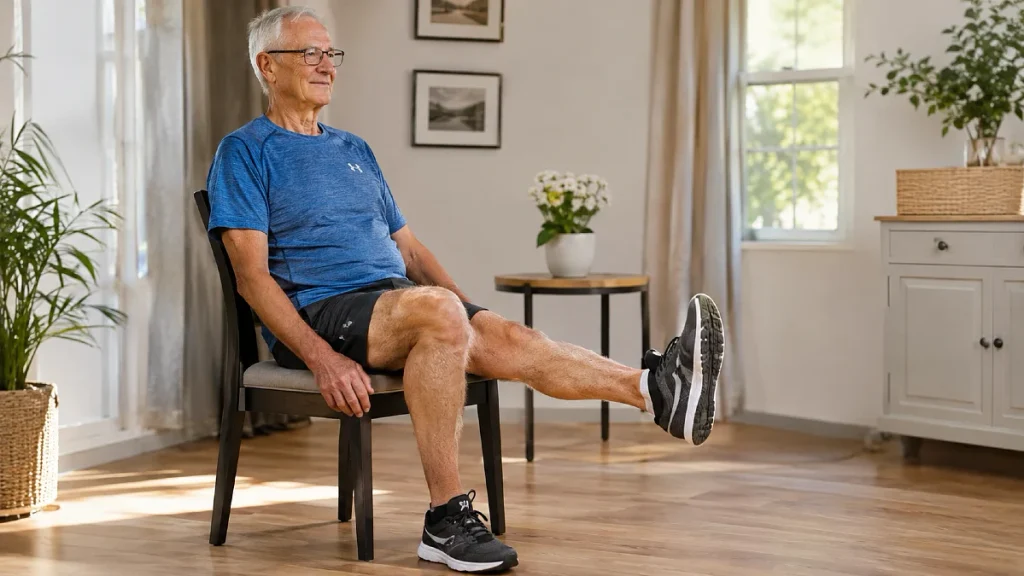
1. Seated Leg Extensions
Sit upright with both feet flat on the floor and your hands resting comfortably at your sides. Slowly straighten one knee until your lower leg extends in front of you, then lower your foot back down.
Repeat the movement with your opposite leg, alternating sides for up to 50 seconds. Keep your back upright and avoid swinging your legs or locking your knees forcefully.
This exercise works the quadriceps, the large muscles at the front of the thighs. These muscles help straighten the knees and play an important role in standing, walking, and climbing stairs.
2. Straight Leg Lifts
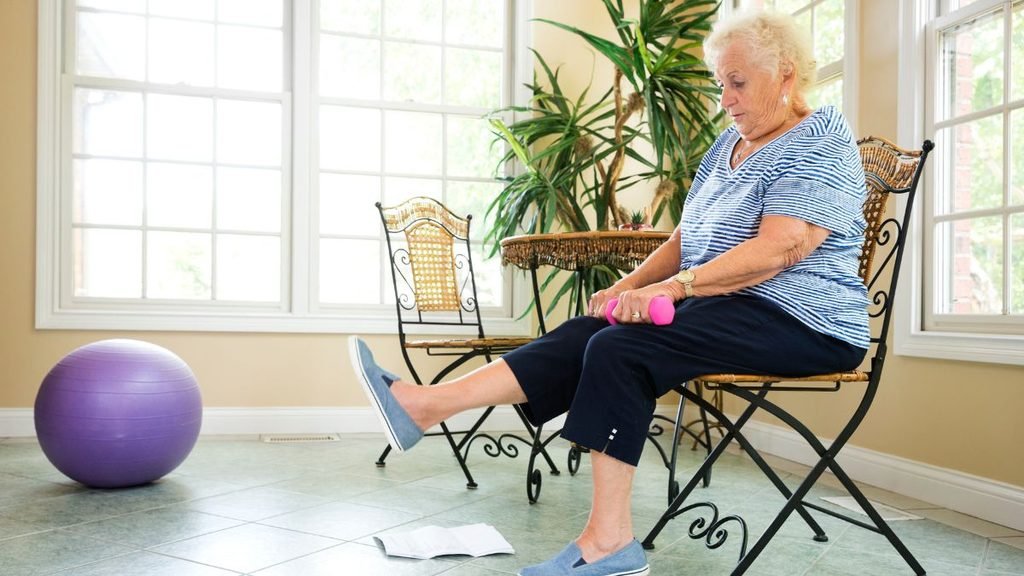
Move slightly forward in the chair while keeping enough of your thighs supported by the seat. Extend one leg in front of you and gently lift it a small distance while keeping the knee comfortably straight.
Lower the leg slowly and repeat the movement before switching sides. Keep your stomach muscles gently engaged, and avoid leaning backward to lift the leg higher.
Straight leg lifts challenge the thigh and hip muscles. The movement does not need to be large because a small, controlled lift can still require muscular effort.
3. Seated Calf Raises
Place both feet flat on the floor while keeping your toes in contact with the ground. Slowly lift your heels, pause briefly, and lower them again with control.
Continue the movement at a comfortable pace for up to 50 seconds. Keep your knees relaxed and avoid bouncing your heels against the floor.
The calf muscles help move the ankles and support activities such as walking and rising onto the toes. Exercising them in a seated position provides a simple way to practice this movement.
4. Seated Toe Raises
Keep your heels resting firmly on the floor and slowly lift your toes upward. Lower the front of your feet gently, then repeat the movement without rocking your entire body.
If lifting both feet together feels awkward, alternate between the left and right foot. Small movements are acceptable, especially if ankle stiffness limits how far the toes can rise.
Toe raises work muscles along the front of the lower legs and encourage ankle movement. This exercise complements calf raises because the feet move in the opposite direction.
5. Seated Side Taps
Sit tall with both feet resting in front of you and your knees comfortably bent. Move one foot outward to the side, gently tap the floor, and bring it back to the starting position.
Repeat the movement with your opposite foot, alternating sides at a relaxed pace. Keep your upper body steady rather than leaning sideways each time your foot moves.
Side taps involve the muscles around the hips and thighs. They also encourage controlled leg movement in a direction that ordinary walking may not use as often.
What the First Five Exercises Work
Each lower-body movement has a slightly different purpose. Together, they provide a useful mix of muscle activity and joint movement without requiring standing.
| Exercise | Main Area | Easier Option |
|---|---|---|
| Leg extensions | Front thighs | Straighten the knee partway |
| Straight leg lifts | Thighs and hips | Lift the foot a smaller distance |
| Calf raises | Calves and ankles | Raise one heel at a time |
| Toe raises | Front lower legs | Alternate feet |
| Side taps | Outer hips | Use shorter sideways taps |
The most important point is to control each movement rather than maximize speed. A shorter movement performed comfortably is generally preferable to forcing a joint beyond its comfortable range.
Part Two: Two Movements for the Waist and Trunk
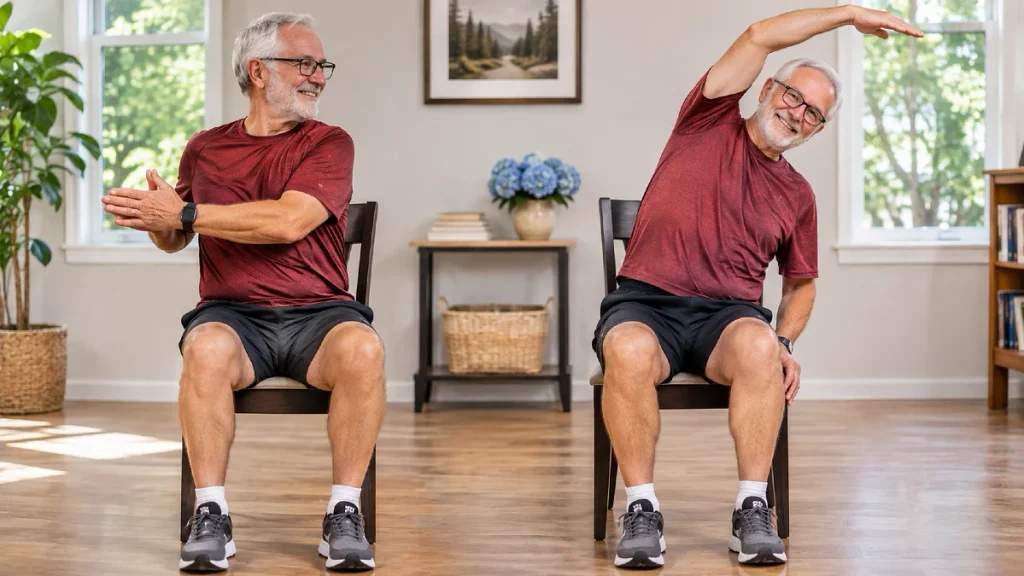
After working the legs, the routine shifts toward the muscles that help support the upper body. These movements emphasize gentle trunk control rather than difficult abdominal exercises.
6. Gentle Seated Torso Twists
Sit upright with your feet flat on the floor and your shoulders relaxed. Slowly turn your head and upper body slightly toward one side, then return to the center before turning the opposite way.
Keep the movement comfortable, and avoid pulling yourself into a deeper twist. Your hips should remain mostly facing forward while your upper body rotates gently.
This exercise encourages movement through the upper back and trunk. People with osteoporosis, spinal fractures, recent back surgery, or pain during twisting should seek professional advice before attempting it.
7. Seated Side Reaches
Sit tall with your arms resting beside your body and your feet planted on the floor. Slowly slide one hand down toward the outside of your thigh or knee while leaning slightly to that side.
Return to an upright position and repeat the movement on the opposite side. Keep your chest facing forward and avoid folding your body sharply toward the floor.
This movement involves muscles along the sides of the trunk and encourages gentle sideways motion. There is no need to touch your heel or reach beyond your comfortable range.
Part Three: Five Exercises for the Arms and Shoulders
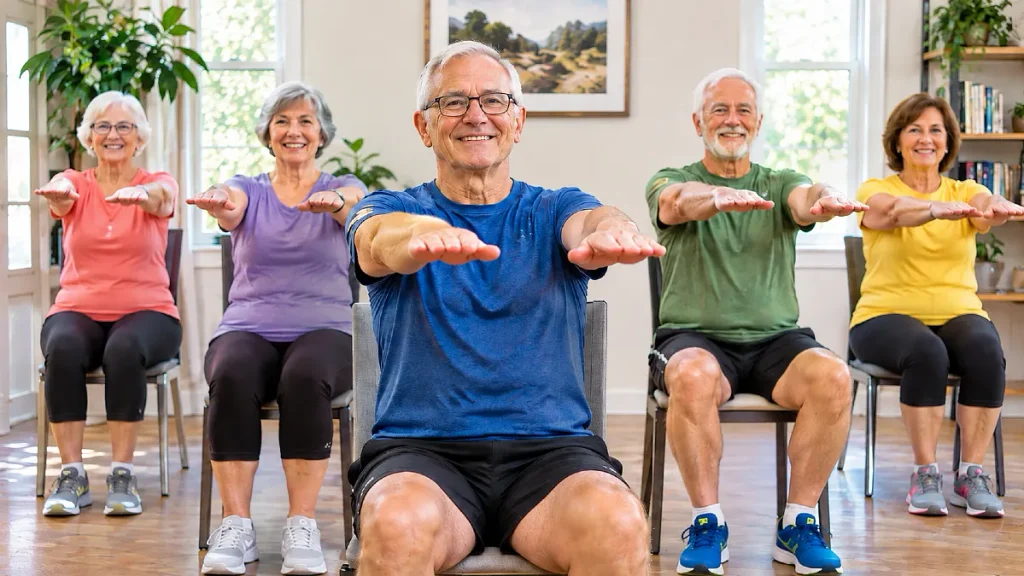
The next five exercises focus on the upper body, including the shoulders, arms, and muscles around the shoulder blades. All five can be performed without weights or resistance bands.
These movements are relevant to everyday activities such as reaching for a cup, putting on a jacket, and carrying light household items. Their purpose in this routine is to encourage comfortable movement and light muscular effort.
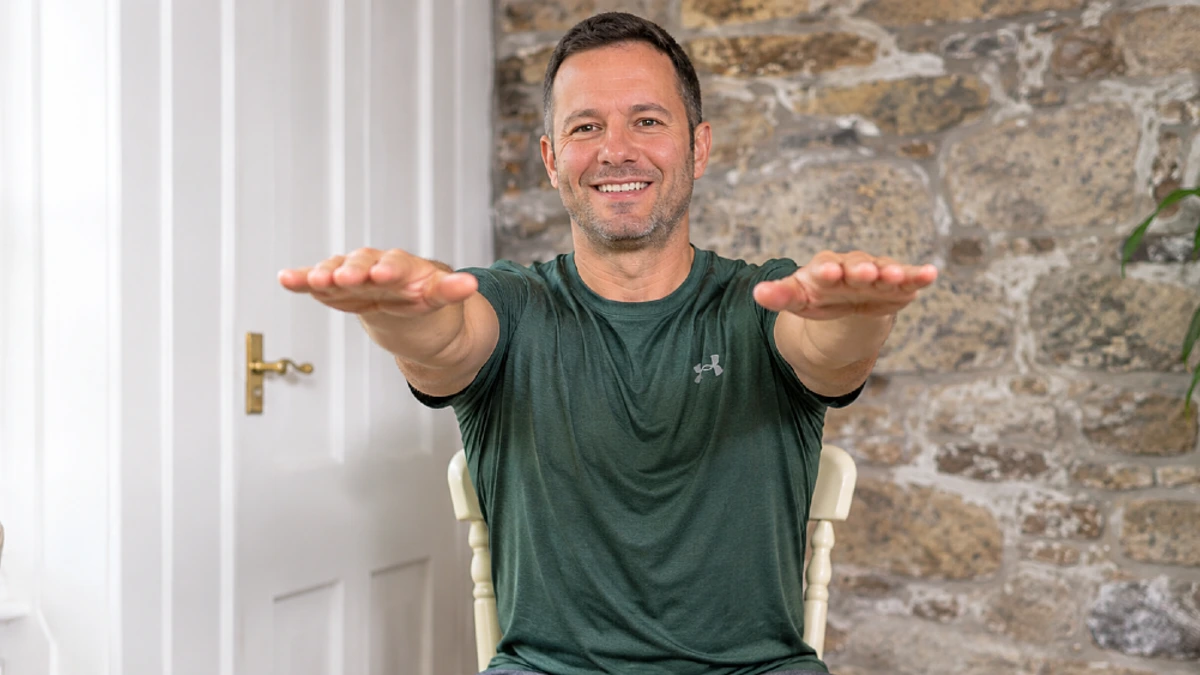
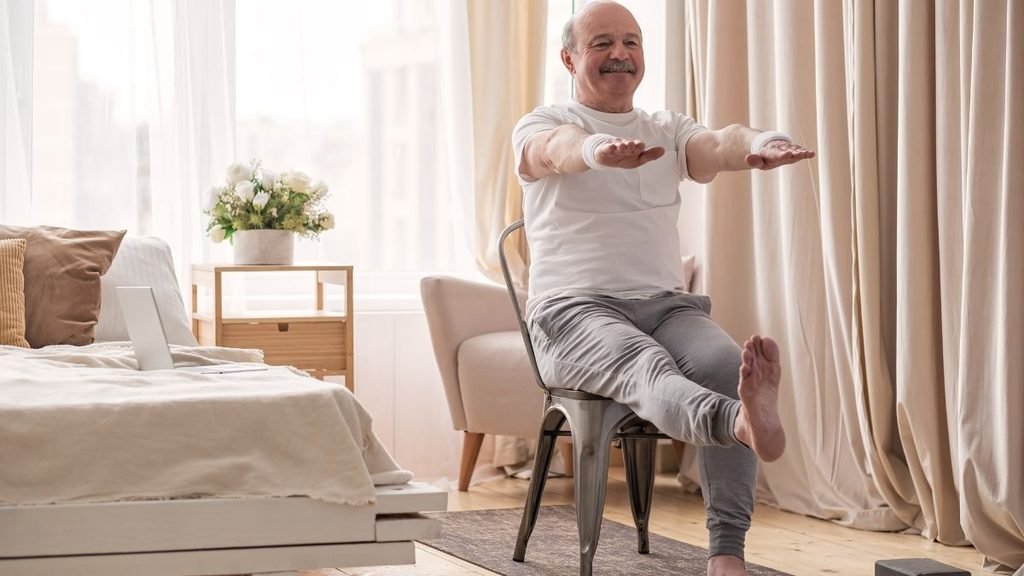
8. Seated Front Arm Raises
Sit upright with your arms hanging comfortably by your sides and your palms facing inward or downward. Slowly raise both arms in front of your body toward shoulder height, then lower them with control.
Keep your shoulders relaxed instead of pulling them toward your ears. If both arms together feel too demanding, lift one arm at a time or stop below shoulder height.
Front raises involve the muscles at the front of the shoulders. Performing them slowly can encourage better control without needing additional equipment.
9. Alternating Overhead Reaches
Begin with both hands resting comfortably near your shoulders or thighs. Slowly reach one arm upward as far as feels comfortable, then bring it down before lifting the other arm.
Keep alternating arms without leaning sideways or arching your lower back. People with shoulder pain or limited overhead mobility can reach forward instead of raising their hands above their heads.
This exercise encourages shoulder movement and gently activates the muscles that support the arms. The height of the reach matters less than maintaining a comfortable, controlled motion.
10. Seated Bicep Curls
Sit upright with your elbows close to your body and your hands resting beside your thighs. Bend your elbows slowly to bring your hands toward your shoulders, then lower them again.
Keep your upper arms relatively still throughout the movement. Avoid swinging your elbows forward or leaning backward to help lift your hands.
Bicep curls work the muscles at the front of the upper arms. Although the original exercise can be performed with hand weights, this gentle version requires no additional equipment.
11. Double Arm Overhead Reaches
Begin with both arms lowered comfortably at your sides. Slowly raise both hands upward together, stopping at a height that feels manageable, then return them to the starting position.
Keep your back supported by good upright posture and avoid holding your breath. If raising both arms creates discomfort, perform a smaller forward reach or repeat the alternating version from exercise nine.
This movement requires both shoulders to work at the same time. It can feel more demanding than lifting one arm, even without weights.
12. Seated Rowing Movements
Extend both arms forward at approximately chest height while keeping your shoulders relaxed. Bend your elbows and slowly draw them backward as though pulling two handles toward your body.
Gently bring your shoulder blades toward each other without forcing them together. Return your arms forward and continue at a controlled pace.
Seated rows involve muscles around the upper back and shoulders. They provide a useful counterbalance to the earlier forward and overhead reaching movements.
How to Adjust the Upper Body Exercises
Shoulder and back mobility can vary considerably between older adults. A comfortable range of motion is more important than matching another person’s reach.
| If You Notice | Try This Adjustment | Avoid |
|---|---|---|
| Shoulder discomfort | Raise arms only partway | Pushing through pain |
| Neck tension | Relax shoulders and slow down | Shrugging repeatedly |
| Back discomfort | Keep movements smaller | Forceful bending or twisting |
| Arm fatigue | Alternate arms or take a break | Rushing repetitions |
| Difficulty coordinating | Practice one arm at a time | Moving too quickly |
The exercises should produce manageable effort rather than sharp pain. Anyone who develops persistent discomfort should stop the affected movement and seek appropriate medical or physical therapy advice.
Part Four: Three Final Movements to Finish the Workout
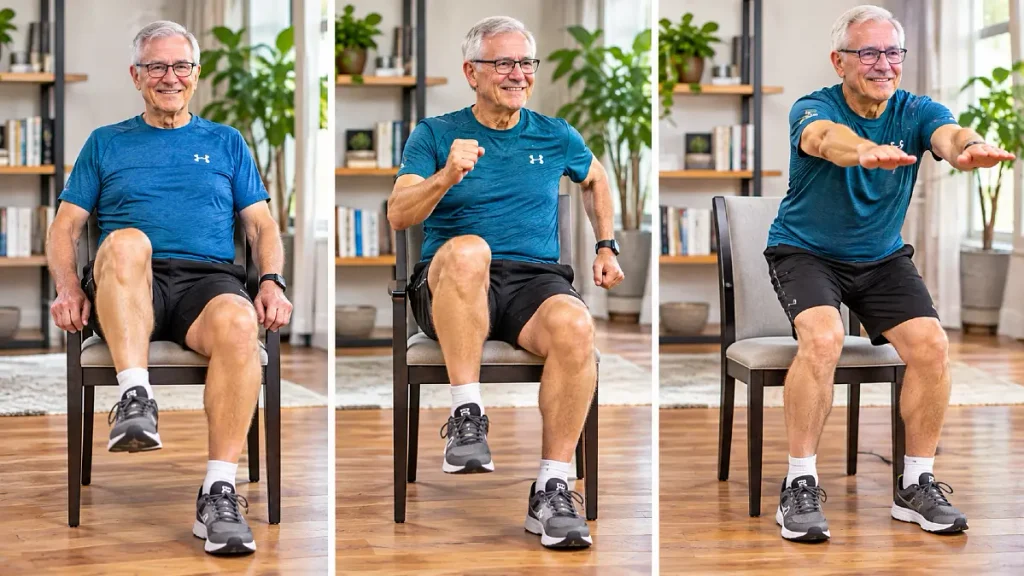
The final three exercises add more continuous movement and, for those who can stand safely, functional leg strengthening. They are intended to finish the session at a comfortable pace rather than turn it into an exhausting workout.
13. Seated Marching Without Arm Movement
Sit upright with your feet flat on the floor and your hands resting on your thighs or the sides of the chair. Lift one foot slightly off the ground by raising your knee, then lower it before lifting the opposite foot.
Continue alternating your feet as though marching while seated. Maintain a comfortable rhythm and avoid leaning back or lifting your knees higher than you can control.
Seated marching activates the hip and thigh muscles while introducing a steady rhythm. Depending on pace and individual fitness, it may also increase breathing and heart rate slightly.
14. Seated Marching With Arm Movement
Continue marching in place, but now add gentle arm movements. As one knee rises, swing the opposite arm forward naturally, then repeat on the other side.
Use small arm swings if coordinating the arms and legs feels difficult. You can also slow your marching pace or stop the arm movements whenever you need a break.
This variation involves more of the body than the previous exercise. It can provide a modest cardiovascular challenge, although the actual intensity will depend on the person and the pace.
15. Sit to Stand: The Final Exercise
Sit near the front of a sturdy chair with your feet hip-width apart and placed slightly behind your knees. Lean your upper body forward a little, press through your feet, and stand up slowly if you can do so safely.
Pause once you are upright, then bend your hips and knees to lower yourself gently back into the chair. Use the chair’s stable armrests for support if needed, and avoid dropping suddenly into the seat.
Sit-to-stand movements strengthen the thighs, hips, and buttocks. They also practice a daily activity that many people perform repeatedly, including getting out of a dining chair or rising from the sofa.
Important: This is the only exercise in the routine that requires standing. Anyone who cannot stand safely should skip it and remain seated, rather than attempting an unsupported squat or forcing themselves upright.
A physical therapist can help determine whether a supported standing variation would be appropriate. For older adults who can perform it comfortably, a few slow repetitions may be more useful than trying to complete as many as possible in 50 seconds.
What Can 15 Minutes of Chair Exercise Actually Improve?
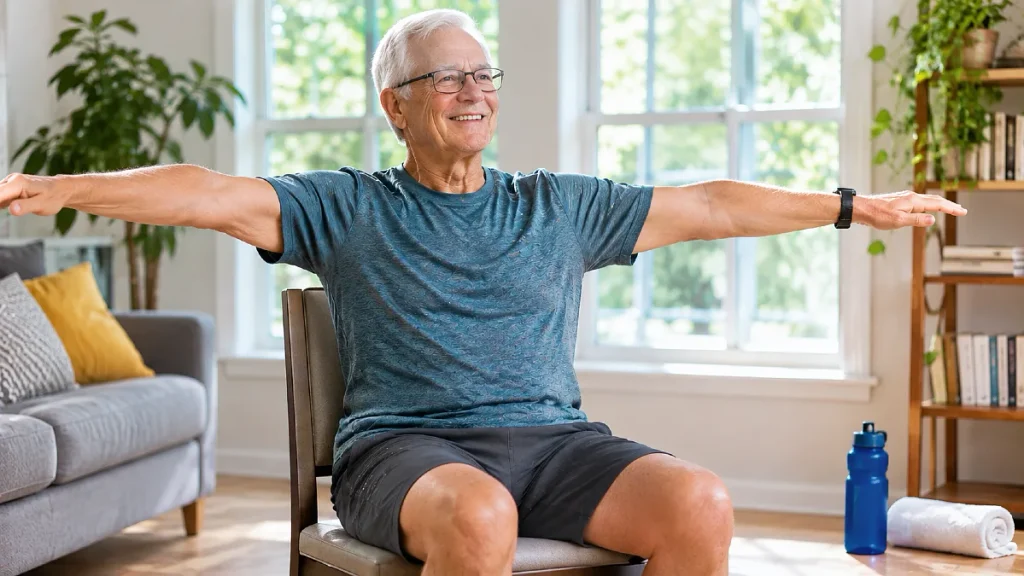
The value of this routine depends on a person’s starting fitness, health, and consistency. Someone returning to physical activity may find the movements challenging, while a regularly active person may need more resistance or other exercises to continue building strength.
There are several reasonable benefits to working toward through a regular movement routine. However, the results are not guaranteed, and a single 15-minute session cannot address every aspect of physical fitness.
Better Joint Movement
Ankles, knees, hips, and shoulders all move through different positions during the workout. Practicing comfortable movement may help older adults maintain or improve their mobility over time.
The ankle exercises are particularly simple because they can be performed without standing. They provide a convenient way to move the feet after a long period of sitting.
Maintaining Everyday Strength
Leg extensions, straight leg lifts, and sit-to-stand movements require the muscles to work against gravity or body weight. These movements can contribute to muscle activity, although meaningful strength gains may eventually require more challenging resistance.
Muscle strength matters because many ordinary tasks require lifting, pushing, or supporting body weight. Carrying groceries, standing from a chair, and climbing steps are familiar examples.
Improved Movement Confidence
Some people become less active after a period of illness, reduced mobility, or a fall. Beginning with manageable movements may help them become more comfortable with regular exercise.
Confidence should increase alongside actual physical ability, not replace safe judgment. People with a history of falls may benefit from supervised balance and strength training rather than relying solely on chair exercises.
A More Regular Activity Habit
One of the main advantages of a short routine is convenience. A chair workout requires little preparation and can fit into an ordinary day without travel or special equipment.
The CDC notes that older adults who cannot meet the full physical activity recommendations should remain as active as their abilities allow. Starting with manageable activity provides a reasonable foundation for gradually doing more.