
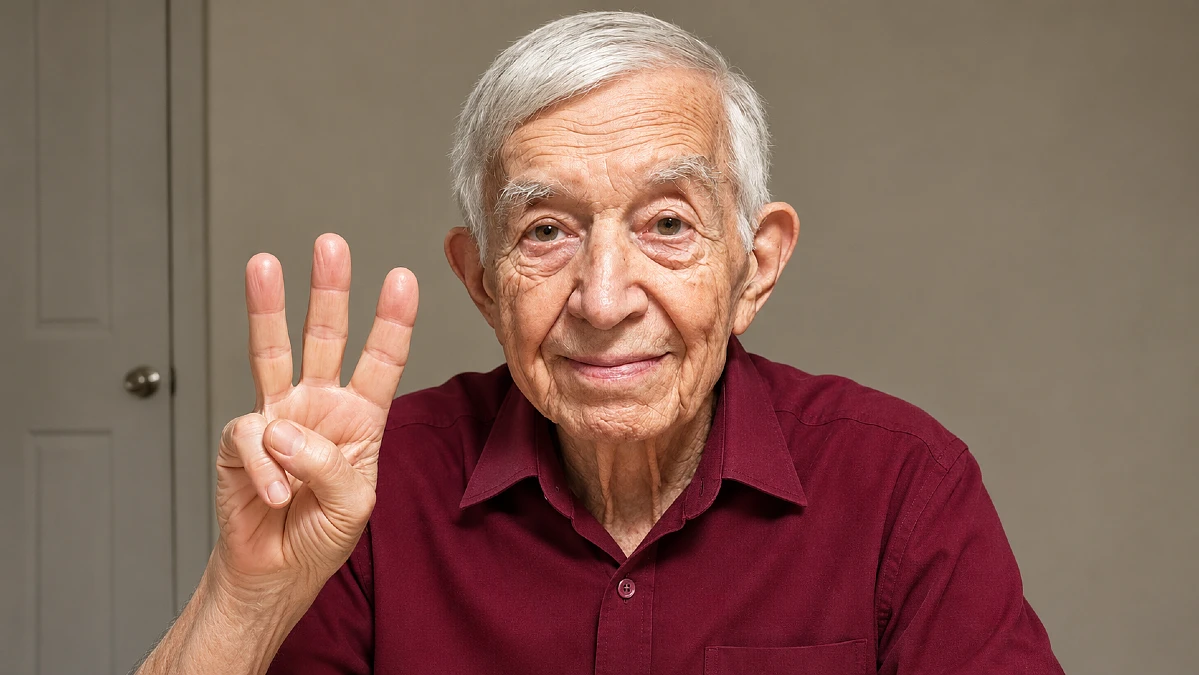
At 96, Virgil Haskins has spent much of his life facing a question that quietly troubles older adults: What happens when you die, and will anyone be waiting?
Even after decades of comforting dying patients, he admits that the thought of his own death frightened him. His greatest fear, however, was connected to someone still living.
After 29 years as a hospice chaplain, Virgil came to believe that three kinds of people matter most when life reaches its end. His story is about love, faith, and one unfinished relationship that took 30 years to repair.
The Three People Virgil Believes Will Be Waiting

For nearly three decades, Virgil served as a hospice chaplain in Roanoke, Virginia, according to his narrated account. Before that, he preached in small Methodist churches in the Virginia mountains.
His work brought him into hospital rooms and family homes during some of life’s most difficult hours. He describes sitting beside more than a thousand people approaching death, including parents, grandparents, veterans, and people who had spent much of their lives alone.
Despite their different backgrounds, many shared one concern. They were frightened by the thought of facing their final moments without someone beside them.
From those experiences, Virgil developed a belief about three kinds of people connected to the end of life.
| The Three People | Who They Represent | Why They Matter |
|---|---|---|
| The first | Loved ones who died before us | Love, memory, and reunion |
| The second | God or a spiritual presence | Faith, comfort, and reassurance |
| The third | Someone with whom peace was never made | Forgiveness, regret, and unfinished relationships |
Virgil’s understanding comes from his Christian faith and personal experiences, not scientific proof of an afterlife. His third category is particularly important because the person involved may still be alive.
For Virgil, that realization changed the way he thought about his remaining years. It also led him to confront a painful family disagreement he had avoided for three decades.
1. The First People: Loved Ones Who Have Already Died

Virgil believes the first people waiting are those who loved someone during life and died before them. They might be a husband, wife, parent, sibling, child, or close friend whose memory remains strong many years later.
During his hospice work, he noticed that some dying patients appeared to recognize people who were no longer alive. Their expressions sometimes changed from worry to happiness as they spoke familiar names or looked toward an empty doorway.
The Farmer Who Believed His Wife Had Returned
One experience in Virgil’s account concerns Delbert Ames, an 81 year old tobacco farmer who had been widowed for many years. Delbert was talking about his childhood when he suddenly stopped and looked toward the doorway.
His face brightened as though someone familiar had arrived for an unexpected visit. He then spoke the name of his wife, Inz, who had died almost 15 years earlier.
Virgil says he turned toward the doorway but saw nobody standing there. Nevertheless, Delbert appeared pleased, and he died later that weekend.
The experience stayed with Virgil because of the comfort Delbert seemed to feel. It strengthened the chaplain’s religious belief that love might continue beyond physical death.
The Mother Who Remembered Her Lost Baby
Another story concerns Edna, an older woman who had lost a baby boy decades earlier. She rarely discussed the loss with her family, and some relatives reportedly did not know the child had existed.
Near the end of her life, Edna reached toward a window and spoke as though she could see her baby. Her daughter was surprised because the family had not known about this painful chapter of Edna’s life.
For Virgil, the experience showed how deeply people carry the memory of someone they love. Even after many decades, a relationship can remain emotionally important.
A similar account involved Ida, a woman in her 90s who had outlived her husband, son, and many friends. Near death, she appeared to recognize someone she called Sissy, a name Virgil later connected to a sister who had died in childhood.
These stories cannot establish that deceased people physically returned. They do, however, describe experiences that can be deeply meaningful to dying patients and their families.
Why Some Dying People Speak to Loved Ones Nobody Else Can See

Reports of seeing or communicating with deceased loved ones are recognized in end of life care. Some patients describe familiar faces, conversations, or dreams involving people who died years earlier.
Medical professionals may refer to these as end of life dreams, visions, or hallucinations, depending on the circumstances. Some experiences are comforting, while others occur alongside confusion, medication effects, or delirium.
The National Institute on Aging advises families not to automatically interrupt or correct a dying person who describes a comforting experience. Instead, relatives can listen respectfully while making sure the person receives appropriate medical care.
| Experience | Possible Meaning | Helpful Family Response |
|---|---|---|
| Mentioning a deceased spouse | Memory, dream, or end of life vision | Listen without arguing |
| Speaking to someone unseen | A personal experience or possible confusion | Ask gently what they are experiencing |
| Appearing frightened or agitated | Possible distress, delirium, or medical symptoms | Notify the care team |
| Remembering someone lost long ago | An emotionally important memory | Offer comfort and allow conversation |
| Becoming unusually clear after confusion | A temporary change in awareness | Use the opportunity for meaningful conversation |
The important distinction is between a comforting experience and one causing distress. Sudden confusion, agitation, or frightening visions should be discussed with the medical team because some causes can be treated.
Virgil interpreted these experiences through his faith. Families may understand them differently, but both approaches can recognize the importance of treating the dying person with dignity.
2. The Second Person: The Presence That Has Been There All Along

Virgil’s second belief is rooted in the religious teaching that God has known a person since before birth. For him, dying does not mean entering an unknown place without spiritual companionship.
He often referred to a passage from the Book of Jeremiah about God knowing someone before they were formed in the womb. The words helped him explain why he believed no person was forgotten by God.
Yet Virgil also understood that not everyone shared his faith. His hospice work brought him into contact with Christians, people from other religions, and people who did not believe in God.
He believed spiritual support should never depend on forcing someone to accept a particular religion. Sometimes, simply sitting quietly with another person was the most meaningful form of comfort.
The Railroad Worker Who Did Not Want Prayers
Virgil recalled visiting an older railroad worker named Lester Combes. The man had spent much of his life rejecting religion and initially told Virgil that he did not want anyone praying at him.
Rather than argue, Virgil respected his wishes. They spent their visits discussing trains and ordinary memories from Lester’s working years.
Later, Lester reportedly described feeling that someone was sitting beside him at night. He could not identify the presence, but he said it did not frighten him.
Virgil understood the experience as a sign of God’s companionship. Another person might interpret it as a comforting sensation during serious illness.
Either way, Lester’s experience reinforced something important about end of life care. People often need companionship and reassurance more than explanations.
The Night Virgil Lost His Own Wife
Virgil’s religious beliefs faced a deeply personal test when his wife, Helen, died. They had been married for 60 years, and he had spent much of his working life helping other families through similar losses.
According to his account, he drove home from the hospital before sunrise but could not bring himself to enter the house. He remained inside his truck, facing the unfamiliar reality of returning home without his wife.
He described feeling a quiet presence during those hours. Although he acknowledged that he could not prove what it was, he believed he was not spiritually alone.
For someone who had spent decades supporting grieving families, the experience carried particular weight. He was no longer comforting someone else’s family but facing the loss that had changed his own.
Sometimes Comfort Comes Through Another Person
Virgil also believed that spiritual support sometimes arrives through ordinary human kindness. He remembered a nurse named Rosa who reportedly stayed beyond her scheduled shift beside a dying patient.
The man’s son could not reach the hospital before his father died. Rosa remained at the bedside, holding his hand and quietly singing hymns until the end.
When the son arrived, she could reassure him that someone had remained beside his father. Her kindness could not remove his grief, but it offered comfort during a painful moment.
This part of Virgil’s story has meaning beyond religious belief. The presence of a compassionate nurse, volunteer, friend, or relative can make a major difference to someone approaching death.
3. The Third Person: Someone You Never Made Peace With

The third person in Virgil’s account is not necessarily someone who has died. It is someone connected to an unresolved disagreement, painful memory, or relationship that ended without understanding.
This might be an adult child who stopped calling, a sibling involved in a long family dispute, or a former spouse whose last conversation ended in anger.
Unlike the first two categories, this one involves something a living person may still be able to change. That is why Virgil regarded it as the most important lesson from his years in hospice care.
The Father Who Kept Asking for His Daughter
One story Virgil shared involved a retired bus driver named Floyd Maberry. During his final days, Floyd repeatedly asked whether his daughter Annie had arrived.
The family had been separated for many years, and Annie had not spoken to her father since the 1970s. Virgil did not know the details of their disagreement, but he understood that Floyd wanted contact.
After obtaining her number, Virgil called Annie and explained that her father was asking for her. She reportedly responded that she had spent years hoping her father would contact her.
Annie traveled overnight and reached her father’s bedside the following morning. Although Floyd could barely speak, he lifted his hand, and she held it while sitting beside him.
He died later that night, according to Virgil’s account. The reunion did not erase decades of separation, but father and daughter had shared a final moment together.
Virgil drew a practical lesson from the experience. Sometimes two people remain apart because each is waiting for the other to make the first move.
When the Person Has Already Died
Not every unfinished relationship can be repaired through a telephone call. Sometimes the person has died, leaving the survivor with words that can no longer be spoken directly.
Virgil described a former schoolteacher named Lucille who continued thinking about a harsh exchange with her first husband. Although they had divorced decades earlier and he had since died, the memory still troubled her.
He suggested that she write down what she had said and what she wished she had said instead. Her granddaughter later accompanied her to the cemetery, where Lucille read the words aloud.
According to Virgil, the act brought her some emotional relief. It could not change the past, but it allowed her to express feelings she had carried for years.
Writing an unsent letter, discussing a memory with a counselor, or speaking privately at a gravesite may help some people process regret. Such actions do not guarantee relief, but they provide a way to acknowledge difficult emotions.
Forgiveness Does Not Mean Accepting Every Harm
Virgil was careful to distinguish making peace from pretending that serious harm never happened. He recognized that some relationships involve abuse, betrayal, or repeated mistreatment.
A person who has been badly hurt does not owe the other person contact, reconciliation, or another opportunity to cause harm. Sometimes the healthiest decision is maintaining distance while working through the emotions privately.
| Situation | Possible Next Step | Important Boundary |
|---|---|---|
| A disagreement caused by misunderstanding | Consider a calm conversation | Both people must be willing |
| Regret over something you said | Offer a specific apology | Do not demand forgiveness |
| A person has already died | Write a private letter | Closure does not require a response |
| A relationship involved serious abuse | Consider counseling or private reflection | Contact is not required |
| The other person refuses reconciliation | Respect their decision | Avoid repeated unwanted contact |
Making peace may mean admitting a mistake, expressing regret, or accepting that a relationship cannot be restored. It does not require people to forgive on a schedule or ignore their own safety.
For Virgil, this distinction became particularly meaningful because he had spent decades carrying an unresolved family disagreement of his own.
Virgil’s Greatest Regret Was Hidden Inside His Bible for 30 Years
The most personal part of Virgil’s account concerns a small index card he kept inside his Bible. It contained a telephone number he knew but repeatedly refused to call.
The number belonged to his younger sister, Peggy.
Their disagreement began during their mother’s final hours in a nursing home in Lynchburg, Virginia. Peggy was beside their mother while Virgil was working with a dying young father in Roanoke.
Peggy called and told him that their mother was asking for him. Virgil was caring for the young father, whose small daughters were waiting nearby, and decided he would visit his mother the following morning.
His mother died around 2 a.m., before he arrived. The young father he had been comforting reportedly died a little after 4 a.m., with Virgil holding his hand.
When Virgil finally reached the nursing home, his mother was already gone. Peggy had spent the night at her bedside and was deeply hurt that her brother had not arrived.
One Argument Turned Into Three Decades of Silence
During their mother’s funeral, Peggy confronted Virgil about his absence. She believed he had found time to comfort other families but had failed to be there when their own mother needed him.
Virgil reacted defensively and said something hurtful about her not understanding his work. What might have become a difficult but necessary conversation instead turned into years of silence.
They stopped speaking at Christmas and family gatherings. Even when Peggy’s husband died, Virgil sent flowers rather than contacting his sister directly.
Helen repeatedly encouraged him to call Peggy. Every Christmas, Virgil would look at the telephone number in his Bible and put it away again.
Then Helen died, and he still did not call.
The longer the silence continued, the more difficult the first conversation became. Virgil had convinced himself that Peggy remained angry and that their mother might have died feeling abandoned by him.
He had spent years advising others to make peace before death. Yet he could not follow the advice in his own family.
A Question From His Great Granddaughter Finally Changed Everything

Virgil described a conversation with his nine year old great granddaughter, Lily, that forced him to confront his fear. She asked whether he was afraid to die, and he initially told her that he was not.
But he knew the answer was untrue. Despite his faith and years of hospice experience, he feared dying while his disagreement with Peggy remained unresolved.
He was also troubled by the possibility that his mother had spent her final hours believing he did not care enough to come.
That summer, Virgil decided to follow the advice he had offered many other families.
He took out a piece of paper and wrote Peggy’s name at the top. He then described his own actions without spending the entire page defending his decisions.
He acknowledged that he had not come when their mother asked for him. He also admitted that he had spoken cruelly to Peggy when she was grieving and exhausted.
Finally, he tried to understand how the experience must have looked from his sister’s position. She had sat beside their mother throughout the night, carrying the sadness and responsibility of those final hours.
When he finished writing, he opened his Bible and found the old telephone number.
The Call That Ended 30 Years of Separation
Virgil called Peggy, and her granddaughter answered the telephone before bringing Peggy to speak with him. For the first time in three decades, brother and sister heard each other’s voices.
Virgil read what he had written rather than trying to explain away his behavior. His apology acknowledged the pain he had caused and the years they had lost.
Peggy then told him something he had never known.
According to her, their mother had asked for Virgil twice that night. But when Peggy explained that he was helping another dying patient, their mother had accepted his absence and expressed understanding for his work.
Peggy admitted that anger and pride had kept her from sharing those words earlier.
For Virgil, the discovery was deeply emotional. He had spent years fearing that his mother died disappointed in him, only to learn that she had understood why he was not there.
His relationship with Peggy began to recover. According to the account, they eventually started speaking every Sunday afternoon.
Virgil described feeling that a burden he had carried for decades was finally lighter. He had not changed what happened on the night his mother died, but he had changed the relationship that remained.
Why Unfinished Relationships Can Feel Heavier in Old Age

As people grow older, certain memories may take on new importance. A family disagreement that once seemed ordinary can feel different after a spouse dies, a sibling becomes ill, or the possibility of reconciliation appears to be slipping away.
People may begin thinking about conversations they postponed or relationships they assumed would eventually improve. The passage of time can make these memories more painful, particularly when an apology or explanation was never offered.
The National Institute on Aging recognizes that emotional and spiritual concerns are important parts of end of life care. These can include unresolved disagreements, worries about loved ones, and the desire to find meaning in personal relationships.
Such concerns deserve attention even when a person has excellent medical care. Managing pain and physical symptoms is important, but emotional support also affects how people experience their final days.
Virgil’s story illustrates that a difficult conversation does not always require a perfect ending. Peggy might have refused the call, or she might have needed more time before discussing the past.
What mattered was that Virgil finally accepted responsibility for his part. He gave his sister an opportunity to respond without demanding that she forgive him immediately.
For older adults, this suggests a useful question: Is there a relationship that deserves thoughtful attention now, rather than another year of silence?
What Families Should Do When Someone Is Approaching Death
Virgil’s experiences also offer lessons for adult children and caregivers who may someday sit beside a dying parent. They may encounter conversations, memories, or behaviors that are unfamiliar and emotionally difficult.
One of his strongest recommendations was to listen rather than immediately correct someone describing a comforting vision. He believed relatives sometimes became so concerned with establishing what was real that they overlooked the person’s emotional needs.
Medical guidance supports a compassionate approach, while also recognizing that sudden changes in awareness can signal a medical problem. Families should work with the hospice or medical team to understand what is happening.
| What Happens | Helpful Response | What to Avoid |
|---|---|---|
| A parent mentions someone who died | Ask gently about the person | Arguing about what they see |
| A loved one expresses regret | Listen and acknowledge their feelings | Dismissing the concern |
| Someone becomes quiet or withdrawn | Offer gentle companionship | Pressuring them to talk |
| A patient appears distressed or confused | Contact the care team | Assuming every symptom is spiritual |
| A family disagreement remains unresolved | Consider a respectful conversation if wanted | Forcing reconciliation |
| Someone cannot respond verbally | Speak calmly and offer appropriate touch | Talking as though they are absent |
Families can also ask about personal preferences before a serious illness makes communication difficult. Some people want prayers or religious music, while others prefer silence, favorite songs, or familiar voices.
Knowing these wishes can help relatives offer comfort in ways that reflect the person’s values. It can also reduce uncertainty for family members making decisions during difficult circumstances.
Three Things Virgil Encourages Older Adults to Do While They Still Can
Virgil’s message is not simply about waiting for death or hoping for a reunion. Much of it concerns decisions that can be made while there is still time to speak, listen, and strengthen relationships.
His advice can be translated into three practical actions that do not depend on a person’s religious beliefs.
1. Write Down the Name of Someone You Still Think About
Consider whether a particular relationship continues to trouble you. It may involve regret over something said, a misunderstanding that was never resolved, or a disagreement that became more serious over time.
Write down what happened, what you wish had happened differently, and what responsibility you can reasonably accept. If safe and appropriate, decide whether a respectful call or letter would be welcome.
The goal is not to force reconciliation or accept blame for someone else’s behavior. It is to understand your feelings and decide whether there is a constructive next step.
2. Tell Your Family About the People Who Matter Most
Older adults sometimes carry memories their children and grandchildren know little about. A childhood sibling, former friend, or loved one who died many years earlier may still hold an important place in their lives.
Sharing these memories gives younger relatives a better understanding of family history. It may also help them respond compassionately if familiar names come up during a serious illness.
Photographs, handwritten letters, recorded stories, and family albums can preserve memories that might otherwise be lost. They can become meaningful keepsakes for future generations.
3. Discuss How You Would Like to Be Cared For
Conversations about aging should include practical preferences alongside emotional and spiritual needs. Older adults may want to discuss who should make medical decisions if they cannot communicate, where they would prefer to receive care, and whom they want contacted during a serious illness.
A health care proxy is someone authorized to make medical decisions when a person cannot do so. An advance directive can record treatment preferences and help guide family members, subject to state law.
Discussing these decisions before an emergency gives loved ones time to understand personal priorities. The National Institute on Aging recommends advance care planning because it helps people communicate their wishes and prepare those who may need to act on their behalf.
What If Someone Has Nobody Left?

One of the deepest concerns in Virgil’s account is the fear of being forgotten. Some older adults have outlived spouses, siblings, friends, or children and may wonder who will be present during their final days.
Virgil responded through his religious faith, believing that love and spiritual companionship do not disappear with death. His stories about deceased loved ones offered hope to people who shared that belief.
However, practical support also matters. Someone without close relatives may benefit from hospice volunteers, trusted neighbors, spiritual communities, social workers, or other people willing to provide companionship.
Hospice teams can help patients and families address physical, emotional, and spiritual needs. Patients can express their preferences about visitors, conversations, religious support, and the people they want involved in their care.
No one can promise that every person will have family at the bedside when death occurs. Even devoted relatives may be absent at the exact moment, and that absence does not mean the person was unloved.
What families and communities can do is offer connection while someone is alive. A visit, a telephone call, or an hour of quiet companionship may matter more than anyone realizes.
At 96, Virgil Finally Understood What Had Frightened Him

After his conversation with Peggy, Virgil began thinking differently about death. He still missed Helen, remembered his mother, and understood that his own life was nearing its end.
But the unresolved disagreement that had troubled him for 30 years no longer carried the same weight. He had apologized, learned something important about his mother’s final thoughts, and reconnected with his sister.
In Virgil’s Christian understanding, Helen and his mother would be among the loved ones he hoped to meet again. He also believed God would remain present, just as he believed throughout his life.
The third person, Peggy, was no longer someone he avoided. She was his sister again, a woman in her 90s with whom he could share conversations and ordinary family moments.
When Lily later asked whether he was afraid to die, Virgil said he could finally answer without hiding his feelings. His account describes a man who found relief not by learning what happens after death, but by repairing something important before it.
That may be the most useful part of his message, regardless of what someone believes about the afterlife.