
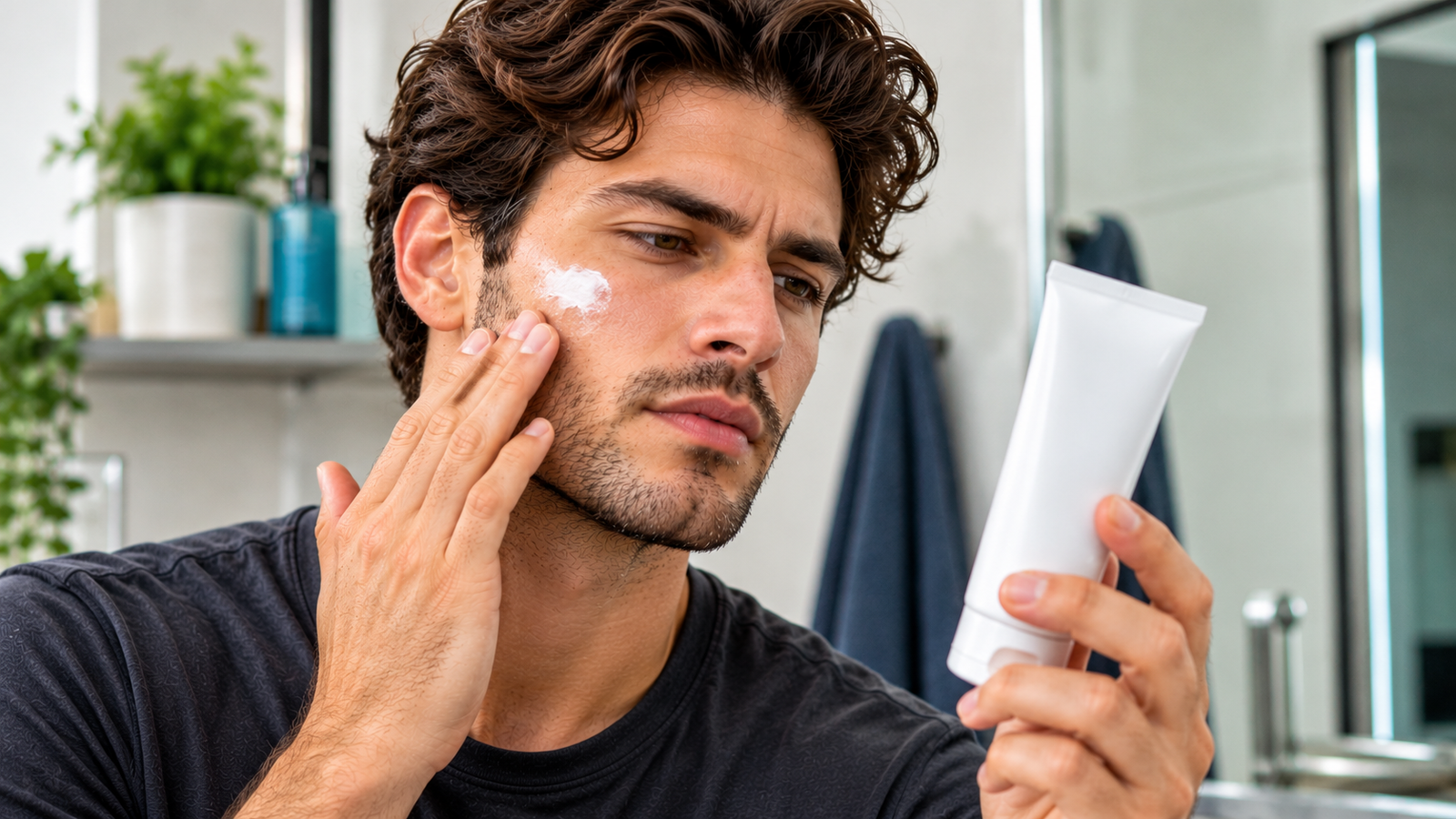
Picking sunscreen for men with oily skin can feel like a trap. The light ones seem to vanish by lunch, and the protective ones leave your forehead shining by 10 a.m. So plenty of guys give up and skip SPF altogether, which is the one move that costs you the most over time.
The fix is not a miracle product. It’s knowing which label terms, textures, and filters work for oily skin, and how to apply sunscreen so it sits flat instead of sliding around. This guide covers all of it.
Why Sunscreen Feels Greasy on Oily Skin (and What the Formula Can Do About It)
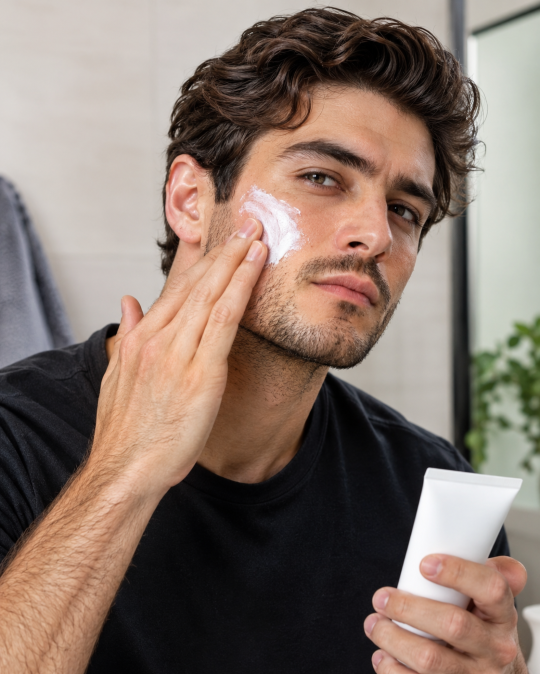
Every sunscreen has two parts. The UV filters do the protecting. The base, which is the gel, lotion, or cream that carries them, decides how it feels.
The greasy feeling mostly comes from the base. Oily skin already makes its own sebum, so a rich, creamy base piles onto a surface that’s already slick. A lighter base gives you the same protection with far less shine.
Sunscreen also mixes with sweat and sebum as the day goes on. That’s why a formula that felt fine at 8 a.m. can look glossy at 2 p.m. Texture and a simple reapply plan matter as much as the product itself.
Skin Note: Oily skin is still skin that needs sun protection. If you break out often or your skin stings with most products, a dermatologist can help you sort out what’s going on.
Read the Label in This Order: Broad Spectrum, SPF 30+, Then the Texture Words
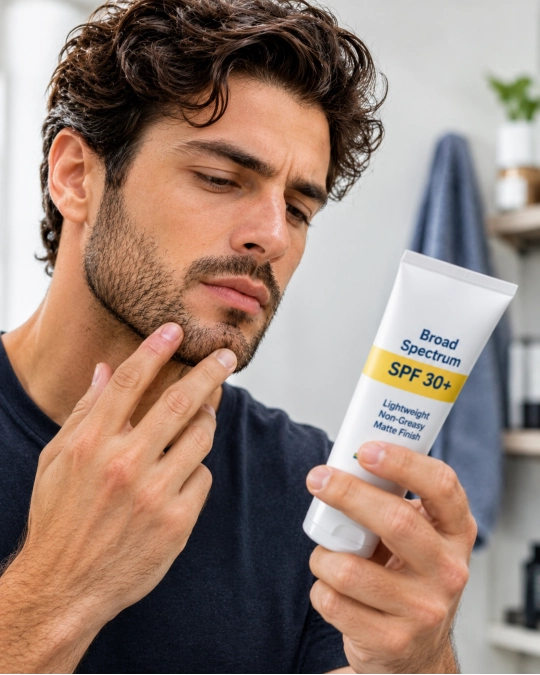
Start with the two terms that decide protection. Then use the texture words to narrow the shelf.
| Label term | What it tells you | How to use it |
|---|---|---|
| Broad spectrum | Covers both UVA and UVB rays | Skip any sunscreen without it |
| SPF 30 to 50 | UVB protection level | 30 is a common minimum. Go to 50 if the texture is light enough to wear daily |
| Water resistant (40 or 80 min) | Holds up through sweat or water for that time | Useful for the gym and hot commutes. You still reapply |
| Oil-free | No added oils in the base | A helpful hint, not a promise of a light feel |
| Non-comedogenic | Brand says it’s formulated to be less likely to clog pores | Treat it as a hint and test it on your own face |
| Matte or mattifying | Usually has silica or similar to soak up shine | Good for the T-zone. Check that it doesn’t feel tight by afternoon |
| Fragrance-free | No added scent | Pick this if your skin stings or flushes easily |
Gel, Fluid, Stick, or Powder: Match the Texture to Where Your Face Gets Shiny
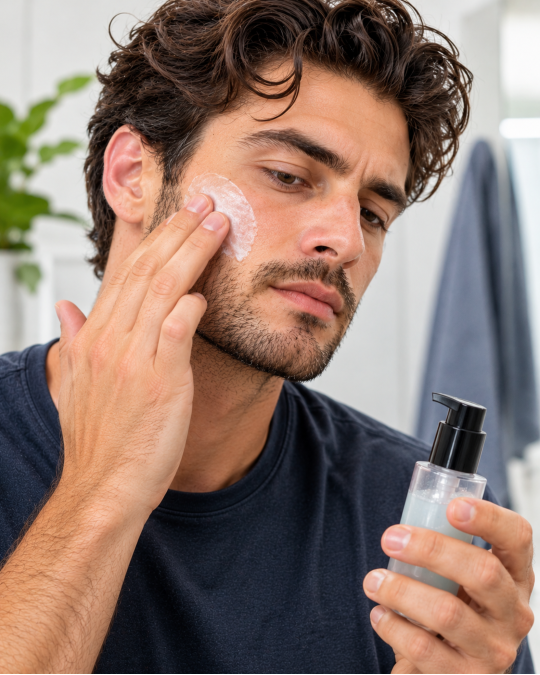
Texture is where most oily-skin guys win or lose. The number on the bottle matters less than how the formula feels once it dries.
| Texture | How it feels | Best for | Watch out for |
|---|---|---|---|
| Water-based gel | Cool, light, dries fast | Very oily skin, humid weather | Feels thin, so people under-apply |
| Lightweight fluid | Like a thin lotion that sinks in | Combination skin, around a beard line | Needs a minute to settle |
| Gel-cream | Slight cushion without heaviness | Oily in summer, normal in winter | Make sure it dries to a matte or satin finish |
| Stick | Solid swipe, no mess | Forehead, nose, ears, midday top-ups | Hard to cover a whole face evenly on its own |
| Brush-on powder | Dry and weightless | Touch-ups over sunscreen you already applied | Rarely enough alone, since you’d need a lot |
Try This: Use a fluid or gel over your whole face. Then run a stick over your forehead, nose, and the tops of your ears. Those spots get the shiniest and catch the most sun, and a stick gives them a second layer without a heavier face-wide formula.
Mineral or Chemical Filters? Pick Based on Sweat, Skin Tone, and Eye Sting
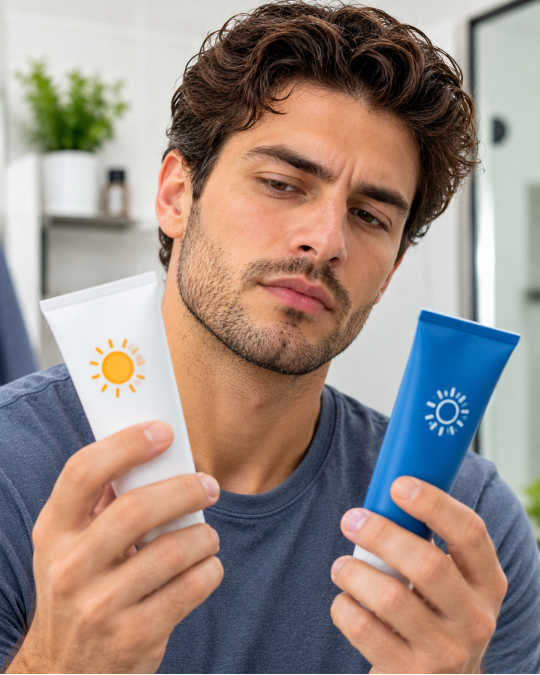
Both types protect your skin when you wear enough of them. The best one is the one you’ll actually put on every morning. Here’s how they differ in daily use.
Mineral filters (zinc oxide, titanium dioxide)
- They sit on top of the skin and tend to be gentler on reactive skin.
- They’re less likely to sting your eyes when sweat runs down your forehead.
- They can leave a pale cast, especially on medium to deep skin tones, and some feel thick. Tinted versions blend more easily.
Chemical filters (avobenzone, octocrylene, and similar)
- They absorb into the skin’s top layer and usually feel thinner and invisible.
- Sweat can carry them into your eyes, which stings for some guys.
- A few people see redness or stinging with certain filters. Switching to a different filter often solves it.
A quick way to choose:
- Sweat in your eyes at the gym? Use a mineral stick on the forehead and hairline.
- Hate a white cast? Try a lightweight chemical fluid or a tinted mineral.
- Skin reacts easily? Start with a fragrance-free mineral formula.
Product Note: Check the ingredient list, too.
- Good signs: Silica (shine-absorbing feel), niacinamide (often added for an oil-control finish), and glycerin or hyaluronic acid (light hydration without weight).
- Check twice: Heavy butters or oils near the top of the list, like shea butter or coconut oil, make a richer base. Alcohol high on the list dries fast, but it can sting or feel tight on some skin.
How to Apply Sunscreen So It Stays Matte: Amount, Order, and Midday Top-Up
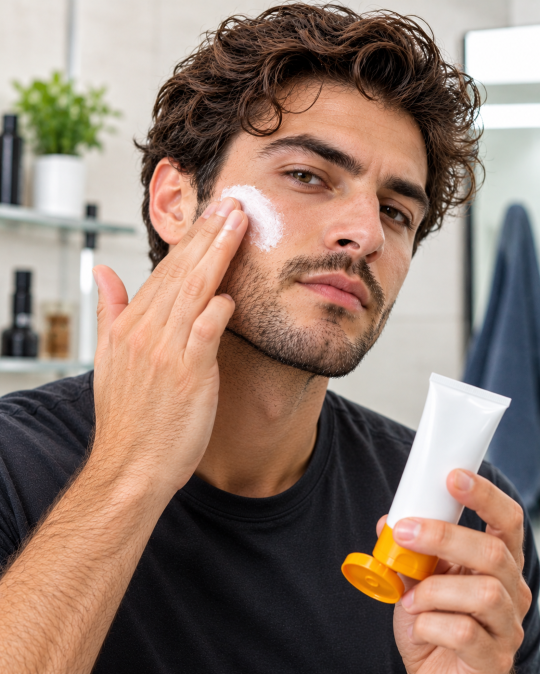
Most guys under-apply, so a good sunscreen ends up working like a weak one. Use this order in the morning:
- Cleanse with lukewarm water and a gentle gel cleanser. Pat dry.
- Shave first if you shave. Add a light, alcohol-free aftershave gel if your skin needs it.
- Moisturize lightly, or skip it. If your sunscreen is hydrating, you may not need a moisturizer. If your skin feels tight by afternoon, add a light gel moisturizer tomorrow.
- Measure with two fingers. Squeeze a line of sunscreen down your index and middle fingers. That’s roughly what your face and neck need.
- Dot, then spread in thin layers. Dot it on your forehead, cheeks, nose, chin, and neck. Pat and smooth it in rather than rubbing hard.
- Wait two to three minutes before applying hair product or pulling a shirt over your face.
Don’t skip these spots:
- Ears, the back of your neck, and your hairline.
- Your part line and any areas where your scalp shows through, whether from short hair, a receding hairline, or thinning.
- Stubble: work sunscreen through with your fingertips so it reaches skin.
- Full beard: cover the skin above your cheek line, around your nose, and your upper lip.
Technique Note: Blotting paper lifts oil, but it also lifts some sunscreen. Blot gently, then add a stick or a small dab of fluid on top. In direct sun, reapply about every two hours, or after heavy sweating or swimming.
At night: Wash it off with your gel cleanser. Water-resistant and mineral formulas may need two gentle passes. Don’t scrub harder, because over-scrubbing oily skin tends to cause irritation, not clarity.
Budget Swap: Already own a heavy sunscreen? Use it on your neck, ears, arms, and hands, where skin is usually less oily. Then buy one lighter formula for your face only.
Real-Life Swaps: What to Wear at the Gym, in the Car, and on Humid Days

| Situation | Try | Why it works |
|---|---|---|
| Desk job with a window or a long drive | Lightweight fluid or gel-cream, SPF 30 to 50 | UVA rays pass through glass, so daily wear still counts |
| Gym or run | Water-resistant formula plus a stick on forehead and hairline | Holds up better when you sweat |
| Hot, humid day | Water-based gel, SPF 50, stick in your bag | Thin layers dry faster and the stick handles top-ups |
| Winter and dry air | Gel-cream | Skin can feel tighter in cold weather, and UV doesn’t take winter off |
| Day after a close shave | Fragrance-free fluid or mineral | Freshly shaved skin reacts more easily |
| Beach or long day outdoors | Water-resistant SPF 50, reapplied on schedule | Sweat and water wear it down faster |
Frequently Asked Questions
Can I skip moisturizer and just use sunscreen?
Many guys with oily skin do, especially with a hydrating gel or fluid SPF. If your face feels tight or looks oilier than usual by afternoon, add a light gel moisturizer underneath. Tight skin can be a sign it wants more water, not less.
Does a higher SPF feel greasier?
Not by itself. Texture comes from the base, so an SPF 50 gel can feel lighter than an SPF 30 cream. The bigger gains come from applying enough and reapplying on time.
Do I need sunscreen under my beard?
A thicker beard may shade some skin, but not reliably. Cover the skin above your cheek line, your nose, and your ears. With stubble, work it through to reach skin.
Is a powder SPF enough on its own?
Usually not, because you’d need to apply far more than most people do. Use it as a midday top-up over a regular sunscreen.
Conclusion
The best sunscreen for oily skin is the one light enough that you forget it’s there. Look for broad spectrum, SPF 30 or higher, and a gel, fluid, or gel-cream base. Use a stick for the forehead and nose, and measure two fingers’ worth each morning.
Start with one new formula and wear it for a full week before judging it. Skin takes a few days to settle, and the shiny-by-noon test tells you more than the first five minutes ever will.